Support CleanTechnica's work through a Substack subscription or on Stripe.
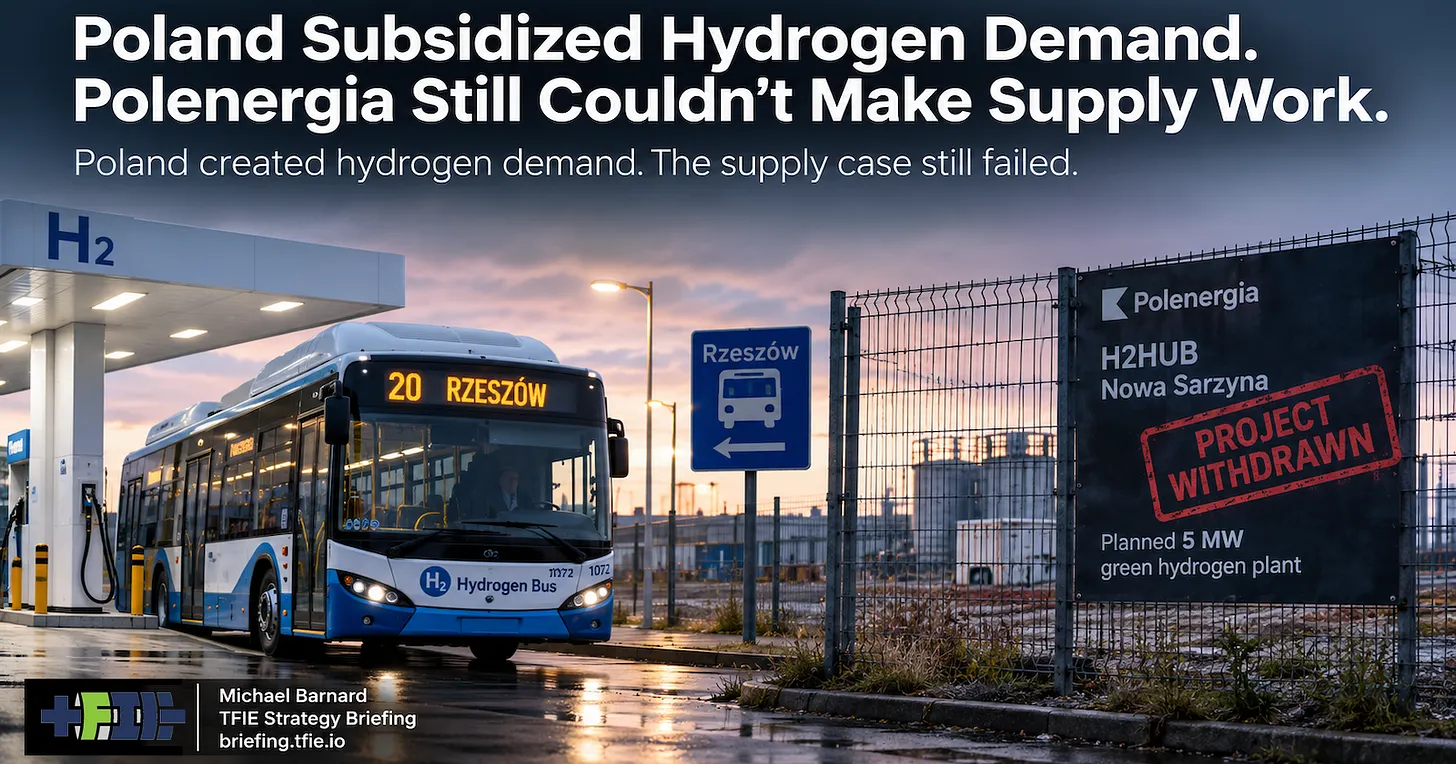
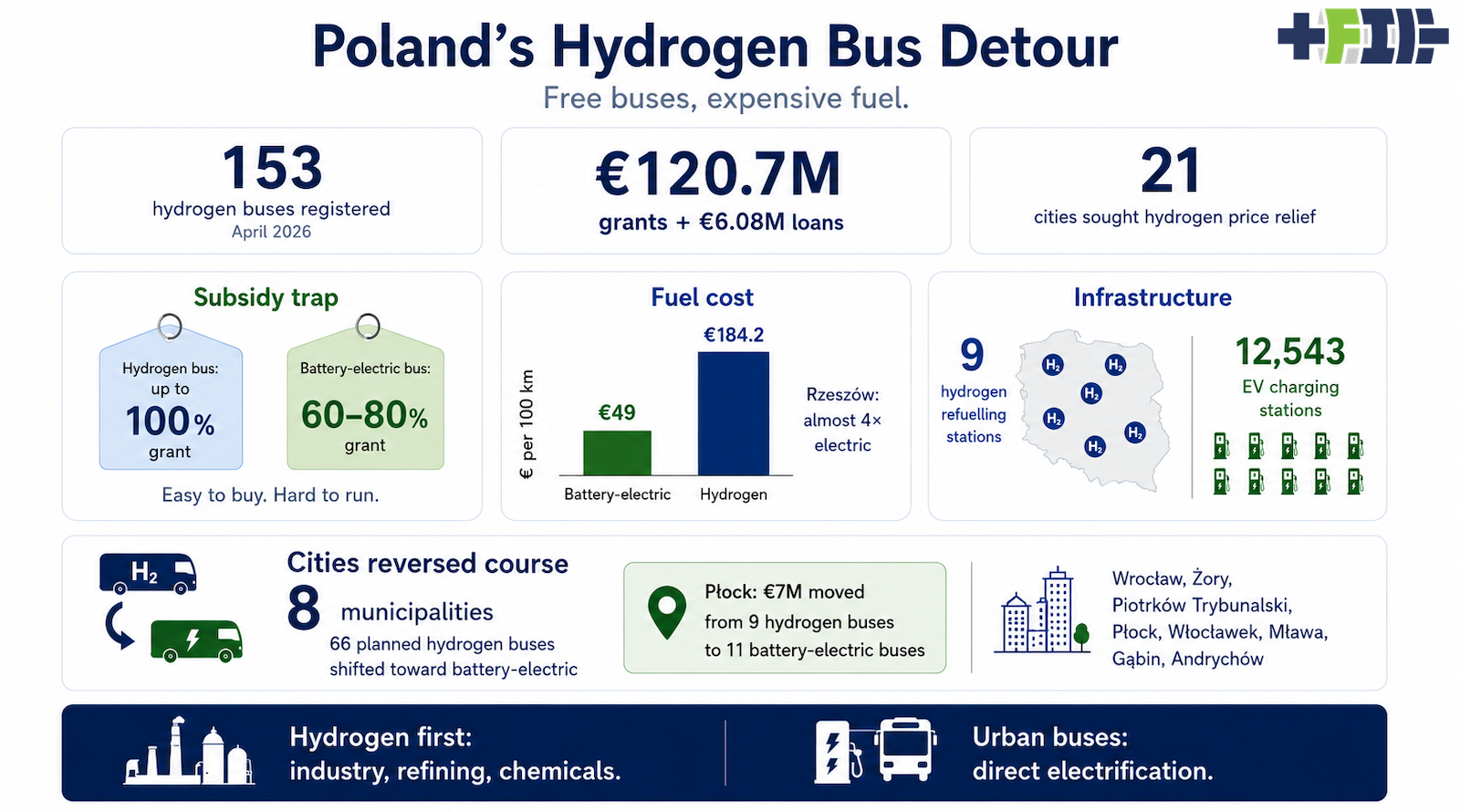
CEE Bankwatch’s May 2026 report, Hydrogen buses in Poland: Where did it all go wrong?, is useful because it moves the hydrogen bus debate out of the brochure and into the depot. It is not another model of what hydrogen might cost in 2035. It is a record of what happened when cities bought buses, signed contracts, waited for fuel, paid invoices, dealt with failed tenders, and tried to run public transport with a fuel system that had not caught up with the promise. By April 2026, Poland had 153 hydrogen buses registered, 140 in service across 12 cities, and another 107 contracted. That is enough deployment to stop pretending this is only about pilots.
That matters because Poland is not a trivial case. It is a serious European transit market, a serious bus manufacturing country, and a coal-heavy economy trying to move. In 1990, coal provided about 98% of Poland’s electricity generation. By 2023, that had fallen to about 60.5%, while renewables had risen to about 27% of electricity production. That is still far too coal-heavy for a climate-stable grid, but it is also a large shift in a country with deep coal dependence, industrial inertia, mining politics, and a legacy power system built around lignite and hard coal.