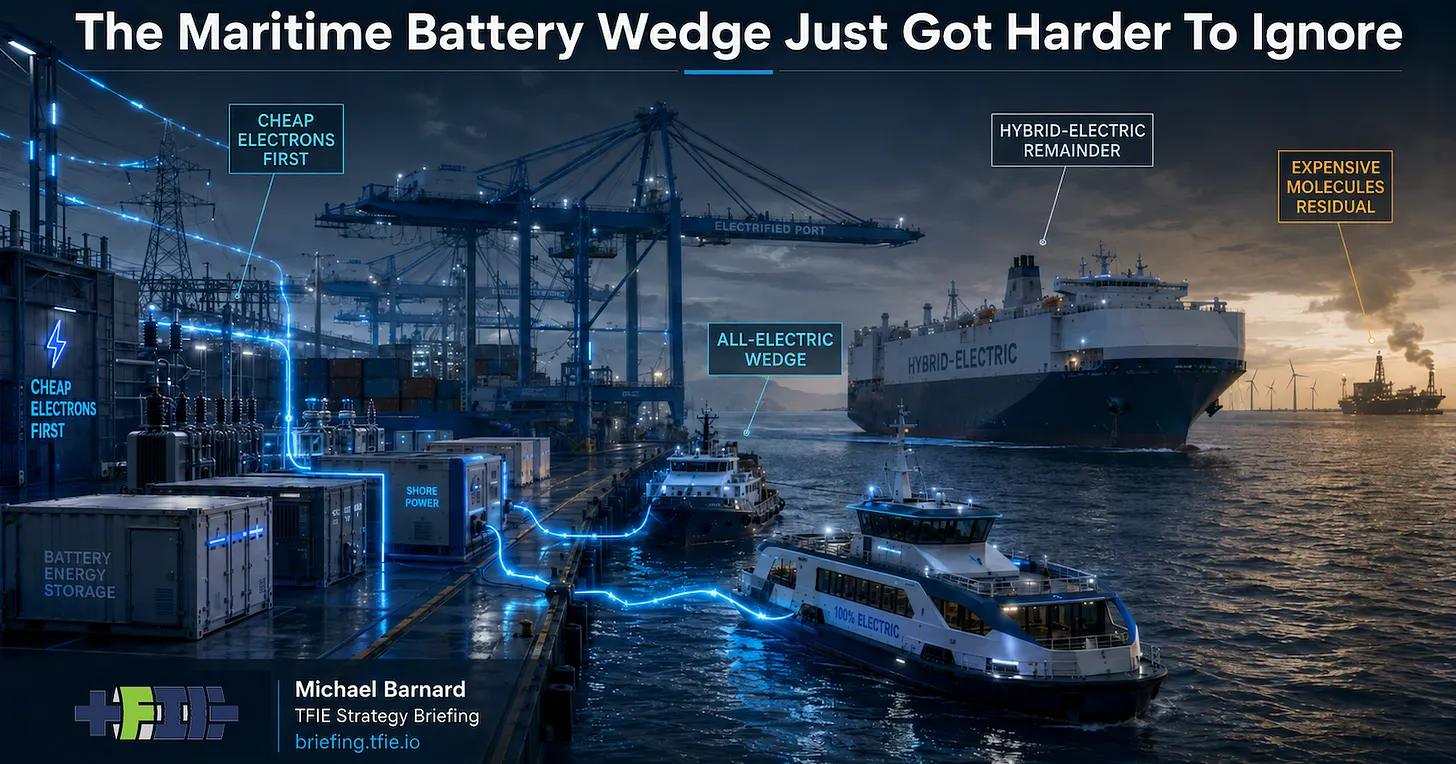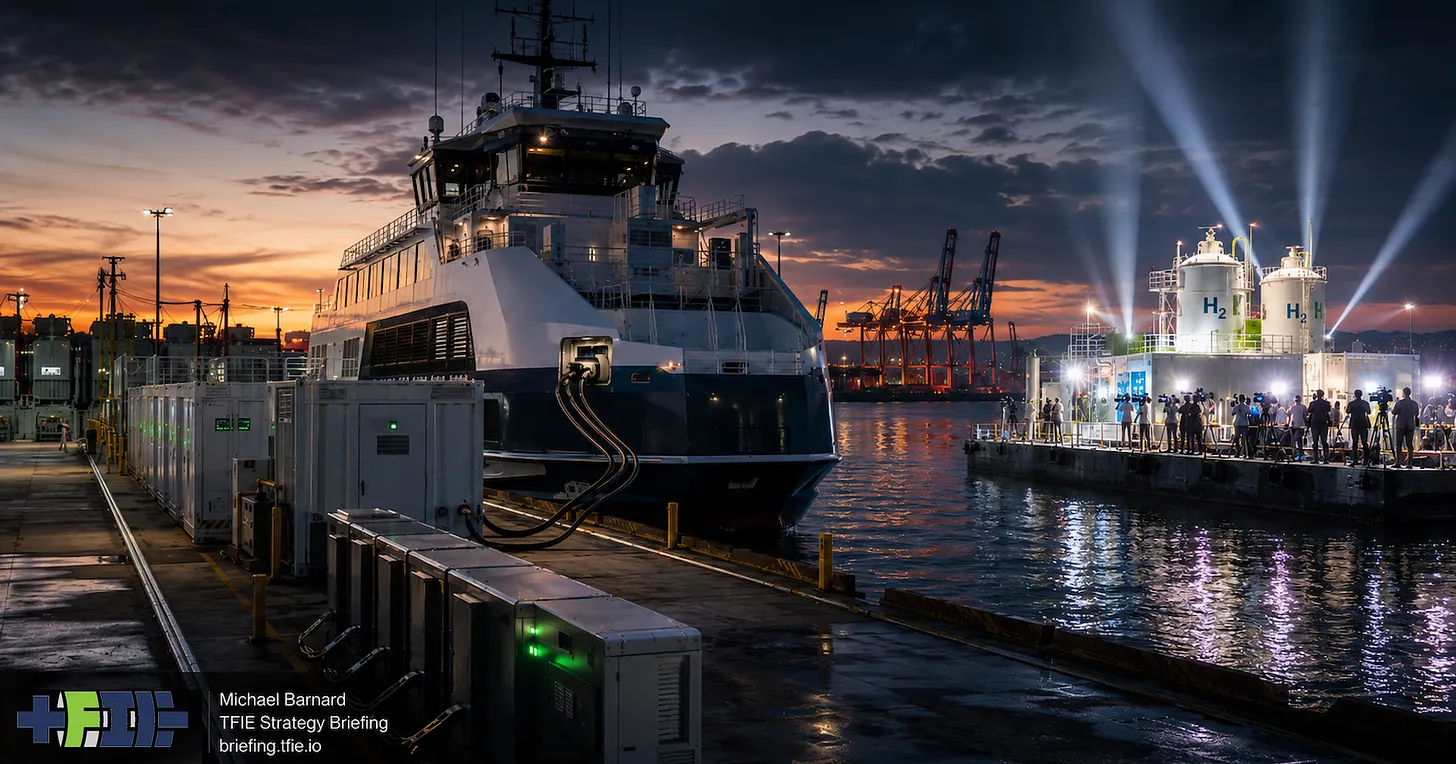
Hydrogen gets the lights and cameras, while scalable maritime electrification increasingly depends on the quieter infrastructure of grids, batteries and routine charging.
Support CleanTechnica's work through a Substack subscription, on Patreon, or on Stripe. Help us produce all of the high-quality, original content we publish week after week despite the challenges of content-scraping AI, antisocial media, inflation, and other hurdles.
At the Port of Tilbury on the Thames, GeoPura recently put one of its hydrogen power units on a floating platform and used it to charge a commercial electric vessel. The system delivered 300 kW through five Ballard fuel cells. It was visually irresistible: a barge, hydrogen equipment, a working ship and an unusual enough arrangement to generate photographs, demonstrations and headlines.
The vessel, however, was not hydrogen-powered. It was battery electric. What GeoPura demonstrated was that hydrogen can be converted into electricity and fed through a charger into a battery. Nobody seriously doubted that this could be done. The more useful question is why hydrogen needs to sit in that chain.
Tilbury is a useful test because the port-power constraint GeoPura is addressing is real even if the hydrogen solution is not obviously the best one. The full TFIE Strategy Briefing follows the missing infrastructure, competing battery architecture and evidence for what repeat deployment actually looks like.