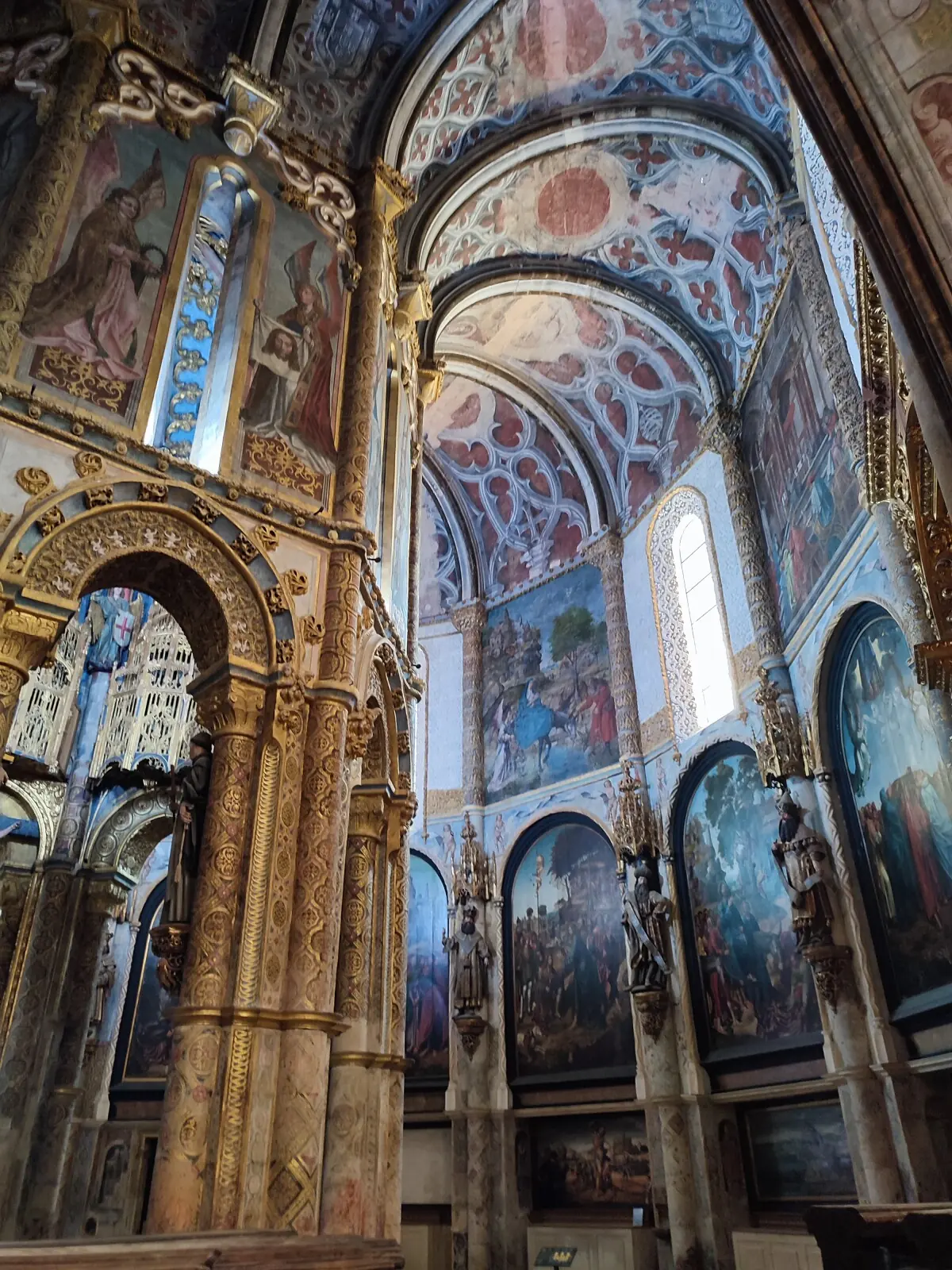
If you walk into the round church in Portugal’s Tomar, you will understand in about four seconds that it was not built for walking. It was built for horses. The Charola — a 16-sided drum of painted saints, gilded columns and Portuguese light — let armoured Templar knights hear Mass without dismounting. Eight centuries on, the gold is still there, and so is the strangeness: a building in western Iberia that is, in its bones, a copy of the round churches of Jerusalem.
I came to it from Germany where I currently teach and study, carrying questions that formed thousands of miles away, in Urdu writing across the Indian subcontinent. The Crusades — the series of religious military campaigns launched by western European Christians between 1095 and 1291, with the declared aim of taking the Holy Land from Muslim rule — reached me first not through Latin chronicles but through Urdu novels written under British rule.
Standing inside the Charola, I felt as if I were looking at the very event itself.
The Society for the Study of the Crusades and the Latin East (SSCLE) meets in full congress only once every four years, which gives its conferences a slightly Olympic quality. Most delegates arrive visibly older, clutching books that did not exist last time the event was held.