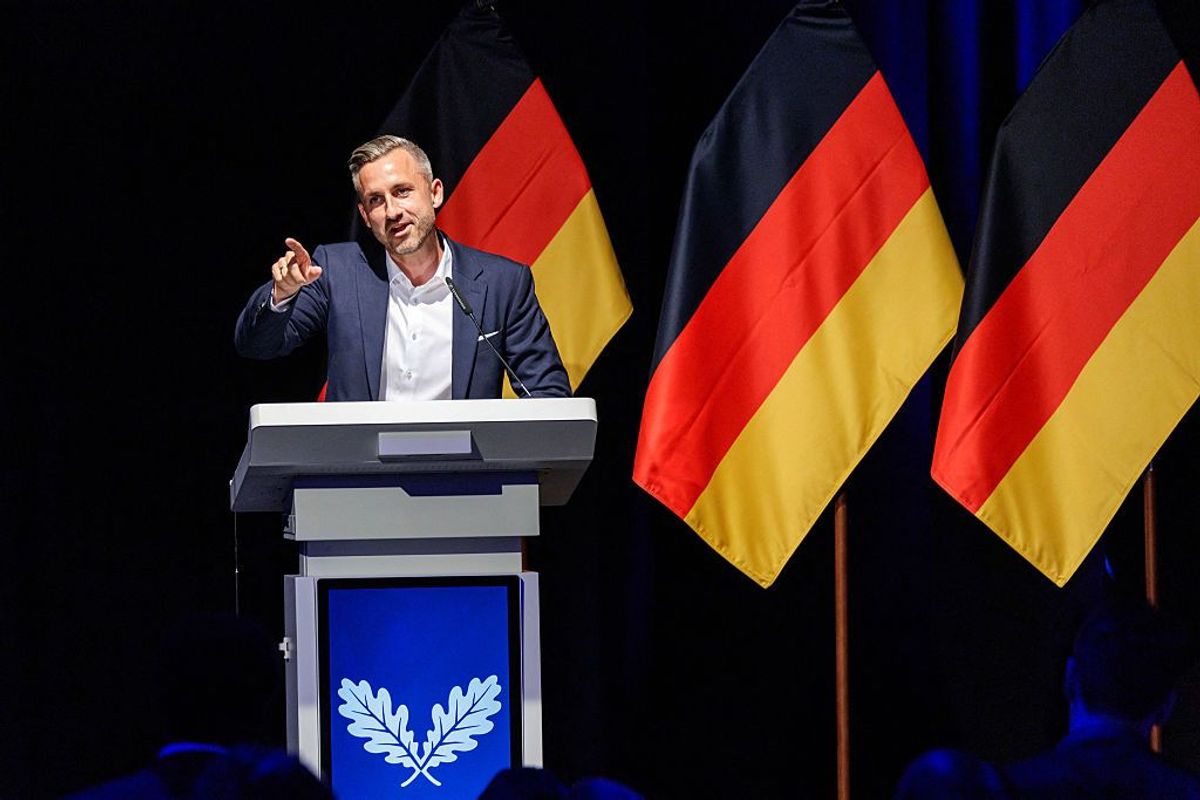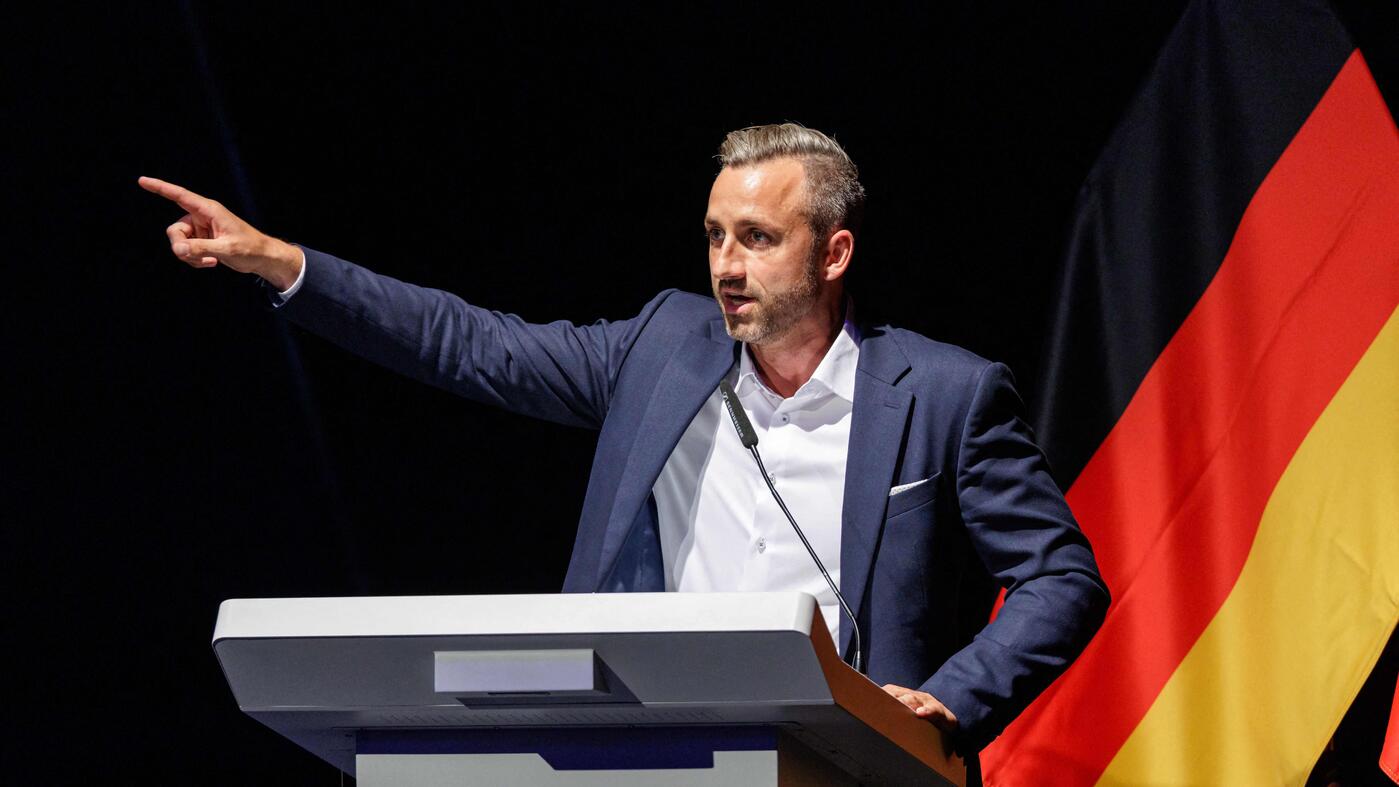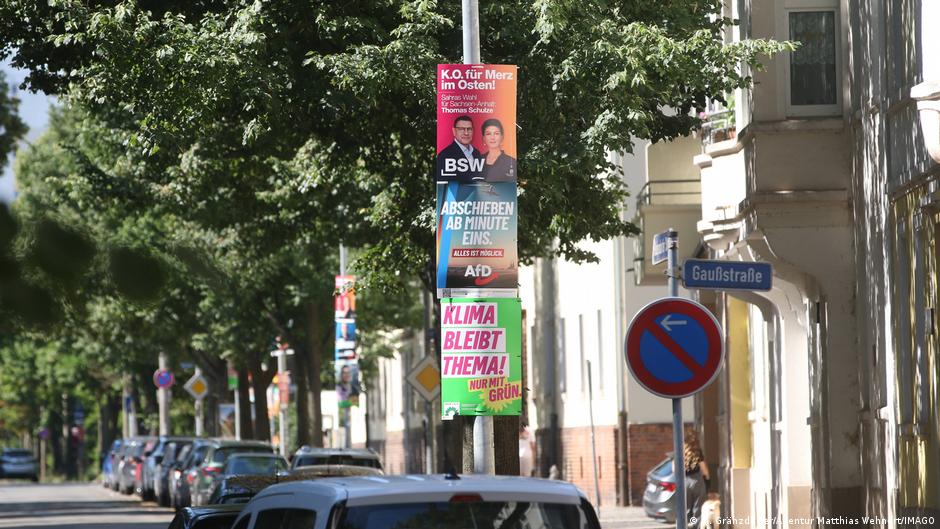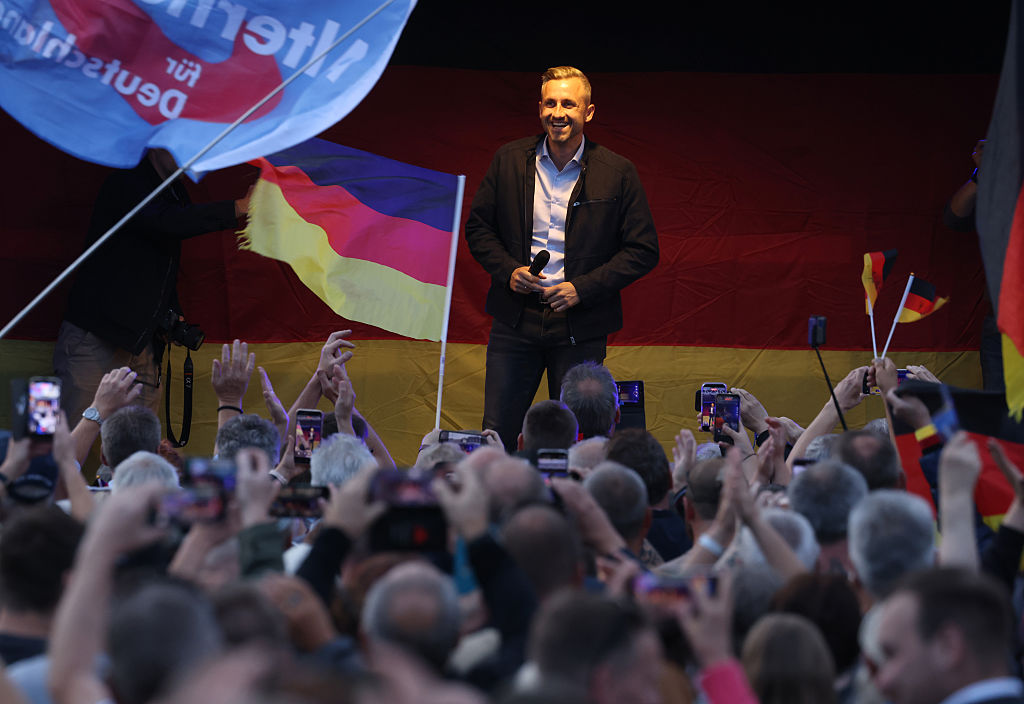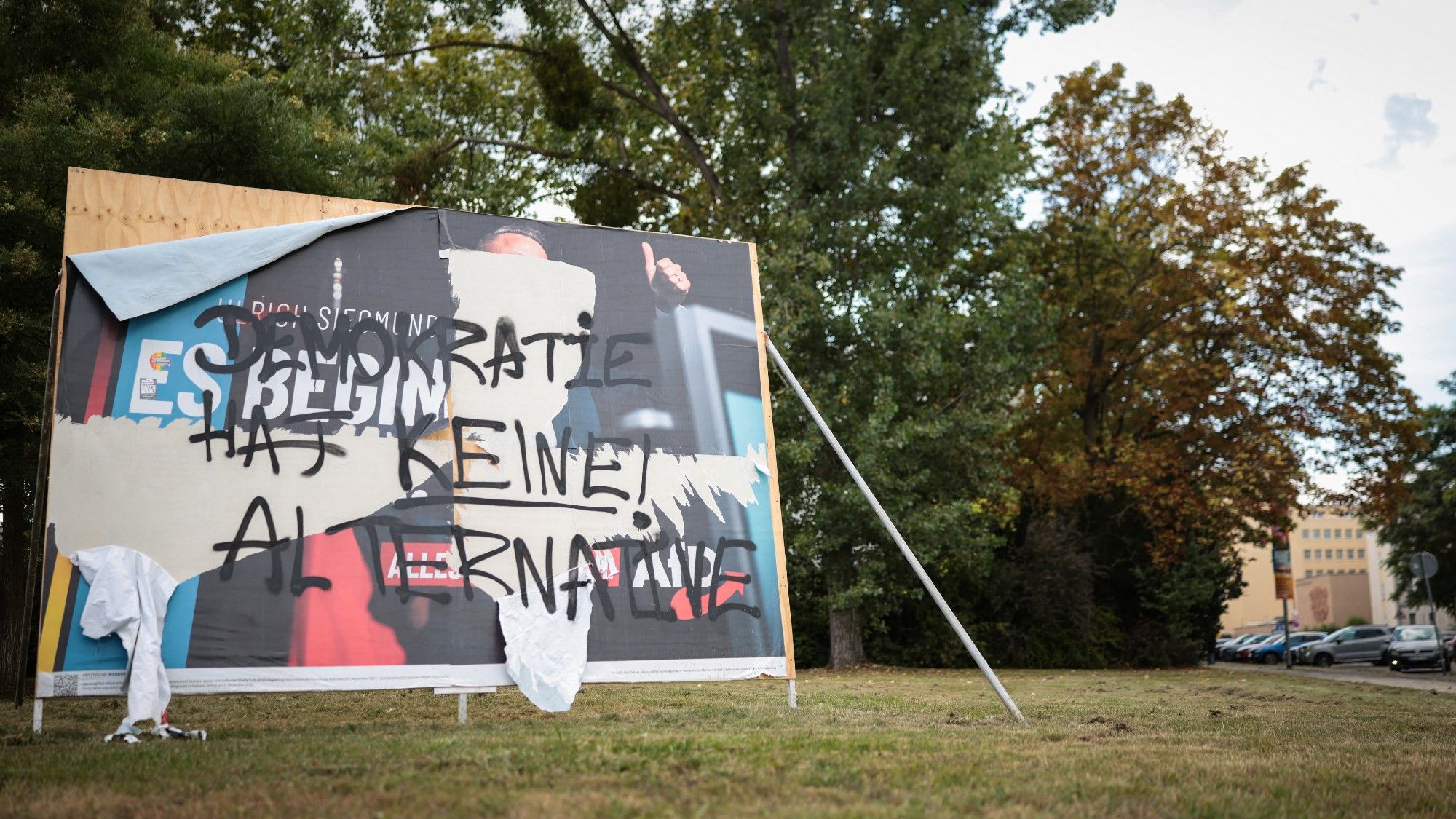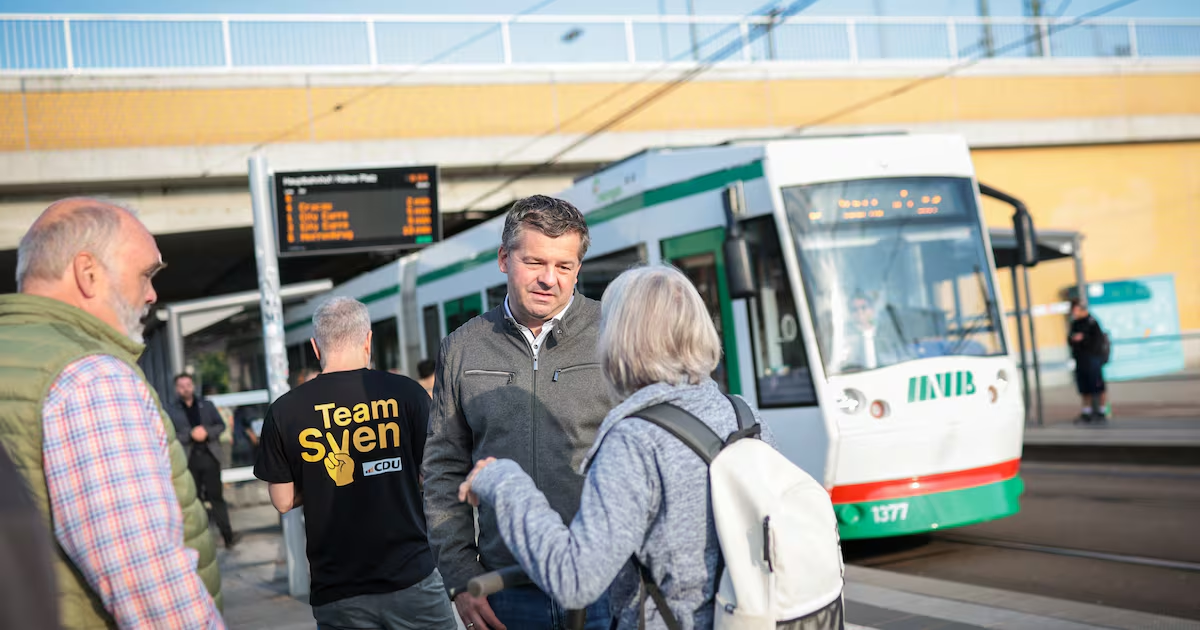
Germany’s most pressing political dilemma is this: how to respond to the country’s far-right surge? And now that dilemma has come home to roost with Sven Schulze.The 47-year-old mechanical engineer hopes to be returned as prime minister when voters in the eastern state of Saxony-Anhalt choose a new parliament next weekend. When polls close at 6pm on Sunday week, however, the centre-right Christian Democratic Union (CDU) politician knows that things could turn out very differently. “There is a theoretical chance that, for the first time, a party will govern that rejects our democratic system,” Schulze said.And as a former MEP, he predicts consequences far beyond his small state of 2.1 million people southwest of Berlin. The local Alternative for Germany (AfD) – with populist ambitions to lead Germany out of the EU and pursue Trumpian “Germany First” trade and diplomacy – is polling 40 per cent. Schulze’s CDU has governed the state for the last quarter century, halved both the jobless and crime rates, yet has slid to just 23 per cent support. As the German saying goes: eaten bread is soon forgotten. And with the AfD, Schulze concedes he is battling a political “smoke grenade”: a slippery opponent making an emotional play for voter trust based on its outsider status as an untested opposition party.Ulrich Siegmund, the far-right Alternative for Germany's main candidate, and the CDU's Sven Schulze take part in a head-to-head debate on regional TV. Photograph: Ronny Hartmann/AFP via Getty So how did it come to this: the CDU – the party of Kohl and Adenauer – fighting an uphill battle against a right-wing populist challenger that promises to end “culturally alien” immigration?The jovial Schulze turns serious. For too long, he argues, his party held its nose rather than engage on emotive and challenging issues such as migration and security, leaving the field open to a more populist AfD approach.They have also mined lingering trauma of the postunification years, he says, when many easterners had to start again. “The majority of people say things are good with them but they’re worried for their future,” he said. “You have to take peoples’ worries seriously, listen to them and solve their problems. If you do that you win their trust.” In the last week of campaigning Schulze hopes to boost his party with his own personal popularity: if they could, 48 per cent of voters in Saxony-Anhalt would re-elect him as prime minister.With his main opponent the opposite is the case: just one in three want its 35 year-old leader, Ulrich Siegmund, as their next prime minister. [ Ulrich Siegmund: AfD's scent specialist smells victoryOpens in new window ]On Wednesday evening Siegmund struggled in a televised debate with Schulze just as a new poll suggested AfD support was sliding and the party likely to fall short of an absolute majority.Given an AfD boycott by all other parties, it would then fall to Schulze’s second-placed CDU to cobble together some sort of an alternative majority. Achieving that, though, will require skill and creativity given weak Social Democrats (SPD) and Greens. Ulrich Siegmund and Sven Schulze taking part in a head-to-head debate on MDR regional TV. Photograph: Ronny Hartmann/AFP/Getty A stronger hard-left Left Party (Linke) is cold comfort for the CDU here given the national party’s explicit ban on any formal co-operation with either it or the AfD. Schulze has promised “no cabinet members” from either party in any future government he leads, leaving open the door of an unofficial support arrangement from the Left Party.Such a strategy would be highly unpopular in Berlin and western Germany – but it could be the way of the future. In Saxony-Anhalt, the CDU is evenly split on such a deal with the Left Party, while potential co-operation with the AfD is backed by just 20 per cent and opposed by 80 per cent.In his last week of campaigning, Schulze hopes to reach voters with a “project fear” approach, playing through the consequences of electing an AfD government, in particular potential economic aftershocks. [ AfD on a roll ahead of crucial electionOpens in new window ]Every third euro earned in Saxony Anhalt is linked to exports, he points out, and many international firms he knows are pausing investment in Saxony-Anhalt until the election outcome is clear.“Many have employees not born in Germany who have a different skin colour,” he said. “And they are asking: will I still be welcome in Saxony-Anhalt?” Election posters in Magdeburg, Germany. Photograph: EPA Schulze denounces Siegmund as an grinning marionette who “surrounds himself with people who are a danger for Germany”, a nod to extremist party allies photographed giving the forbidden Nazi salute or spreading neo-Nazi propaganda.Outside Magdeburg’s central station, however, many AfD voters shrug off such warnings. Local teacher Gabi Roth says she is backing the AfD next weekend in the hope of “radical change”. “The schools are a disaster, everything’s going down the dumper,” she says. When another passerby ask what change in particular she hopes from the AfD, Gabi shrugs her shoulders. [ Migrant-led businesses strike over rising racism before key German electionOpens in new window ]“I am not an extremist,” she said, “I just want a change and if the AfD doesn’t work out, we can choose someone else next time.” Local trainee Tobias is not so sure. The 28-year-old says that, for all the state’s problems, many things have gone right in the last years. “I just worry,” he said, “that the AfD, once in power, will get their hooks in and we will never really get them out again.” As the AfD nears a landmark victory in Saxony-Anhalt, conservatives prepare for difficult choices to keep the far right from power
Last stand against far-right AfD in Germany’s east
An election in Saxony-Anhalt has become a defining test of whether Germany’s mainstream can still hold the line
947 words~4 min read