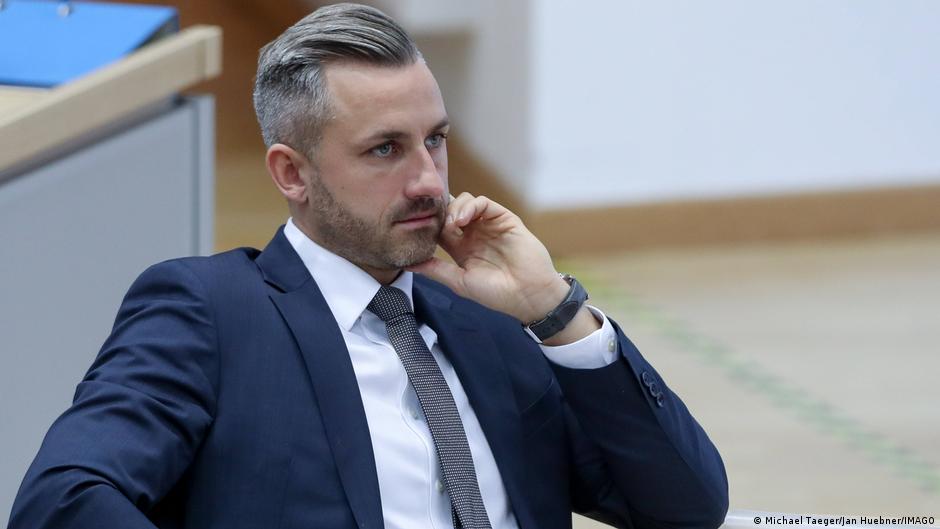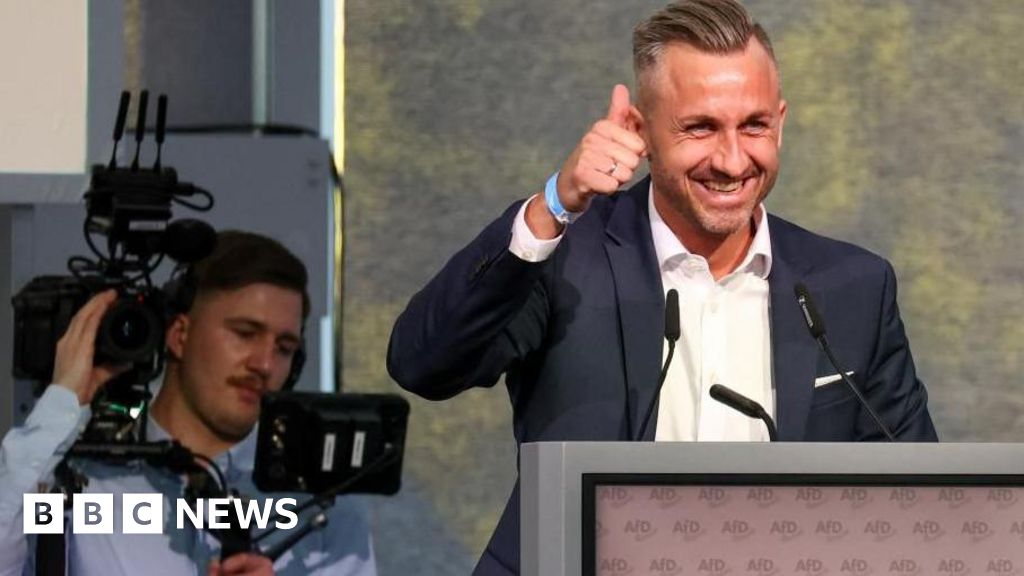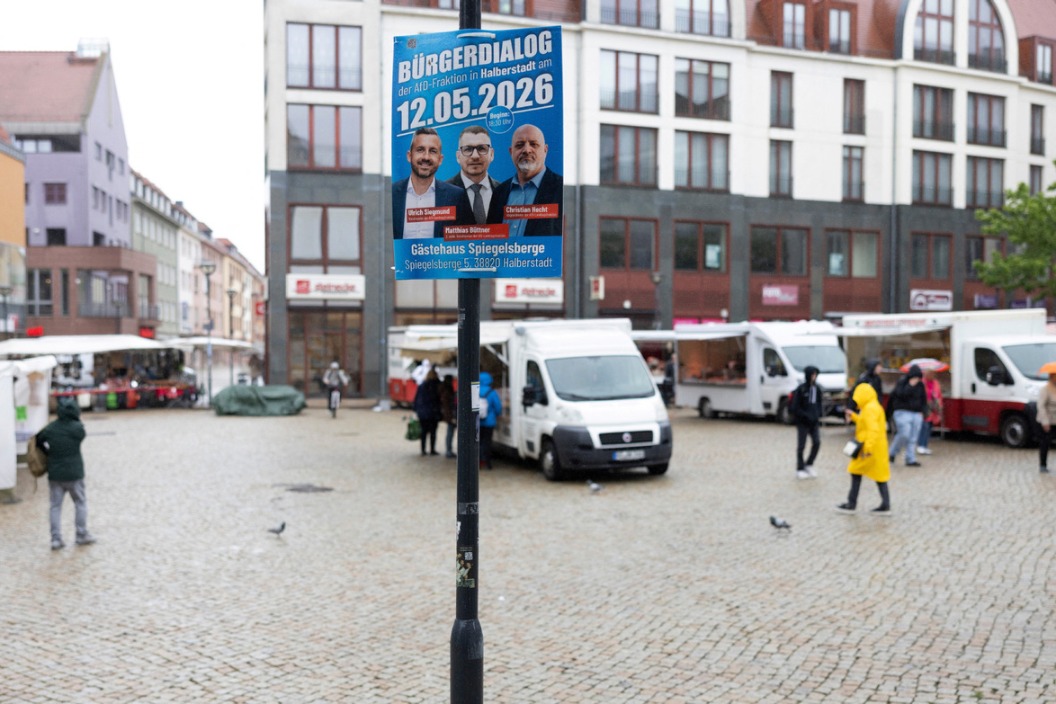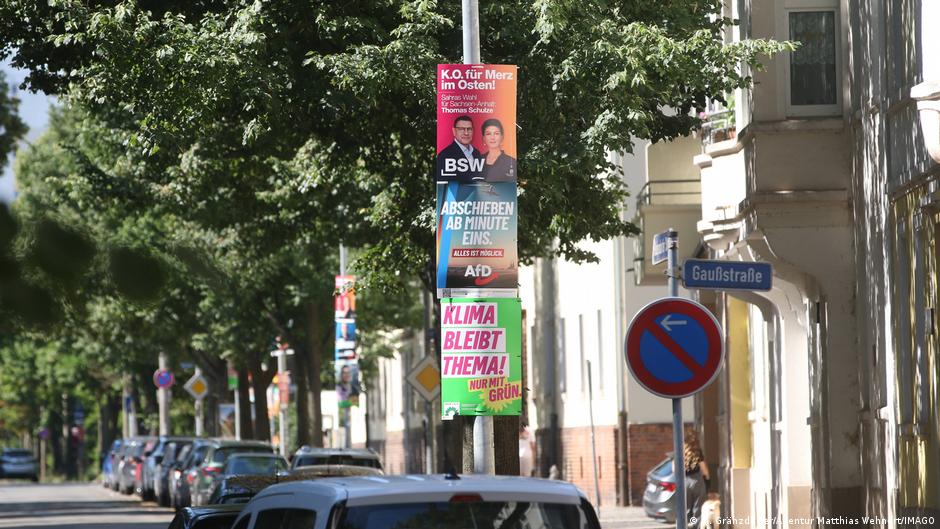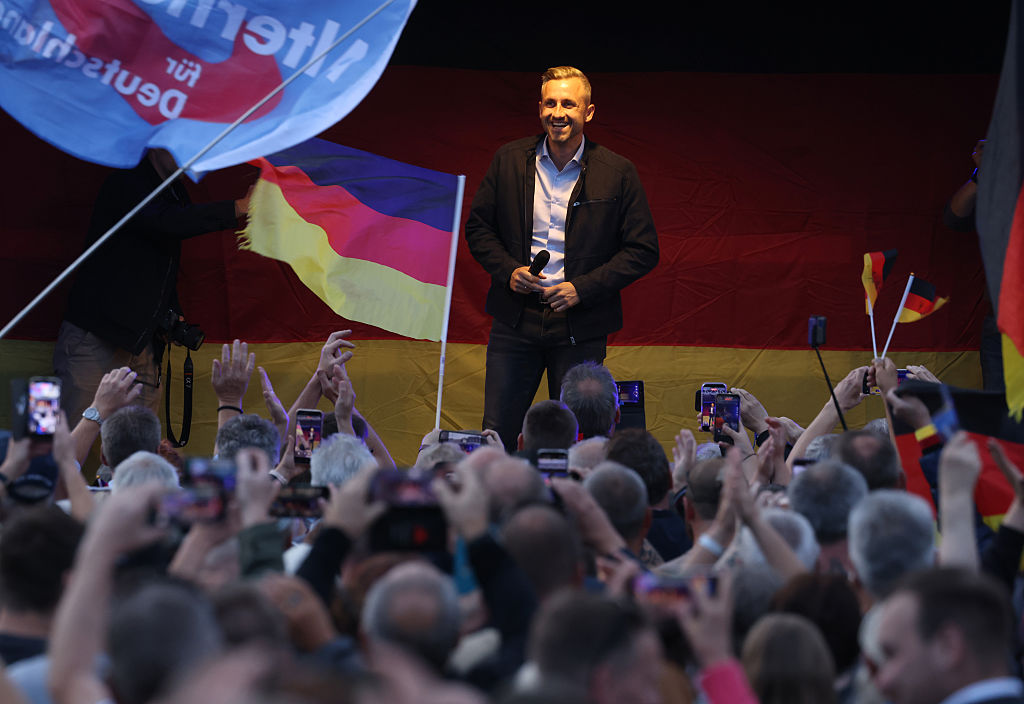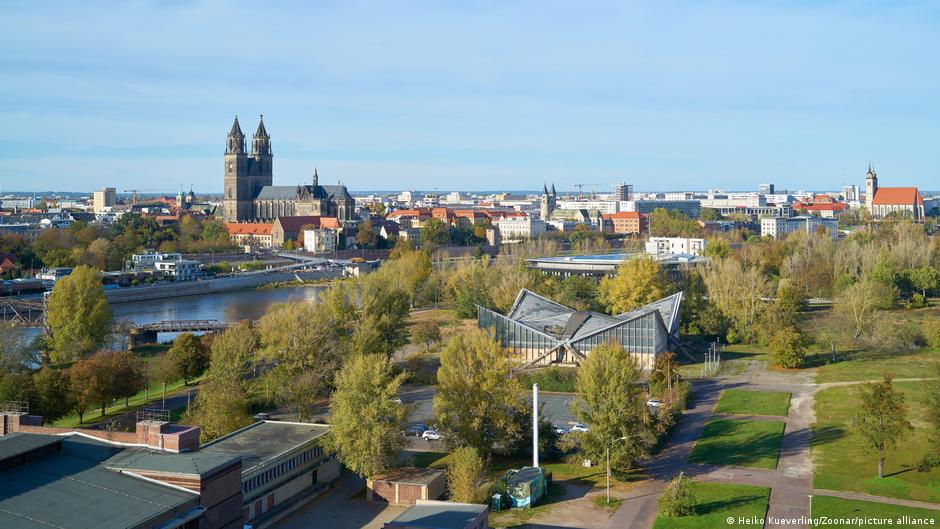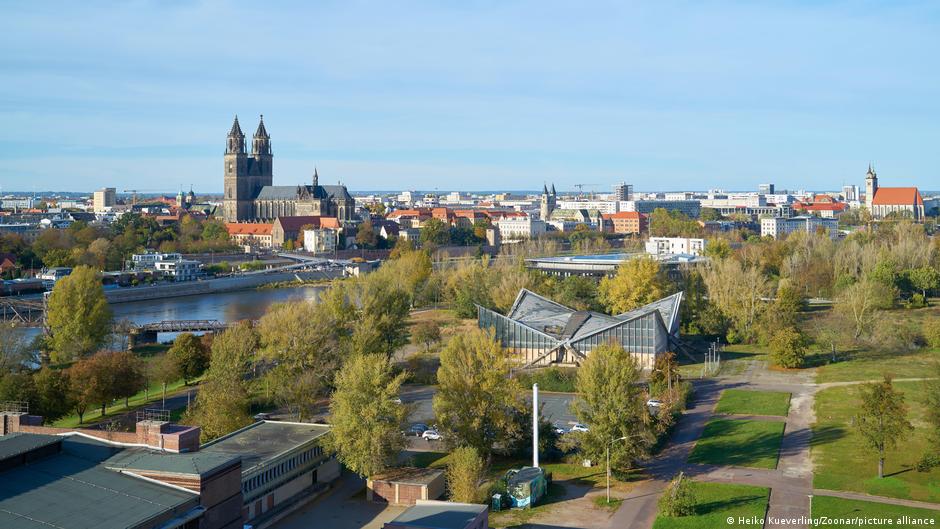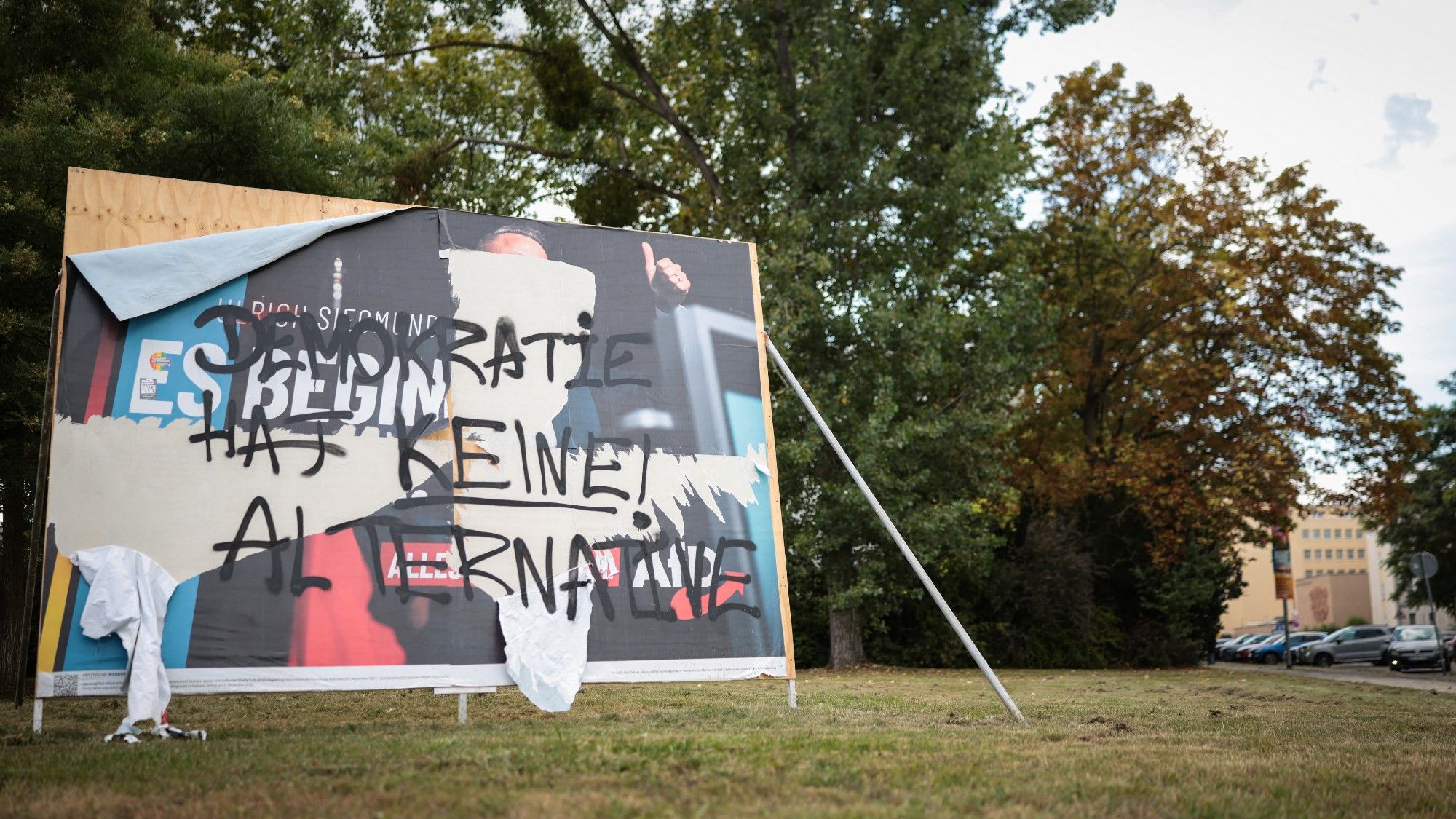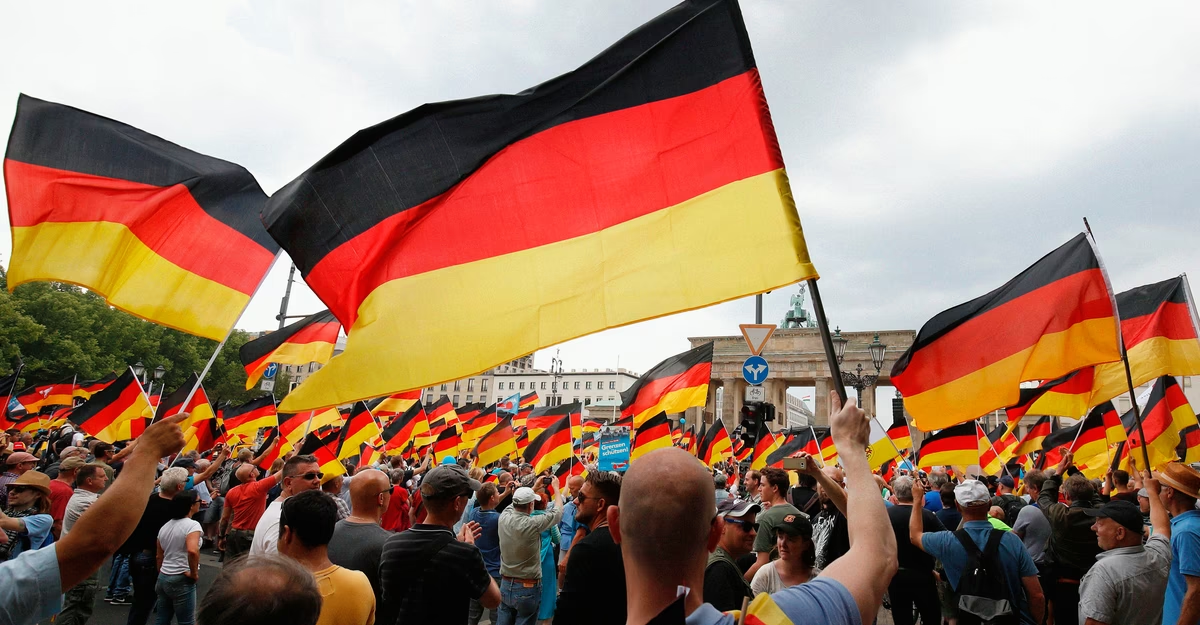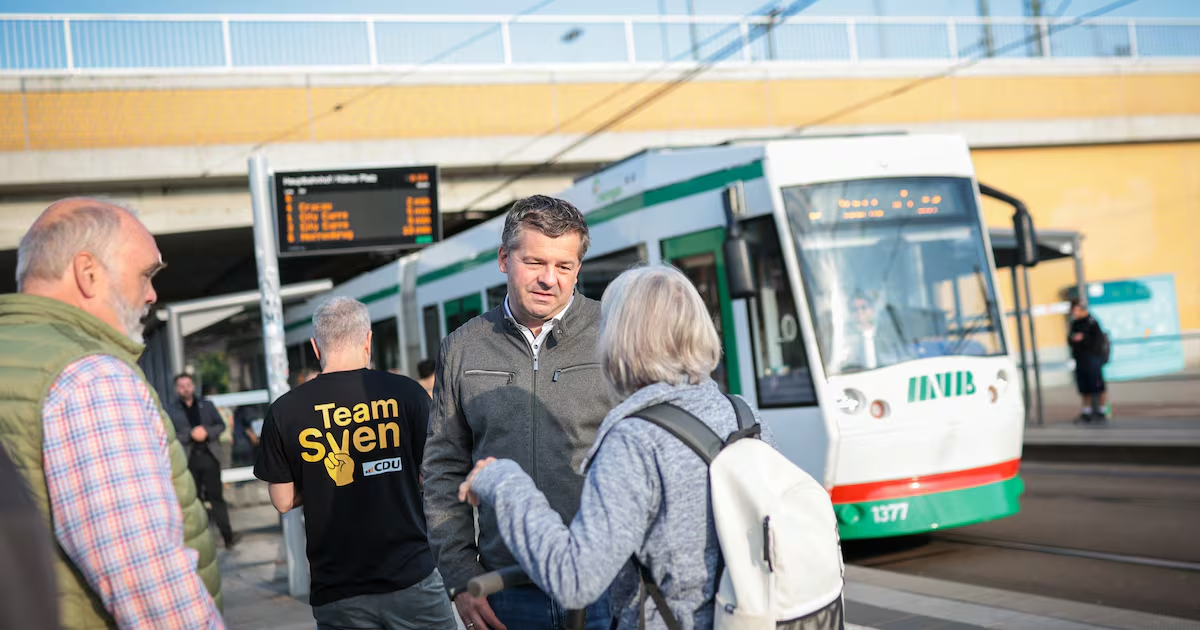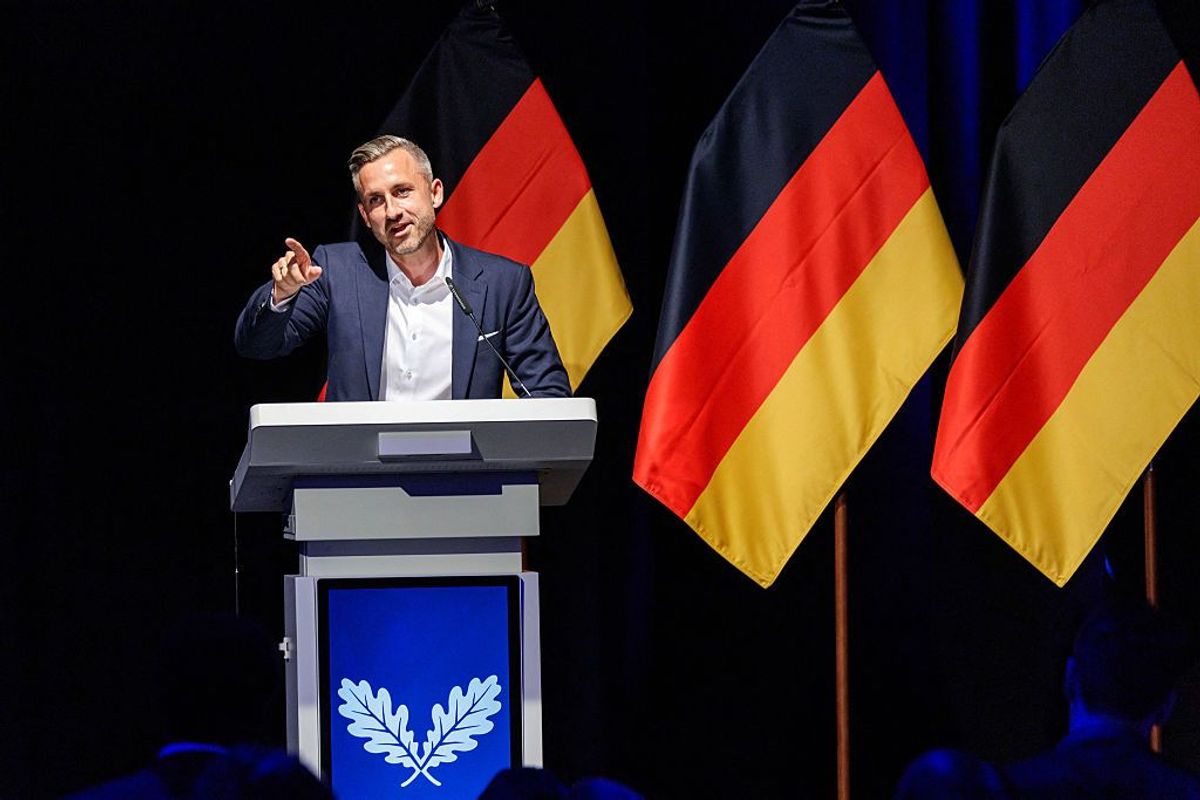
Ulrich Siegmund, far-right Alternative for Germany (AfD)'s main candidate in the Saxony-Anhalt state election, addresses delegates during the federal congress of Generation Germany, the youth organization of the far-right Alternative for Germany (AfD) party, in Magdeburg, eastern Germany, on Aug. 29, 2026. (Jens Schluter / AFP via Getty Images)Germany could get its first far-right state government since World War II — and Ukraine has reasons to follow it closely.The Alternative for Germany's (AfD) potential victory in Saxony-Anhalt's election on Sept. 6 will not only send a chilling signal to the federal state's 39,000 Ukrainians but also shake the mainstream parties' efforts to keep the Moscow-friendly party out of power.Polling at 41%, the AfD's local branch — classified by the German security service as "confirmed far-right extremist" — stands a strong chance of winning an absolute majority as it promises a radical break from Germany's current political course.The branch's social media-savvy and controversial leader, Ulrich Siegmund, pledges to cut support for Ukrainian refugees and revitalize educational ties with Russia, a platform the AfD casts as freeing Germany from its "anti-Russian" policies.The result will be a litmus test for the rising AfD, which hopes to flex its muscles in two more state elections later in September.But the ultimate goal of Germany's largest opposition party remains to unseat the increasingly unpopular Chancellor Friedrich Merz and his governing coalition of Christian Democrats (CDU/CSU) and Social Democrats (SPD), a result that would redraw Europe's political map and leave Kyiv without a vital backer.The AfD reaches for a historic victoryAs Saxony-Anhalt, a state of 2.1 million people in what was once East Germany, readies for the vote, the AfD lays out a vision that is markedly different from German politics of the past decades.The party's manifesto pledges an overhaul of education and sweeping immigration measures, including deportations, stricter asylum rules, and separate school classes for children of refugees.Saxony-Anhalt's 39,000 Ukrainians, mainly the 31,000 living here as refugees, are among those in the party's crosshairs.The manifesto calls for slicing financial support for Ukrainians and abolishing their status of "war refugees" in what the AfD calls a push for "remigration" — a far-right term for driving migrants out of the country.If elected, Siegmund also pledged to restore student exchanges with Russian schools and expand Russian language courses, as his party seeks to break with the government's "anti-Russian policies," which it says are not "in Germany's interest."Ulrich Siegmund (L), far-right Alternative for Germany (AfD)'s main candidate in the Saxony-Anhalt state election and Sven Schulze, Saxony-Anhalt's State Premier and Christian Democratic Union's (CDU) main candidate, take part in a head-to-head debate on MDR regional TV in the Broadcasting Center Saxony-Anhalt in Magdeburg, on Aug. 26, 2026. (Ronny Hartmann / AFP via Getty Images)A success in Saxony-Anhalt would reverberate beyond the state's borders.Winning the state election would, for the first time, secure the AfD a place in the Bundesrat, a legislative body that represents Germany's 16 federal states.This would be not only an opportunity to delay federal legislation but also become a high-profile platform for the AfD's campaign to advocate against energy sanctions on Russia, to stop aid to Ukraine, and to relaunch the Nord Stream gas pipelines.And while foreign policy and defense remain firmly in the hands of the federal government, the state administration has sway over local security and policing, and therefore access to sensitive intelligence — raising concerns in Germany about leaks to Russia.Two other elections in focusSiegmund eyes not only a victory in his state — he wants to set off a "domino effect" that would see the AfD score further wins across Germany."At the moment, the AfD is indeed benefiting from a wave of normalization, despite its continued radicalization," says Anna-Sophie Heinze, political scientist at Leuphana University Lüneburg."A strong AfD result in Saxony-Anhalt could therefore strengthen the party's momentum and potentially affect perceptions and campaigns elsewhere."The nationalist party is leading the polls ahead of the Sept. 20 elections in the northeastern state of Mecklenburg-Vorpommern and has a strong position for the Berlin vote scheduled for the same day.Both states lie in Germany's eastern part, which has become the AfD's stronghold, but the party is growing strong nationwide, as the March elections in two western states — Baden-Württemberg and Rhineland-Palatinate — already showed.In Mecklenburg-Vorpommern, a federal state on the Baltic Sea coast with 1.6 million people, the AfD polls at around 36%, leaping over the traditionally dominant SPD.Even in Berlin, a bastion of liberal and left-wing parties, the AfD competes with the CDU for second place, about four percentage points behind the projected winner — the post-Communist Die Linke party.The podium is seen during the federal congress of Generation Germany, the youth organization of the far-right Alternative for Germany (AfD) party, in Magdeburg, eastern Germany, on Aug. 29, 2026. (Jens Schluter / AFP via Getty Images)But experts say that a victory in Saxony-Anhalt might not necessarily translate into a win in the other two states later in September.Without an absolute majority, the AfD is largely locked out of coalition talks thanks to the so-called "firewall," an agreement by other parties not to work with the far right — an approach rooted in Germany's experience with Nazism.And as Ursula Münch, director of the Academy for Political Education in Tutzing, points out, Germany's "political landscape varies from state to state," and the AfD faces much steeper odds on Sept. 20 than in the Saxony-Anhalt election.That does not mean a victory on Sept. 6 would be without wider repercussions for German politics."The entire public debate in Germany — and the way certain topics are discussed — has been changing for years now due to the gradual rise in support for the AfD," Münch told the Kyiv Independent.She expects that a regional victory could, for example, impact "how refugees, including those from Ukraine, are discussed in Germany.""Fewer and fewer people are bothered by extremist statements, which means that extremism is becoming increasingly socially acceptable."Ukraine caught in Germany's rightward shiftThe AfD rose from a small pro-market, Euroskeptic party in 2013 to one of Europe's strongest and most extreme right-wing political forces, leading nationwide polls with about 28%.It stands so far to the right that it had to form its own ultranationalist Europe of Sovereign Nations (ESN) group in the European Parliament, after other European nationalists booted it from their coalition due to some AfD members' views on Nazism.The AfD's warm views toward Russia and hostility toward the EU and NATO — as well as espionage scandals involving Russian intelligence — are why other parties label it not only as a political rival but also as a security threat to Germany.The firewall has held so far — but there are concerns that the AfD's surging popularity and potential wins in regional elections might cause it to crack.The far right's growing dominance has been forcing mainstream parties, from left to right, into increasingly unwieldy alliances, ones that are becoming unpopular among their own members and supporters."For the AfD, the primary goal in the state election is to get a foot in the door," says Marcel Lewandowsky, a political scientist at Martin Luther University Halle-Wittenberg.German Chancellor Friedrich Merz (L) and President Volodymyr Zelensky (R) attend a press conference after the summit of the Coalition of the Willing to support Ukraine at the Hotel des Invalides in Paris on July 13, 2026. (Teresa Suarez / POOL / AFP via Getty Images)If it succeeds, the ruling center-right CDU will face increasing internal pressure, as "conservatives prefer cooperation with the AfD over the unpopular coalition with the Social Democrats and are calling for their party to shift further to the right," the expert told the Kyiv Independent.The AfD's move from opposition to running a state government could also shift the boundaries of political debate — including on Ukraine."Given the relatively poor economic situation in Germany and the tight budget, many people in Germany criticize the current government for spending so much money — on the one hand, to better equip the German military, and on the other, to support Ukraine," Münch says."And the AfD then claims that we could afford everything again if Germany were to 'make peace' with Russia and we were to send all refugees back."Germany is arguably Ukraine's most important ally in Europe, being the leading military provider and hosting about 1.3 million Ukrainian refugees, the largest number in the EU.Opinion polls show Germans tilting toward reducing some financial benefits for Ukrainians, and even the current government is toughening its approach toward draft-age Ukrainian men within its borders.The military support for Ukraine, meanwhile, is also under fire from the left.Die Linke, polling nationwide at 12%, has similarly spoken out against sending arms to Ukraine, urging a diplomatic resolution of the war instead.But unlike the AfD, it has firmly condemned Russian aggression and categorically ruled out a coalition with the far right.And when it comes to military and financial support for Kyiv, more than half of the Germans actually favor boosting Western assistance — showing that the AfD's Russian-friendly agenda still has a clear ceiling.Note from the author:Hi, this is Martin Fornusek.I hope you enjoyed this article. In our team, we believe fact-based and truthful reporting should be available to all — that's why we don't use any paywall.If you want to see more in-depth coverage of international politics and how it shapes Ukraine's struggle against Russian aggression, please consider joining the Kyiv Independent community.
Germany's Kremlin-friendly AfD eyes historic election win
Germany could get its first far-right state government since World War II — and Ukraine has reasons to follow it closely. The Alternative for Germany's (AfD) potential victory in Saxony-Anhalt's election on Sept. 6 will not only send a chilling signal to the federal state's 39,000 Ukrainians but also shake the mainstream parties' efforts to keep the Moscow-friendly party out of power. Polling at 41%, the AfD's local branch — classified by the German security service as "confirmed far-right ext
1,559 words~7 min read