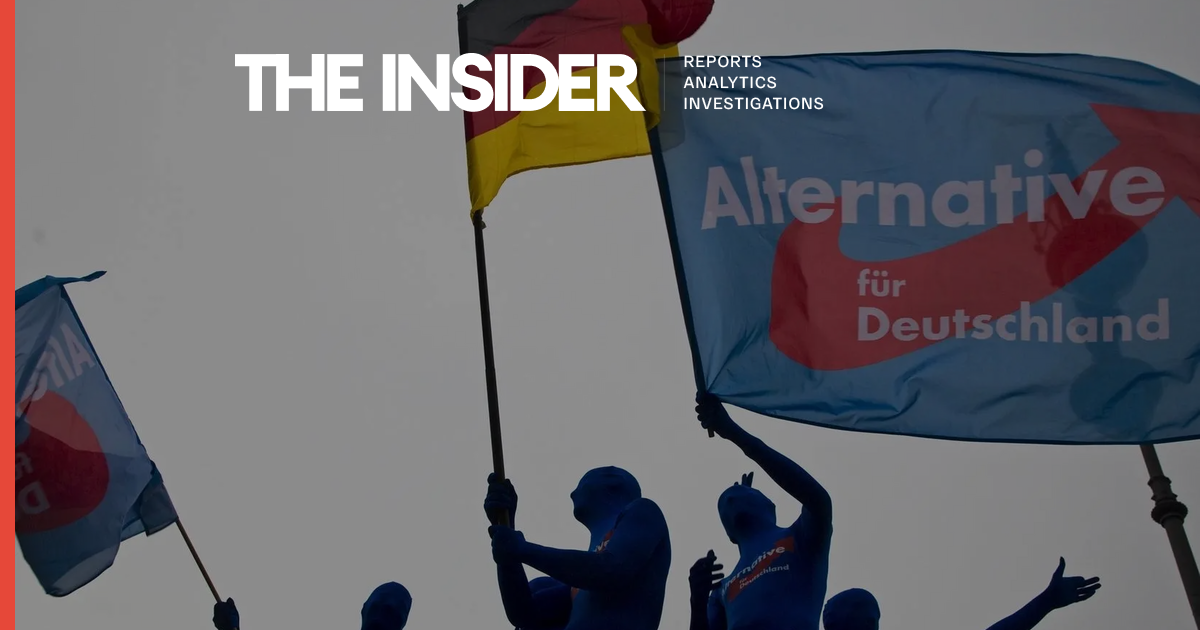
For the first time in its history, the far-right Alternative for Germany (AfD) party has a real chance of forming a regional government. On Sept. 6, voters in the eastern German state of Saxony-Anhalt will go to the polls, and experts are already describing scenarios in which the AfD would have enough votes to govern alone. In that case, the German political system’s “firewall” — the voluntary commitment of other parties not to cooperate with the radical right — would prove powerless. The AfD’s rise to power even in a state as small and economically weak as Saxony-Anhalt could cause serious problems for Berlin — including in the key areas of defense and security.Contents1.The “plan for Germany” is under threat2.Red tape as a weapon3.Reshaping the systemThe “plan for Germany” is under threatIn Germany, a regional government cannot directly influence the nation’s foreign or defense policy. This is the exclusive prerogative of the federal center, in the form of the Bundestag and the government. That said, the AfD makes no secret of its opposition to weapons deliveries to Ukraine and to broader European rearmament plans. The party describes Berlin’s actions as a “course toward war” and demands “the restoration of partnership with Russia.”Even if a party representative were to take the premier’s seat in Magdeburg, they would be unable to change Germany’s current geopolitical course. Moreover, the authors of Germany’s Basic Law anticipated the possibility of conflict between the federal center and a state, embedding protective mechanisms in two separate articles.Article 37 allows the federal government to apply coercive measures in the event that local authorities refuse to follow a national decision. Additionally under Article 85, the federal government may issue direct instructions to the states within the framework of so-called “federal supervision.” But the process isn’t simple.If an event in Europe were to trigger NATO’s Article 5 mechanism, Germany’s civilian authorities and military would begin implementing the Operational Plan for Germany (OPLAN DEU) — a set of mobilization and logistics measures that include the redeployment of large military contingents and equipment from western and southern Europe to the east, and Berlin’s allies would be counting on the use of German territory as a key hub for defensive operations. Although the exact routes for convoy movements are classified, several factors suggest that Saxony-Anhalt has been assigned an important role in such plans.First, the geographic location of the state is perfect, as it sits halfway between the western part of the country and Poland. As a result, virtually the only route for a rapid response runs through Saxony-Anhalt. After all, numerous key Bundeswehr bases and logistics centers are located in and around the state.Second, this region has in recent years undergone large-scale rehabilitation of its rail network, autobahns, and secondary roads. Many of them are now considered to be among the best in Germany. Plans through 2029 call for further modernization of the central rail hubs in Magdeburg and Dessau, as well as capacity expansion on the Magdeburg–Berlin route.A state government, if it chooses, could significantly slow down military convoy movements at precisely the moment when every hour counts. For example, a hypothetical premier of Saxony-Anhalt who opposes “escalation” and calls for “seeking compromises at the negotiating table” could refuse to issue the permits required for heavy — and especially tracked — military vehicles to pass through the region, as the issuance of such permits falls within the competence of the relevant state authority. In addition, military convoys are required to move exclusively with a police escort whose purpose is to close off civilian traffic, and law enforcement agencies are subordinate to local authority. A state government could significantly slow down military convoy movements at the very moment when every hour counts
A stab in the back: Why an AfD victory in Saxony could pose a national security threat to Germany
For the first time in its history, the far-right Alternative for Germany (AfD) party has a real chance of forming a regional government. On Sept. 6, voters in…
2,235 words~10 min read