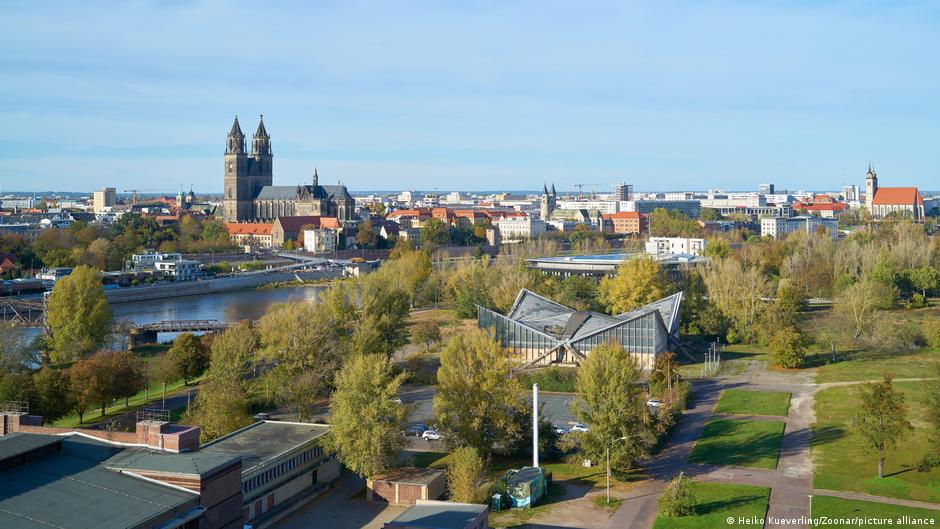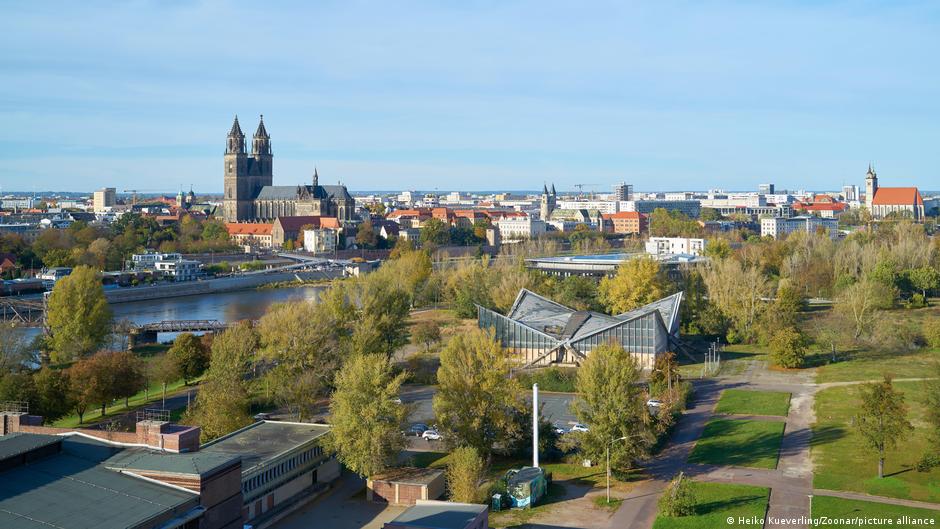
Saxony-Anhalt, one of Germany's 16 federal states, boasts a rich cultural and historical heritage: Many of the world-famous architects associated with the Bauhaus in Dessau lived and worked here. The towns of Eisleben and, above all, Wittenberg preserve the memory of the great reformer Martin Luther. It was in Wittenberg that he famously nailed his 95 theses to the door of the Castle Church, setting the Reformation in motion.
Saxony-Anhalt is home to the Chemical Triangle around Leuna and Bitterfeld in the eastern part of the state, which still provides around 10,000 jobs. To the west lies the Harz mountain range, while the River Elbe, one of Europe's major waterways, flows through the state from southeast to north.
The southern part of Saxony-Anhalt is being forced to reinvent itself as it undergoes structural change following the decision to phase out lignite coal. Unemployment remains slightly above the national average.
How one region in eastern Germany is getting a second chanceTo view this video please enable JavaScript, and consider upgrading to a web browser that supports HTML5 video
Home to around 2.1 million people, it is one of Germany's more sparsely populated states. Only two cities, the state capital Magdeburg and Halle, have more than 200,000 inhabitants.