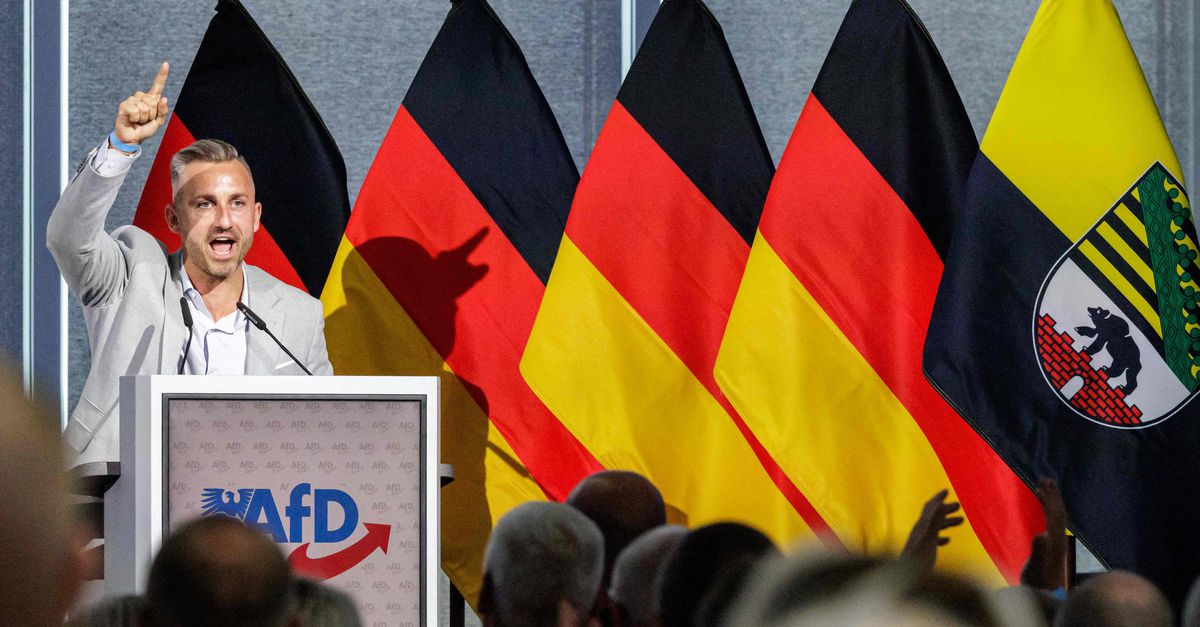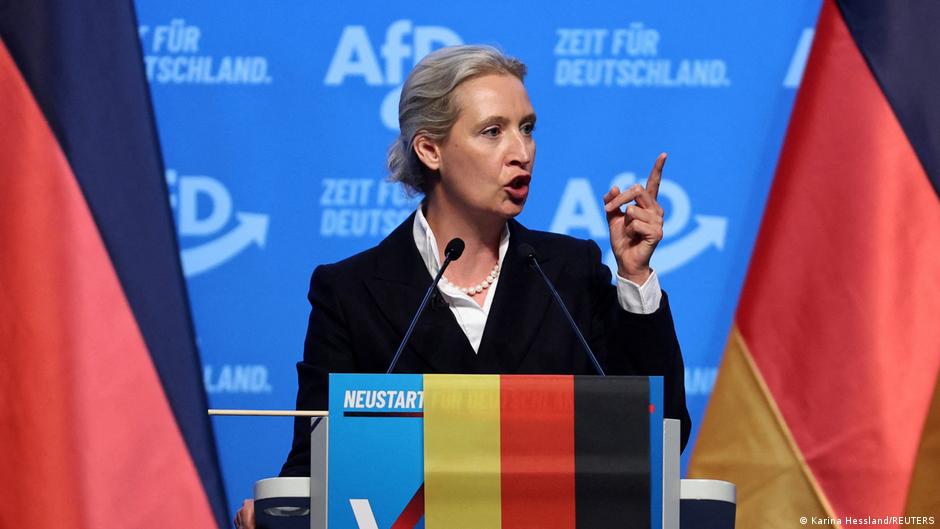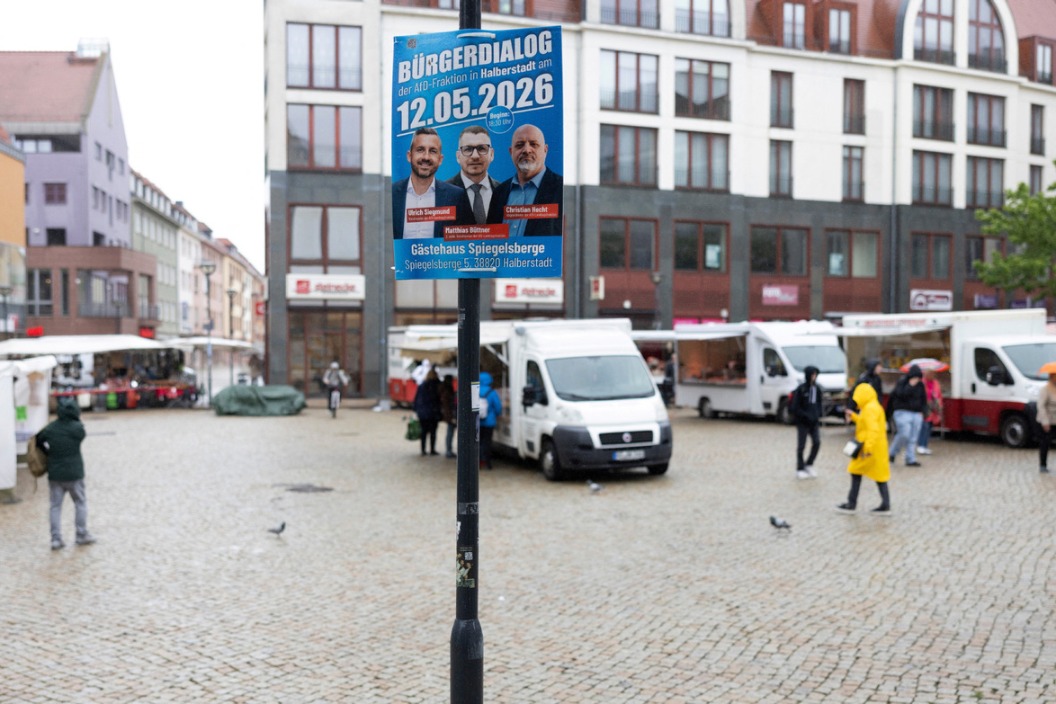
A placard advertises for a citizen dialogue with Ulrich Siegmund, top candidate of the far-right Alternative for Germany (AfD) party in Germany's Saxony-Anhalt state election, in Halberstadt, Germany, on May 12, 2026. [Photo/Agencies]
An opinion poll conducted for German weekly newspaper Bild am Sonntag shows the vast majority of people questioned think it is a formality that the far-right Alternative for Germany party, or AfD, will secure power in at least one of the three state elections taking place in the fall.
Since reunification in 1990, Germany has been consisting of 16 federal states, and three of those have elections later this year.
The AfD was launched in early 2013, initially as a party that opposed economic bailouts in the eurozone area, but has grown rapidly and taken an increasingly hard line on other issues, most notably immigration, and also state handling of the COVID-19 pandemic.
In the February 2025 elections to the country's 630-seat federal Parliament, the AfD ended up with 20.8 percent of the vote and 150 seats, making it the second-largest party.