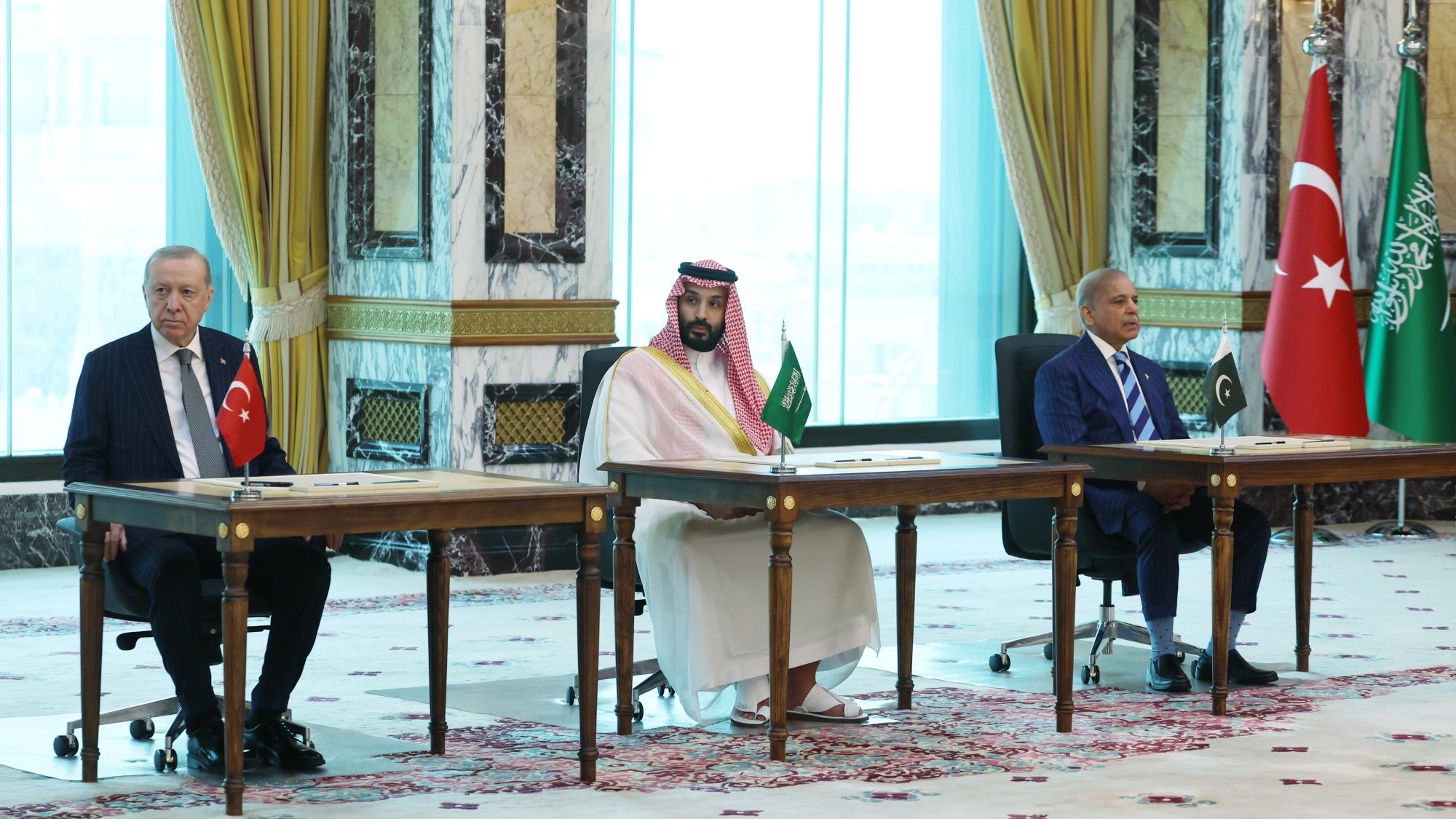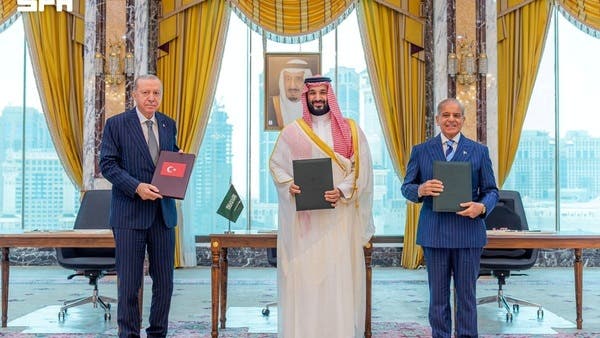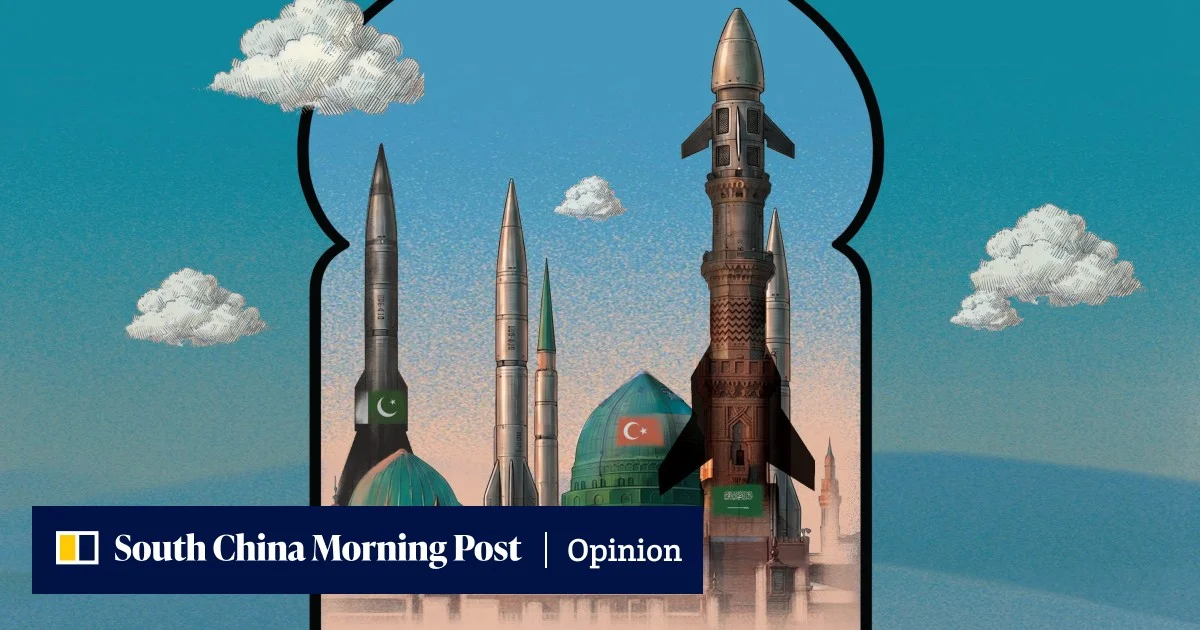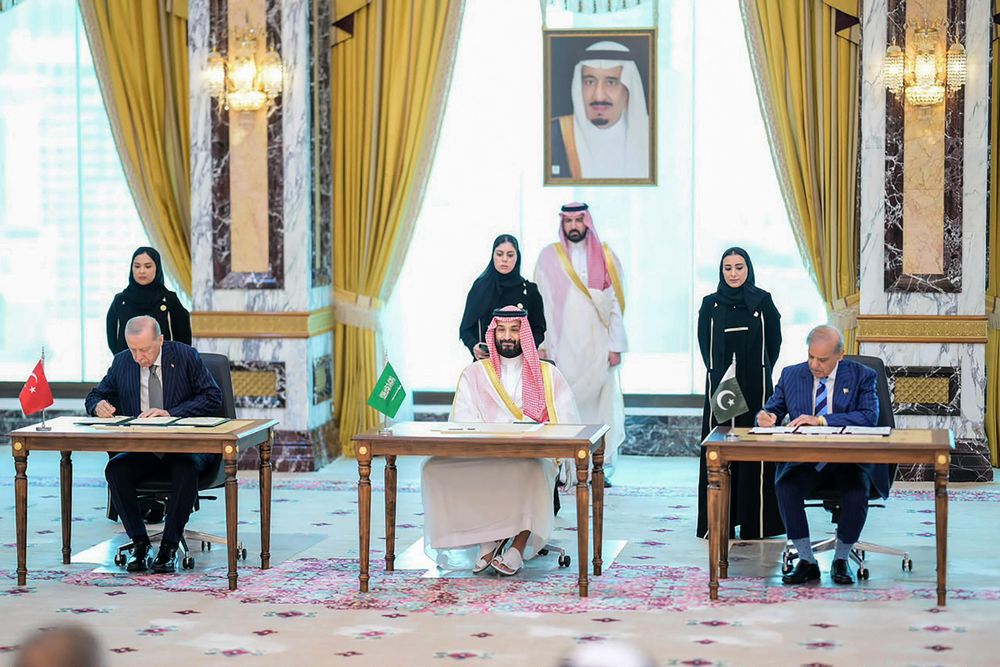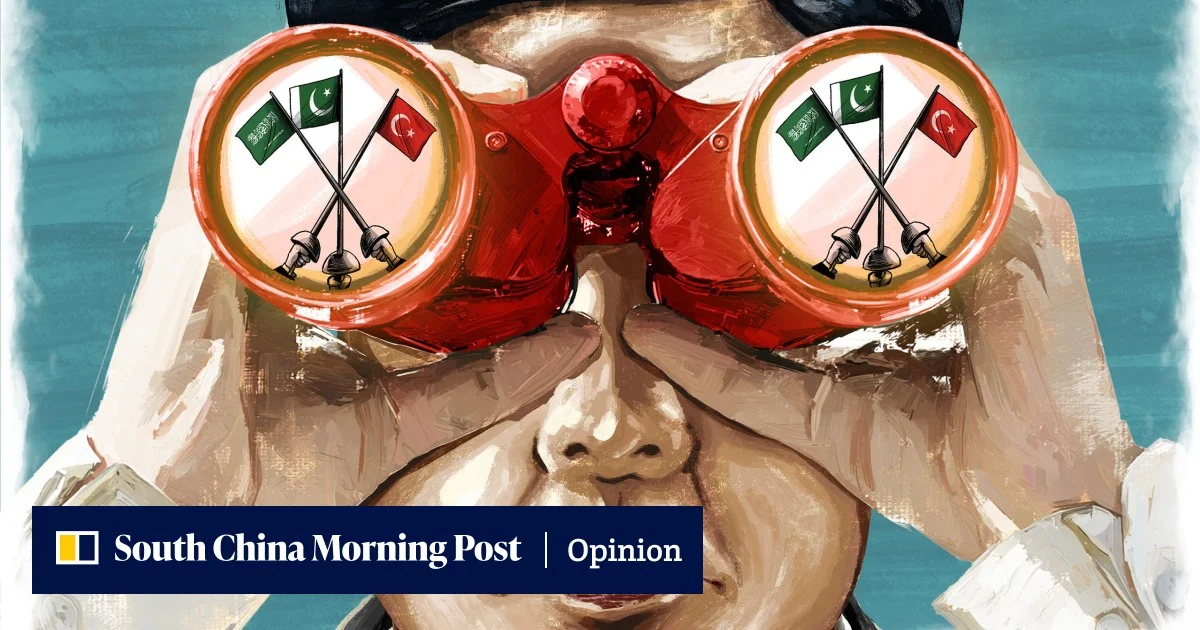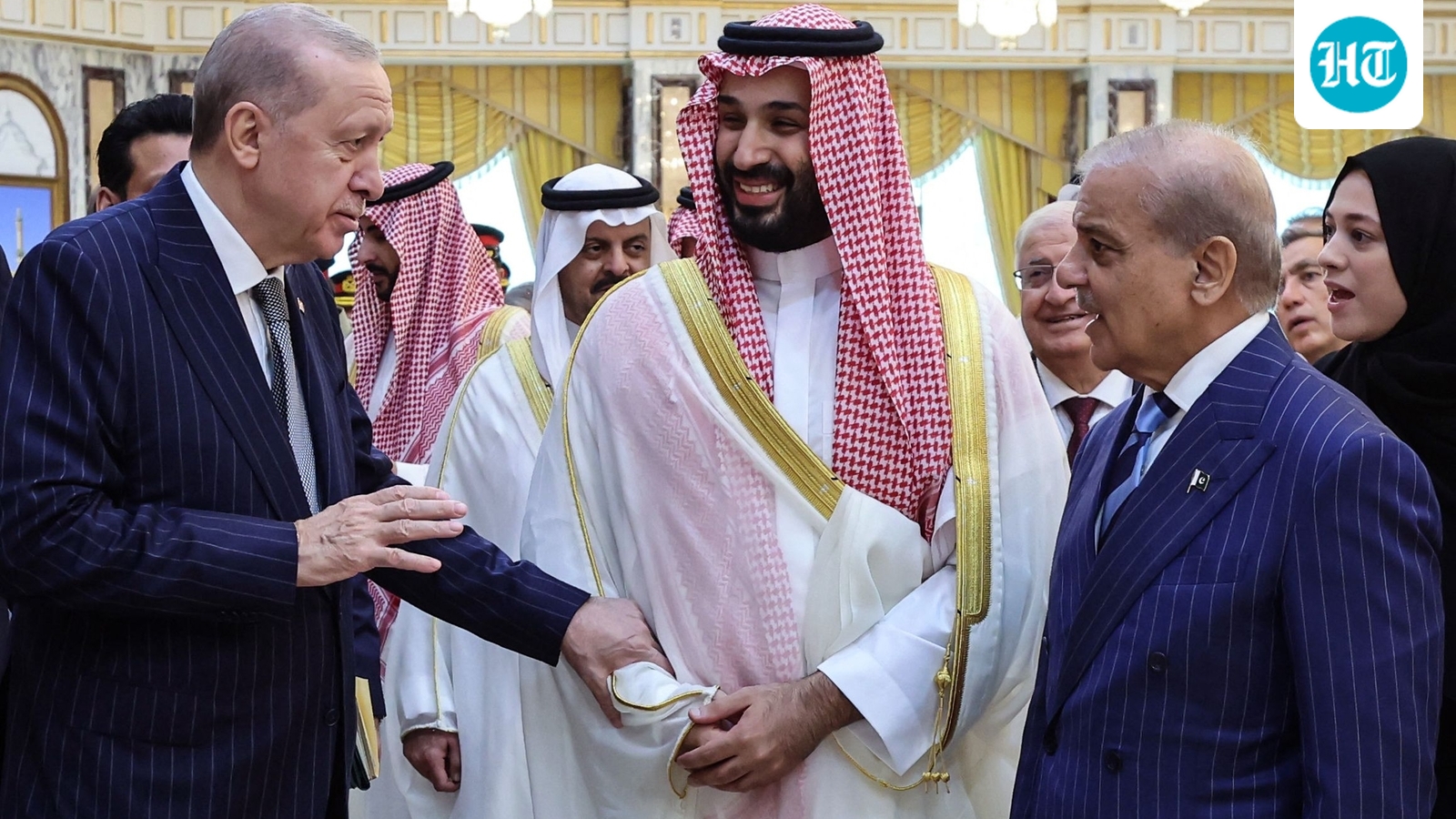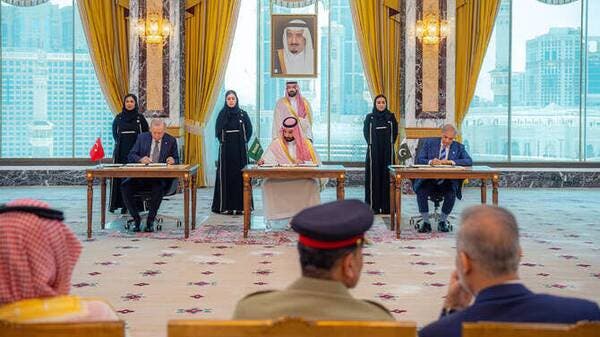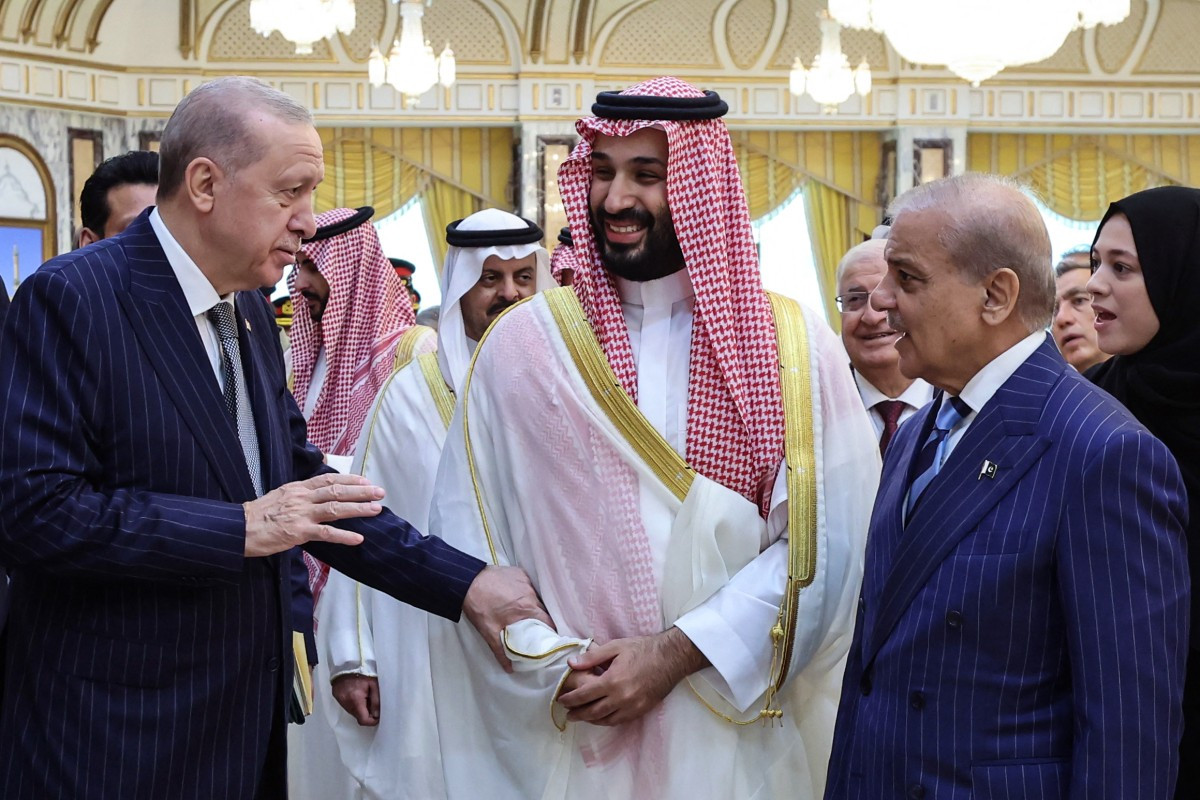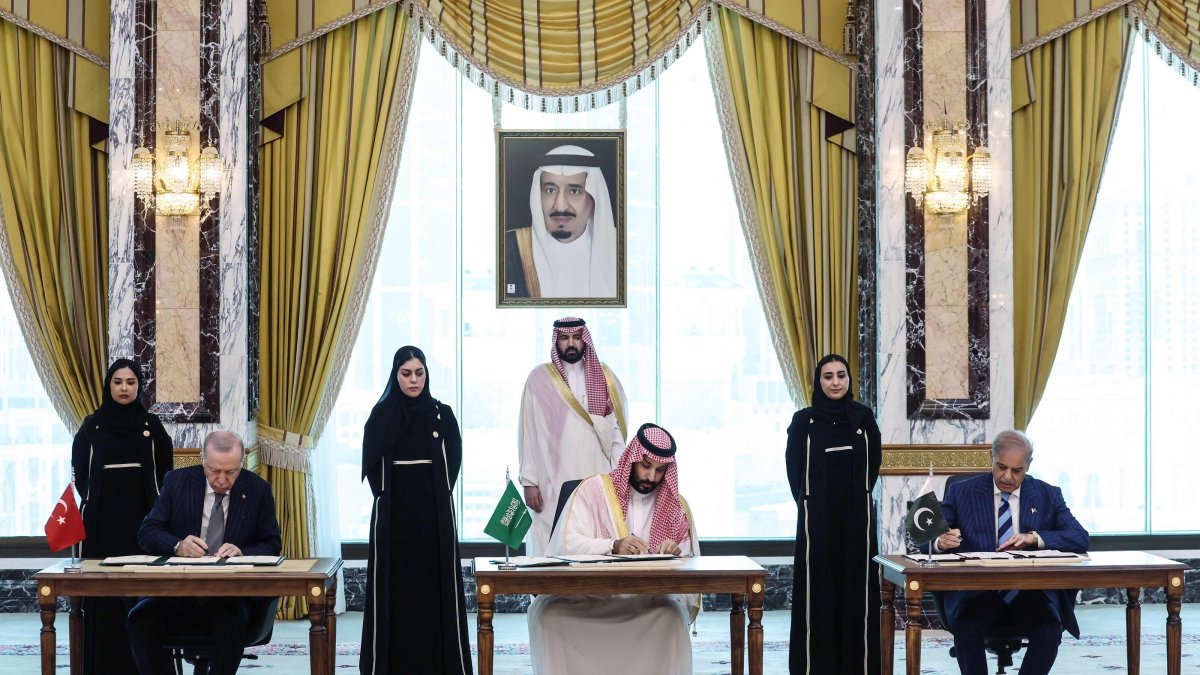
Analysts are trying to make sense of the Mecca Joint Defence Agreement, known as the Mecca pact, signed by Saudi Arabia crown prince Mohammed bin Salman Al Saud, President Recep Tayyip Erdogan of Turkey and Pakistan Prime Minister Shehbaz Sharif on August 7, and how this will affect global geopolitical scenarios. Some describe it as the first institutional collective defence arrangement in the modern Middle East, while Arash Azizi, writing in The Atlantic, suggests it could be the birth of a new Sunni-Muslim security architecture, a hedge against an unreliable American patron or a symbolically loaded rebuke to Iran. Al Jazeera indicates that combined, the three countries’ militaries are a formidable force, with nearly 1.4-million active personnel and an annual defence budget of $124bn. Marc Lynch described it in a recent Foreign Affairs article as one moment in the slow, uneven collapse of the security order the US built in the Middle East after the 1991 Gulf War through military bases, guarantees to Gulf autocrats and binding Israel and the Arab states into a shared front against Iran. Lynch calls this downward spiral a “one-two punch” that has seen the moral collapse of American authority during Israel’s destruction of Gaza since October 2023, followed by the practical collapse of American military credibility during this year’s war against Iran. The three signatories to the pact bring unequal weight to the table: Pakistan brings the Muslim world’s only nuclear arsenal with about 170 warheads and the largest population of the three. Saudi Arabia brings money and oil leverage, but of the three, is the war’s most direct casualty, having seen a near 5% contraction in real GDP. Turkey offers Nato’s second-largest army and a maturing defence industry. Austria-based political activist and writer Michael Pröbsting argues that Ankara saw an opening to expand influence and export weapons, sharpened by real anxiety about Israeli expansionism, which included Israeli direct threats and the recent bombing of Idlib. An interesting facet about the Mecca pact is who wasn’t there: Qatari analysts suggest that Doha wants to build upon the new pact, with Qatar’s emerging foreign policy envisioning a security network built around a Gulf Co-operation Council core, backed by the US, Europe and other regional powers. Egypt sat through a full year of quadrilateral talks with the other three under the so-called R4 framework but wasn’t invited to join the pact. There have been suggestions that Riyadh itself vetoed Cairo’s inclusion, wary of Egypt’s closeness to a pro-Israel, UAE-led axis that is a rival to Saudi Arabia and extends from Sudan to Somalia. Other accounts suggest the reluctance ran both ways, with Cairo unwilling to jeopardise its own ties to Israel, the UAE and India. Oman’s response to the various threats and strikes it has suffered was not to pick a side, but to double down on being indispensable to all sides: mediating between Washington, Tehran and the Gulf states even as the war raged, securing agreement with Iran on specific shipping-route co-ordinates through the Strait of Hormuz within days of the Mecca pact signing. Two of the three signatories share a land border with Iran, which has long refused to accept any of the signatories’ diktat. It demonstrated it can close the strait and hit deep into Gulf territory whenever it chooses. Its regime is bruised but intact and its regional leverage has, if anything, grown. The region epitomises the flux in various parts of the world, with much speculation about where all this will lead. The third Mistra Forum on Africa & Geopolitics, organised under the theme Imagining the World in 2040, to be held on September 28, will try to make sense of the trajectory of global geopolitics. While the Middle East-Southwest Asia region will not be the only topic under discussion, delegates will look at the issues afflicting this volatile region, which will undoubtedly play a major role in the unfolding scenarios. • Abba Omar is director of operations at the Mapungubwe Institute for Strategic Reflection. He served as South Africa’s ambassador to Oman (2003-08) and the UAE (2008–12).Business Day
YACOOB ABBA OMAR | Mecca pact signals realignment in Middle East power dynamics
Turkey, Saudi Arabia and Pakistan forge collective defence as US influence wanes
678 words~3 min read