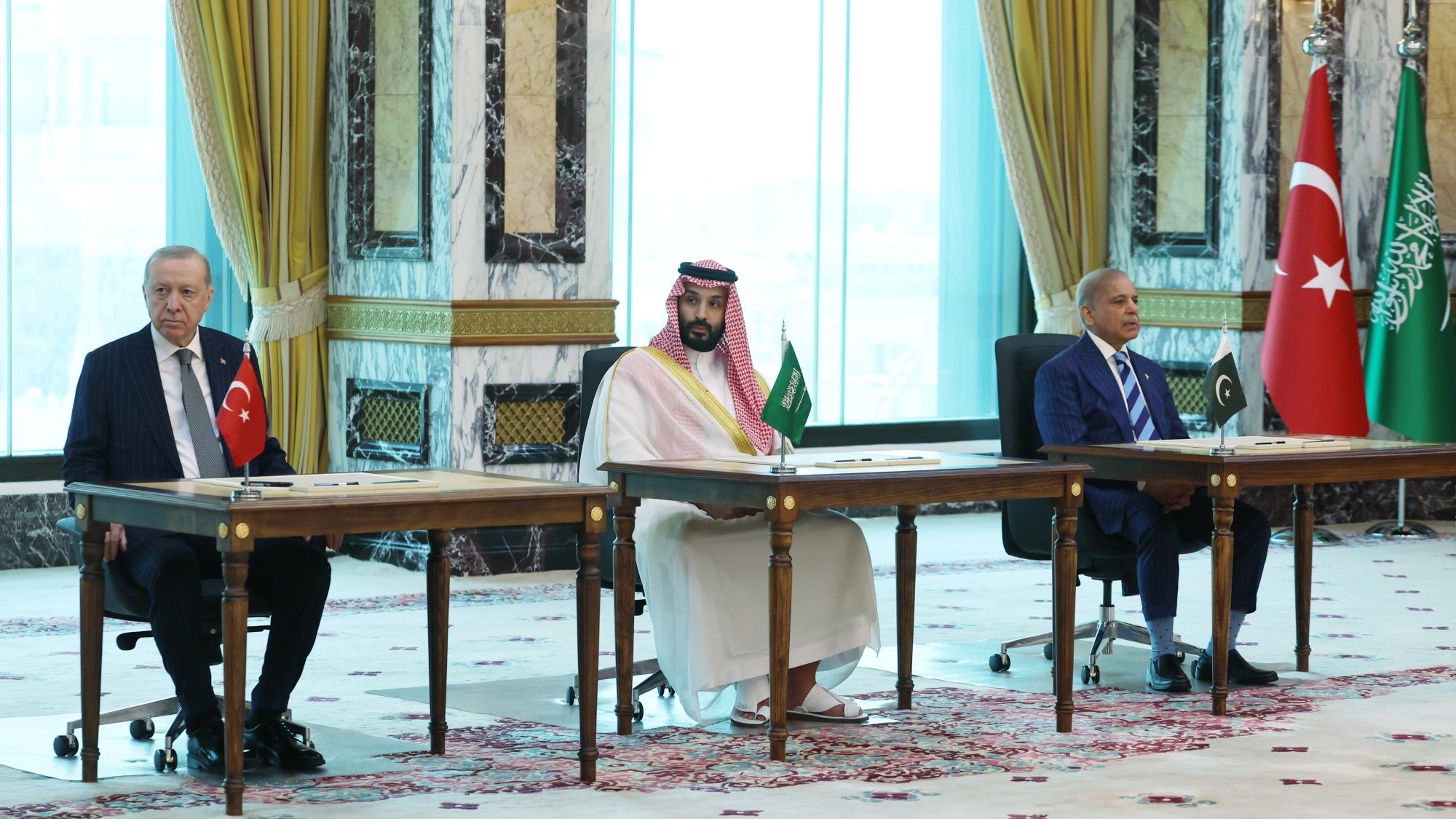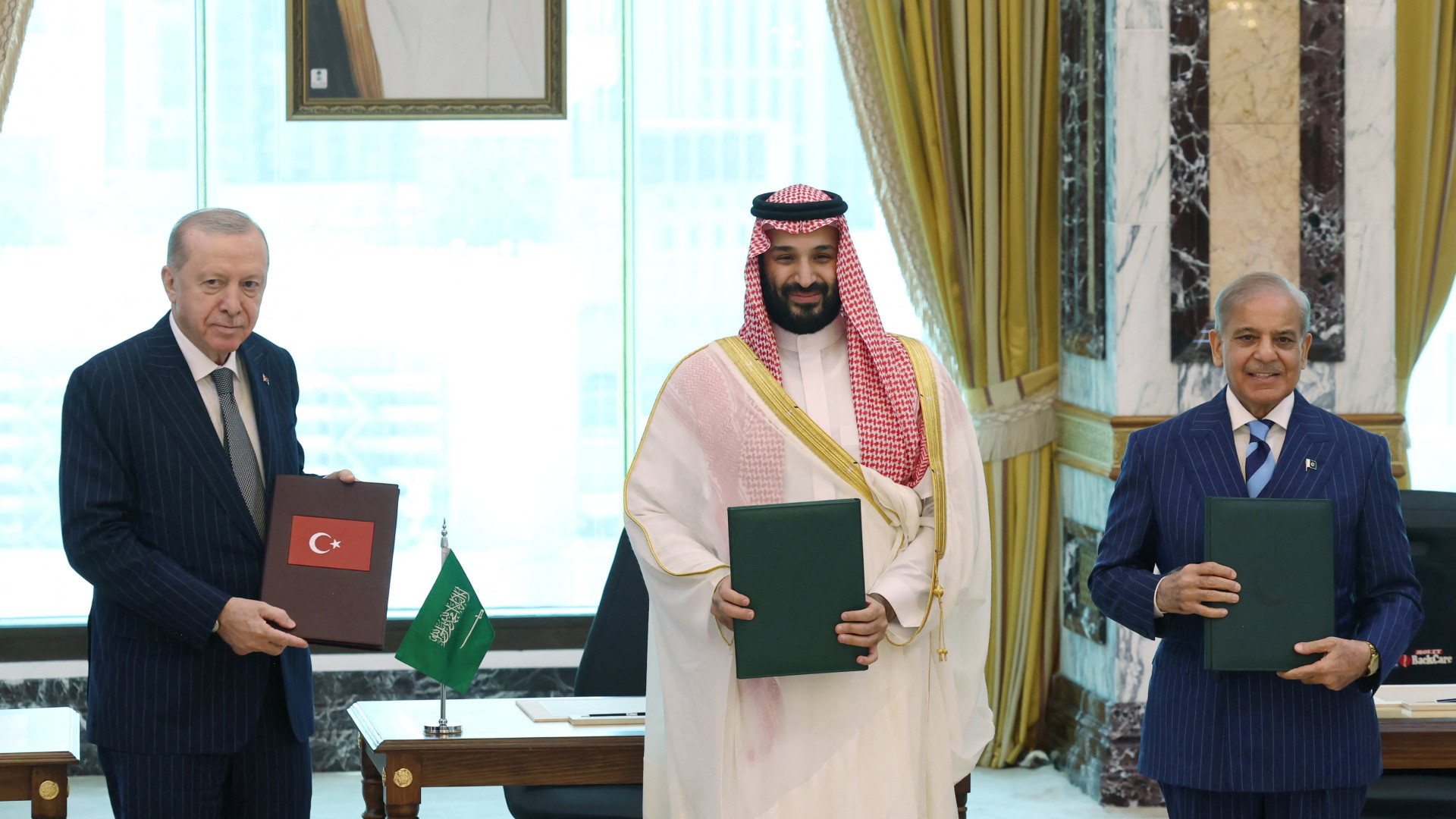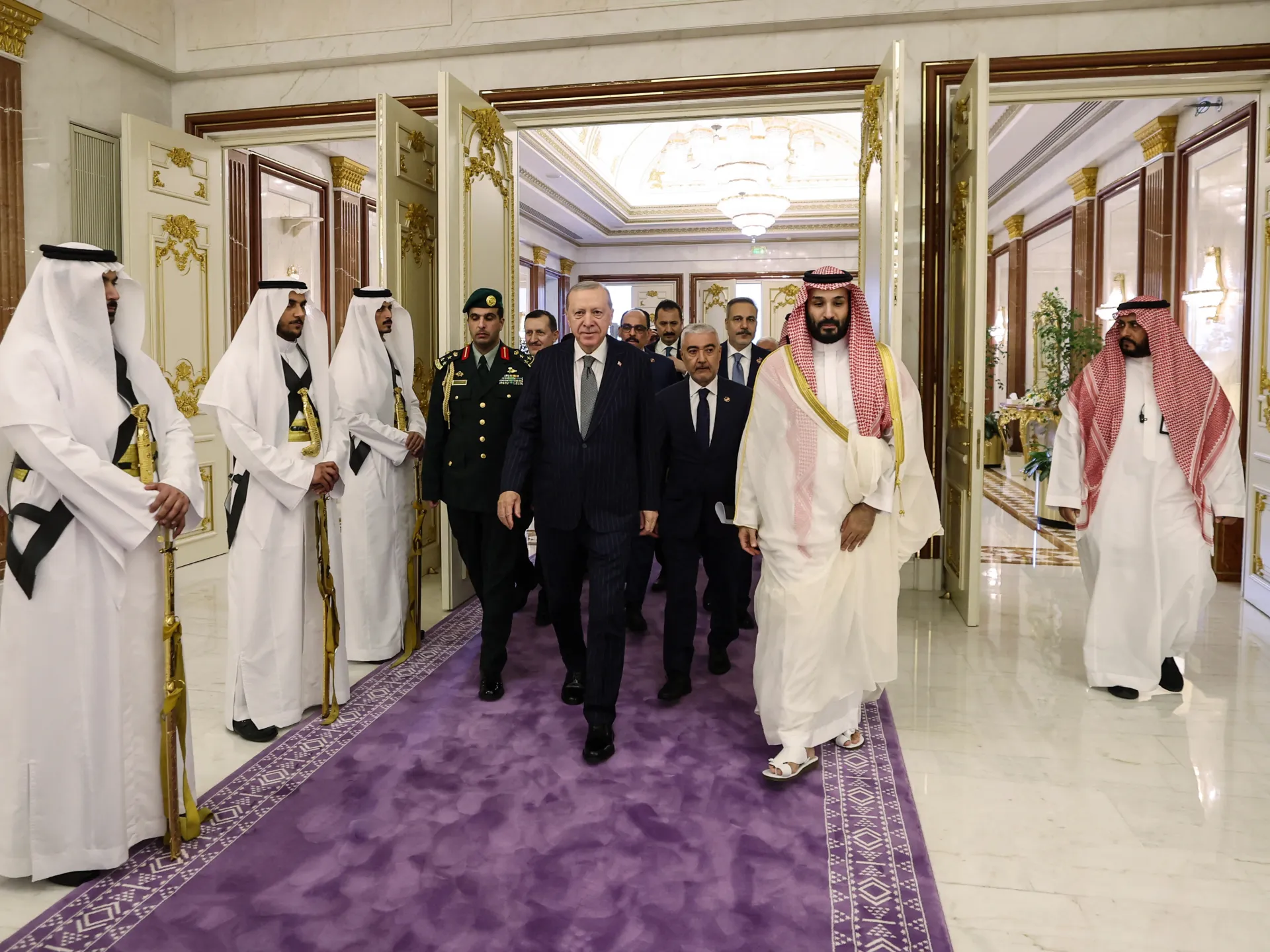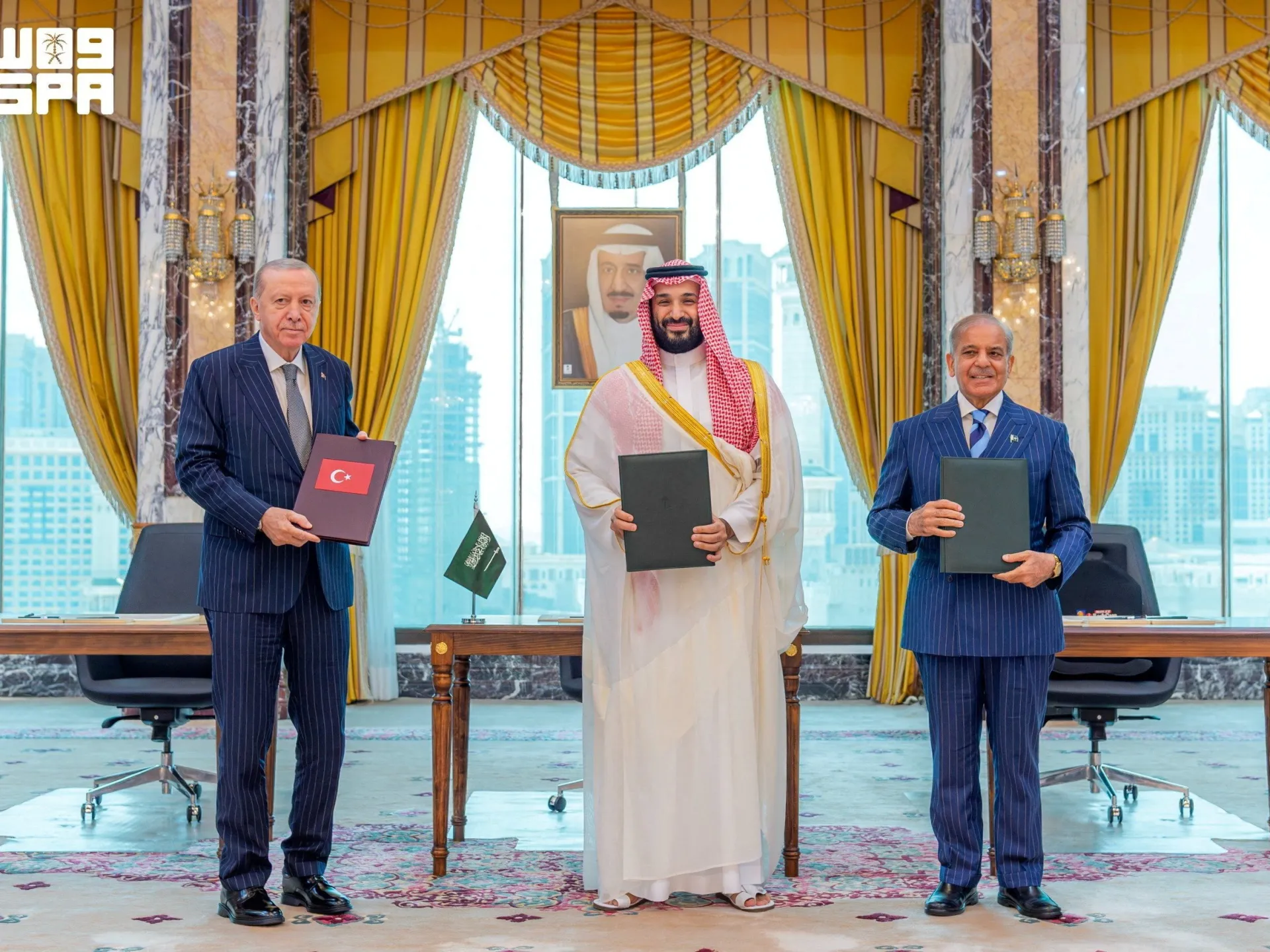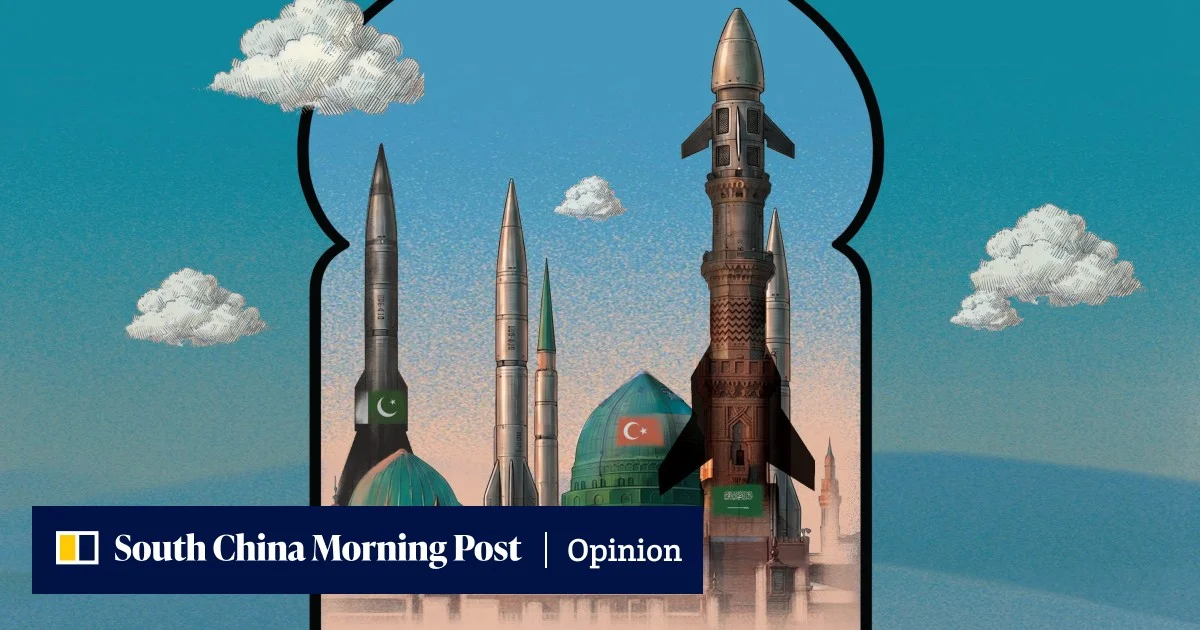
The Mecca security pact between Saudi Arabia, Turkey and Pakistan stipulates that an armed attack against one shall count as an attack against all three. Yet the real message is directed at the United States: if being an American ally offers no immunity against attack, there is little point in waiting for Washington to honour its security guarantees.That there has been no official White House statement casts some doubt on whether Donald Trump is really “very happy to see that Saudi Arabia, Turkey and Pakistan have recently, and finally, signed the Mecca Joint Defence Agreement”, as the US president wrote on social media. “It shows that the Middle East is coming together and how countries will finally be able to defend themselves in a more meaningful way.”Superficially, the needs of the three nations are complementary: wealthy Saudi Arabia lacks military capacity, Turkey harbours ambitions across Eurasia and nuclear-armed Pakistan seeks financial support. Their strengths fit neatly together, cemented by a shared Sunni faith.But it is too early to argue that the Middle East is coming together. The concept of “middle power” may be in vogue after Canadian Prime Minister Mark Carney called for middle power solidarity amid great power rivalry in his landmark Davos address. Yet neither Pakistan nor Turkey, plainly middle powers, are strictly Middle Eastern countries, despite ambitions to extend their influence.And the major powers will not walk away. America’s role in the Middle East might shrink in the long term but a new regional security architecture is unlikely to be short of its presence. The European Union, for instance, has talked about strategic autonomy for over a decade. The Ukraine conflict, however, exposed the hollowness of that ambition, as European security still fell back on American leadership and Nato’s military umbrella.Besides, eroding US influence in the region runs counter to Israel’s interests. Even if Washington were inclined to step back, Tel Aviv would go to great lengths to drag it back into the fray and cling tightly to its American backing – notwithstanding the fact that Israel’s killings in Gaza have shifted public opinion across sizeable segments of the US population, including young Jewish communities.Turkey’s President Recep Tayyip Erdogan, Saudi Arabia’s Crown Prince Mohammed bin Salman and Pakistan’s Prime Minister Shehbaz Sharif meet in Mecca. The countries signed a joint defence agreement on August 7. Photo: Turkish Presidency Press Office/AFP
Opinion | Could Mecca defence pact be first step to new Middle East order?
As security deal shakes up calculations for the US, China and Russia, a regional order shaped by regional states is no longer unthinkable.
393 words~2 min read