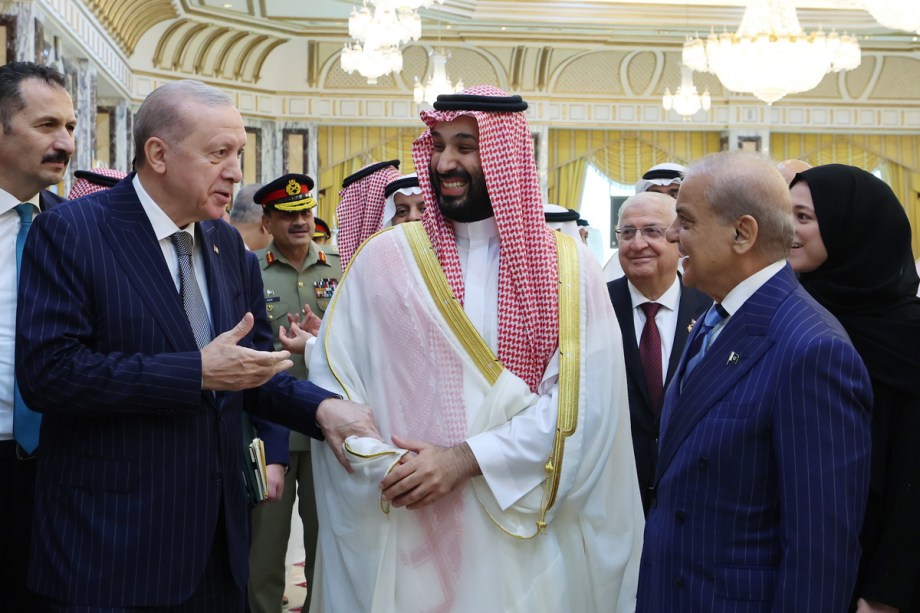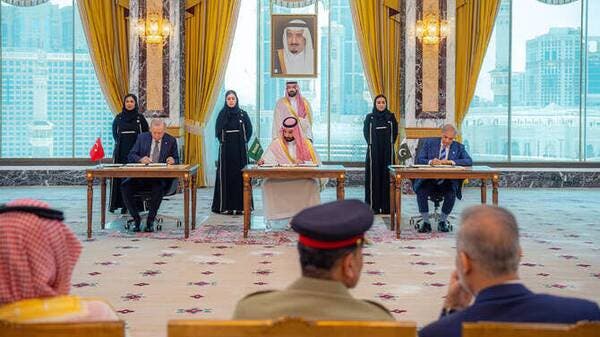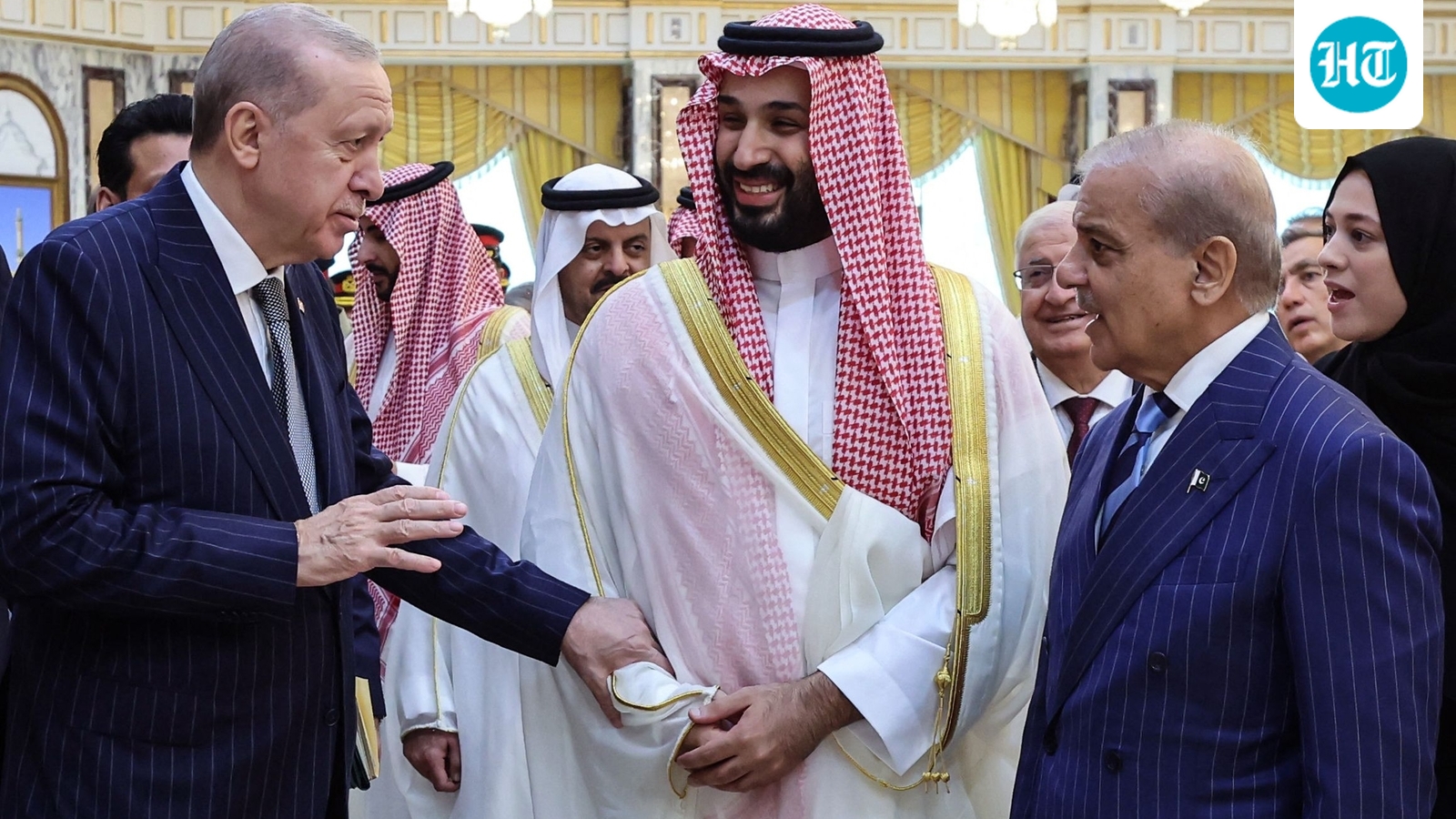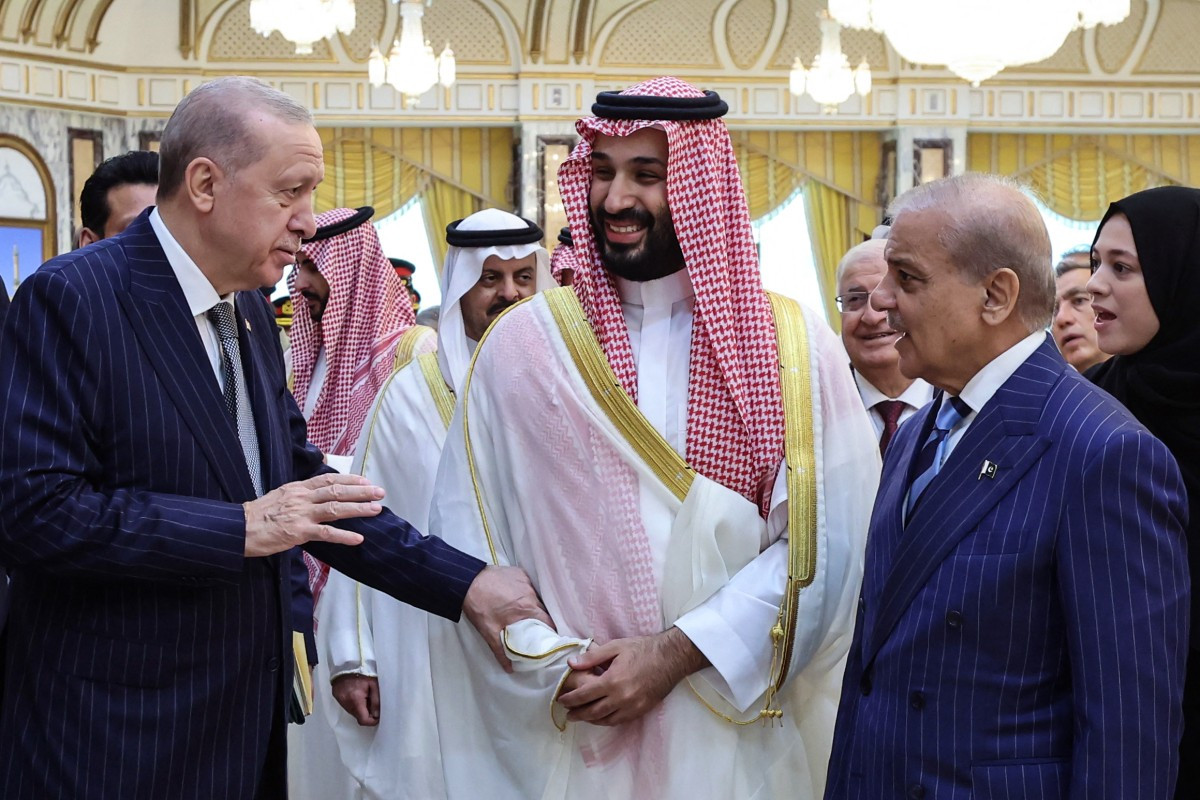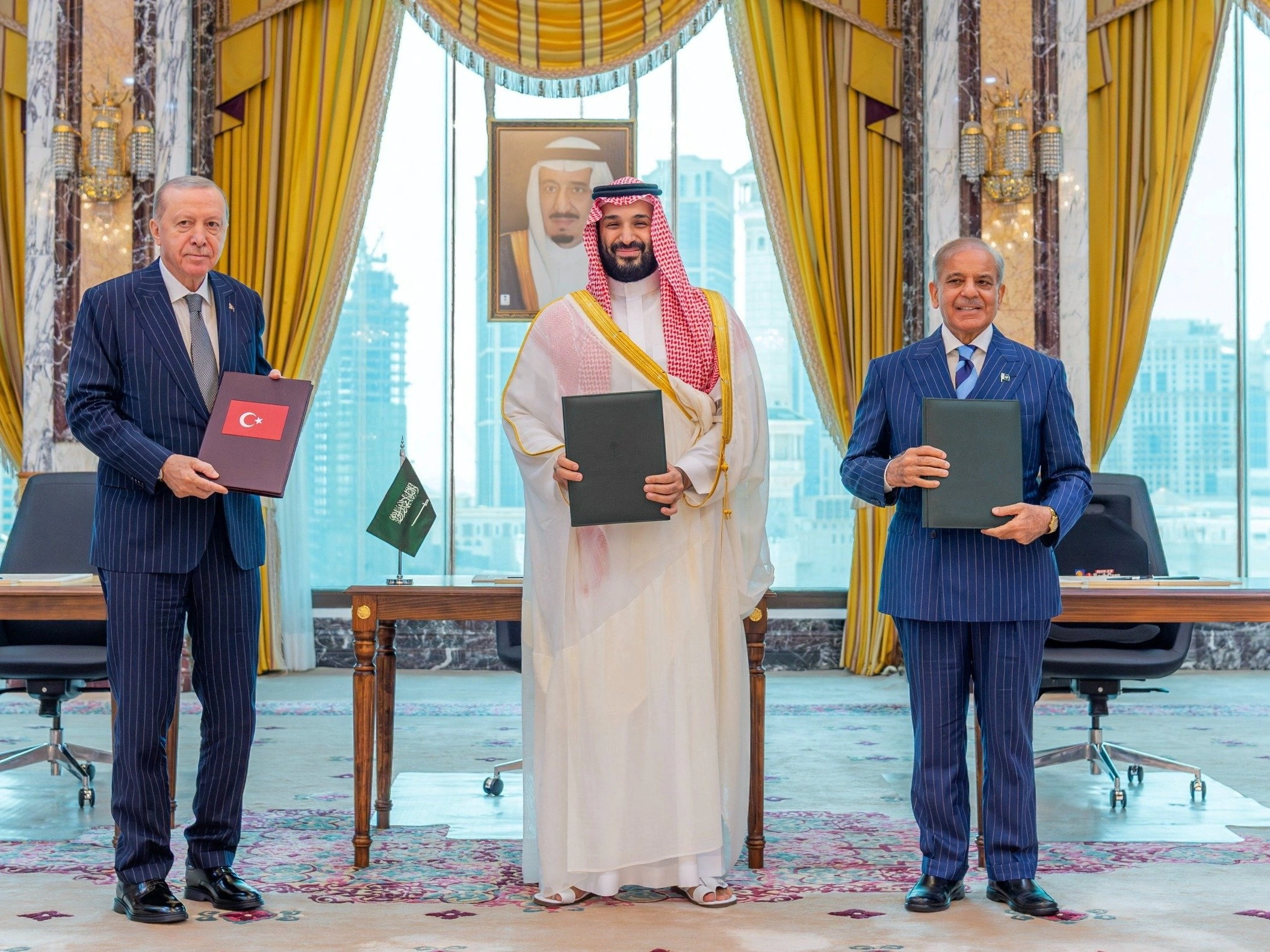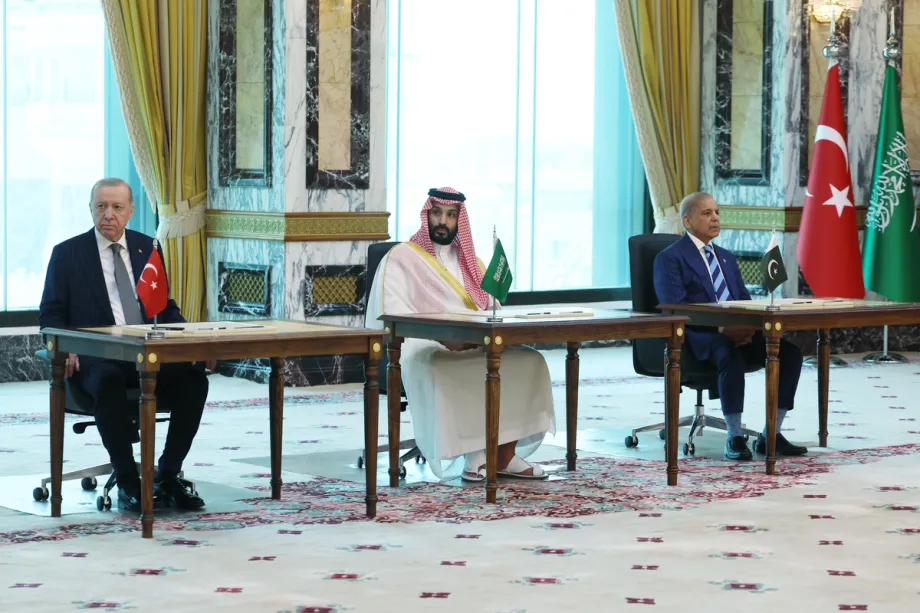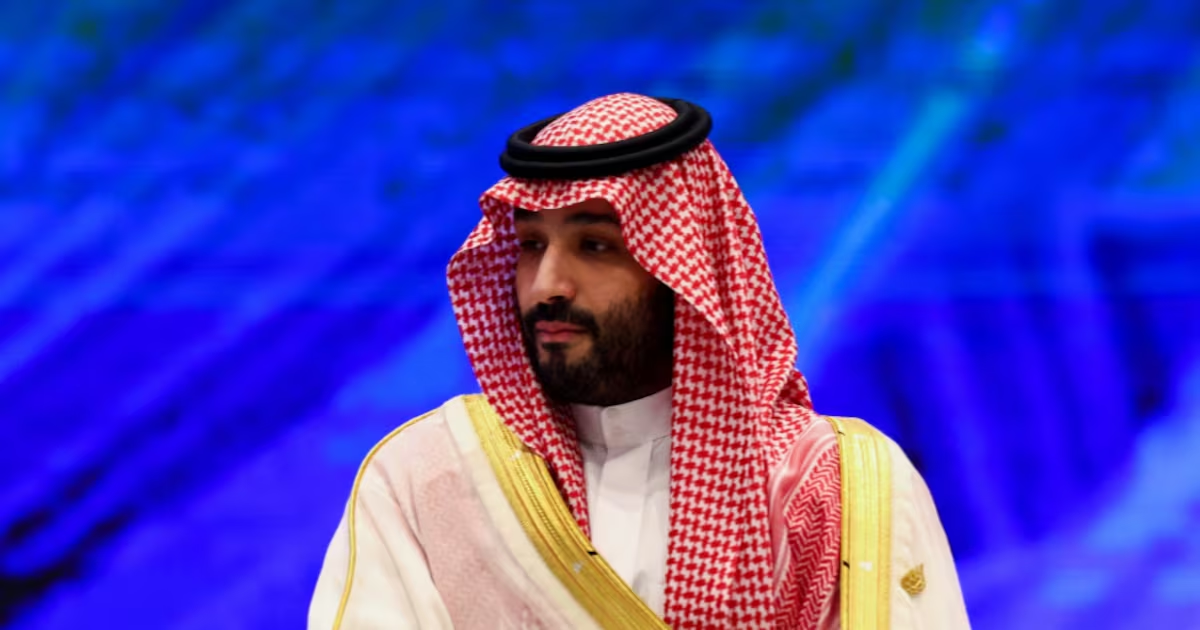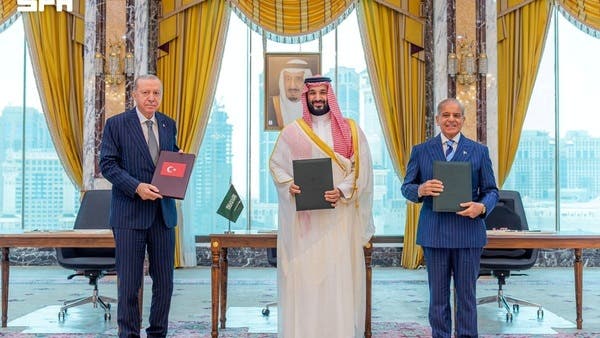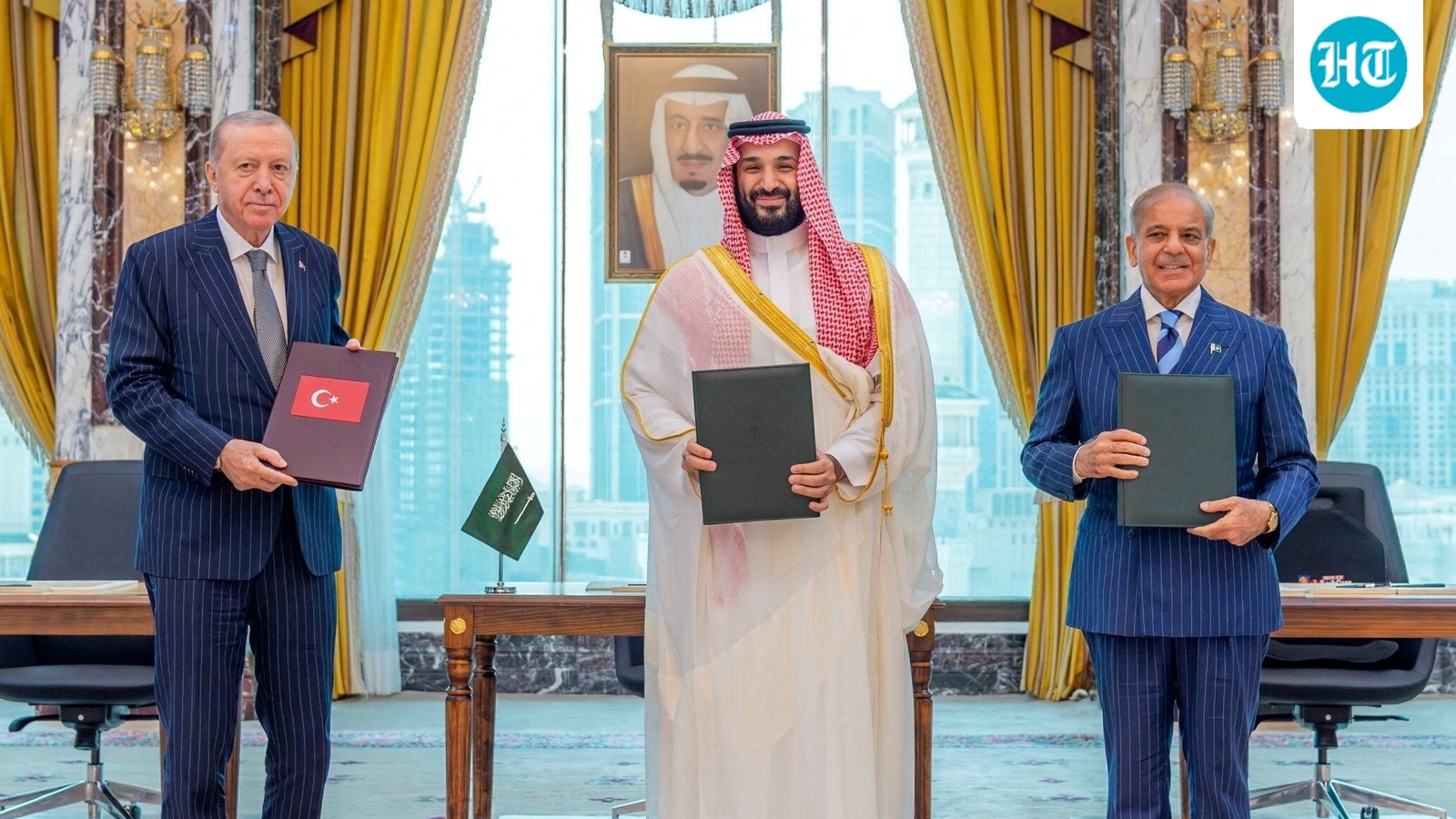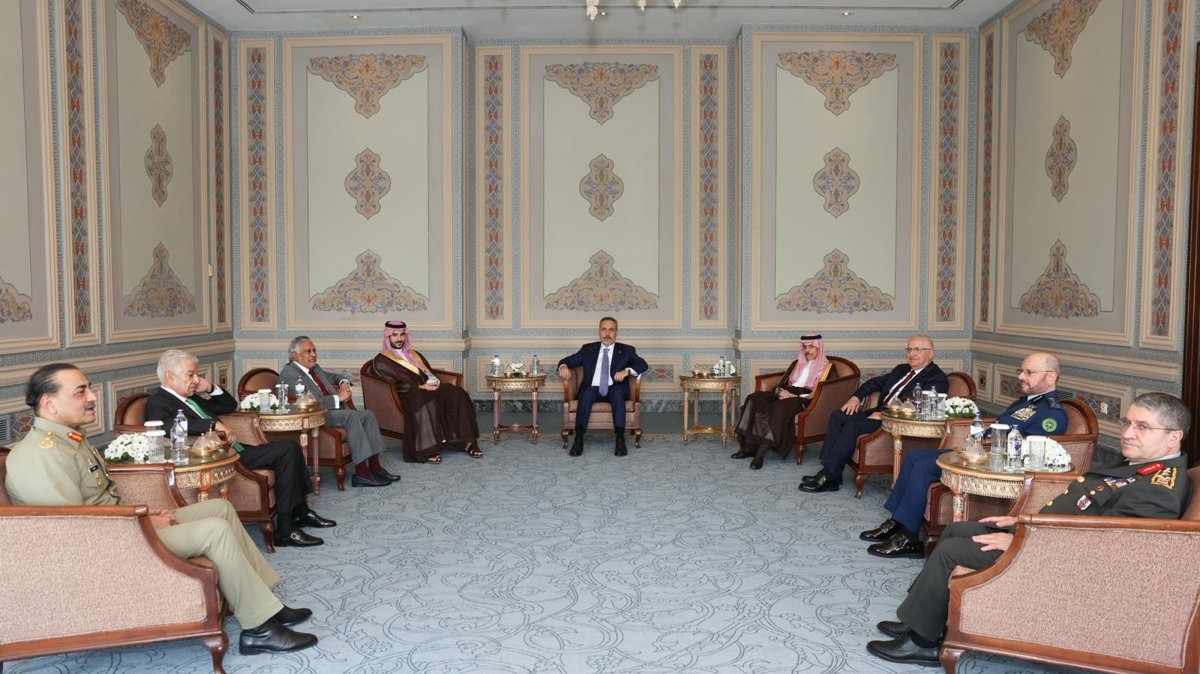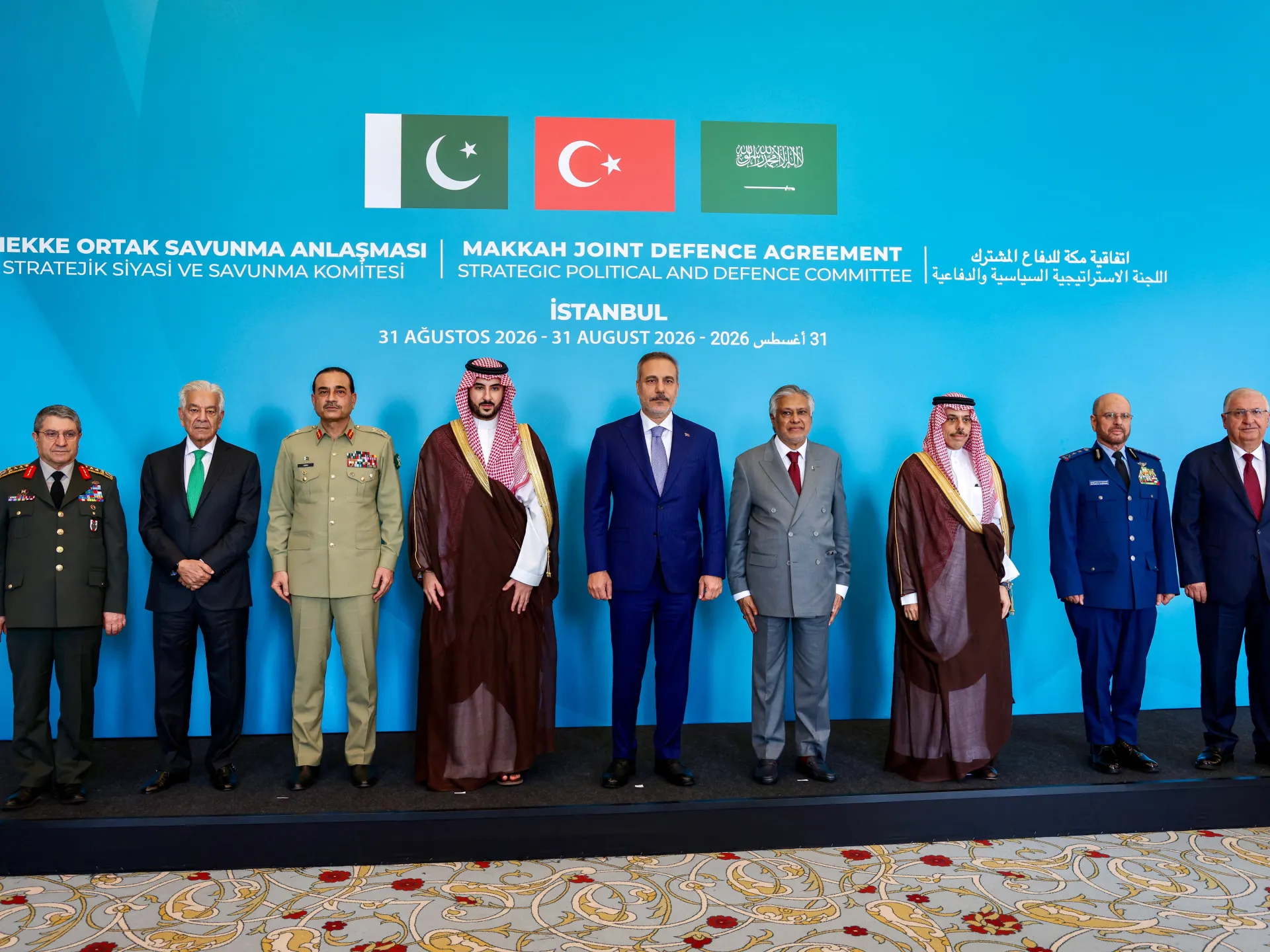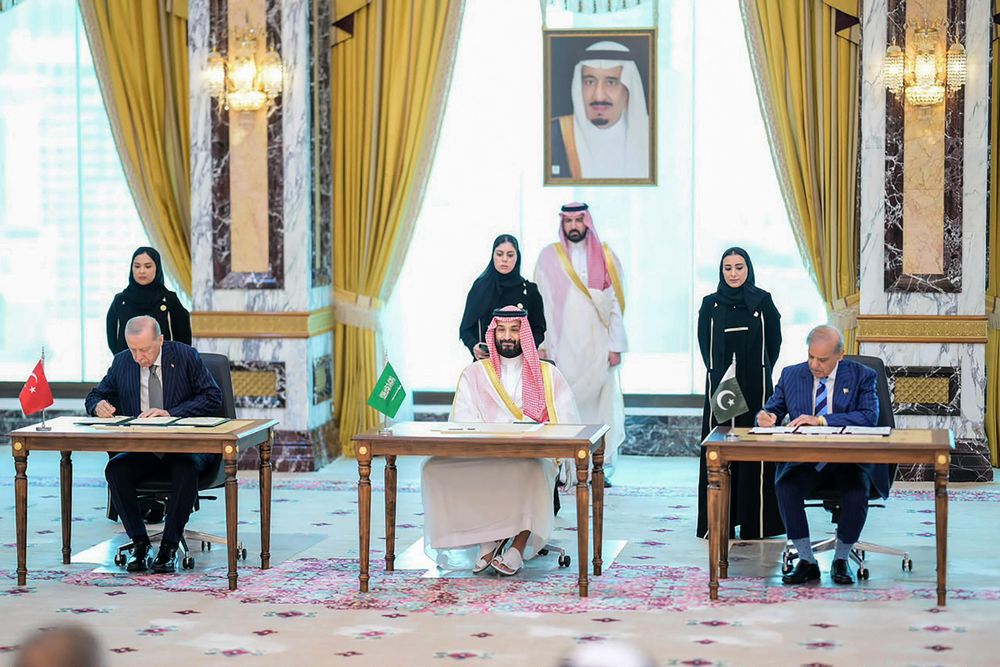
Saudi Crown Prince Mohammed bin Salman (C), Turkish President Recep Tayyip Erdogan (L) and Pakistani Prime Minister Shehbaz Sharif signing the Mecca Joint Defence Agreement in Mecca, Saudi Arabia on August 7. The question is not whether Ankara and Islamabad are prepared to sign alongside Riyadh, but what they will do when Saudi Arabia comes under another attack from Iran or the Houthis, writes Bayethe Msimang.
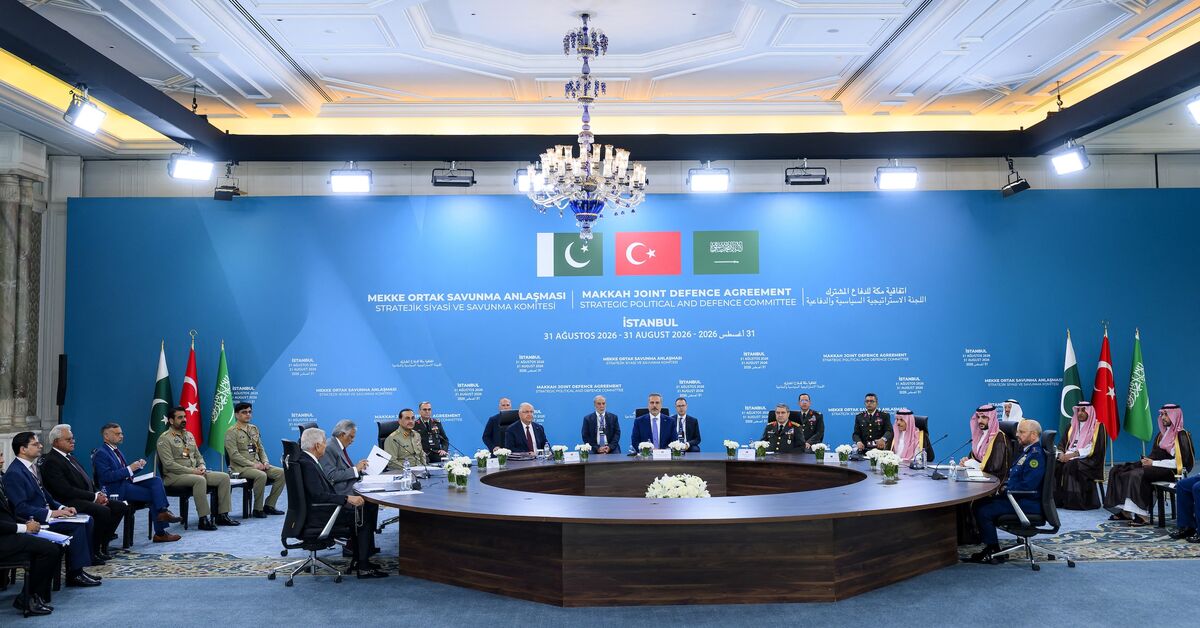
The “Mecca Agreement” on joint defence, signed by Saudi Arabia, Turkey, and Pakistan on August 7, has revived debate over the Middle East’s ability to forge a sustainable military alliance, particularly as the agreement stipulates that any armed attack against one of the three countries will be regarded as an attack against all three. Yet, according to international reports, the agreement still lacks many of the military and operational structures that would make this commitment effectively equivalent to Article 5 of the North Atlantic Treaty, according to Reuters.
The significance of the agreement lies not merely in bringing together three major Muslim countries, but in the question of whether it represents a genuine shift in the balance of power or another Saudi attempt to build a political and security umbrella following a series of failed regional experiences that did not achieve the objectives announced at their inception.