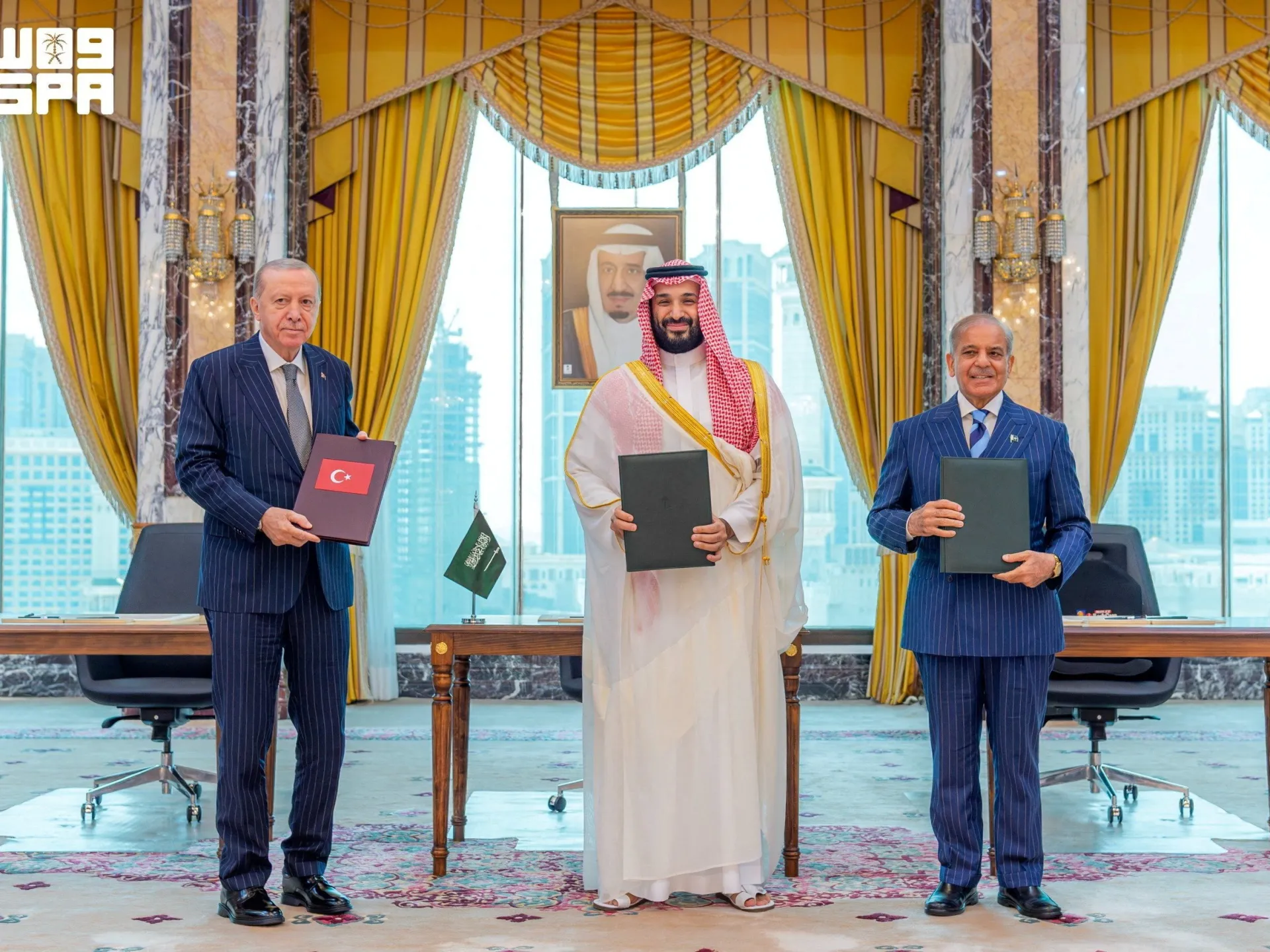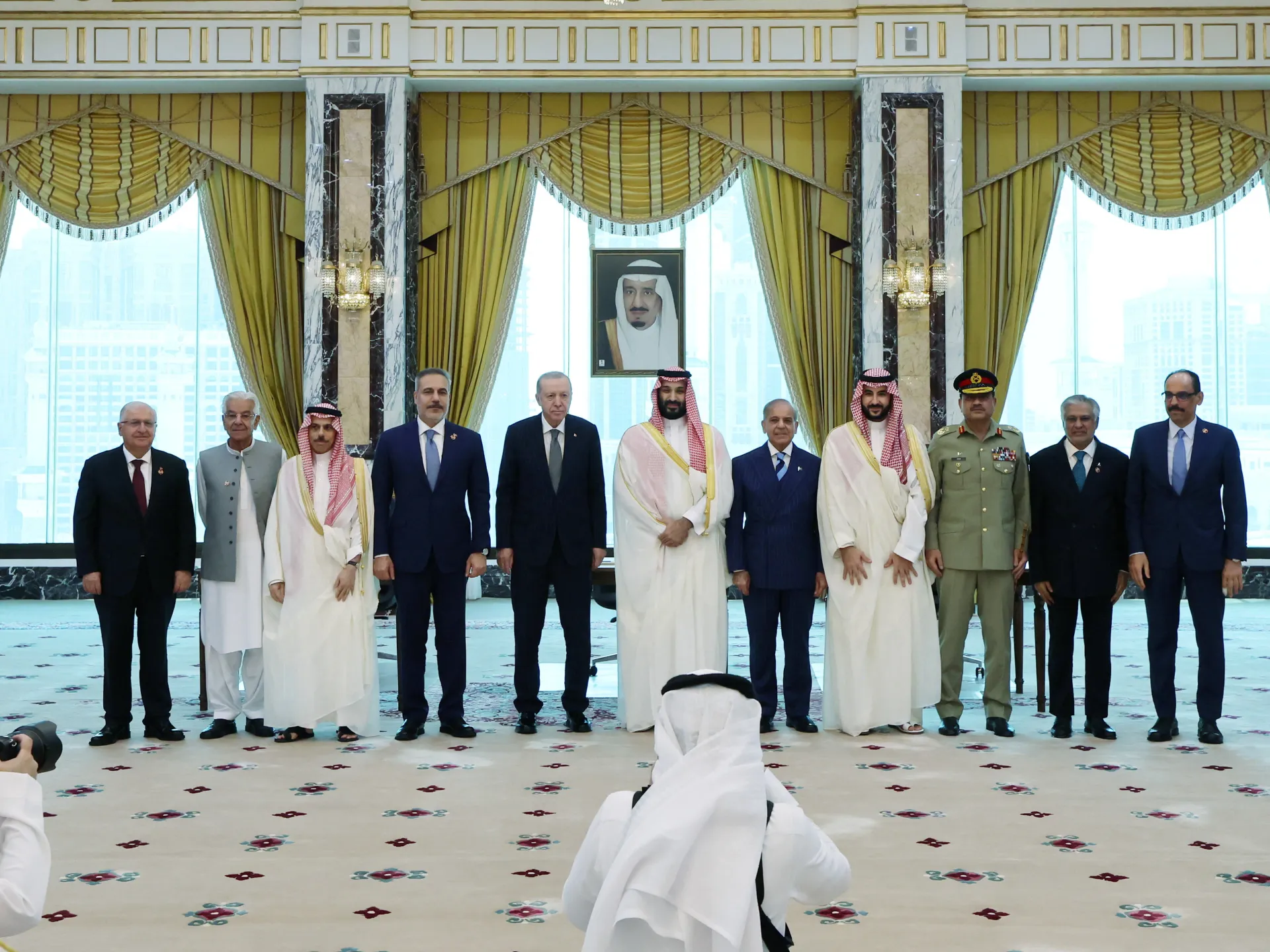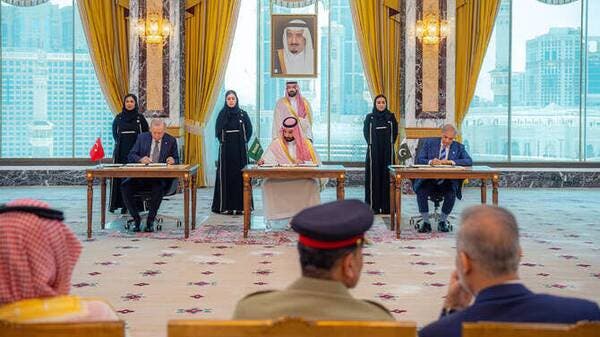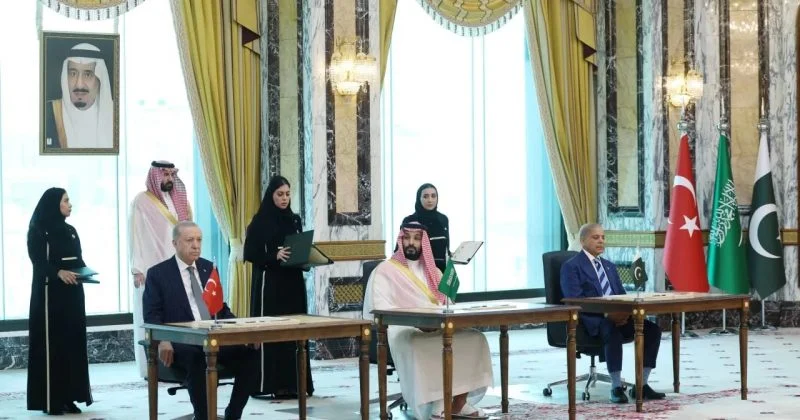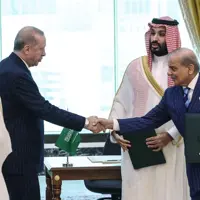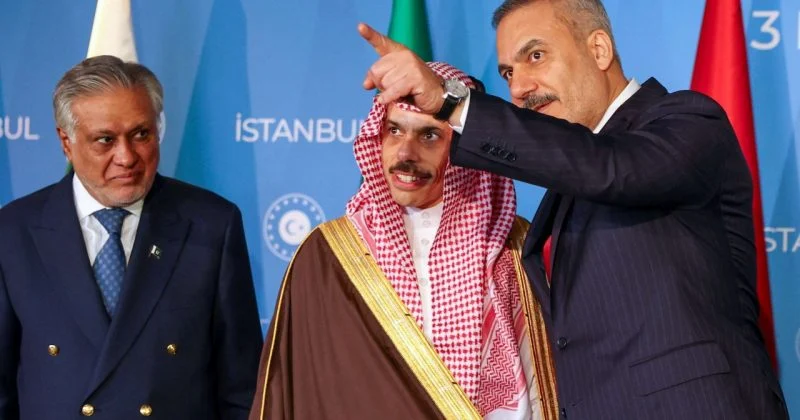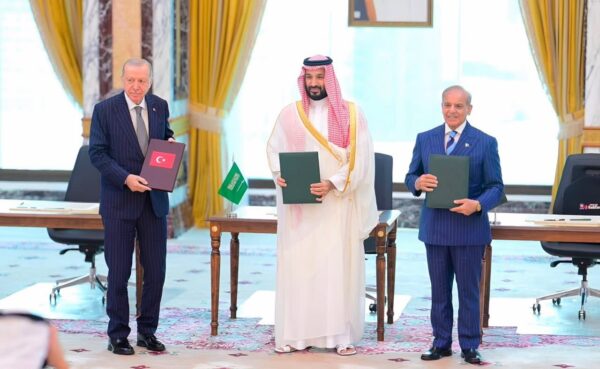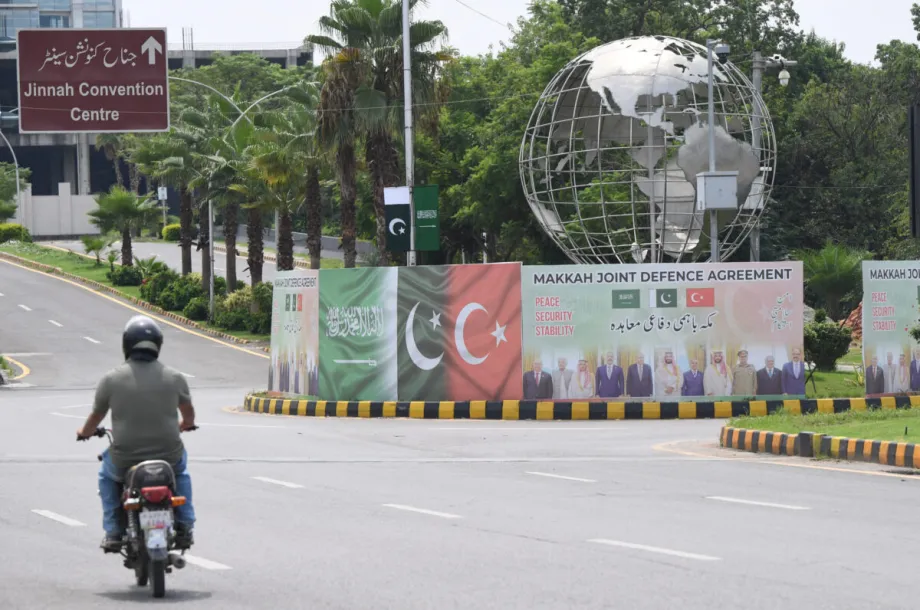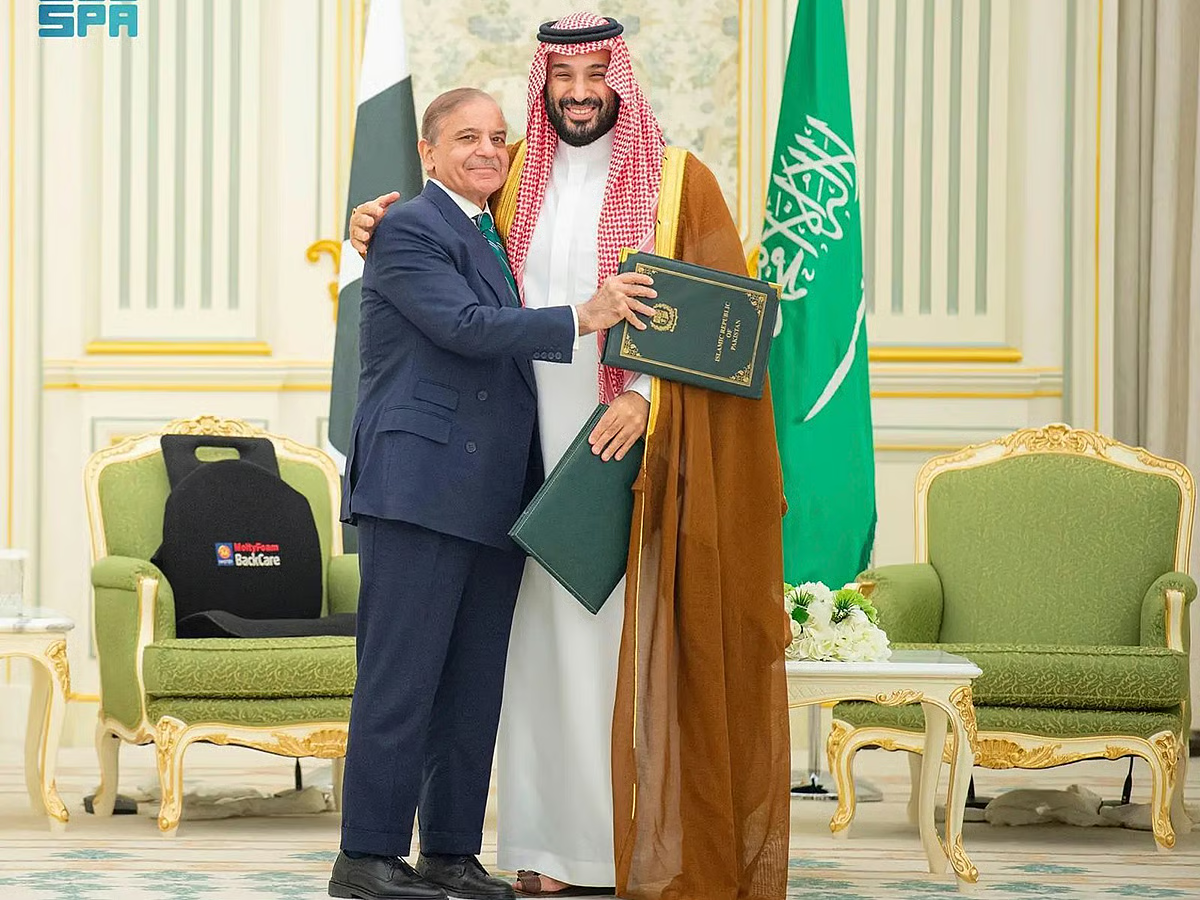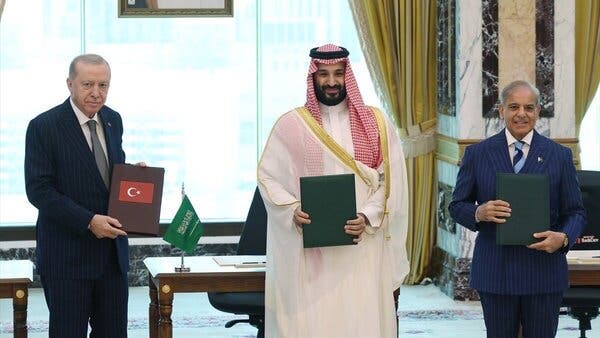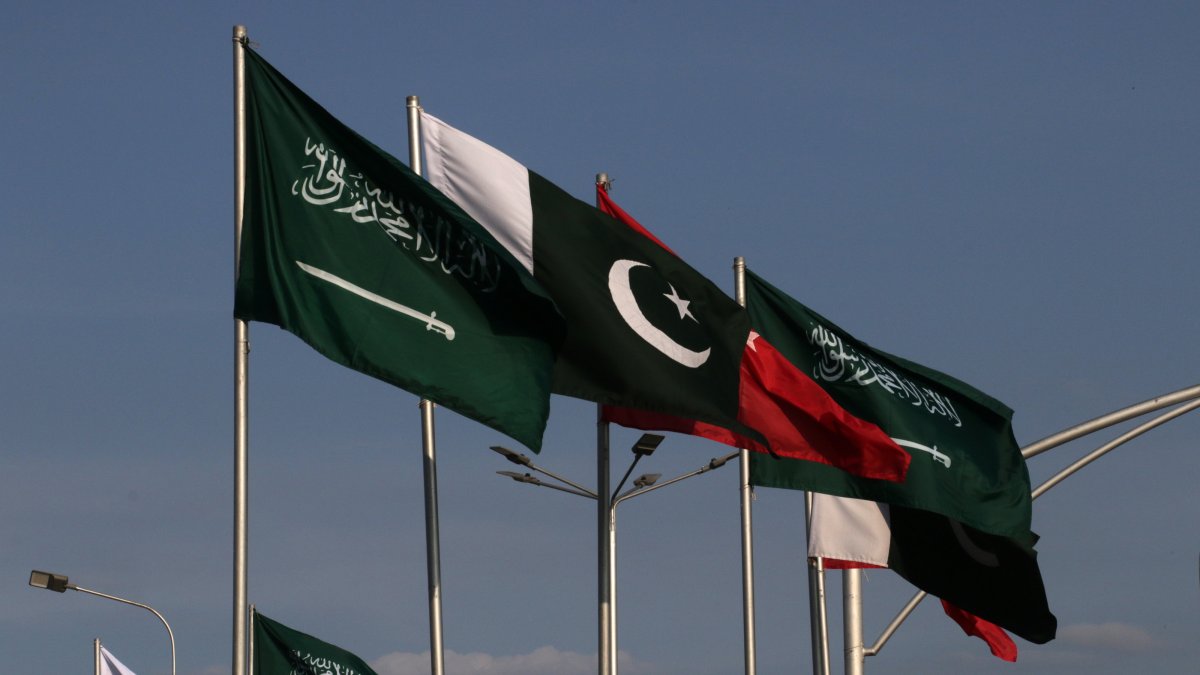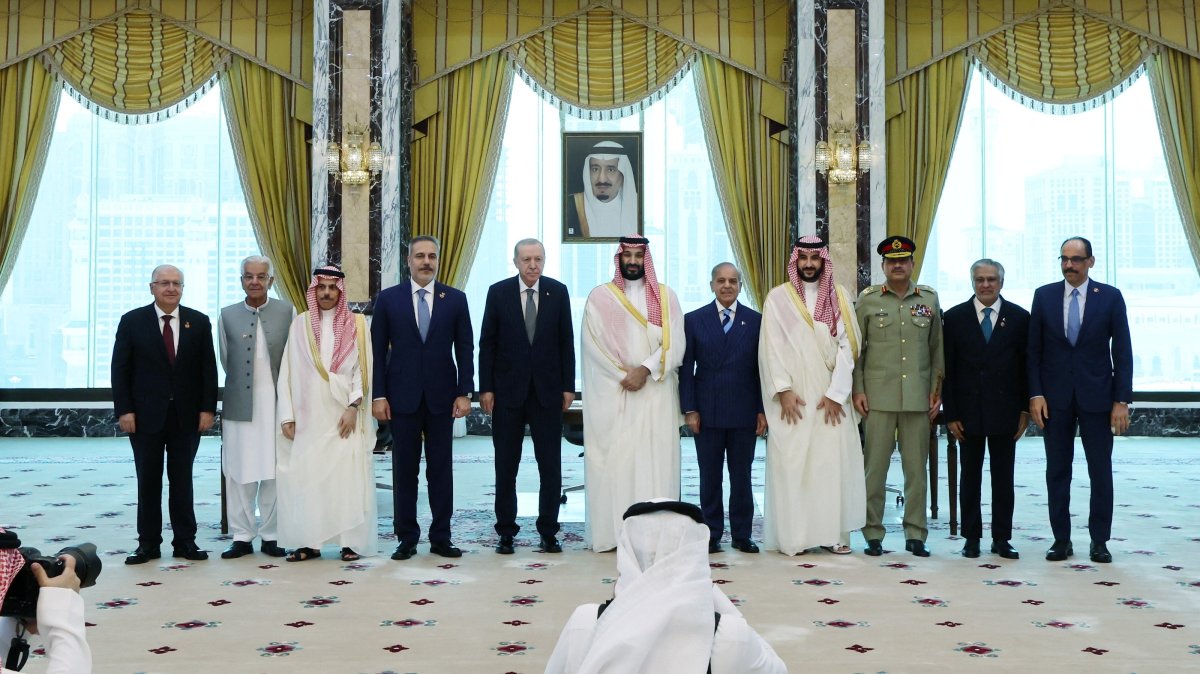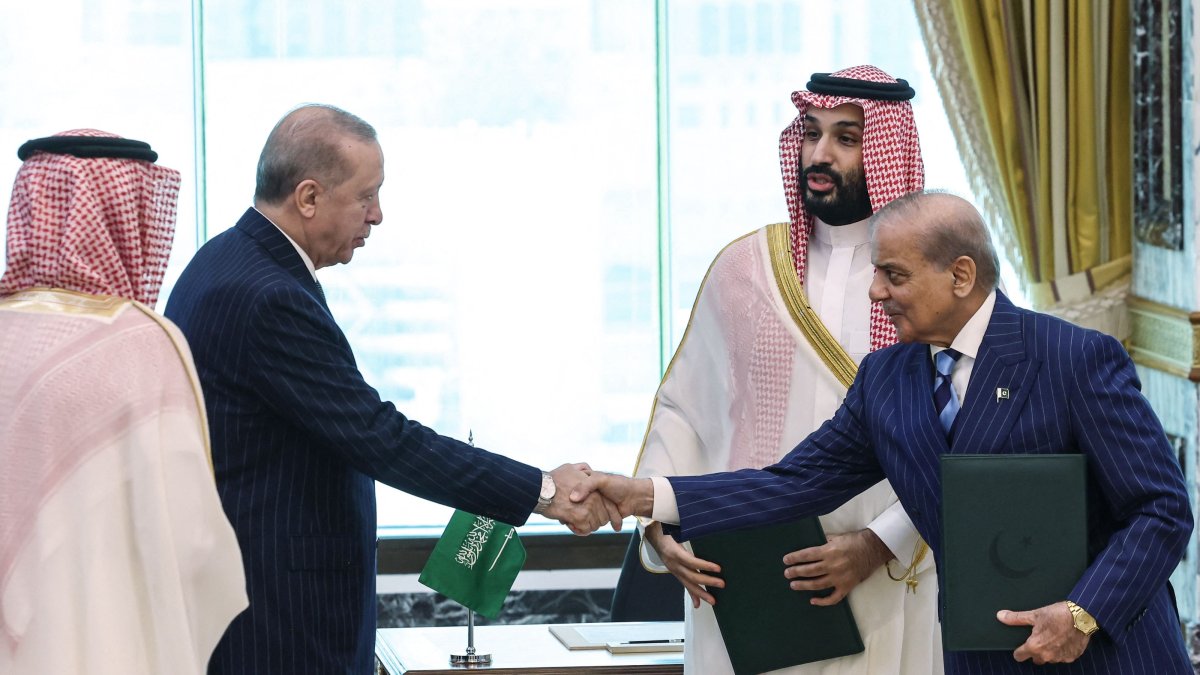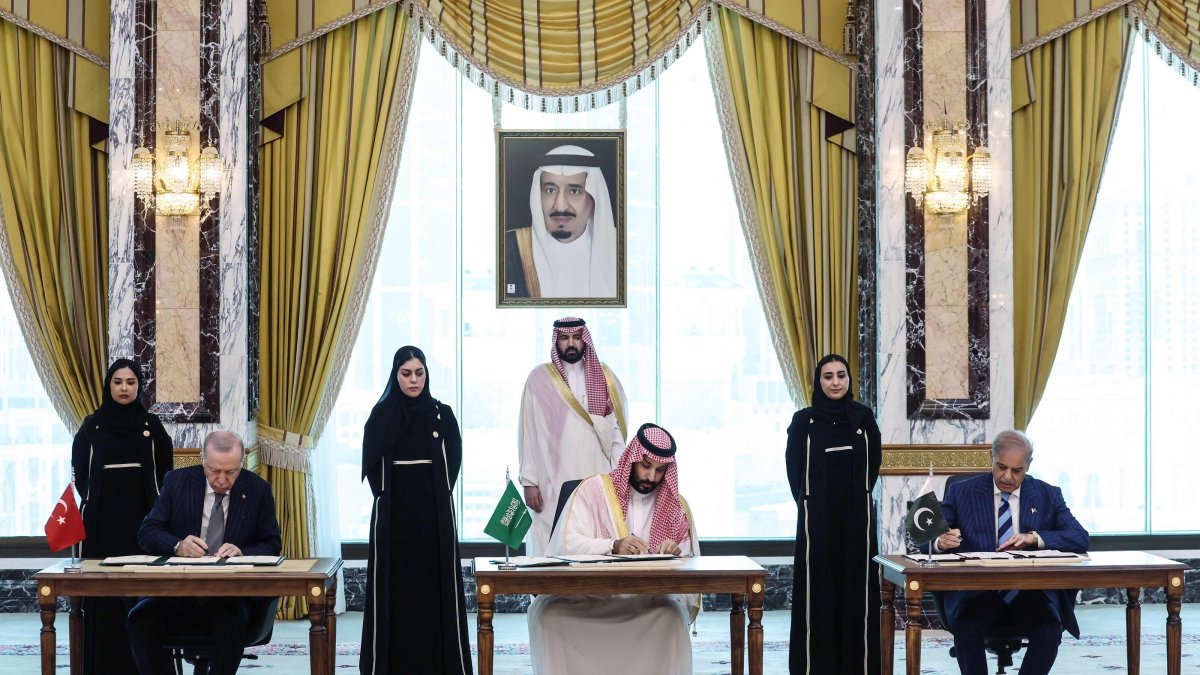
Three Muslim countries, namely Türkiye, Saudi Arabia and Pakistan, have signed a collective defense agreement on Aug. 7 in the holy city of Mecca, Saudi Arabia. The signatories of the Mecca Joint Defense Agreement were the leaders of these three countries: President Recep Tayyip Erdoğan, Saudi Crown Prince Muhammed bin Salman and Pakistani Prime Minister Shahbaz Sharif.
This agreement goes beyond relying on traditional partners and supporters, signaling a need for collective security and defense action. Unlike many previous regional agreements, the Mecca pact envisages a security architecture that includes a commitment to mutual defense and reflects the will of the regional powers rather than that of the global powers. According to the agreement, the signatories will construct a new security architecture as the region and the world undergo important structural security dynamics.
The main objective of the pact is to “strengthen collective deterrence against any act of aggression, and stipulates that any armed attack against any one of the three States shall be regarded as an attack against them all.” Thus, the agreement lays a solid foundation for collective deterrence. As the Minister of Foreign Affairs Hakan Fidan has stated, the pact is technically the same as Article 5 of the NATO alliance.