view more
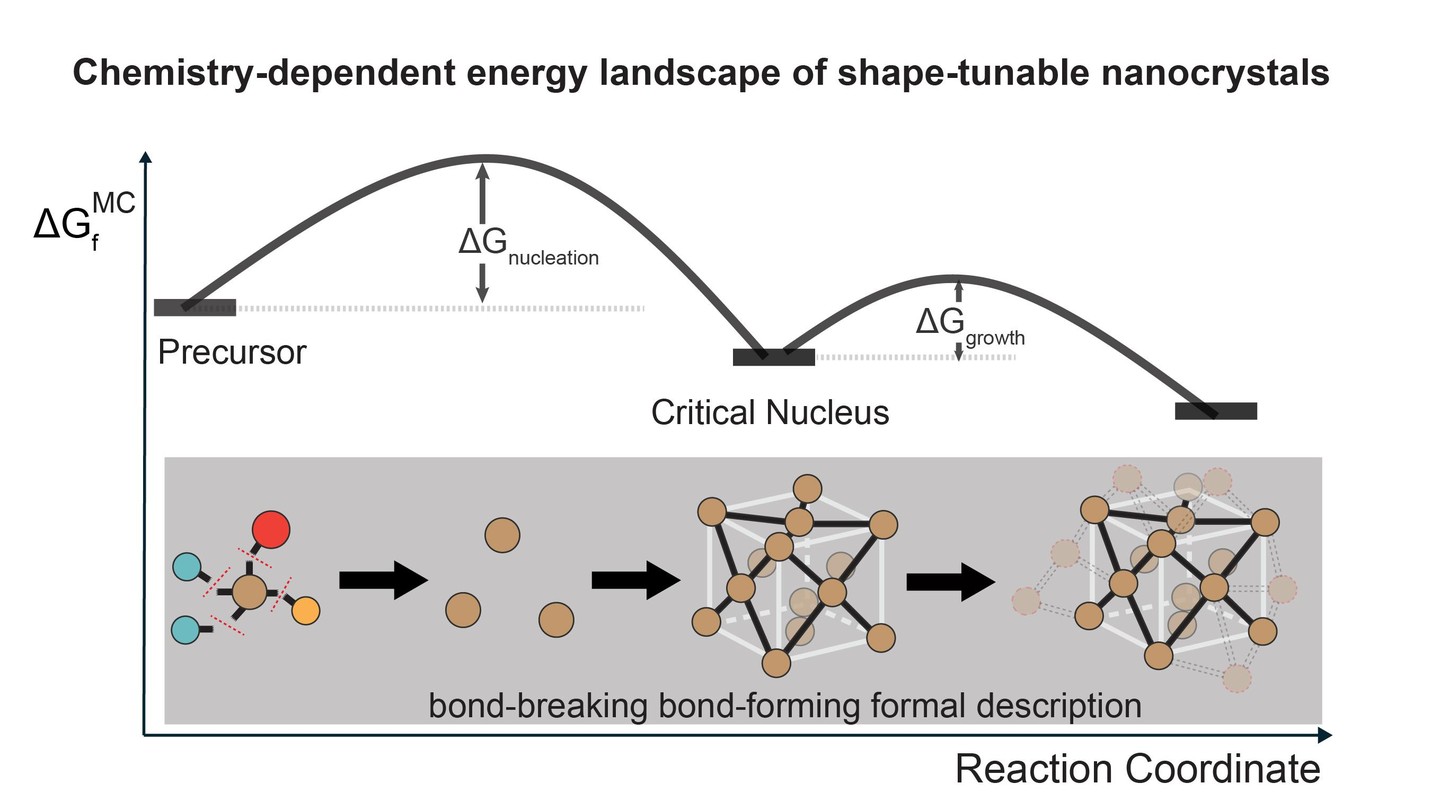
The most common scientific approach for thinking about how condensation, freezing and other phase transitions begin is based in classical nucleation theory, which was developed about a century ago. Thousands of experiments have supported a key equation describing how initial ordered seeds, called nuclei, form within disordered matter.
Now, new UCLA-led research proposes a revision to classical nucleation theory.
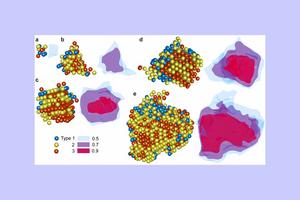
The study, published in Nature Materials, used tiny spheres, or nanoparticles, made of complex materials with varying degrees of atomic order. The investigators devised a method for trapping crystal nuclei at various stages of development during a phase transition.
When the team examined the nanoparticles using an imaging method that maps individual atoms in 3D, what they saw differed from current explanations of the nucleation process.