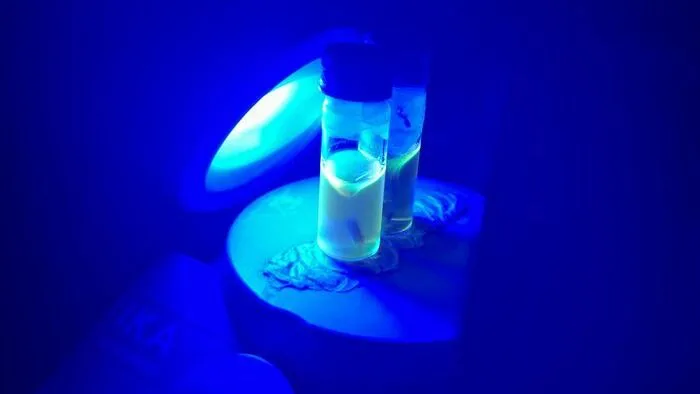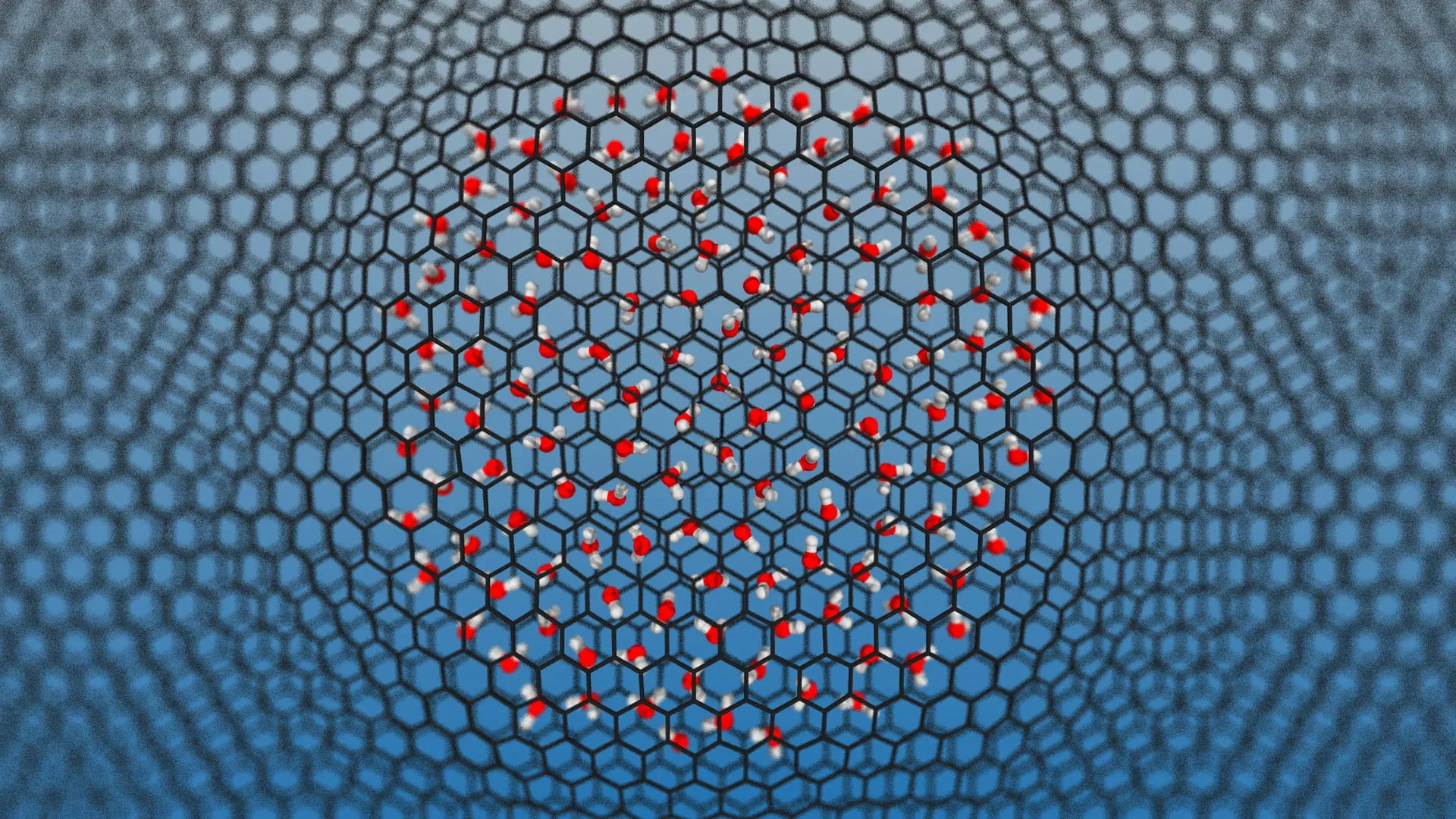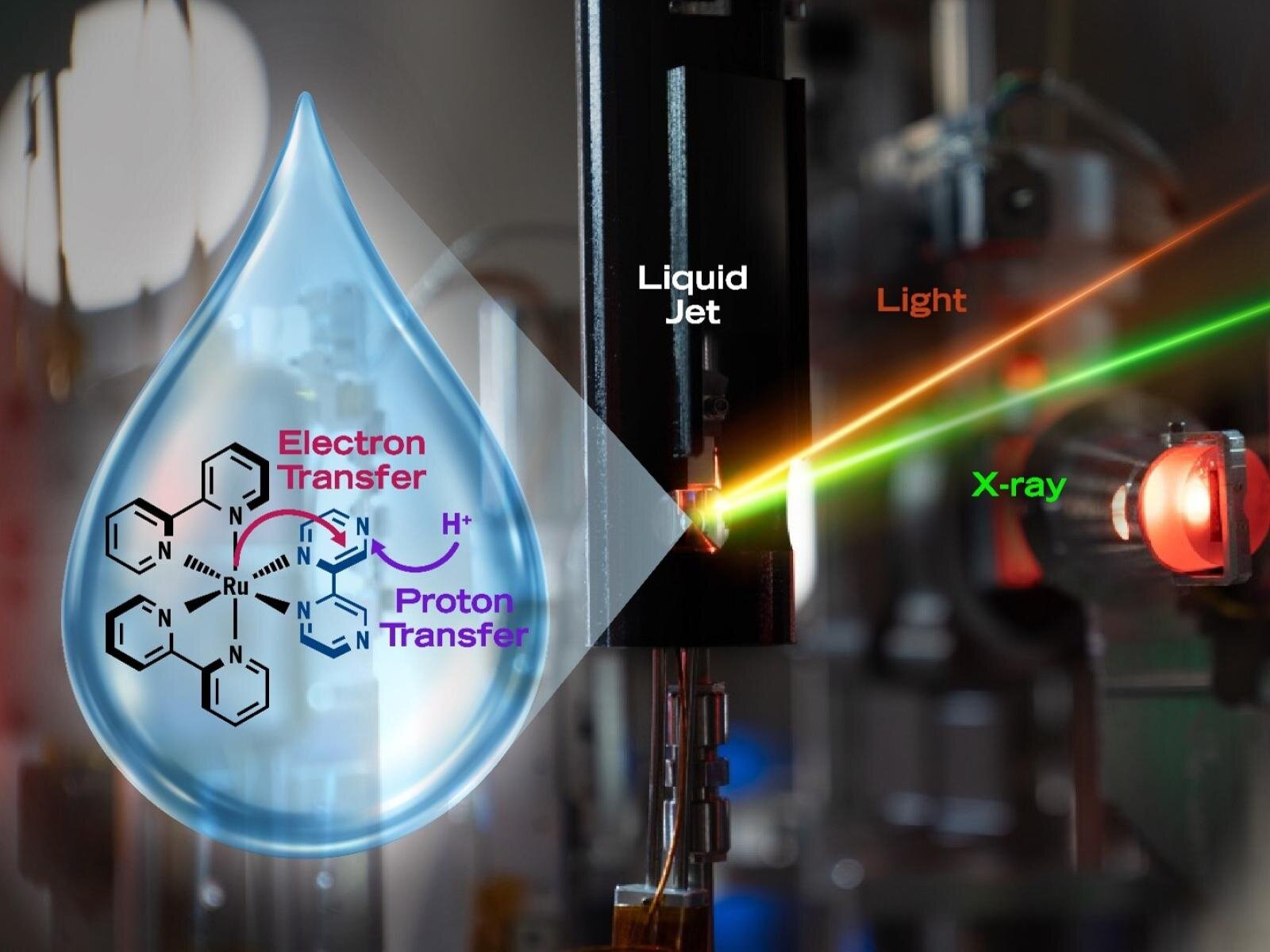
Illustration shows the solvated molecular complex, light-induced electron and proton transfer, and the X-ray probes. Credit: Illustration by Jeff London | Pacific Northwest National Laboratory; photo credit: D.J. Hoffman, C.Y. Hampton/SLAC
Some of nature's most important chemical reactions rely on the coupled movement of negatively and positively charged particles. These processes play central roles in photosynthesis, catalysis and biological energy conversion yet remain difficult to observe.
Now, a research team led by the Department of Energy's Pacific Northwest National Laboratory, in collaboration with colleagues at SLAC National Accelerator Laboratory and several academic labs, has captured snapshots of these events triggered when light strikes a molecule.
The findings, published in Nature Communications, could help researchers better understand and ultimately design better flow batteries, fuel cells and catalysts.
The research team focused on the coupled movement of positively charged particles called protons with negatively charged electrons. This coordinated energy transfer is among the most efficient known and, in plants, is used to capture the sun's energy and convert it into stored energy, among other processes in nature.