Scientists have observed how energy moves through a molecule immediately after it absorbs light, revealing that individual atoms can record very different parts of the transformation.
Using rapid X-ray flashes produced at the European XFEL, the researchers followed changes at specific atoms as the molecule released and redistributed the absorbed energy. Their results show that exposure to light can make an atom more responsive to the movement of neighboring atoms.
The technique gives scientists a way to examine extremely fast chemical reactions at the atomic scale and in real time. It could eventually improve understanding of how DNA withstands light exposure, how energy travels through materials designed to harvest light, and how other fundamental light-driven processes occur.
Following Energy Through a Molecule
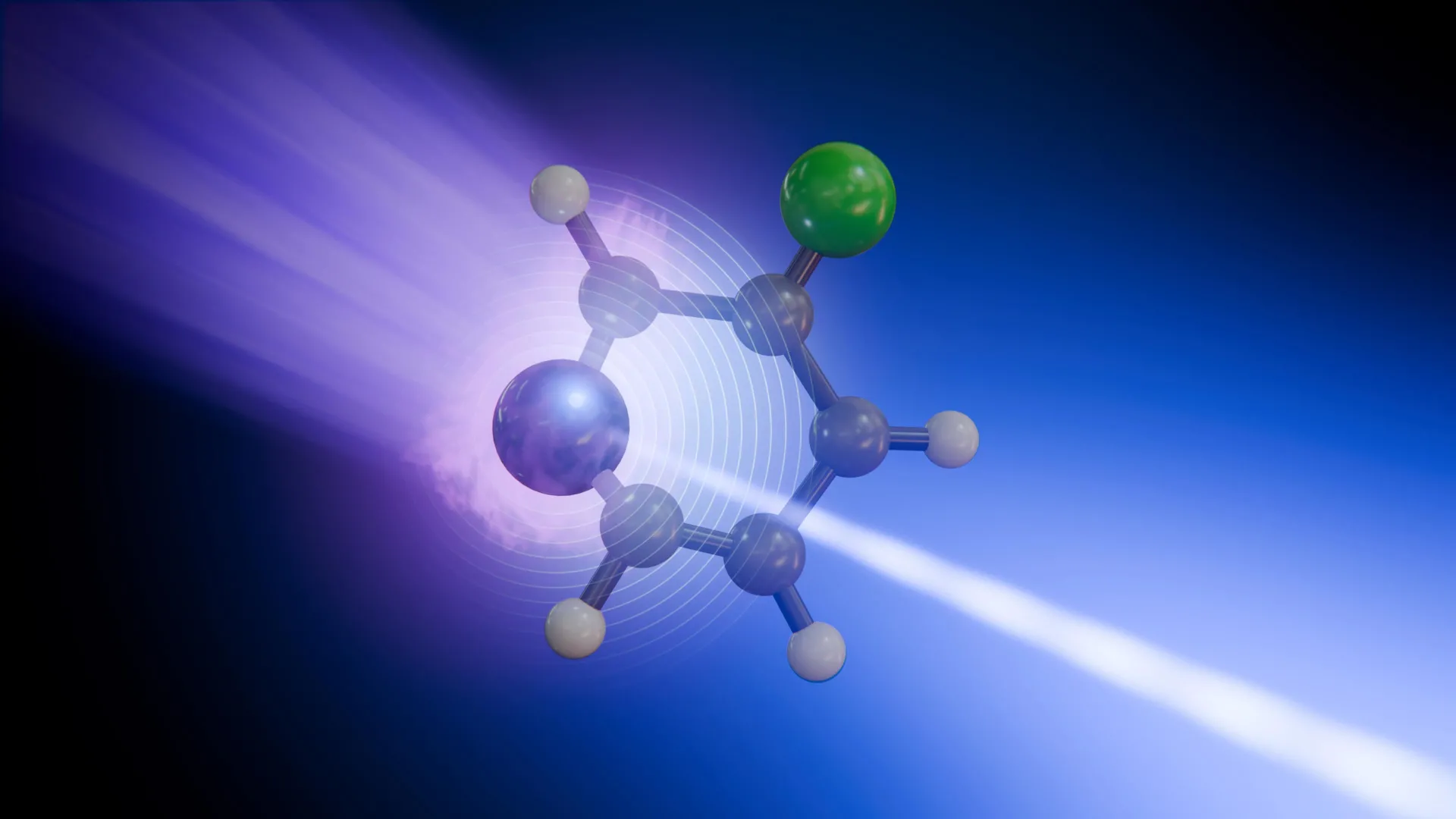
The researchers studied 3-fluoropyridine, a small ring-shaped molecule containing both nitrogen and fluorine atoms.