view more
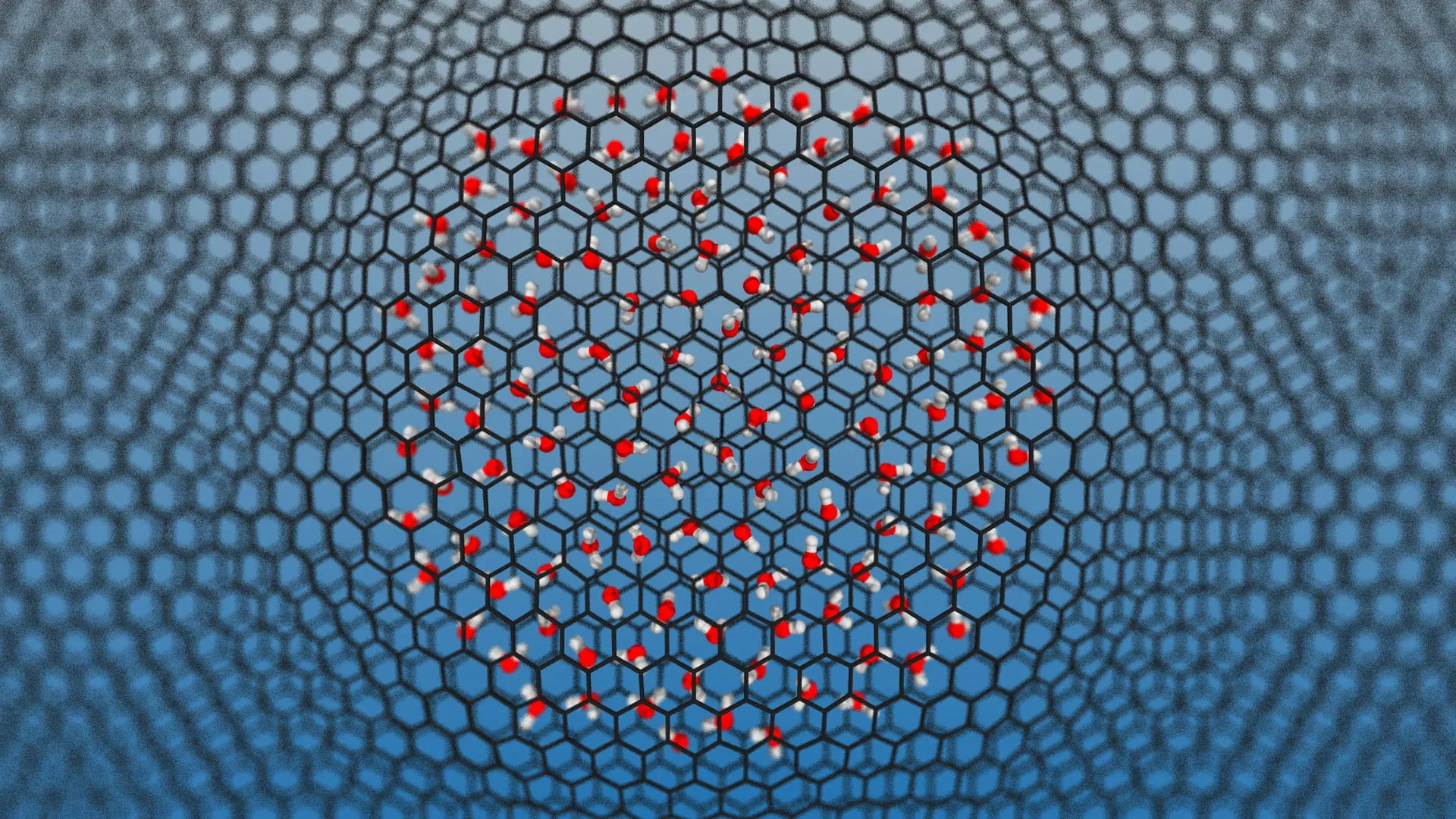
Water is the most studied molecule on Earth, yet a surprisingly basic question has gone unanswered for decades: when water is squeezed into gaps just a few molecules wide – as happens inside nanoscale pores, membranes, and biological channels – does it become more, or less chemically reactive?
This matters because water’s most fundamental chemical property is its ability to split into two charged species, H₃O⁺ (the hydronium ion) and OH⁻ (the hydroxide ion). This reaction defines the pH, a measure of how acidic or alkaline (basic) a solution is, and underpins all of acid-base chemistry, from how enzymes work in your cells to how electrodes function in batteries. Through this research, the scientists wanted to understand whether (and how) confining water to nanometre-scale spaces affects this behaviour.
In the paper published in Science Advances, the researchers from Cambridge, Harvard, CalTech, and the Max-Planck Institute for Polymer Research found that the apparent reactivity of nanoconfined water is extraordinarily sensitive to conditions such as density, pore width, wall flexibility, and surface chemistry.
“When we compared systems under equivalent thermodynamic conditions – specifically at the same chemical potential (the quantity that determines whether a reaction proceeds), the effect of confinement largely disappeared. In other words, the confinement alone does not intrinsically change water’s reactivity. This explains why experiments over the past decade have produced contradictory results,” said Xavier R. Advincula, the study’s lead author.