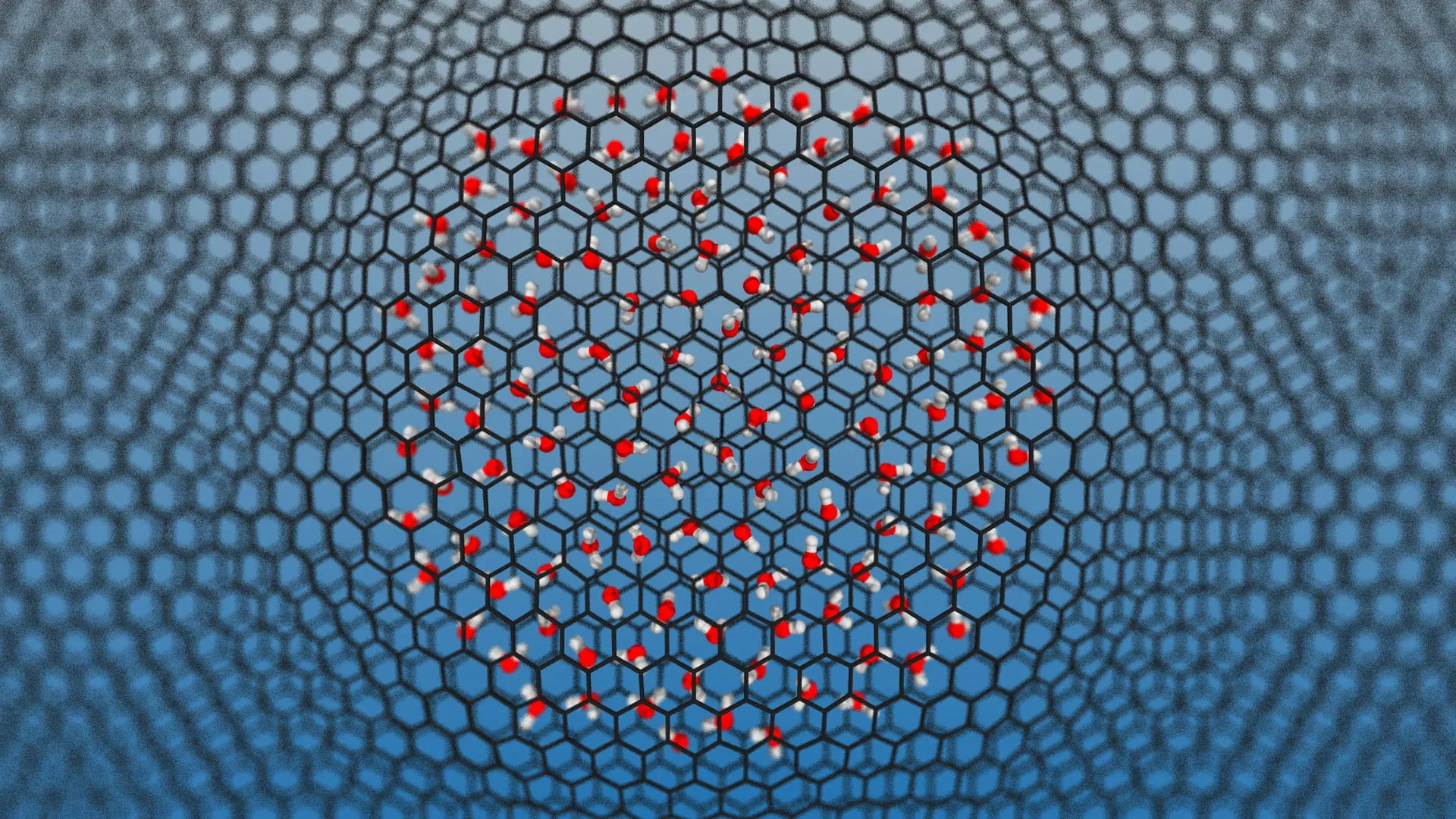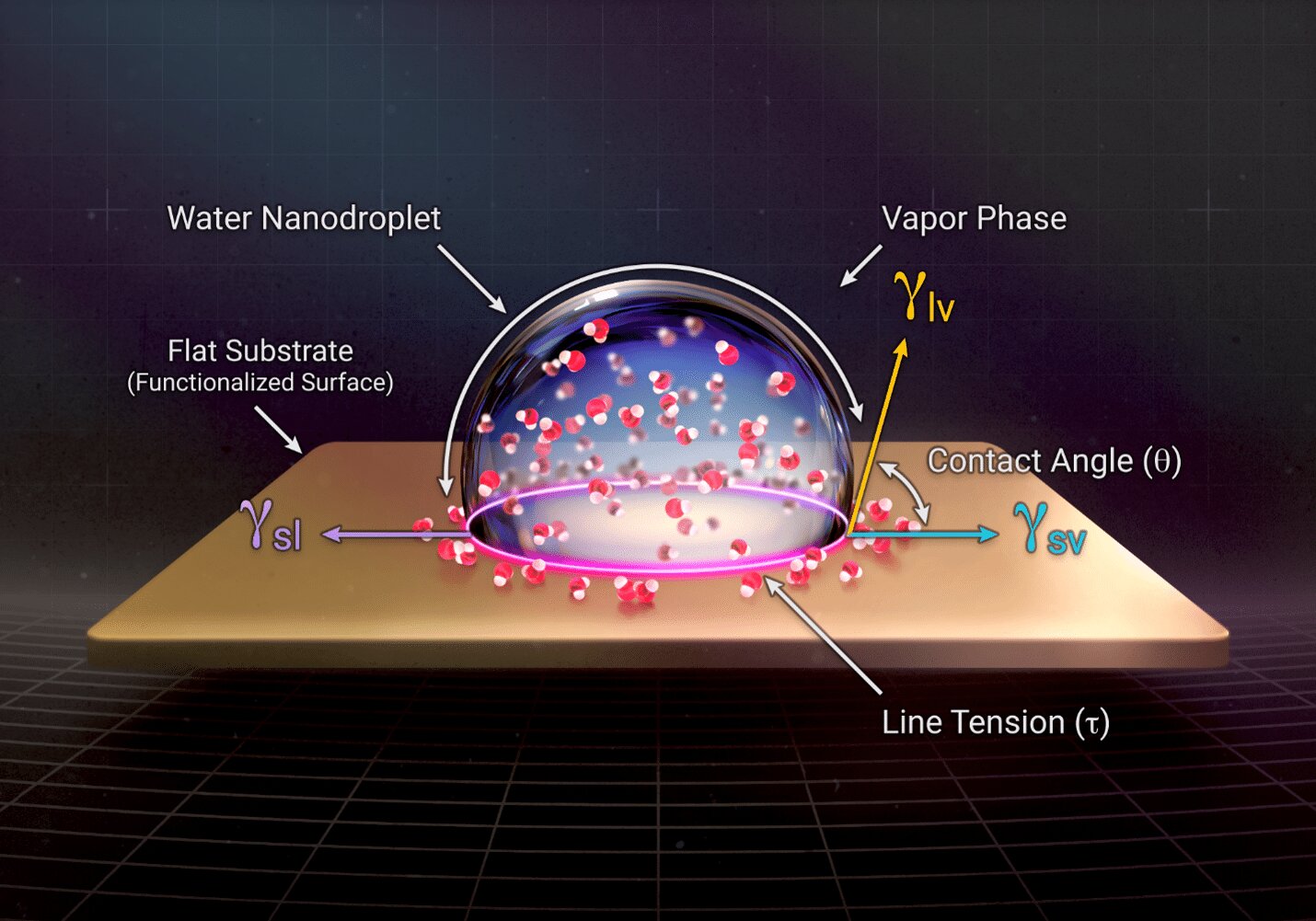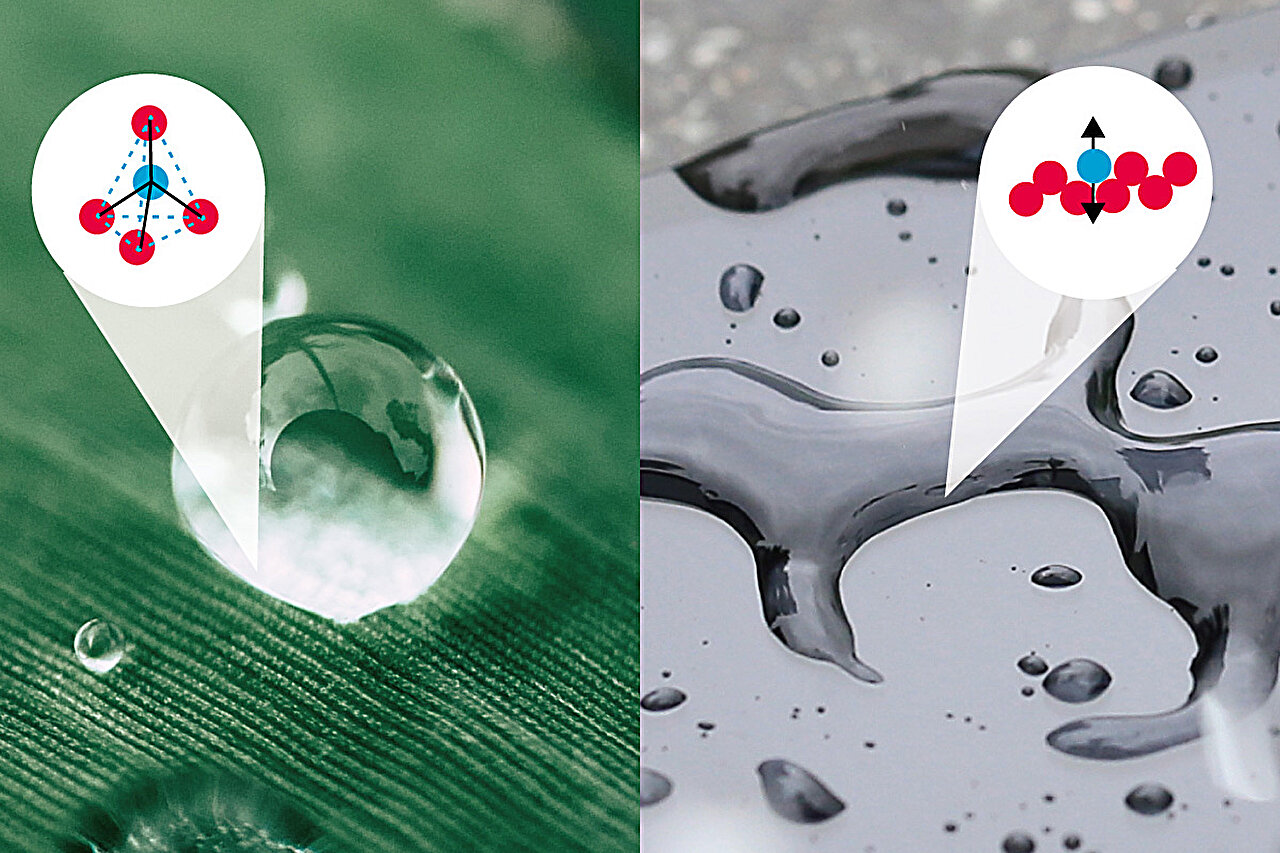
Researchers at the Institute of Industrial Science, The University of Tokyo, carry out computer experiments to track how water nanodroplets wet surfaces. Credit: Institute of Industrial Science, The University of Tokyo
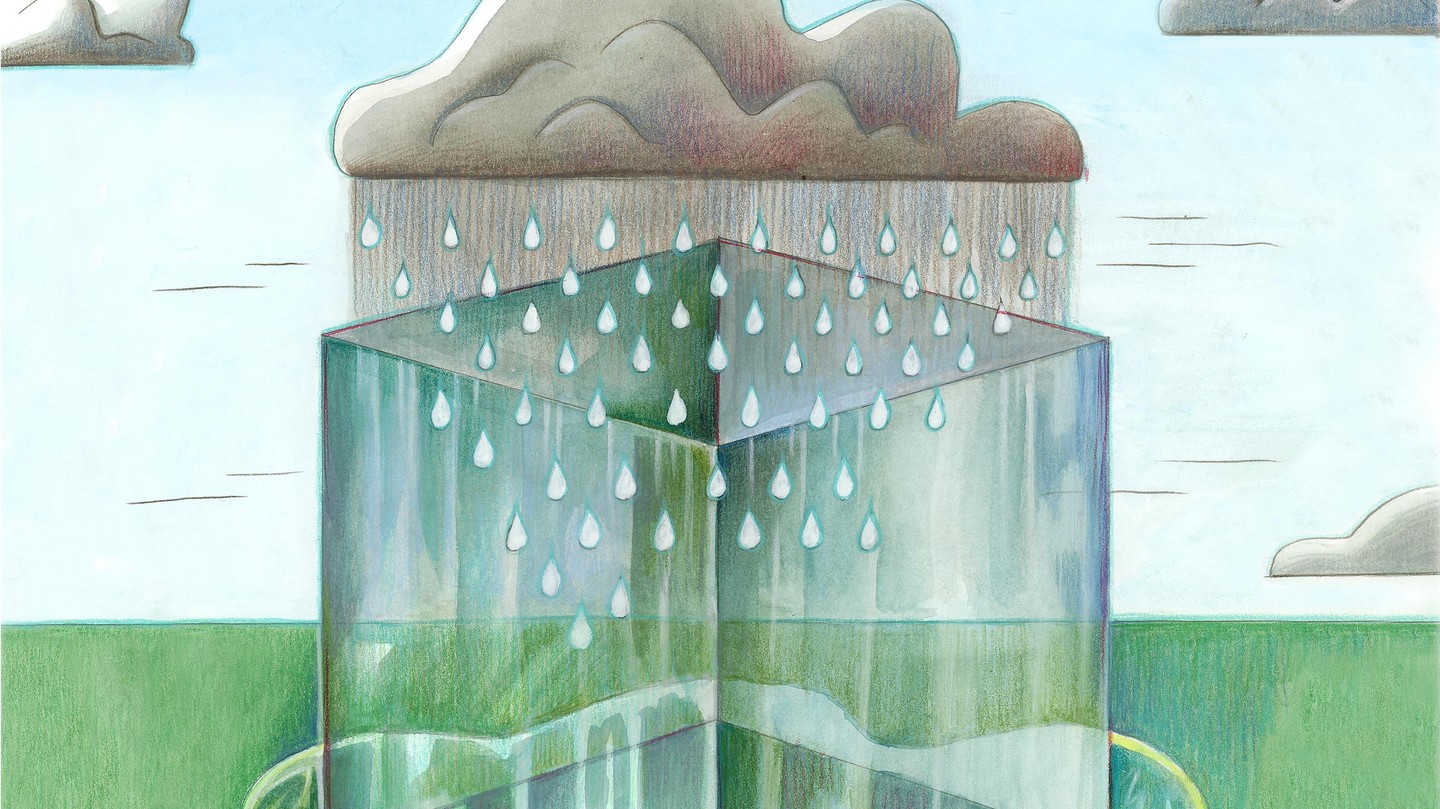
Why does water roll off a duck's back but spread on clean glass? For macroscopic (millimeter-scale) drops, this behavior can be explained using continuum theory. However, when nanoscale (10–9 mm) droplets spread on surfaces, a force called line tension becomes relevant and mysteriously changes sign. Questions about the nature of this force and its relevance to water's interaction with surfaces have remained unanswered.
Now, researchers from the Institute of Industrial Science, The University of Tokyo, have carried out computational studies that explain the origin of line tension in water nanodroplets at a molecular level. This discovery was reported in Nature Physics.
On hydrophobic surfaces like Teflon, water forms spherical beads and slides off, a process known as nonwetting. On a waxy leaf, water forms stable, round drops, corresponding to partial wetting. On clean glass, water spreads into a thin film, referred to as complete wetting. Substrate wettability is the ability of liquids to maintain contact with a solid surface. Changing the substrate wettability can drive wetting from partial to complete.