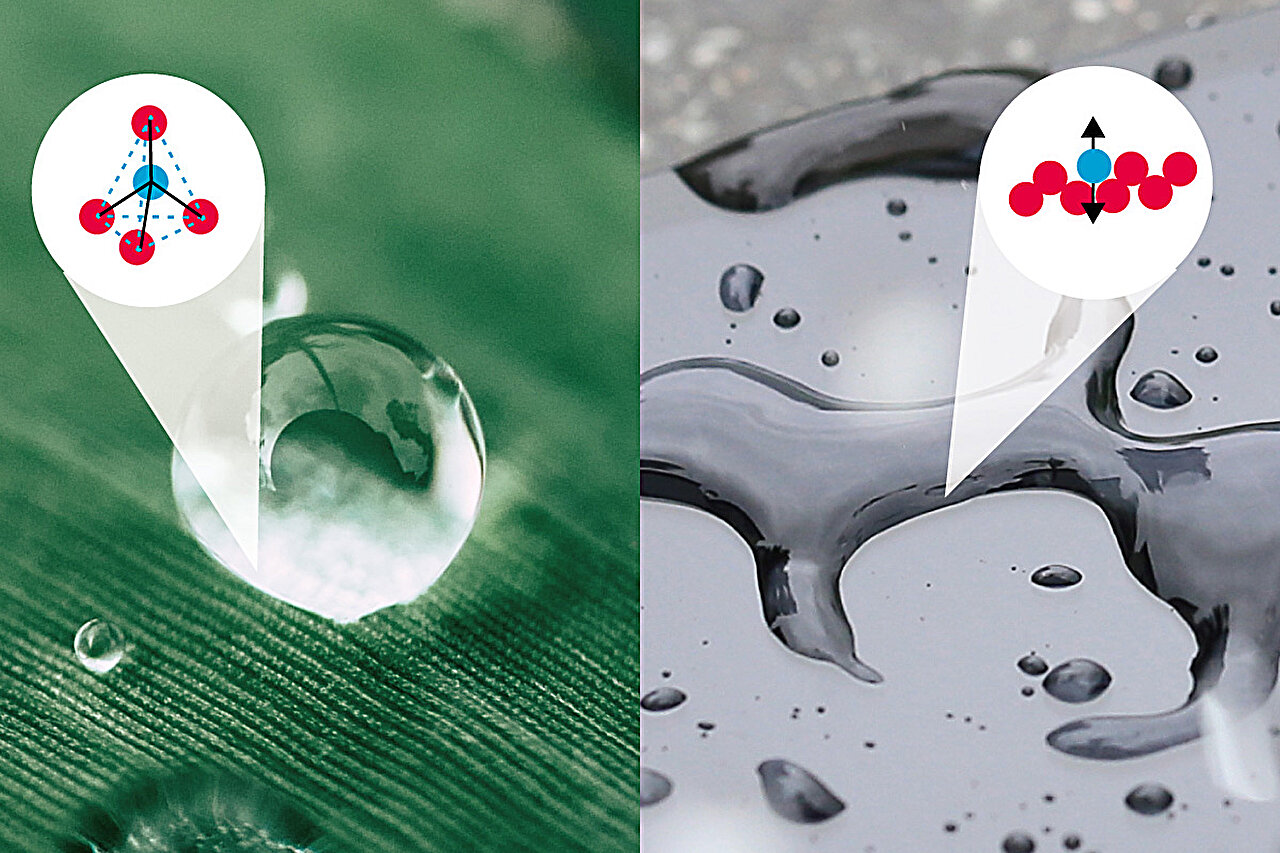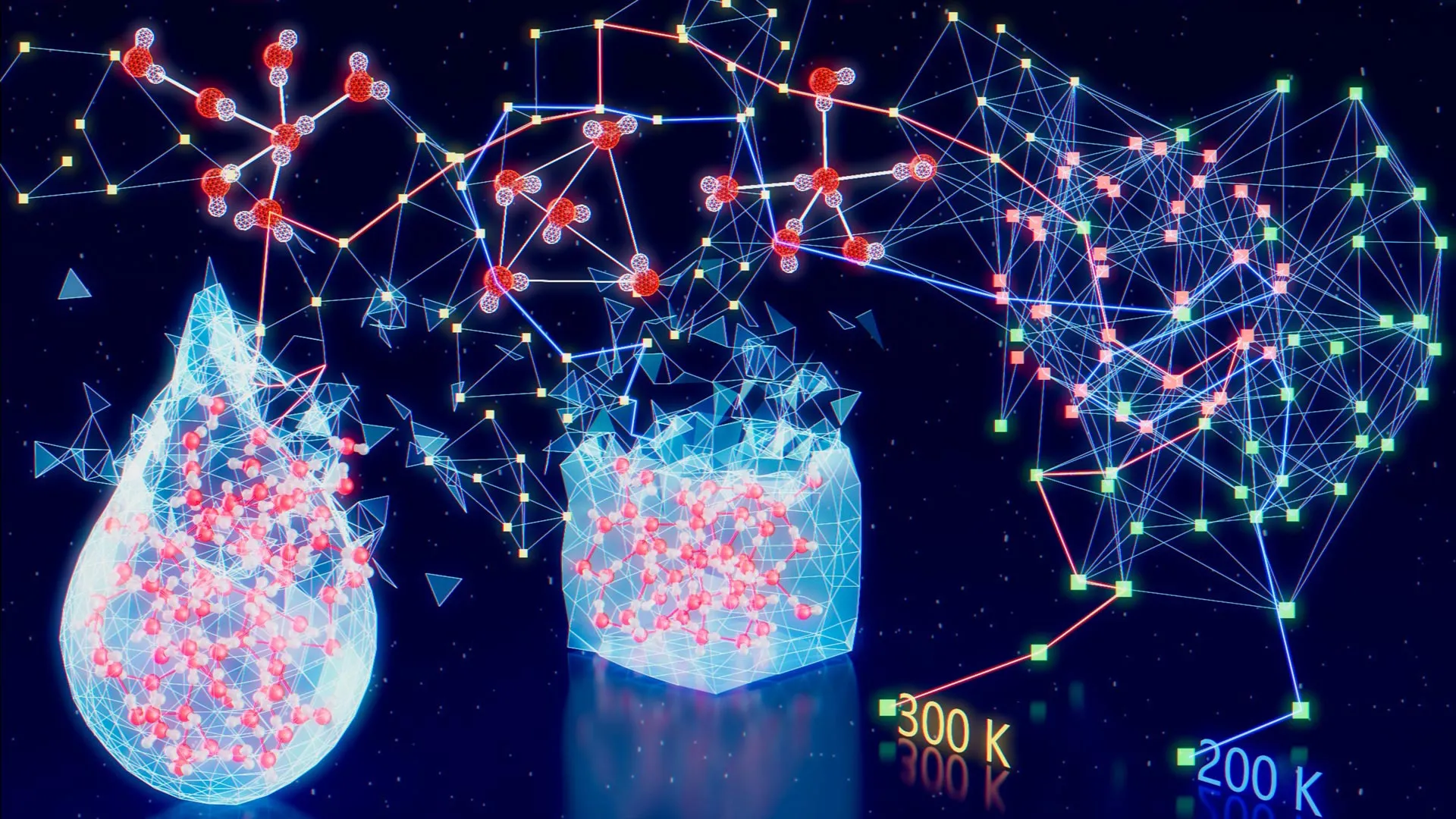
Water covers most of Earth's surface, yet it behaves in ways that set it apart from nearly every other liquid. One of its most unusual traits is that it expands instead of contracts when it freezes. Scientists have long linked these odd behaviors to changes in water's microscopic structure as temperature and pressure vary, but they have lacked a consistent way to describe and compare those structural changes.
Now, researchers at the University of Osaka have turned to artificial intelligence (AI) to tackle that challenge. Their AI system provides a unified way to compare different methods of describing the structure of supercooled water, helping identify which ones capture the most important features. The research was published in Communications Chemistry.
Why Supercooled Water Behaves So Strangely
For liquid water to become ice, its molecules must arrange themselves into an orderly crystal lattice. That process begins at a nucleation site, a surface where ice crystals can start forming. Tiny impurities in the water or even microscopic scratches inside a container can provide those starting points.
If those nucleation sites are absent, water can remain liquid even after it has been cooled below its normal freezing point. This unusual state is known as supercooled water.