view more
Osaka, Japan – Water is the most abundant liquid on the Earth’s surface; and it is highly anomalous compared to other liquids, as it expands upon freezing. The anomalies in water have been linked to how its microscopic structure changes with temperature and pressure. However, there is no systematic scheme for characterizing these structural changes.
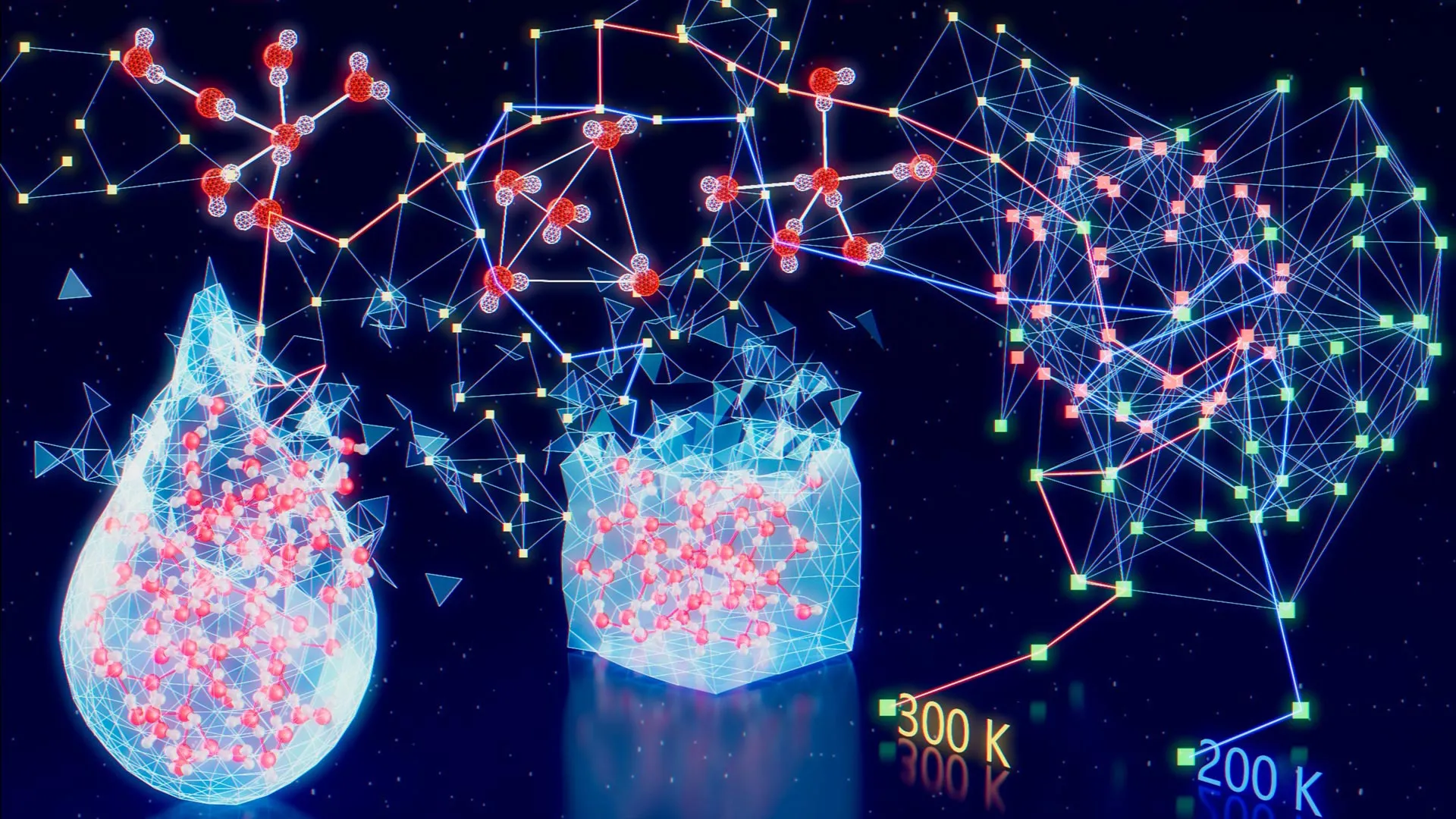
Now, researchers at the University of Osaka have used artificial intelligence (AI) to evaluate characterization frameworks. The AI model is part of a unified framework for comparing and estimating structural descriptors for supercooled water. This exciting discovery was reported in Communications Chemistry.
For water to freeze, molecules need to order themselves into a structured lattice such as ice. Molecules need to attach to a foundation, known as a nucleation site, to grow into a solid phase. Impurities in water or scratches inside a container can serve as nucleation sites.
Consequently, water in a smooth, clean container can be cooled below its freezing point without solidifying. This state is called supercooled water.