Introduction
The week before Christmas 2025, five mathematicians were holed up in a classroom at ETH Zurich. The mood was electric: They were this close to a career-defining breakthrough.
The group — consisting of then-postdocs Sahar Diskin and Philip Easo, graduate student Ritvik Ramanan Radhakrishnan, Benny Sudakov, and Vincent Tassion — was perfecting a solution to one of the biggest open problems in percolation theory, the study of flow in a network.
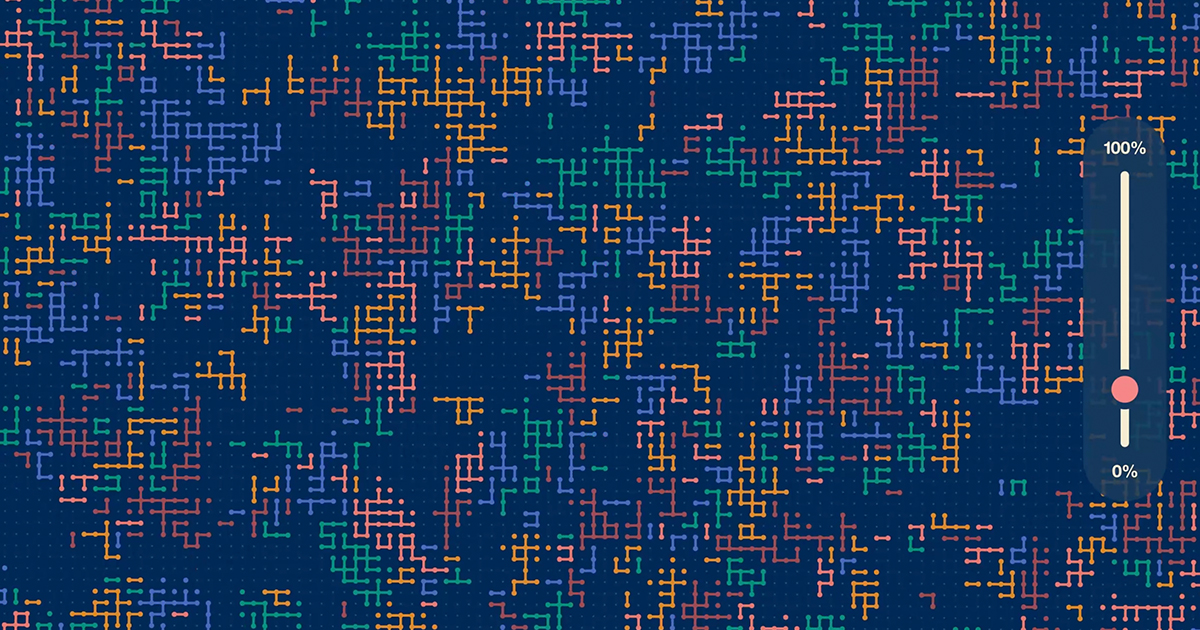
Percolation captures a vast array of phenomena, but the prototypical examples involve fluids, like hot water seeping through a bed of coffee grounds. Diskin, Easo, Radhakrishnan, Sudakov, and Tassion were trying to work out something fundamental about how graphs — networks of points connected by lines, or edges — can be taken over by large connected areas, the equivalent of pools of fluid. The group had glimpsed a simple argument that could deal with a huge variety of graphs at once.
“We almost didn’t believe it at first,” Radhakrishnan said.