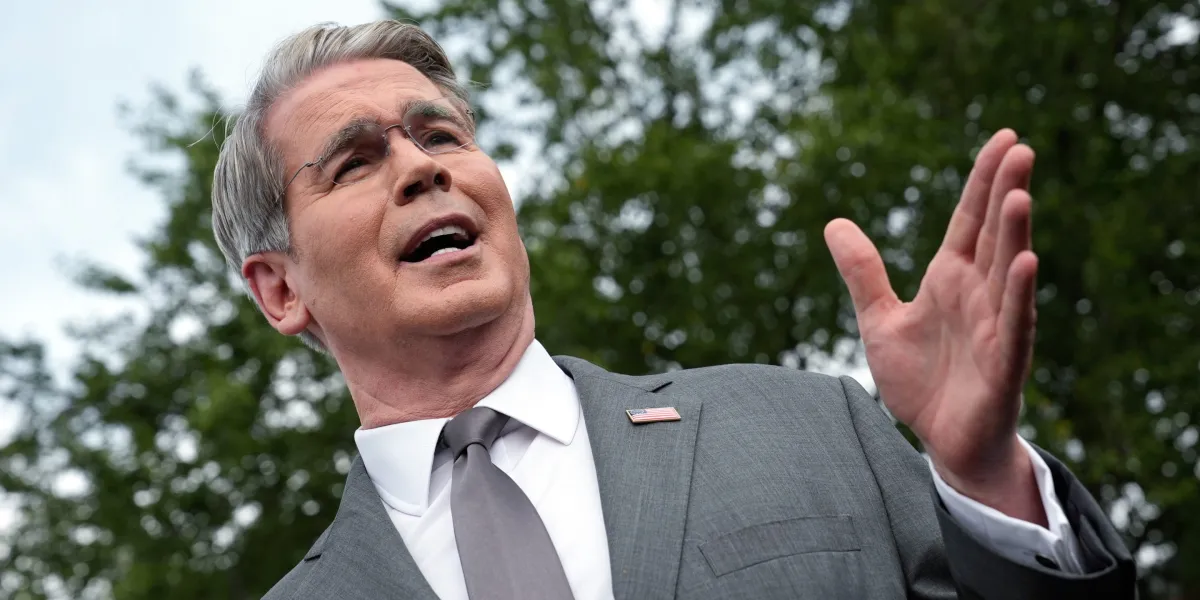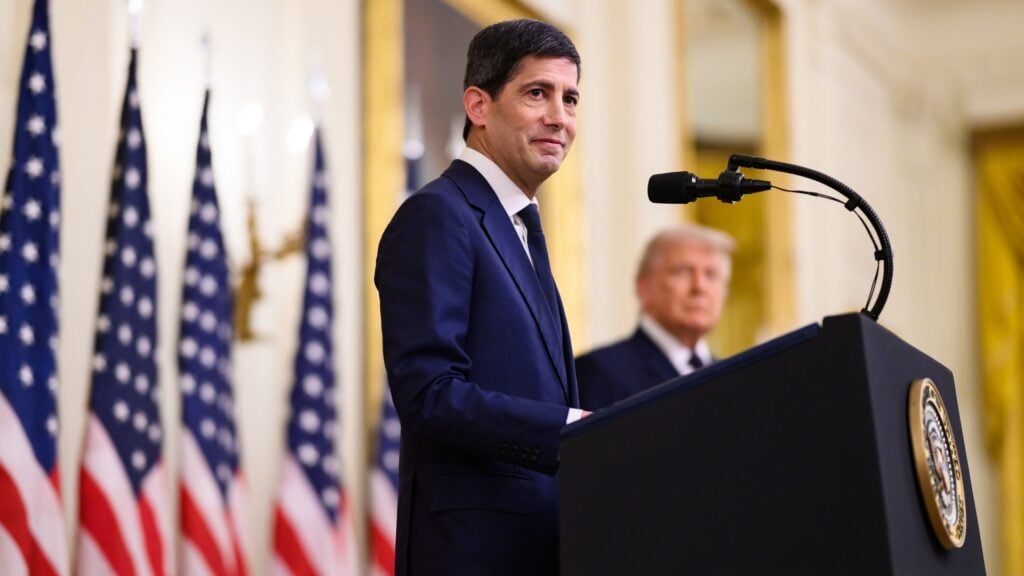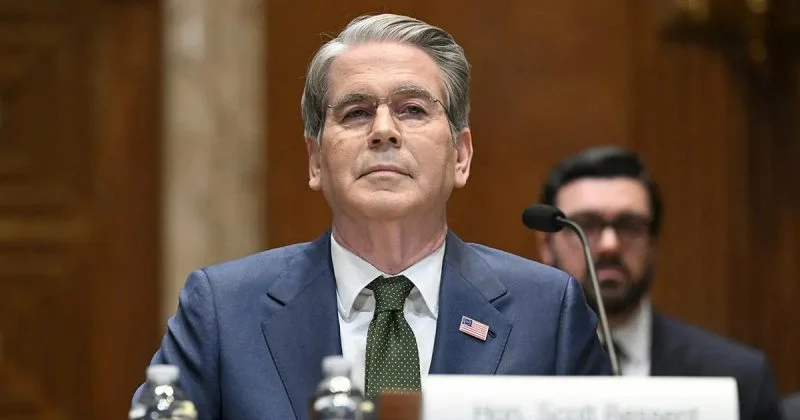
Skip to Content News Archives Economy Energy Oil & Gas Renewables Electric Vehicles Mining Commodities Agriculture Real Estate Mortgages Mortgage Rates Finance Banking Insurance Fintech Cryptocurrency Work Wealth Smart Money Wealth Management Investor Personal Finance Family Finance Retirement Taxes High Net Worth FP Comment Executive Women Puzzmo Newsletters Financial Times Business Essentials More Innovation Information Technology FP500 Podcasts Small Business Lives Told Tails Told Shopping Financial Post Store Obituaries Place a Notice Advertising Advertising With Us Advertising Solutions Postmedia Ad Manager Sponsorship Requests Classifieds Place a Classifieds ad Working Profile Settings My Subscriptions My Offers Newsletters Customer Service FAQ News Economy Energy Mining Real Estate Finance Work Wealth Investor FP Comment Executive Women Puzzmo Newsletters Financial Times Business Essentials HomeFinancial TimesScott Bessent's bond intervention puts U.S. Treasury on collision course with FedIncreased purchases of debt threaten to undermine central bank chief Kevin Warsh's bid to tame inflationAuthor of the article:Last updated 8 minutes ago The Treasury intervention has had a muted effect on bond yields. But if Scott Bessent's move succeeds, it would lower mortgage rates and other borrowing costs — juicing the economy. Photo by Chip Somodevilla/Getty ImagesUnited States Treasury secretary Scott Bessent’s bond market intervention is pulling in the opposite direction to the Federal Reserve’s battle against inflation, big investors warned ahead of chair Kevin Warsh’s Jackson Hole speech.Subscribe now to read the latest news in your city and across Canada.Exclusive articles from Barbara Shecter, Joe O'Connor, Gabriel Friedman, and others.Daily content from Financial Times, the world's leading global business publication.Unlimited online access to read articles from Financial Post, National Post and 15 news sites across Canada with one account.National Post ePaper, an electronic replica of the print edition to view on any device, share and comment on.Daily puzzles, including the New York Times Crossword.Subscribe now to read the latest news in your city and across Canada.Exclusive articles from Barbara Shecter, Joe O'Connor, Gabriel Friedman and others.Daily content from Financial Times, the world's leading global business publication.Unlimited online access to read articles from Financial Post, National Post and 15 news sites across Canada with one account.National Post ePaper, an electronic replica of the print edition to view on any device, share and comment on.Daily puzzles, including the New York Times Crossword.Create an account or sign in to continue with your reading experience.Access articles from across Canada with one account.Share your thoughts and join the conversation in the comments.Enjoy additional articles per month.Get email updates from your favourite authors.Create an account or sign in to continue with your reading experience.Access articles from across Canada with one accountShare your thoughts and join the conversation in the commentsEnjoy additional articles per monthGet email updates from your favourite authorsSign In or Create an AccountorWall Street has widely criticized Bessent’s surprise move last week to “at least double” the Treasury’s purchases of long-term U.S. government debt, with investors saying that it could both undermine the agency’s credibility and work against the Fed’s ability to tame this year’s flare-up in inflation.Bessent’s manoeuvre to prop up the US$32 trillion bond market after long-term borrowing costs hit a 19-year high has raised the stakes for Warsh when he addresses the Kansas City Fed’s economic conference in Jackson Hole, Wyoming, on Friday.Get the latest headlines, breaking news and columns.By signing up you consent to receive the above newsletter from Postmedia Network Inc.A welcome email is on its way. If you don't see it, please check your junk folder.The next issue of Top Stories will soon be in your inbox.We encountered an issue signing you up. Please try again“I have a very dim view of the Treasury’s rationale and its tinkering. I think it’s a self-limiting, self-defeating strategy,” said Greg Peters, co-chief investment officer at PGIM Credit. “The markets are looking for something out of Warsh, but I am not sure what he’s supposed to do here.”Lisa Shalett, chief investment officer of Morgan Stanley Wealth Management, added that intervening in the Treasury market “because you’re cranky” about rising yields “is not a compelling argument and smacks of whimsy”.“And you don’t want an unpredictable, whimsical Treasury,” she said. If Bessent continued to try to exercise control over yields in the world’s most important bond market, “it would be an admission that they’re worried in DC about debt sustainability”, Shalett added.The response to Bessent’s surprise intervention has heaped pressure on the Fed chair to soothe investors’ concerns over the financial and economic risks emanating from the Trump administration’s war in Iran, which has sent costs spiralling for consumers and businesses.Warsh is travelling to the central bankers’ gathering in Jackson Hole already under pressure from markets — and some of his fellow Fed rate-setters — to explain what it would take for him to raise interest rates and bring inflation closer to the Fed’s two per cent goal. The latest reading put U.S. inflation at 3.7 per cent.Bessent’s plan to increase bond purchases is aimed at bringing down long-term borrowing costs, which have jumped in recent months amid concerns over inflation, mounting public borrowing and vast debt raising to finance the AI boom.Warsh and Bessent — both protégés of hedge fund billionaire Stanley Druckenmiller — meet regularly and are thought to maintain cordial relations. But investors and economists have pointed out that the priorities and strategies of the Fed and the Treasury seem increasingly at odds.Druckenmiller this week called the plan to increase the buyback of long-term Treasuries to at least US$4 billion a “mistake”. Federal Reserve Chair Kevin Warsh speaks during a news conference at Federal Reserve Headquarters on July 29, 2026 in Washington, DC. Photo by Win McNamee/Getty Images“This wasn’t liquidity management, it was price management — and a mistake far larger than US$4 billion suggests,” he said in a Wall Street Journal opinion column.The Treasury intervention has had a muted effect on bond yields. But if Bessent’s move succeeds, it would lower mortgage rates and other borrowing costs — juicing the economy. That comes at a time when several Fed officials have said the central bank should consider the opposite: raising rates to cool inflation.Three members of the Federal Open Market Committee backed a rate rise at the central bank’s July vote. Other regional Fed presidents have since said that they would also support a quarter-point rise in borrowing costs.Krishna Guha, vice-chair at Evercore ISI, said the Treasury’s move might not have only unsettled investors, “but folks on the FOMC as well”.Bessent’s intervention was quickly followed up by comments from him that the rise in the U.S. government’s borrowing costs did not “reflect the underlying fundamentals”.In contrast, Warsh has emphasized that investors need to be guided more by economic data and market prices rather than waiting for central bankers to give them so-called forward guidance on the trajectory of U.S. borrowing costs.The Fed chair suggested last month that higher Treasury yields reflected economic developments that pointed to the need for higher U.S. borrowing costs, adding that the central bank under his watch was “trying not to interfere with the market signal”.“Warsh’s core view is hard to reconcile with what the Treasury is doing,” said Guha. “It’s hard for Warsh to appeal to market price formation in the bond market right now if you’ve got a Treasury secretary who’s telling you the prices are wrong and also is intervening in it.”Warsh is expected to use the Jackson Hole address to outline the rationale behind his pared-back communication style and convince markets that he can lead the Fed’s efforts to bring inflation towards its 2 per cent goal after more than five years.Scott Barnard, fixed income portfolio manager at Westwood, said Warsh’s decision to ditch forward guidance combined with Bessent’s intervention to keep a lid on longer-term yields had given the impression that the Fed and Treasury were “pulling in opposite directions”.The Trump administration’s desire for lower borrowing costs ahead of crucial midterm elections in November has also raised concerns that the central bank will come under pressure to intervene too, should Bessent’s bid to control yields continue to fall short.“It would have a whiff of fiscal dominance were the Fed to conduct monetary policy with an eye to helping debt management,” said Jason Furman, a professor at Harvard who chaired the White House’s Council of Economic Advisers under former president Barack Obama.© 2026 The Financial Times Ltd Join the Conversation This website uses cookies to personalize your content (including ads), and allows us to analyze our traffic. Read more about cookies here. By continuing to use our site, you agree to our Terms of Use and Privacy Policy.
Scott Bessent's bond intervention puts U.S. Treasury on collision course with Fed
Scott Bessent's bond market intervention is pulling in the opposite direction to the Federal Reserve's battle against inflation. Read here
1,419 words~6 min read