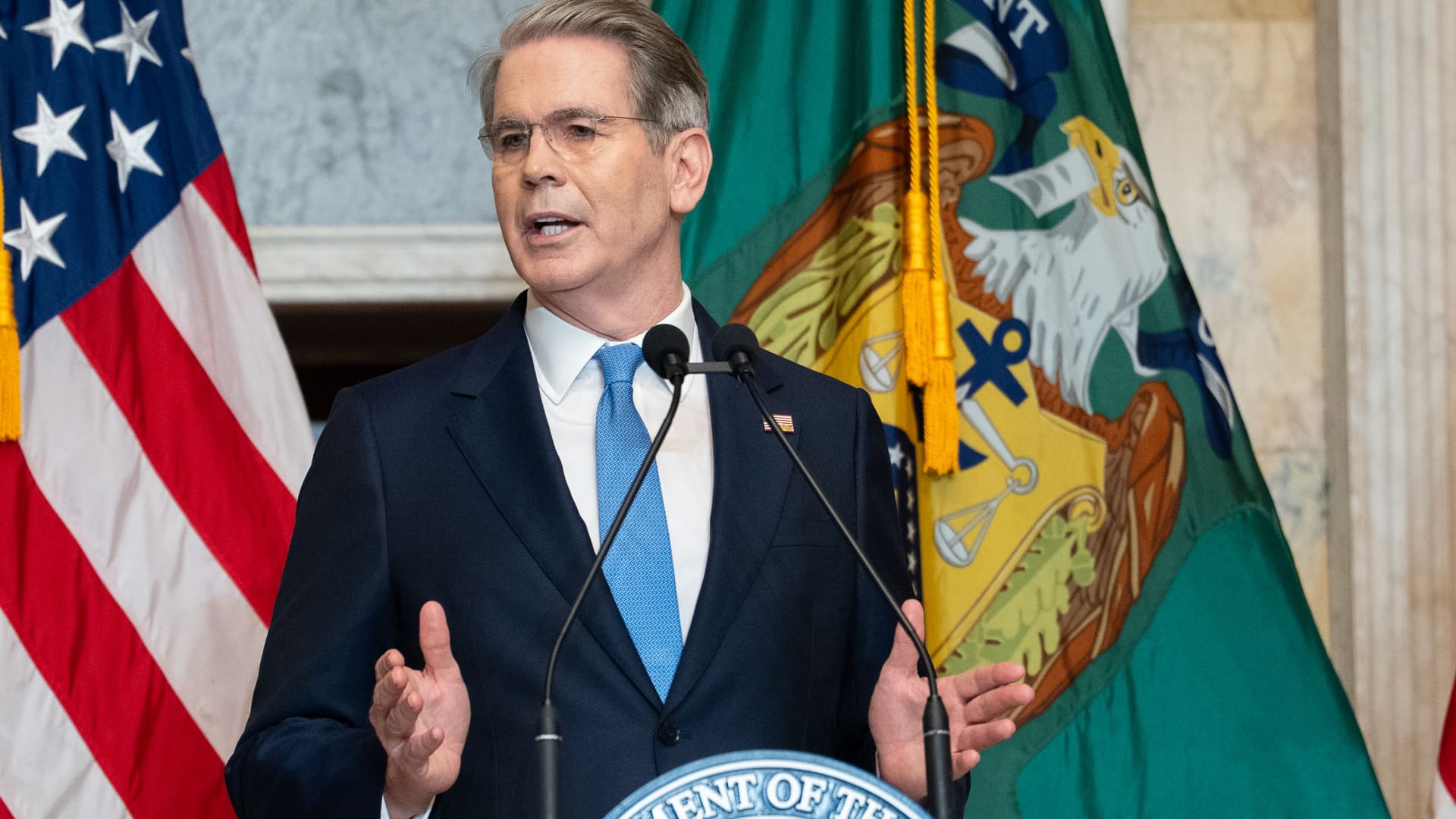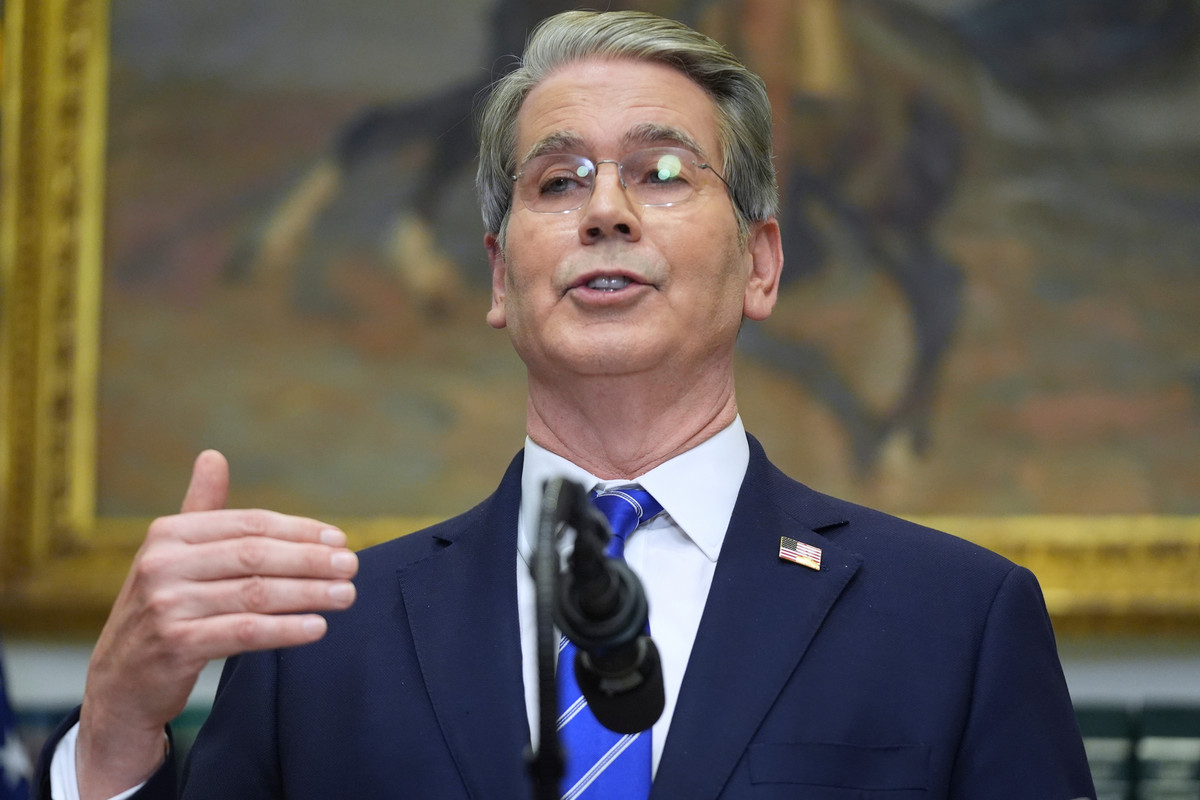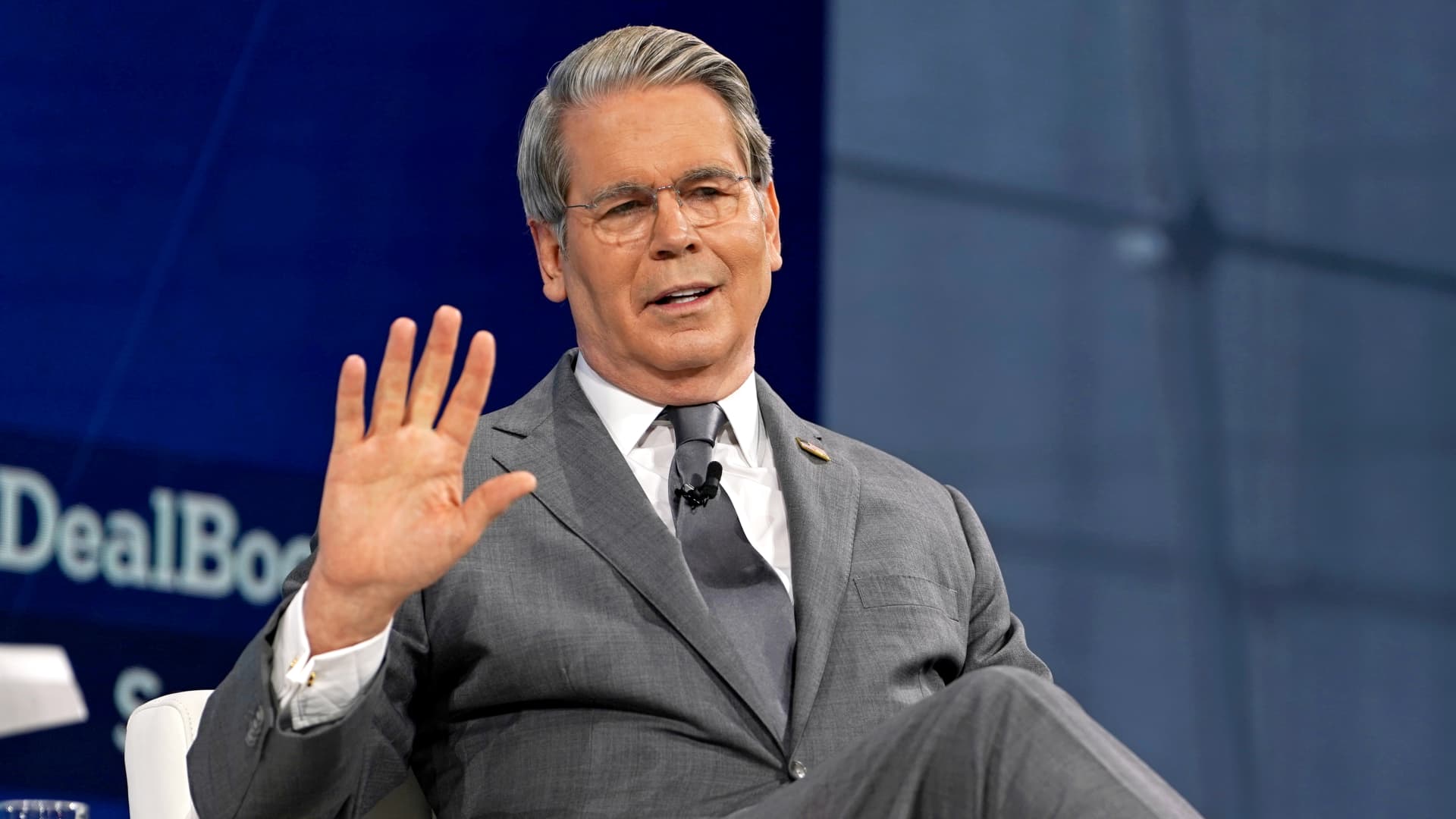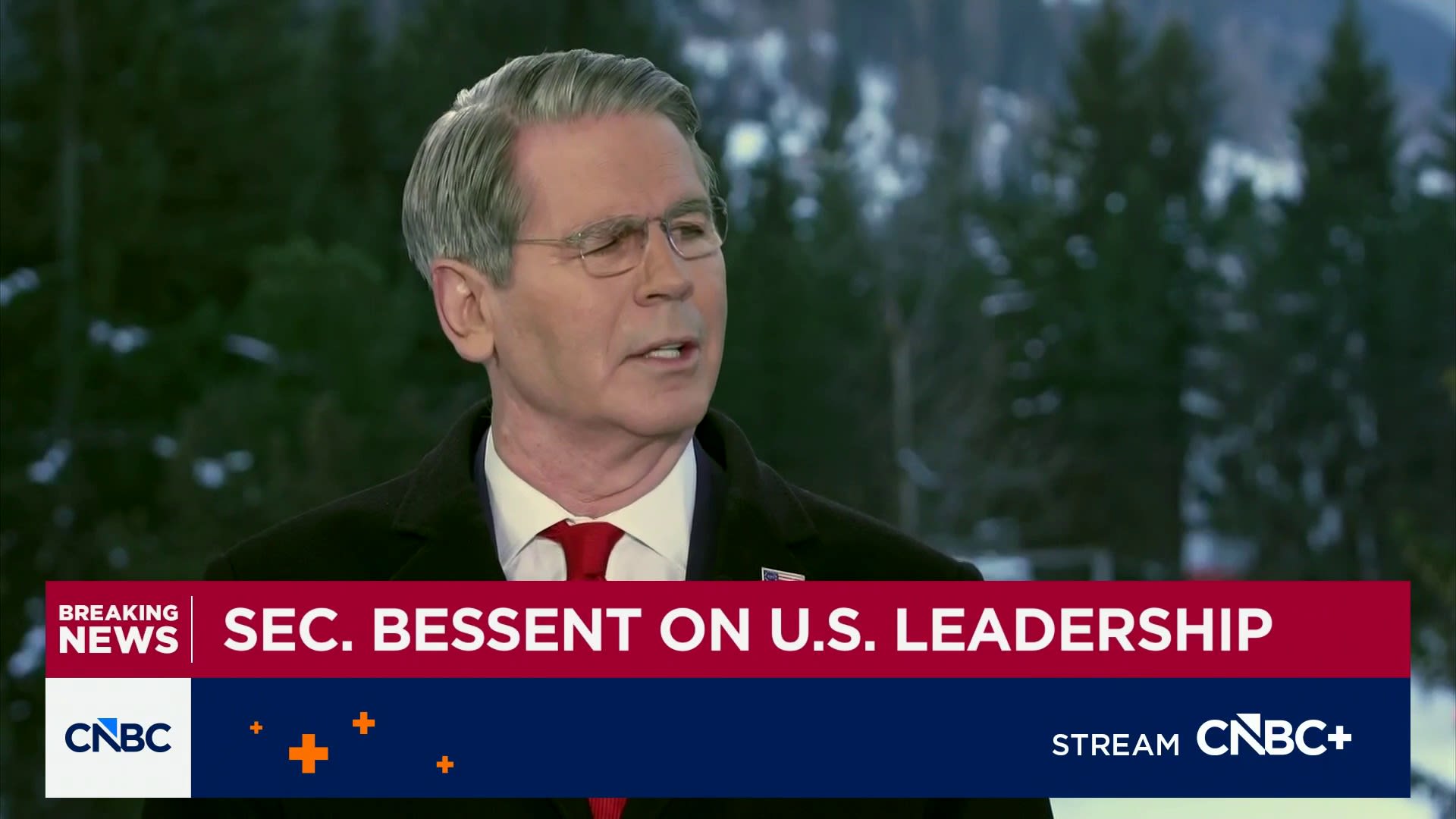
Skip to Content News Archives Economy Energy Oil & Gas Renewables Electric Vehicles Mining Commodities Agriculture Real Estate Mortgages Mortgage Rates Finance Banking Insurance Fintech Cryptocurrency Work Wealth Smart Money Wealth Management Investor Personal Finance Family Finance Retirement Taxes High Net Worth FP Comment Executive Women Puzzmo Newsletters Financial Times Business Essentials More Innovation Information Technology FP500 Podcasts Small Business Lives Told Tails Told Shopping Financial Post Store Obituaries Place a Notice Advertising Advertising With Us Advertising Solutions Postmedia Ad Manager Sponsorship Requests Classifieds Place a Classifieds ad Working Profile Settings My Subscriptions My Offers Newsletters Customer Service FAQ News Economy Energy Mining Real Estate Finance Work Wealth Investor FP Comment Executive Women Puzzmo Newsletters Financial Times Business Essentials HomeNewsEconomyBessent becomes most interventionist U.S. Treasury chief in decadesBessent puts his credibility on the line in an effort to quell a potentially damaging rise in U.S. borrowing costsAuthor of the article:Secretary of the Treasury Scott Bessent (R) listens as U.S. Vice President JD Vance (L) speaks during a Cabinet meeting at Camp David, the presidential retreat, on July 31, 2026 in Camp David, Maryland. Photo by Anna Moneymaker/Getty ImagesWith a slew of unexpected maneuvers this year, Scott Bessent has emerged as the most interventionist Treasury secretary in financial markets in decades — putting his credibility on the line in an effort to quell a potentially damaging rise in U.S. borrowing costs.Subscribe now to read the latest news in your city and across Canada.Exclusive articles from Barbara Shecter, Joe O'Connor, Gabriel Friedman, and others.Daily content from Financial Times, the world's leading global business publication.Unlimited online access to read articles from Financial Post, National Post and 15 news sites across Canada with one account.National Post ePaper, an electronic replica of the print edition to view on any device, share and comment on.Daily puzzles, including the New York Times Crossword.Subscribe now to read the latest news in your city and across Canada.Exclusive articles from Barbara Shecter, Joe O'Connor, Gabriel Friedman and others.Daily content from Financial Times, the world's leading global business publication.Unlimited online access to read articles from Financial Post, National Post and 15 news sites across Canada with one account.National Post ePaper, an electronic replica of the print edition to view on any device, share and comment on.Daily puzzles, including the New York Times Crossword.Create an account or sign in to continue with your reading experience.Access articles from across Canada with one account.Share your thoughts and join the conversation in the comments.Enjoy additional articles per month.Get email updates from your favourite authors.Create an account or sign in to continue with your reading experience.Access articles from across Canada with one accountShare your thoughts and join the conversation in the commentsEnjoy additional articles per monthGet email updates from your favourite authorsSign In or Create an AccountorWednesday brought the latest surprise. Just two weeks after releasing its schedule for buying back older Treasury securities, the Treasury Department announced it would “at least double” its planned purchases of outstanding 10-year to 30-year debt.That came after the Treasury earlier this month opened the door to potential cuts in issuance of longer-dated debt. Then back on July 31, Bessent oversaw the first purchases of yen by U.S. authorities in three decades, an action seen as reducing the need for Japan to sell down its Treasuries stockpile to fund its own yen buying. And early this year, Bessent deployed so-called rate checks — calls by authorities to banks for quotes on the yen — surprising even a former Japanese official.SUBSCRIBER EXCLUSIVE: FP West: Energy Insider brings you behind the oilpatch’s closed doors with exclusive insights from insiders every Wednesday morning.By signing up you consent to receive the above newsletter from Postmedia Network Inc.A welcome email is on its way. If you don't see it, please check your junk folder.The next issue of FP West: Energy Insider will soon be in your inbox.We encountered an issue signing you up. Please try again“He’s activist, absolutely,” said Mark Sobel, a former U.S. Treasury official now at the research group OMFIF. “It harkens back to his hedge-fund background.”As for the motive: “It seems clear to me that he and the administration are concerned about the rise in long-term yields,” he said.The Treasury didn’t immediately respond to a request for comment on Bessent’s market measures.As stewards of the nation’s economic policy and its financial markets, Treasury Secretaries have often been forced to intervene in moments of crisis.That’s not the case now, given that the bond selloff has been orderly and building for months. But his action after 10-year Treasury yields, his self-specified financial benchmark, rose above where they were before Trump returned to office, shows mounting worries in Washington.The rise in Treasury yields, on a combination of concerns about inflation, United States Federal Reserve policymaking and outsize fiscal deficits, has kept mortgage rates elevated and poses a headwind to economic growth months before the November congressional election.When it comes to debt issuance, the Treasury has long hewed to the principle of being “regular and predictable,” and not surprising investors. It’s a concept Bessent himself endorsed in a keynote speech at a Treasury market conference in November.What he also said in that speech, however, was that “my job is to be the nation’s top bond salesman. And Treasury yields are a strong barometer for measuring success in this endeavor.” And he highlighted the economic importance of lower Treasury rates.“It is going against ‘regular and predictable’ — but that’s the world we live in,” Gregory Faranello, head of U.S. rates trading and strategy at AmeriVet Securities, said of Wednesday’s announcement. “The messaging is clear: stop the rise in yields.”Bessent’s predecessor, Janet Yellen, also moved to stanch a rise in yields in 2023. Bessent was among a number of Republicans who criticized that step — done via the regular quarterly debt-issuance statement — as politically motivated, being aimed at juicing the pre-election economy. Stephen Miran, U.S. President Donald Trump’s former chief economist and an ex Fed-board member, had co-written a paper in July 2024 inveighing against “activist Treasury issuance,” or ATI.“Once one political party begins using ATI to stimulate the economy into election season, it may be used repeatedly by all future administrations,” Miran and co-author Nouriel Roubini wrote.The Treasury’s move comes just weeks after Federal Reserve Chairman Kevin Warsh had enthused over financial markets being freed of forward guidance. “Market participants are learning to play the ball, not the referee, and market prices will continue to respond in the direction and magnitude they see fit.”Bessent has shared Warsh’s sentiment in the past, writing in an essay last year that Fed bond purchases had created “distortions” in markets and “disrupted an essential source of feedback.”As it turns out, “this is not an administration that sets stable rules and then lets the market chips fall where they may,” said Brad Setser, a senior fellow at the Council on Foreign Relations.Bessent, 63, was famed for his role in successful, high-stakes bets on the British pound and Japanese yen during his work for George Soros. And some market participants viewed Wednesday’s action as drawing on that career.“It is like the ‘lift everything on the screen’ trick from the old days,” said Brad Golding, a portfolio manager at Christofferson Robb & Co. That’s a reference to a hedge fund technique of hitting big dealers with orders all at the same time to trigger a large move in the market.Being the main cabinet member responsible for stewardship of the world’s biggest economy, Treasury secretaries have had a long tradition of major interventions in times of crisis. The department played a key role during Covid, ran the main bailout program of the global financial crisis, and took point on multiple emerging market rescues in the 1990s.Bessent’s maneuvers are distinct, some observers say, by not being prompted by crisis or particularly disorderly market conditions.“Bessent is letting everyone know that his approach is more actively interventionist, even absent the kind of catalyst that might have been required in recent decades,” said Douglas Rediker, a managing partner of the political advisory firm International Capital Strategies in Washington.Sobel, who served at the Treasury from the late 1970s to 2015, said Bessent has at least been the most activist since the early 2000s. Historical comparisons, such as to James Baker — who helped engineer the Plaza and Louvre Accords of the 1980s that had a strong influence on exchange rates at the time — are fraught by historical contexts being different, he said.Many market participants and economists highlighted that the fundamentals behind today’s higher yields challenge the Treasury’s operational toolkit. With two months to go in the fiscal year, the deficit so far for 2026 is US$1.8 trillion, five per cent wider than last year. Spending is being propelled by Social Security, Medicare, Medicaid and interest on the debt. Defense spending is also set to rise, and Republicans are exploring more tax cuts.“Instead of addressing the underlying issue, which is to bring down debt and to run a more modest budget deficit, it’s trying to manipulate the yield curve,” said Robin Brooks, a senior fellow at the Brookings Institution.Bessent has indicated, however, that he’s a believer in the power of the government to influence markets. Speaking last month about the Trump administration’s stakes in a number of technology and resource companies, he said, “What we’re trying to do is create market signals.” Speaking on Fox Business, he said, “In essence, trying to tell investors, OK, here’s where the puck’s going to be. Skate to it quickly.”Investors skated, some, on Wednesday. Ten-year yields were down around 6 basis points in afternoon trading in New York, while 30-year rates were almost 9 basis points lower.“This only works for so long,” said Guy Miller, chief strategist at Zurich Insurance. “It can be quite a potent intervention when you’ve got the Treasury saying that they’re very much committed to doing this. But ultimately, unless you tackle profligate policy, that’s not sustainable indefinitely.”As for Bessent’s yen operation, Japan’s currency has this month surrendered a portion of the intervention-spurred advance. Wednesday’s drop in Treasuries yields also gave the yen a push higher, however. The drop in rates even pulled the Bloomberg Dollar Spot Index down to the lowest level in three months.“He’s picking a fight with two massive markets — Treasuries and FX,” said Peter Boockvar, chief investment officer at Onepoint Bfg. “And that’s a really tough battle.” Join the Conversation This website uses cookies to personalize your content (including ads), and allows us to analyze our traffic. Read more about cookies here. By continuing to use our site, you agree to our Terms of Use and Privacy Policy.
Bessent becomes most interventionist U.S. Treasury chief in decades
Scott Bessent has emerged as the most interventionist Treasury secretary in financial markets in decades. Read more.
1,764 words~8 min read