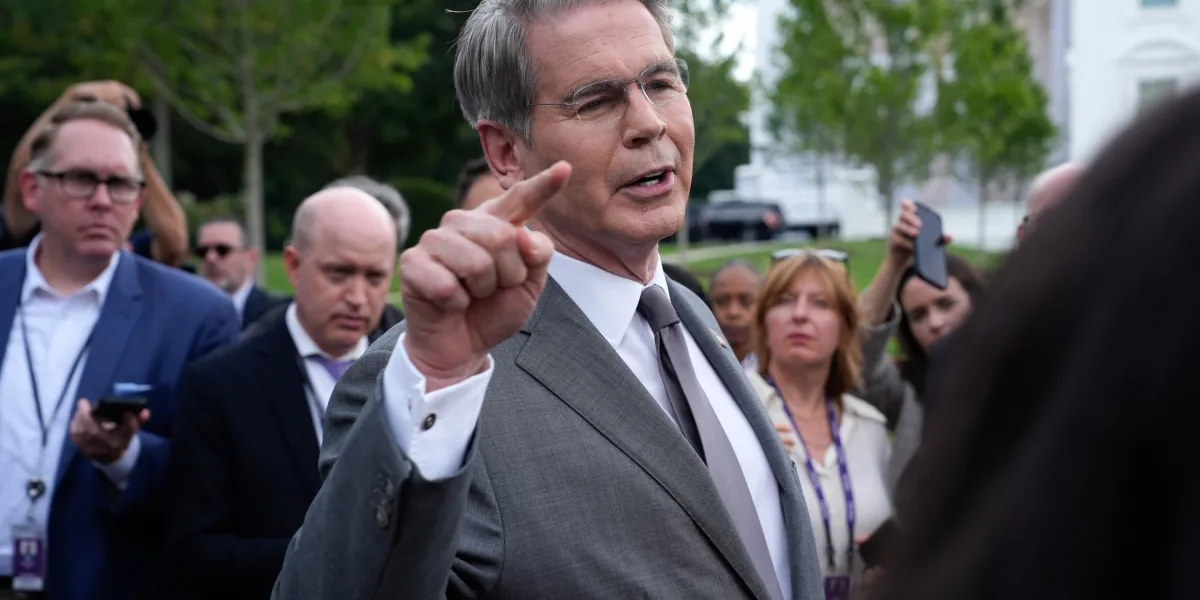
Treasury Secretary Scott Bessent might win points with his boss, President Trump, for his intervention in the market for U.S. Treasuries — doubling its buybacks to at least $4 billion — but he will earn no points from the bond vigilantes.
The history of such market interventions is littered with failures. Given Bessent’s participation in the Soros raid on the pound in 1992, when the Bank of England and the U.K. Treasury were forced to devalue sterling, one would have thought that Bessent knew that markets have a way of outsmarting government officials.
The Treasury is engaged in a new version of “Operation Twist,” buying long-term debt to keep longer-term yields down and selling an equal amount of short-term debt, which tends to raise short-term yields. Overall, this will tend to flatten or “twist” the yield curve — at least initially.
The key distinction to make is whether Operation Twist is conducted on its own as a part of fiscal policy, or whether it is accompanied by a change in monetary policy.
The reason is that two main factors drive yields. First, is the supply and demand of credit, including the size of the fiscal deficit and corporate and household demand for credit. Second is inflation, which is almost entirely determined by monetary policy.