view more
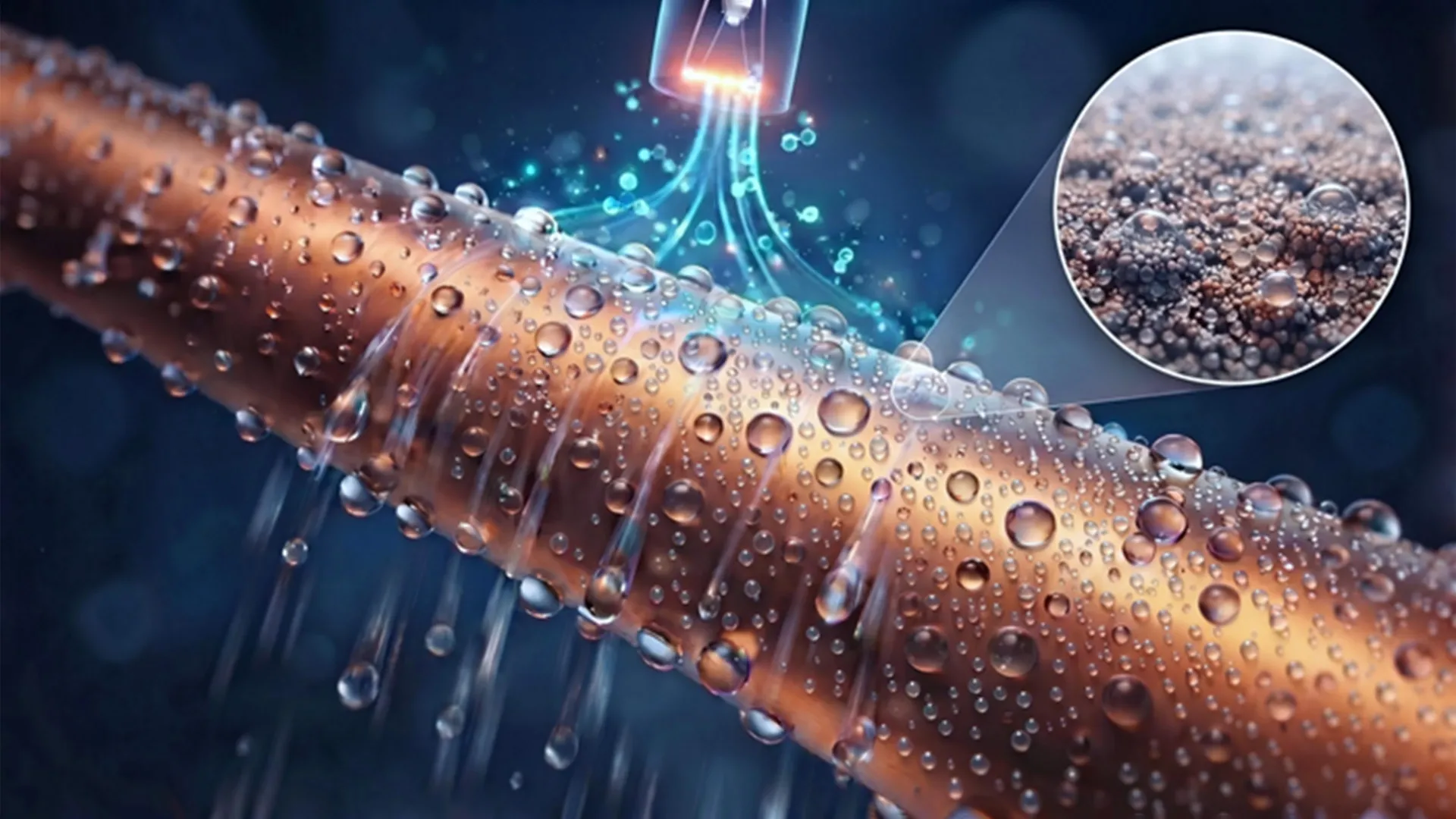
A technology that boosts condensation heat transfer performance by up to 5.5 times that of conventional copper surfaces has been developed by helping water droplets form more readily and detach more quickly. It is expected to help improve the energy efficiency of power plants and desalination facilities and enhance the cooling performance of electronic devices.
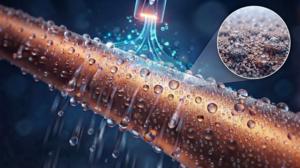
KAIST (President Choongsik Bae) announced on August 23 that a joint research team led by Professor Youngsuk Nam from the Department of Mechanical Engineering and Professor Sung Gap Im from the Department of Chemical and Biomolecular Engineering has developed a technology that controls the thickness and structure of an ultrathin polymer coating applied to a surface, allowing more water droplets to form and the resulting droplets to detach more quickly as water vapor turns into liquid water.
Condensation is the process by which water vapor turns into liquid water. It is easy to observe in everyday life, as when droplets form on the surface of a cold beverage cup. In industrial settings, it is widely used to convert steam back into water at power plants, obtain fresh water from seawater, and remove heat generated by electronic devices.