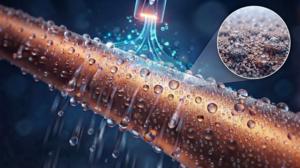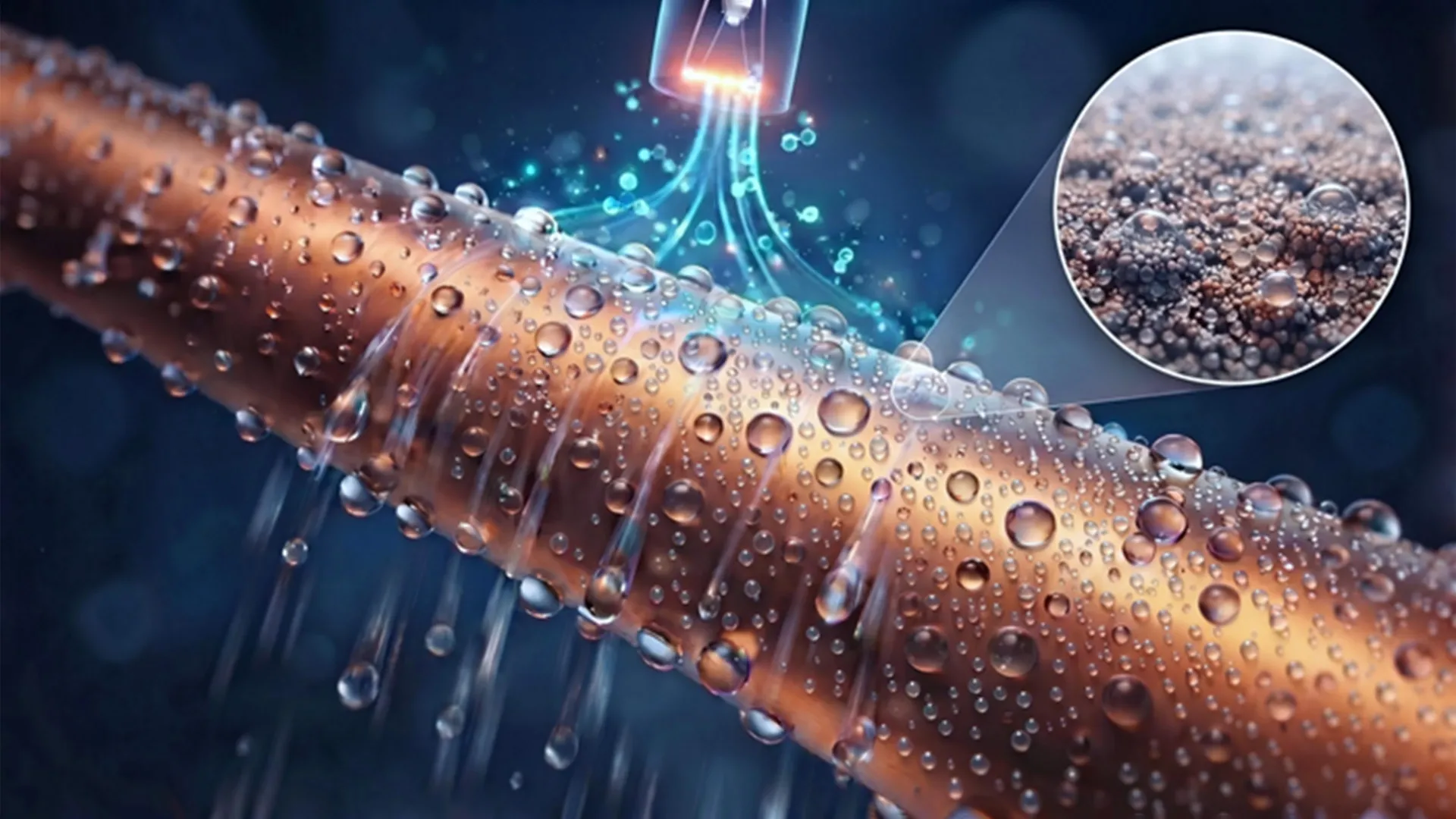
Researchers have developed a new surface coating that can increase condensation heat transfer performance by as much as 5.5 times compared with conventional copper surfaces. The technology works by helping water droplets form more easily and detach more quickly, a combination that could improve energy efficiency in power plants and desalination facilities while also enhancing the cooling of electronic devices.
KAIST (President Choongsik Bae) announced on August 23 that a joint team led by Professor Youngsuk Nam from the Department of Mechanical Engineering and Professor Sung Gap Im from the Department of Chemical and Biomolecular Engineering created the technology by carefully controlling the thickness and structure of an ultrathin polymer coating. The coating encourages more droplets to appear as water vapor condenses while also making it easier for those droplets to leave the surface.
Why Condensation Matters for Heat Transfer
Condensation occurs when water vapor changes into liquid water. A familiar example is the layer of droplets that appears on the outside of a cold drink. In industry, condensation plays an important role in converting steam back into water at power plants, producing fresh water from seawater, and carrying heat away from electronic equipment.