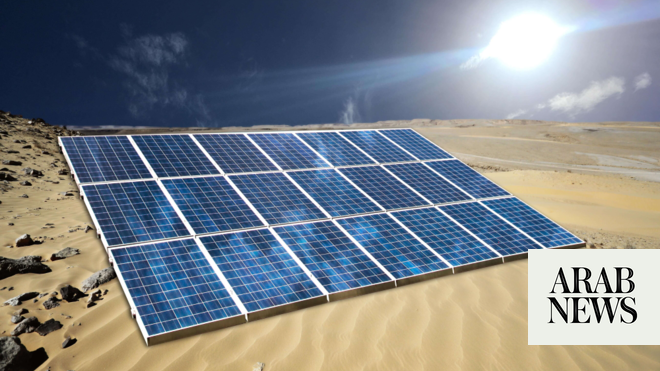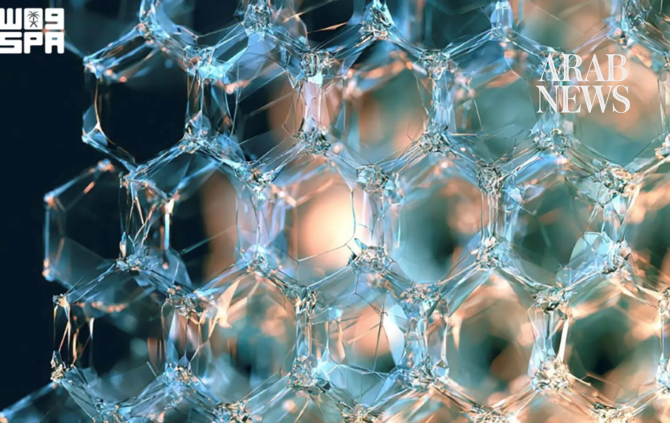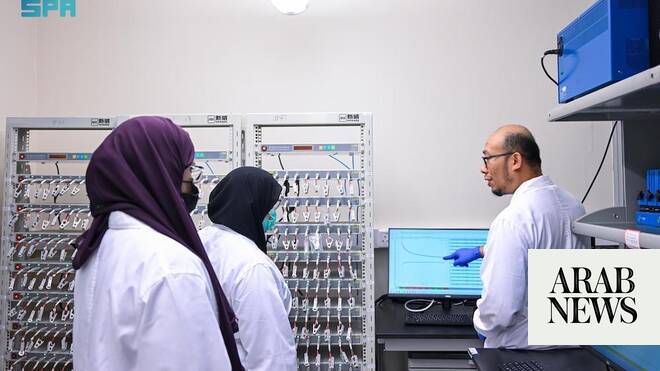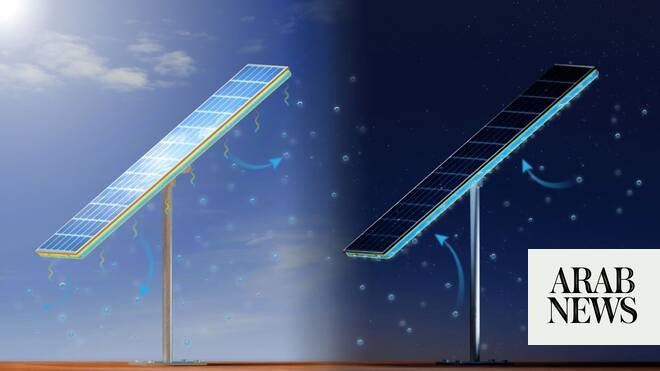
RIYADH: The King Abdullah University of Science and Technology has made a notable research breakthrough, developing a new composite material that improves the efficiency and lifespans of the cells used in solar panels through cooling.
The new technology has the potential to cut down the maintenance cost of solar cells, according to the Saudi Press Agency. Results of the study, carried out in partnership with the King Abdulaziz City for Science and Technology, were published in the journal Materials Science and Engineering.
The study targeted the issues of commercial solar panels, which only convert around 20 percent of sunlight into electricity, while the remainder is absorbed as heat or reflected away. Other problems include high temperatures, which reduce the efficiency and performance of the cells, shortening their lifespan and demanding more frequent replacement.
This means that cooling is essential, yet traditional cooling systems such as fans and pumps consume electrical energy; passive cooling, on the other hand, requires no electricity.
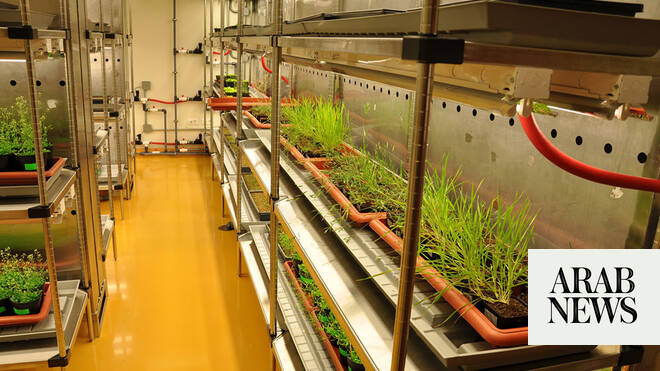
Prof. Chiaochiang Gan, lead researcher at KAUST, explained that the nanomaterials used in the passive cooling process are thin substances that can be applied to multiple systems that demand cooling, such as solar cells and agricultural greenhouses, without affecting their performance.