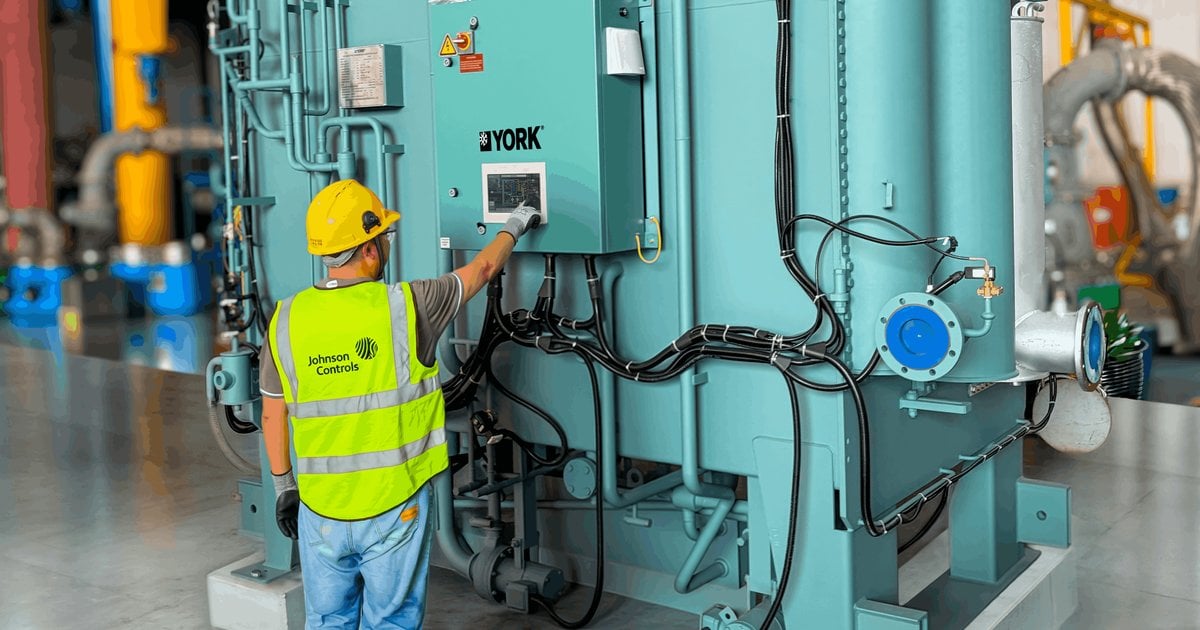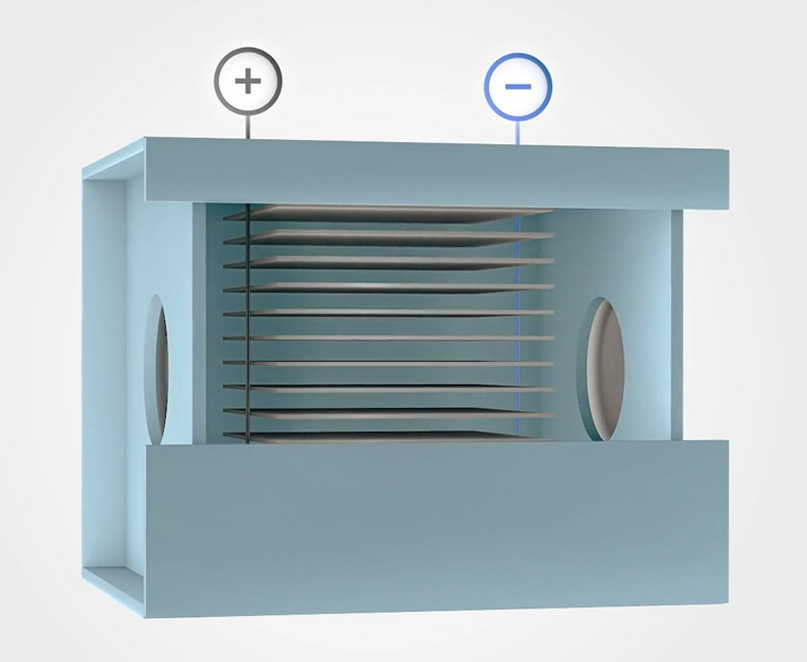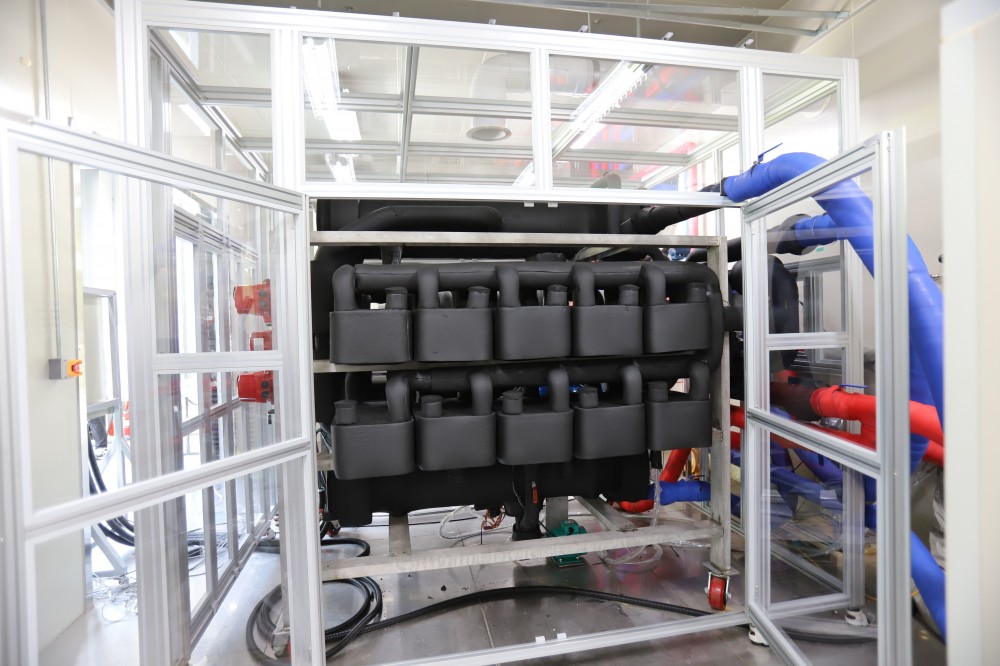
Korean researchers have developed a 10 kW chemical adsorption heat pump that uses waste heat at around 40 C to provide cooling for buildings, factories and data centers. The prototype features a high-performance adsorption bed, an electrochemical compressor with no moving parts and ammonia as a natural refrigerant.
make copy editing following pv-magazine.com standards: Researchers from the Korea Institute of Machinery and Materials (KIMM) have developed a prototype of a chemical adsorption heat pump for cooling applications in commercial buildings, factories and data centers.
A chemical adsorption heat pump is a thermally driven system that uses the reversible attraction between a solid adsorbent and a refrigerant vapor to transfer heat and produce heating or cooling, with little mechanical compression. Instead of using an electrically powered compressor like a conventional heat pump, it supplies heat—such as industrial waste heat—to the adsorbent, causing the refrigerant previously held on its surface to be released.
The refrigerant is then condensed, rejecting heat, before evaporating at low pressure and absorbing heat from the space or process being cooled. During the adsorption phase, the vapor is drawn back onto the solid adsorbent, allowing the cycle to repeat. Because heat is the main energy input, chemical adsorption heat pumps can convert otherwise unused low-temperature waste heat into useful cooling or heating while requiring relatively little electricity.