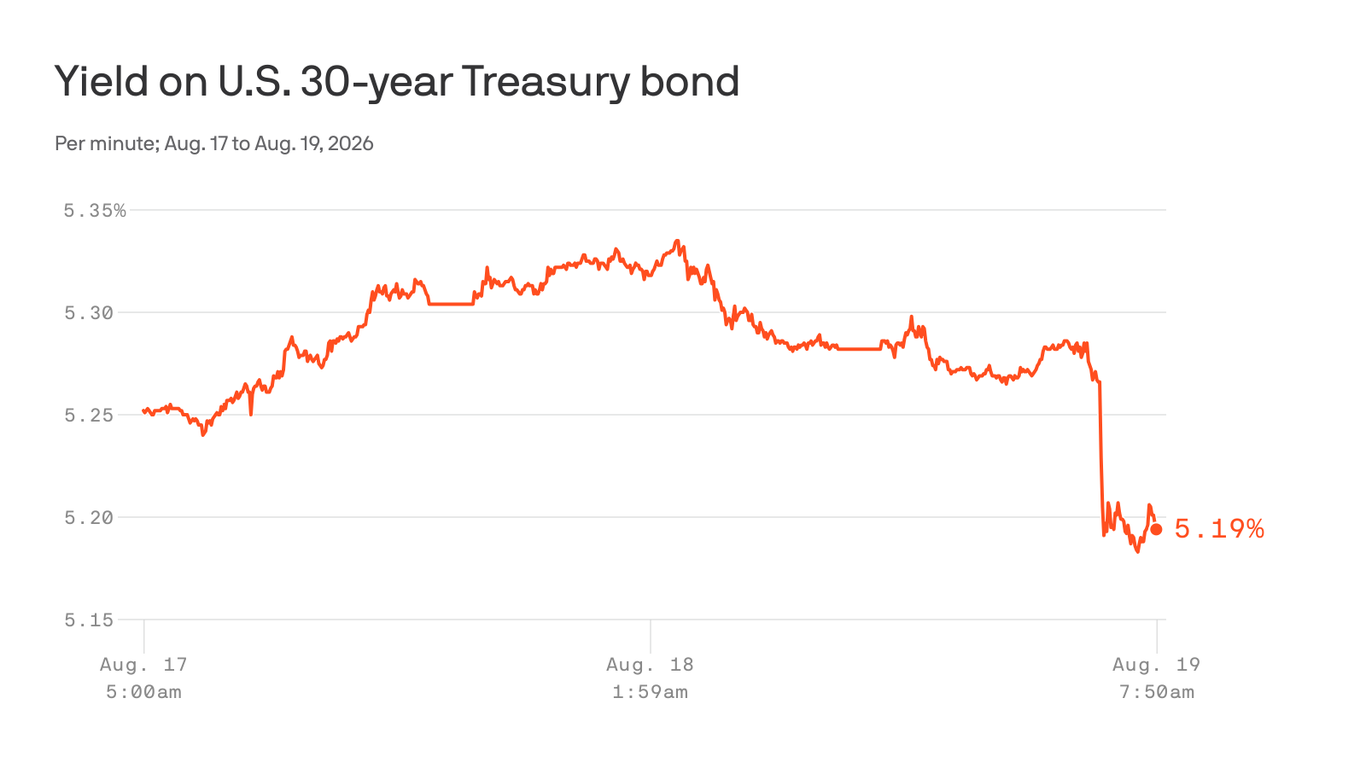
The U.S. Treasury’s recent efforts to stabilize long-term bond markets appear to be falling short, according to MarketWatch. The intervention, led by Treasury Secretary Scott Bessent, involved increasing the size of bond buybacks to enhance liquidity in 10- to 30-year Treasuries. Despite these measures, yields on the 30-year and 10-year Treasury bonds rebounded quickly after an initial decline, indicating limited long-term relief. As yields remain near 5.25% and 4.70% respectively, the effectiveness of the intervention is being questioned. This development is drawing attention from market participants who are assessing its implications for broader economic conditions.
The news of the Treasury’s intervention challenges is impacting market perceptions, particularly in commodities. The potential for economic instability is causing some to consider gold as a safe haven. In prediction markets, there is a notable interest in whether the price of gold will hit $4,700 in August 2026, with the probability currently standing at 57.9% for a YES outcome. This reflects a significant increase from 7% a week ago, indicating heightened expectations of gold price movements in response to perceived economic uncertainties.