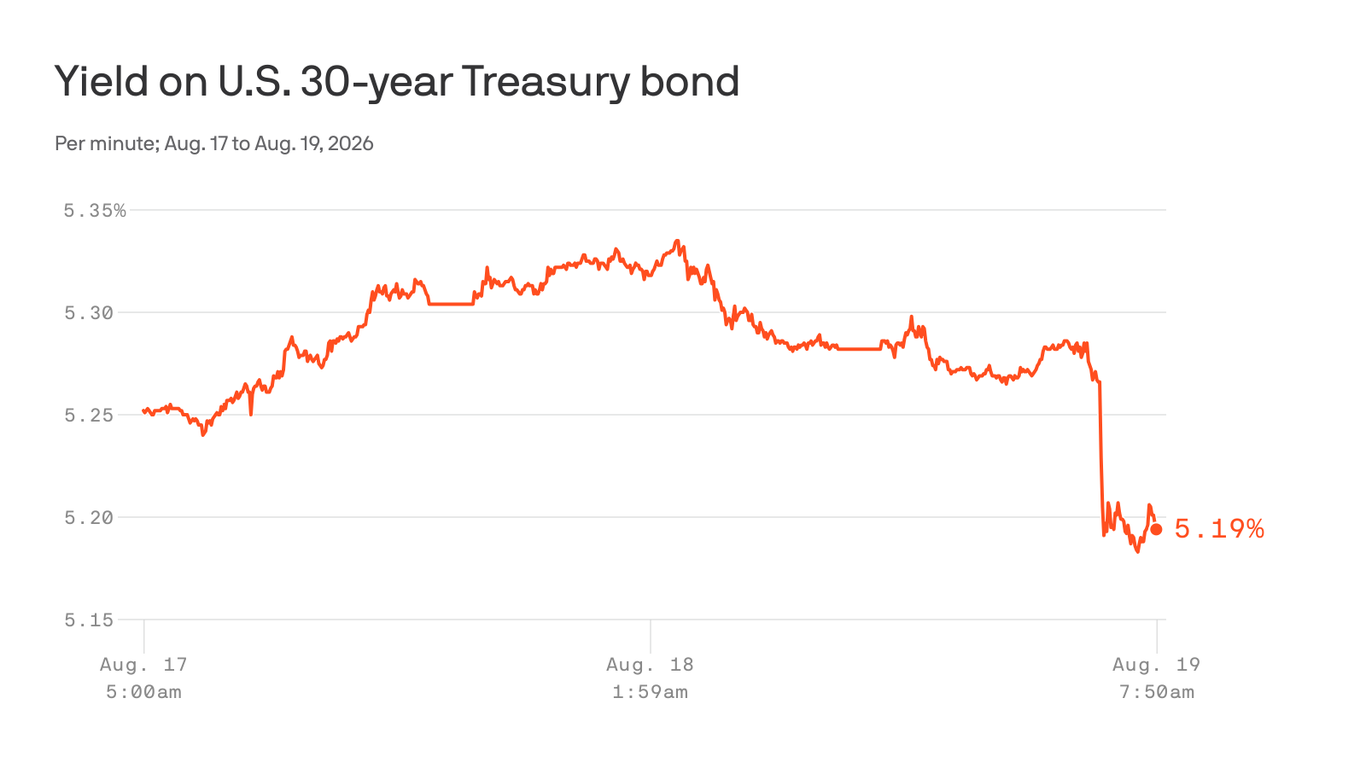
Data: FactSet; Chart: Matt Phillips/AxiosThe apparent goal of the Treasury Department's announcement on Wednesday — at least in Wall Street's estimation — was lowering long-term bond yields. It worked, but not for long. Why it matters: Analysts believe that the Treasury's plan to boost its own bond-buying program is a risky undertaking. But has the juice been worth the squeeze? The latest: Long-term Treasury securities again sold off Thursday, pushing prices down and yields — which move in the opposite direction — higher. Shortly before 5pm ET, the yield on the 30-year bond was hovering around 5.25%.For comparison, the yield on the long bond was around 5.28% ahead of the Treasury's announcement.Our thought bubble: Three basis points, or 0.03 percentage points, on the bond doesn't seem like a huge payoff for putting the credibility of the U.S. Treasury on the line. And now that it is on the line, the question is whether Treasury Secretary Bessent will feel the need to defend it. What they're saying: "One question is whether Bessent is able to stay in the mode of periodic tactical surprises to discipline shorts and prevent yield overshooting or gets dragged down the slippery slope of trying to defend levels of yields – a dangerous exercise," Evercore ISI analysts wrote. "Absent real fiscal consolidation, we fear the markets will view this action as lacking credibility, meaning this could contribute to higher term premium and yields," wrote JPMorgan bond analysts. The bottom line: It's likely the market is going to test the line in the sand — about 5.30% on the 30-year bond — that the Treasury Department has drawn, and the response — or lack of one — will be a big event for investors.
Was the Treasury 's market intervention worth it?
It's likely the market is going to test the line in the sand.
286 words~1 min read