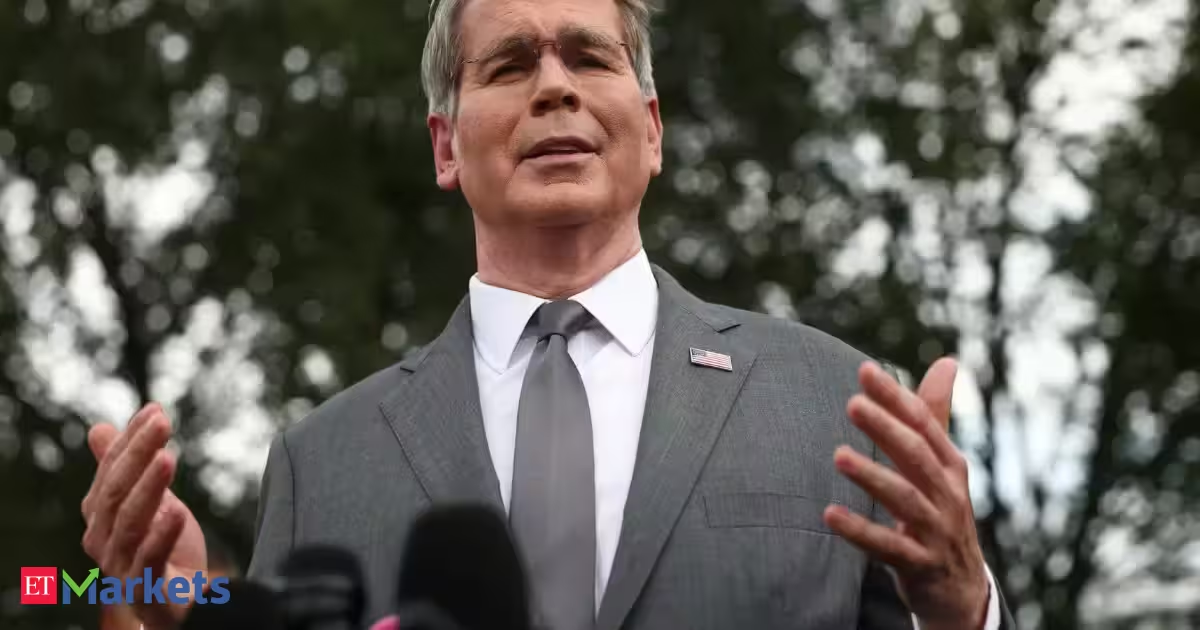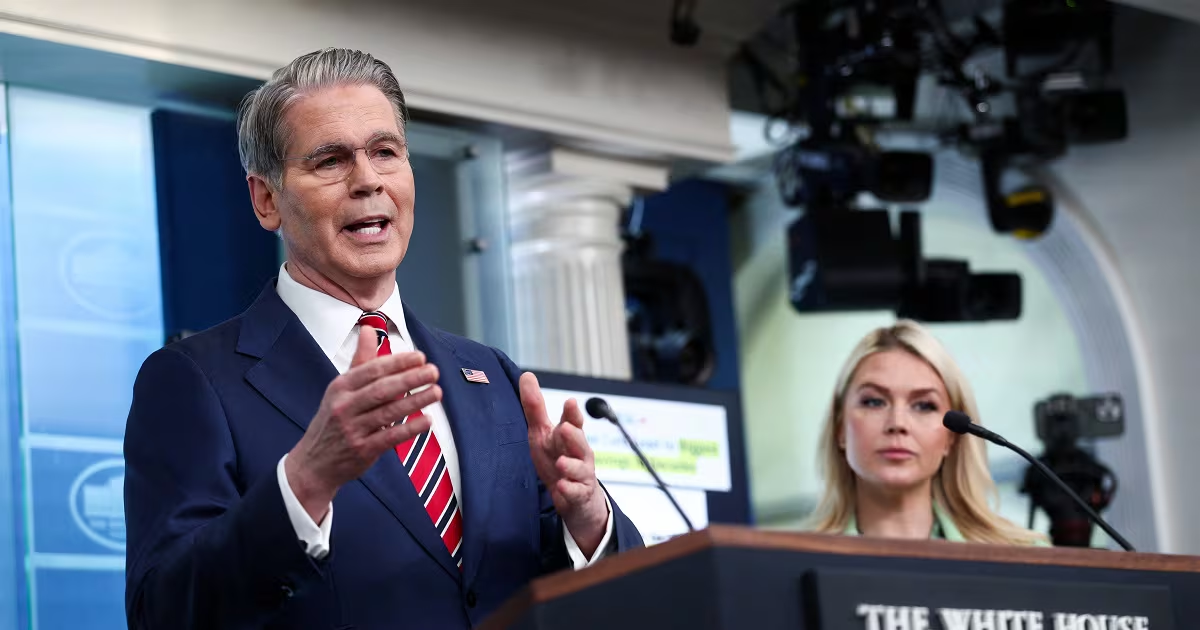
The US Treasury is stepping in to cool off a bond market that’s been running hot in all the wrong ways. Secretary Scott Bessent announced on August 19 that the department will expand its liquidity-support buyback operations for longer-dated securities, raising the maximum size from $2B to at least $4B per operation, effective September 9.
The trigger is hard to miss. The 30-year Treasury yield climbed to roughly 5.33%, a threshold the market hasn’t touched since 2007. The 10-year yield hovered near 4.66% to 4.72%, with selling pressure intensifying across the long end of the curve.
Why the long end is under siege
Two massive forces are competing for the same pool of capital right now. The federal government’s borrowing needs, with total debt approaching $40 trillion, are creating a tidal wave of new issuance. At the same time, technology companies are flooding the corporate bond market to finance AI infrastructure buildouts.
Bessent framed the intervention around his commitment to “regular and predictable” issuance, emphasizing that the Treasury’s role is to set the global risk-free rate. He also noted that corporate investment, particularly at the long end, can boost productivity. The argument is straightforward: if companies can issue long-term bonds at reasonable rates, they invest in capital-intensive projects. If those rates blow out because the government is crowding them out of the market, that investment slows down.