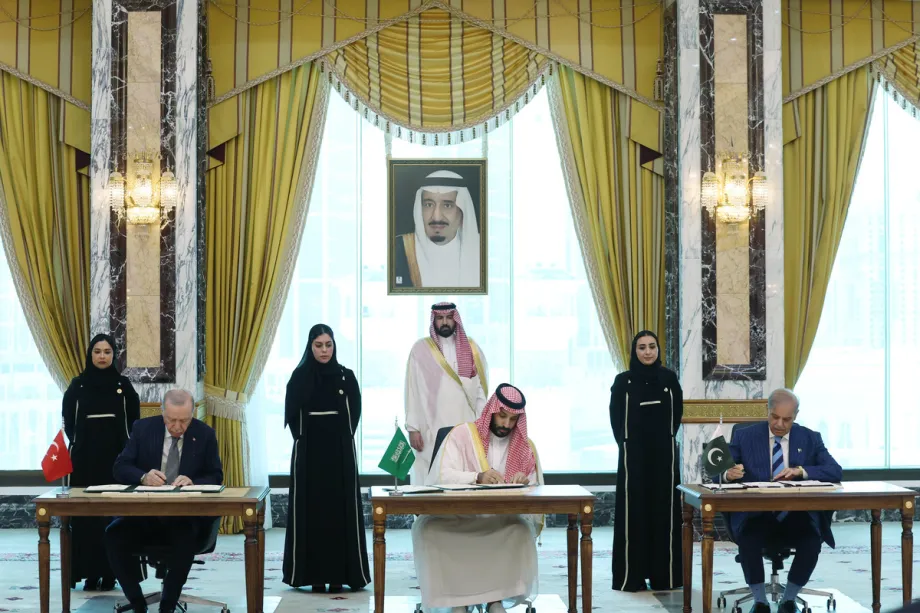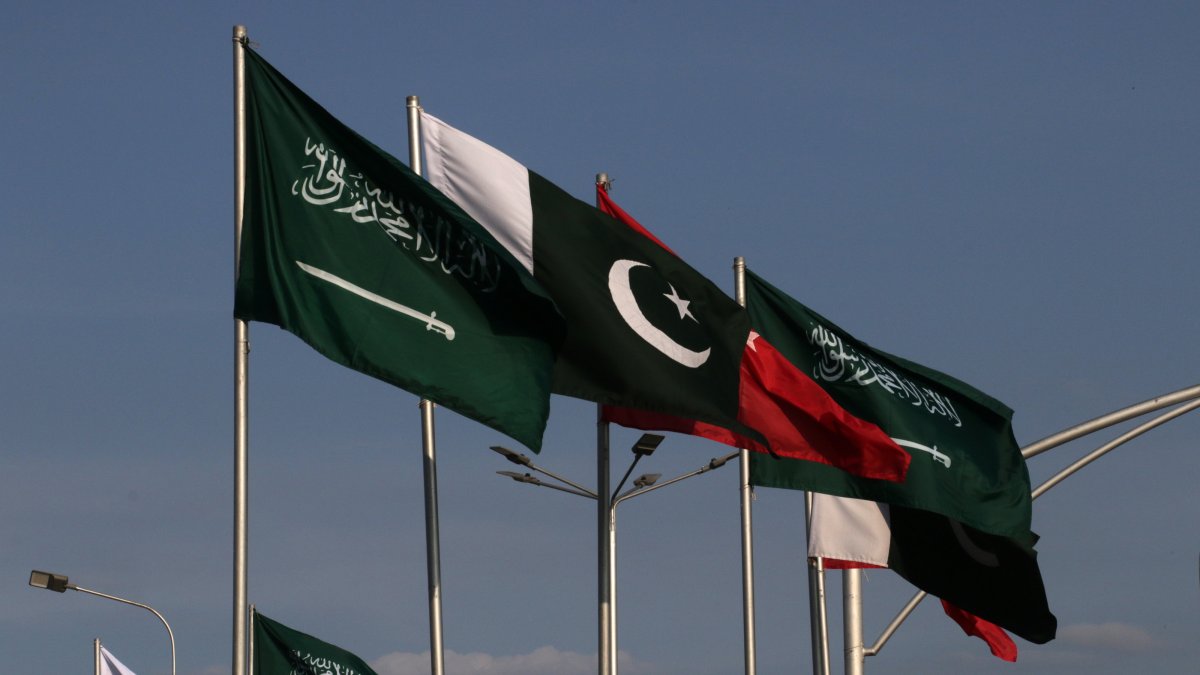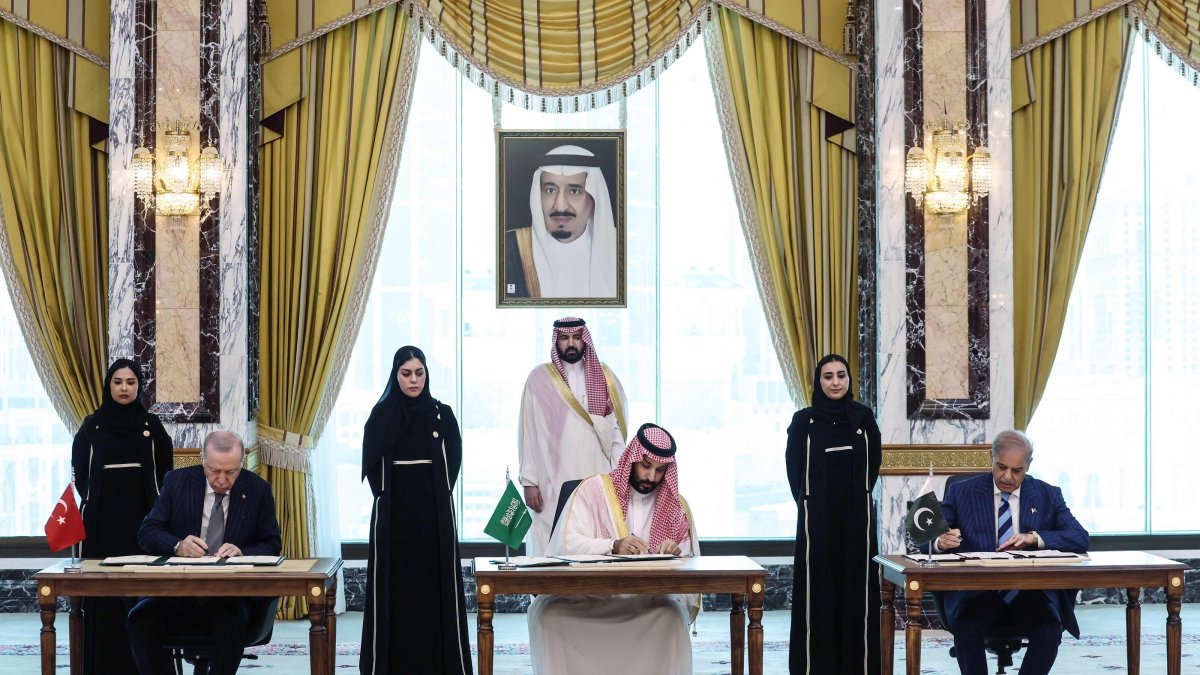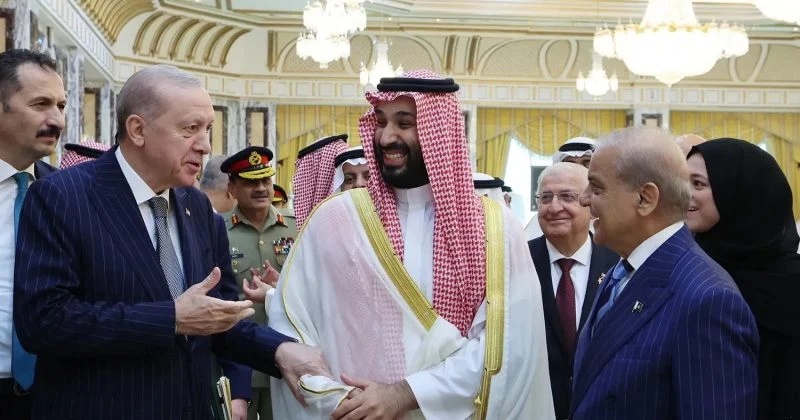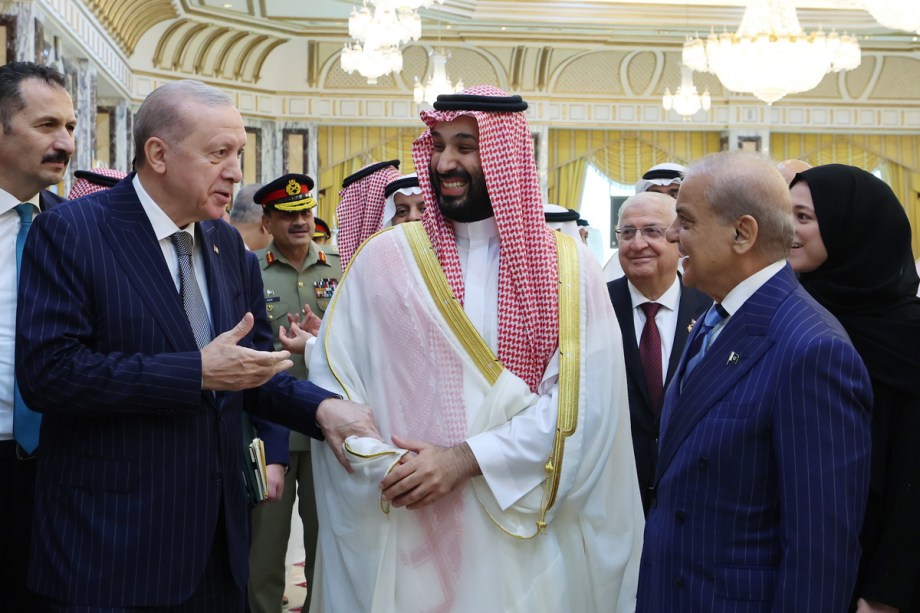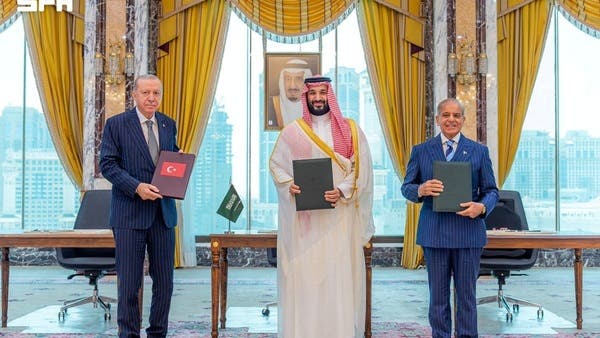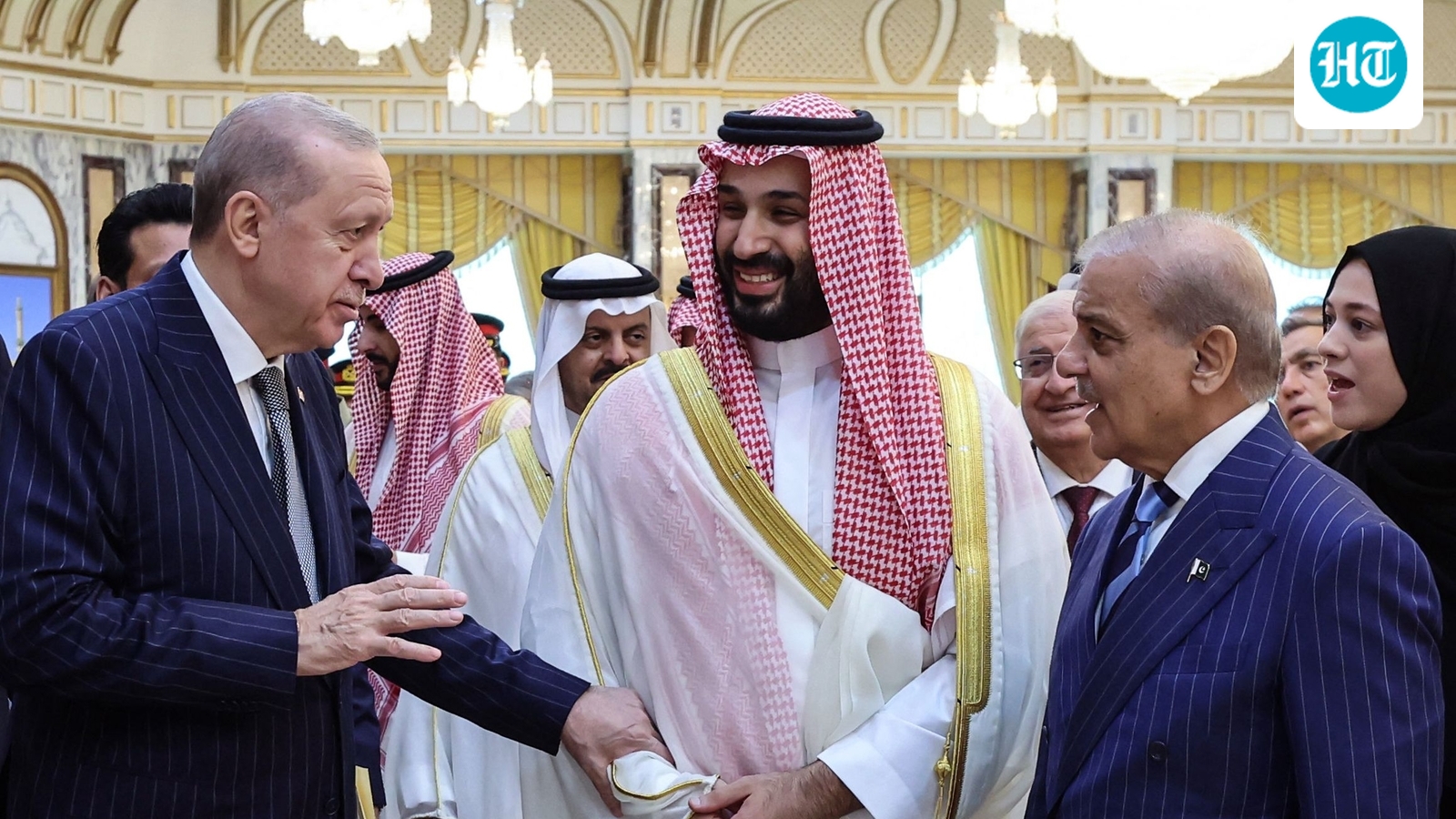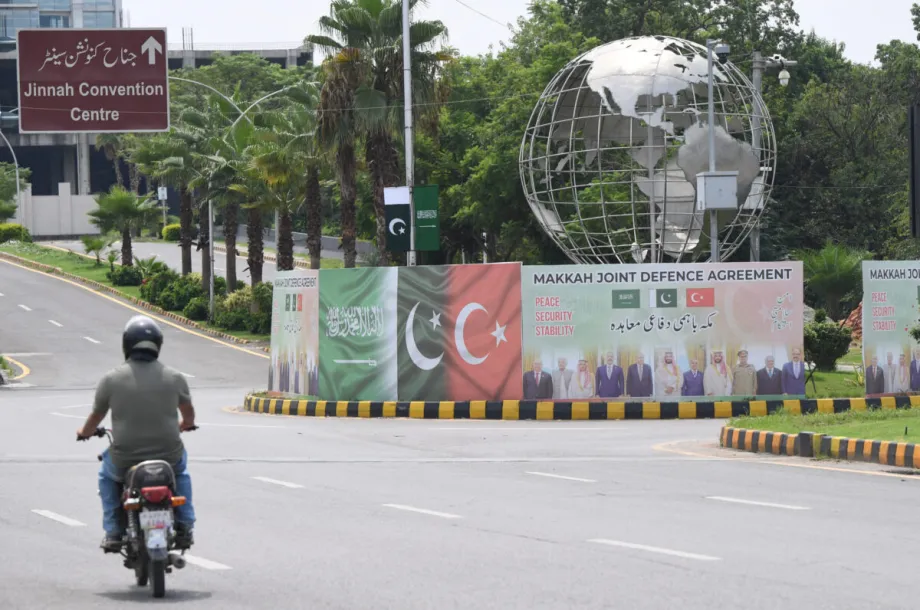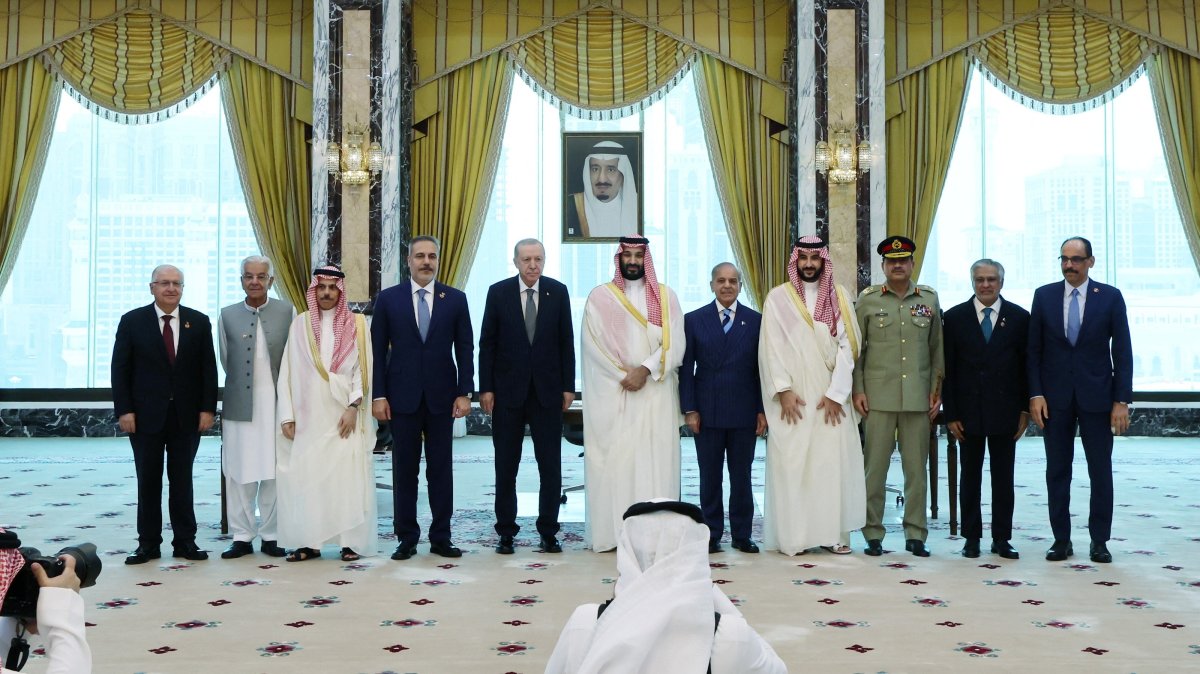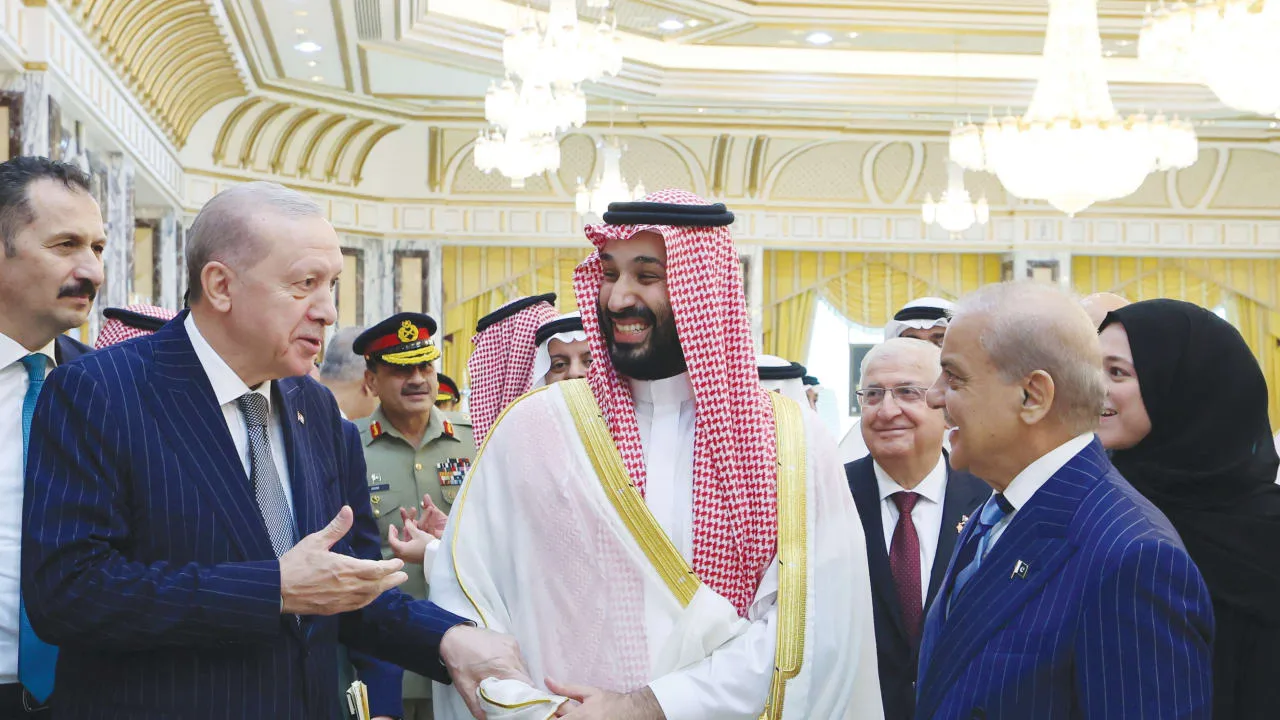
ByTHE MEDIA LINEAUGUST 15, 2026 08:49Mecca Agreement: Yes to strengthening security, stabilityAl Rai, Kuwait, August 8For more stories from The Media Line go to themedialine.orgThe Mecca Joint Defense Agreement between Saudi Arabia, Pakistan, and Turkey represents an important milestone in strategic cooperation among Islamic countries, with objectives centered on strengthening collective security, developing joint defense capabilities, and reinforcing solidarity in the face of regional and global security challenges.The agreement comes amid rapidly changing regional and international conditions, making coordination among friendly and brotherly states essential to preserving stability and protecting shared interests.It is built on a clear principle: an armed attack against one party is considered an attack against all, thereby strengthening collective deterrence, raising the level of military, security, and political coordination among the three countries, and sending a message that their security is interconnected and that preserving their stability is a shared responsibility.Such cooperation is intended not only to strengthen regional stability and reduce the risk of escalation, but also to unify efforts, exchange expertise, and improve defense readiness.The importance of the agreement extends beyond the military sphere into political, economic, and strategic dimensions. It can deepen relations among the three states, reinforce mutual trust, and open wider avenues for cooperation in defense industries, military training, and modern technologies, while also supporting investments and joint projects that benefit the participating economies and contribute to development and stability.US PRESIDENT Donald Trump with Chinese President Xi Jinping after a visit to the Zhongnanhai Garden in Beijing, May 15. (credit: Evan Vucci/Pool/File/Reuters)The agreement also reflects a shared understanding that contemporary challenges require collective action, whether in response to security threats, regional crises, or dangers affecting maritime routes and international trade.This cooperation can raise the level of coordination among military and security institutions and facilitate the exchange of information and expertise in support of regional security.The agreement has been welcomed by many observers of Islamic and international affairs as a step that strengthens cooperation among Islamic countries within a framework that respects national sovereignty and seeks to protect security and stability.The Muslim World League likewise welcomed efforts aimed at reinforcing Islamic solidarity and coordinating responses to shared threats, emphasizing the importance of unity and cooperation among Islamic states.The success of such agreements should not be measured only by their defensive provisions, but by the atmosphere of cooperation, trust, and integration they create, and by the opportunities they provide to strengthen peace and prevent conflicts before they occur, through deterrence and coordination. They also reaffirm that collective action among friendly states remains one of the most important means of preserving regional security and protecting the higher interests of their peoples.In the end, the Mecca Joint Defense Agreement offers a model of strategic cooperation based on shared interests and mutual respect and reflects the participating states’ desire to build a more coordinated and capable defense architecture.Continuing along this path can help consolidate security and stability, expand opportunities for development and prosperity, and confirm that solidarity among brotherly states remains one of the principal pillars of peace and security in the region. May God preserve our Gulf in safety and stability.– Dr. Issa Al-AmiriThe ‘alliance’ against Tehran on three frontsAsharq al-Awsat, UK, August 9 It has become clear that the war Iran is waging is directed against Saudi Arabia and its Gulf sisters, not primarily against the US or Israel. Since February, Iran has attacked Saudi Arabia with more than a thousand drones, in addition to ballistic missiles aimed at civilian and military facilities, while expanding the confrontation through Iraq and Yemen in an effort to encircle the kingdom.Riyadh, in turn, surprised Tehran by forming a bloc of three states that border Iran. The new alliance changes the balance of power against Tehran: Turkey and Pakistan are no longer spectators but frontline states, bringing strategic depth, greater military capabilities, a combined population of some 400 million – four times Iran’s – and more than 1,400 kilometers of land borders facing it. Turkey is a NATO member, while Pakistan is a nuclear power with close military ties to China.This Saudi move will affect both the management of the conflict and the negotiations and will gradually deprive Iran of many of the advantages it enjoyed in its war with the US.Last month, Iran escalated its attacks on northern and southern Saudi Arabia by opening two fronts from Iraq and Yemen.The development coincided with Crown Prince Mohammed bin Salman’s work on the Mecca Agreement and the announcement of the trilateral military alliance with Turkey and Pakistan, which had been under preparation since last year. It is the second alliance Saudi Arabia has built and announced within a single week, following the establishment of an international maritime military coalition led by Riyadh.The alliance with Turkey and Pakistan matters on three fronts: deterring Iran, defending the oil market, and shaping Arab and Islamic public opinion.The first front is Iran itself. Tehran’s escalating military activity exposes its desire to widen the conflict and perhaps impose a new geopolitical reality in the Gulf by force.The Riyadh-Ankara-Islamabad axis is designed to create a balance that deters Iran from considering further expansion into the Gulf and from targeting Jordan, Syria, and Yemen. A wider war would impose enormous costs on Iran’s leadership.Tehran’s strategy in confronting the US has depended on holding oil hostage. It turned the closure of Hormuz, attacks on producing states, and threats to energy infrastructure into its strongest leverage against a superpower it cannot confront on equal military terms. The new Saudi-led axis deprives Iran of much of that card.The alliance also enjoys broad international acceptance because many governments chose neutrality in the US-Israel-Iran war. Even states that considered confrontation with Iran justified believed the war had been launched without sufficient legal and diplomatic preparation.The international support for the Saudi-Turkish-Pakistani axis can be seen in the broad backing for the multinational maritime coalition announced by Riyadh last week, whose meeting at the Saudi Ministry of Defense brought together 43 governments.Both the Mecca and Red Sea initiatives are defensive, directed against Iranian aggression, and were prepared politically and legally in advance.This front is not intended to protect Saudi Arabia alone; it also shelters the wider Gulf and the eastern Arab world. The objective is to stop an Iran that, after losing many of its centers of influence through the destruction of Hezbollah and the fall of the Assad regime, chose instead to destabilize the region and create a new geopolitical reality through threats to Arab states. The outline of that plan became clear after the war resumed in late February, when Iranian attacks focused more heavily on Saudi Arabia, the Gulf states, and Jordan than on the two declared enemies in the war, the US and Israel.The second front is oil, the battle the entire world is watching. Iran has sought to close both Hormuz and Bab al-Mandab, strike Gulf production and export facilities, and force the world to submit to its demands. Markets reacted immediately to the announcement of the new trilateral alliance, with oil prices falling on international exchanges.The third front is public opinion: the hearts and minds of roughly 300 million Arabs and more than a billion Muslims worldwide. They had been watching a war marketed to them as an American-Israeli assault on a peaceful Muslim country. Because the war was not decided quickly, Iran devoted enormous effort to justifying its own aggression and depicting attacks on its neighbors as legitimate because those states supposedly belonged to the American-Israeli camp.Faced with the new alliance, it will become much harder for Tehran’s propaganda machine to convince one-and-a-half billion people that Pakistan, Turkey, and Saudi Arabia are enemies of Arabs and Muslims.Iran’s leadership, hiding underground, will lose the propaganda war as well. We will see Tehran’s aggressive behavior begin to change in the coming days.– Abdulrahman Al-Rashed Does the US-Iran war benefit China?Al-Bayan, UAE, August 9 Is China benefiting from the US-Iran war, or is it being harmed by it, and where exactly do the gains and losses lie?The question has become increasingly relevant following reports published last week by American media outlets, including CNN, Reuters, and The Washington Post, claiming that the US military has consumed around 80% of its interceptor missiles and certain types of munitions during the recent war.According to those reports, this depletion was a major reason President Donald Trump stopped launching additional military operations against Iran.Trump denied the reports last week and even threatened to prosecute what he called the “traitors” who had published false information.Defense Secretary Pete Hegseth also denied them, yet at the same time requested more than $67 billion in additional congressional funding to cover the current fiscal year, warning that insufficient resources could threaten the military’s ability to replenish equipment and ammunition.Trump had already asked major American defense companies months ago to accelerate production of weapons and munitions.So, what does any of this have to do with China? Quite simply, if the reports of severe US stockpile depletion are accurate, Beijing will regard them as extremely welcome news. Many analysts already believe that strategic competition between the US and China for global leadership is unavoidable. Today it may be economic and technological; tomorrow it may become military. China is therefore watching the US-Iran war closely to identify American strengths and vulnerabilities. If US weapons stocks have indeed fallen sharply, that would expose a serious weakness.The obvious question would be what happens if the US suddenly faces a military confrontation with China, Russia, or both, and how quickly it could replenish the weapons required.Some observers argue that these reports may themselves be part of an American strategy of deception aimed at China. There is no definitive answer, because the outcome depends on several changing factors.China would benefit significantly if the war continued at a limited level. The US military would require more aircraft carriers, air defenses, fighter aircraft, intelligence capabilities, precision missiles, munitions, and spare parts, potentially drawing resources away from the Pacific and Indian Oceans and giving Beijing greater freedom of movement in Asia.A prolonged Middle Eastern conflict could also expand China’s economic influence, strengthen the Belt and Road Initiative, increase Chinese investment abroad, and reinforce China’s image as a power associated with peace, stability, and investment rather than war.Yet perhaps the greatest benefit would be the opportunity to study American military performance in real conditions: ammunition consumption, logistical management, and the effectiveness of US air defenses. That information could help China plan for any future confrontation with the US over Taiwan or elsewhere in the Pacific. But this scenario would not produce pure gains for China or pure losses for Washington.A long conflict that disrupts shipping and supply routes would immediately harm the Chinese economy, which depends heavily on Middle Eastern energy. Higher import costs would affect industry and therefore economic growth, while disruption to global trade, weaker demand, and rising transportation costs could contribute to a major slowdown in China itself.Some experts therefore believe that a prolonged but limited American entanglement with Iran would benefit China, while a broad regional war would hurt Beijing through higher oil prices, disrupted supply chains, threatened maritime security, and declining global growth.China’s ideal scenario would be the gradual exhaustion of its American competitor without the collapse of the world economy.Its worst scenario, however, would be an American victory that destroys the Iranian regime and places Washington in a dominant position over global energy flows. In that case, the key to China’s economy could effectively end up in American hands.– Emad El-Din Hussein Translated by Asaf Zilberfarb. All assertions, opinions, facts, and information presented in these articles are the sole responsibility of their respective authors and are not necessarily those of The Media Line, which assumes no responsibility for their content.Restoring serenity to religionAl-Ittihad, UAE, August 9After many years of following two intertwined phenomena – violent extremism in the name of religion and Iran’s efforts to penetrate Arab states – I arrived in 2014 at what I called three objectives: restoring serenity to religion, renewing and supporting the experience of the nation-state, and working continuously to ensure that we Arabs remain part of the world’s security and progress.The great question that occupied our generation from the 1970s and 1980s onward was how religion, which is by nature a soft force that should inspire reassurance, tranquility, goodwill, and constructive action, became vulnerable to penetration by violence. The movements associated with the so-called Islamic Awakening made clear that they intended to use religion as a path to political power.Some of us reassured ourselves that extremist movements represented only a small minority that peaceful majorities would never follow. Yet despite their limited numbers, as the 1990s and subsequent decades demonstrated, they were able to ignite sedition and attract sections of the public that were not confined to the poor or deprived.One explanation may have been weak religious and social education, but the phenomenon lasted long enough to unleash a wave of terrorism that became global.Under the cover of that wave, Iranian penetration expanded as well. Tehran exploited sectarianism but also worked through extremists who operated under slogans of sectarian identity, liberation, or hostility toward existing regimes and states.Some governments were slow to confront these waves of extremism, manipulation, and blackmail, but eventually they recognized them for what they were: political and strategic threats.Religious penetration and division nevertheless continued, and religious institutions, with state support, struggled against them until the waves receded without disappearing entirely.The wars that erupted after 2023 reignited embers that had never fully died, now under the slogans of confronting aggression and seeking martyrdom. Yet decades of experience have taught us that militia struggles bring nothing but losses, and the devastation of the past three years has been unlike anything in our modern history.Most disturbing of all is the transformation of religion into a game available to anyone skilled in manipulating emotion and psychology through illusions of revenge and defending the oppressed – when it is the oppressed themselves who end up paying the heaviest price for the benefit of those who use them, whether Iranian actors or political Islam movements.The challenge was, and remains, how to restore religion’s immunity and dignity so that it cannot be humiliated or exploited. Nation-states are responsible for defending themselves and their societies against attack. Religion, however, is the responsibility of the communities that embrace its message of peace and security, the scholars who refuse to be deceived by mobilization and polarization, and the cultural and media figures who influence the public.None of these groups should accept the use of religion in violence that divides societies, fragments communities, and destroys social harmony.Perhaps Donald Rumsfeld, the US defense secretary under president George W. Bush, was sincere when he told Muslims that extremists had hijacked their religion and that they needed to liberate it from terrorist gangs. Sedition is created by a minority, while the majority suffers its consequences.That is our condition today. Our duty is to protect our religion from exploitation, our states from targeting, and our societies from manipulation.– Radwan al-Sayed Follow us on Google
Saudi, Pakistani, Turkish Mecca Agreement strengthens security, stability | The Jerusalem Post
A weekly selection of opinions and analyses from the Arab media around the world.
2,495 words~11 min read