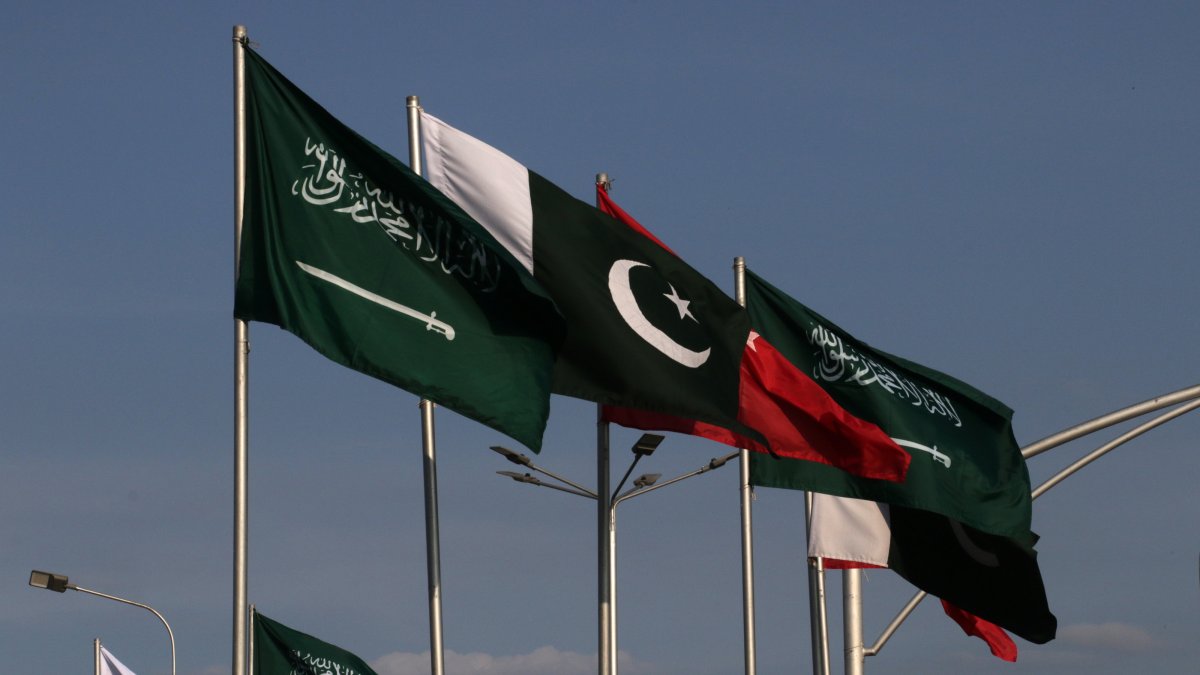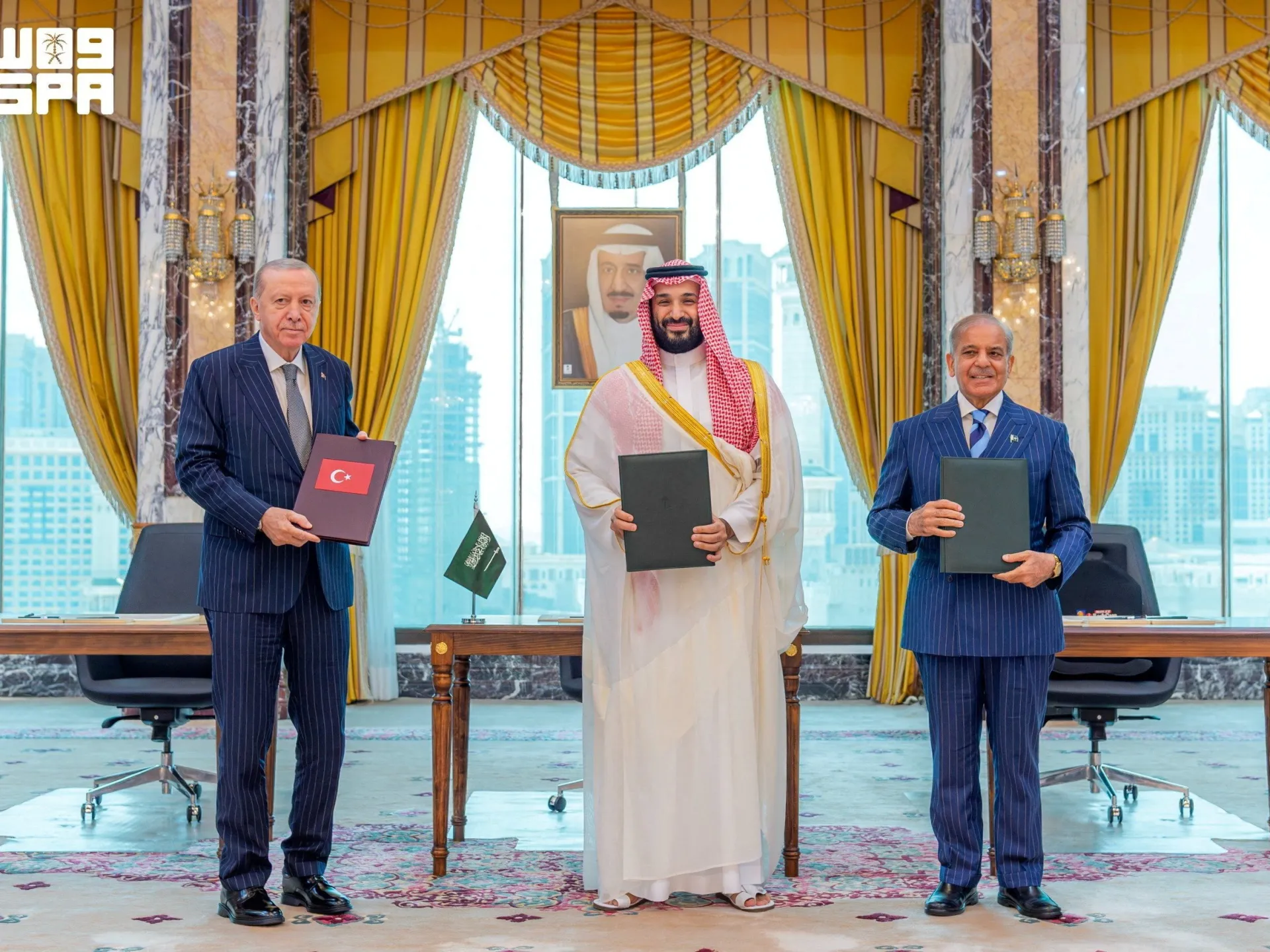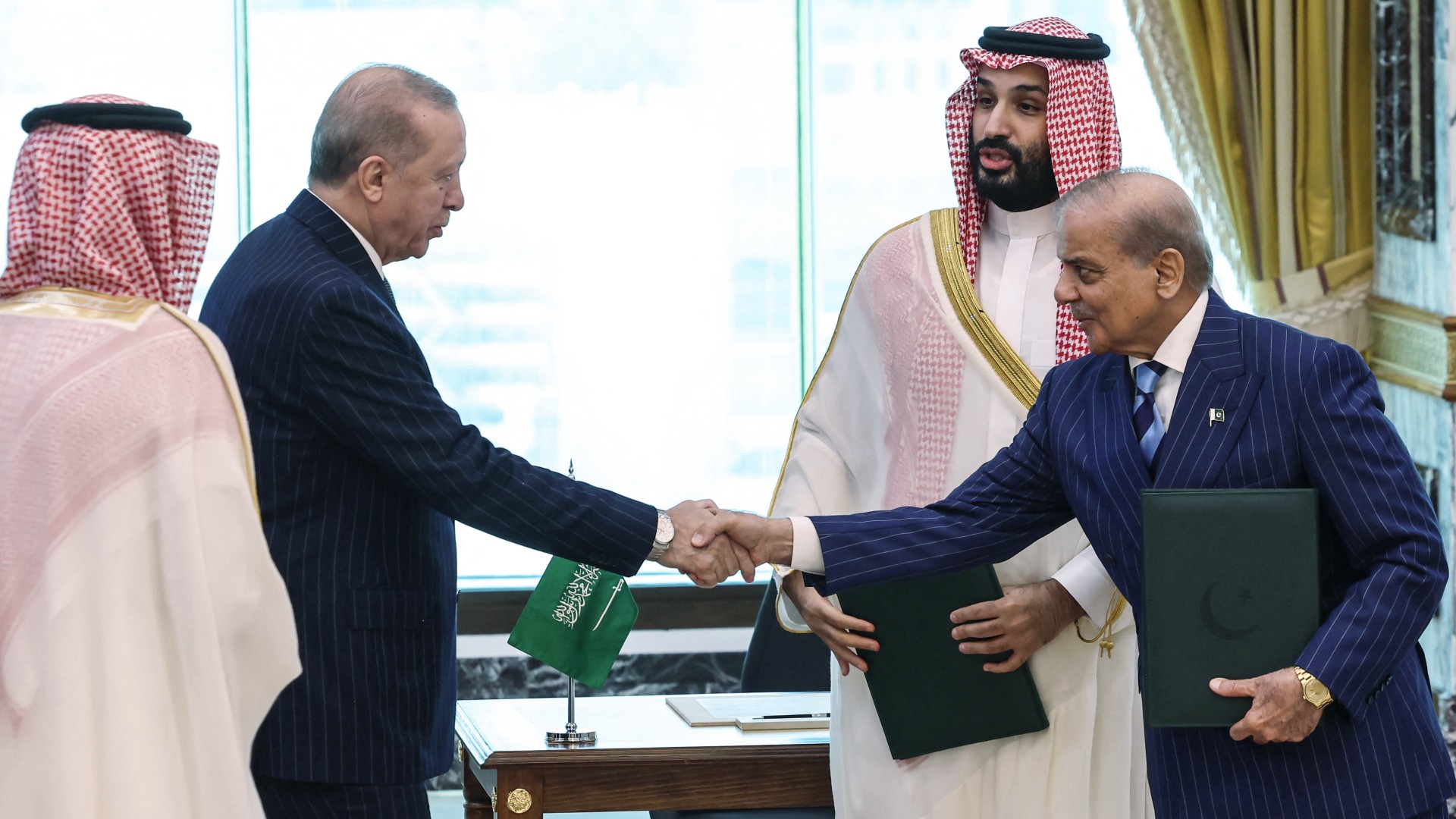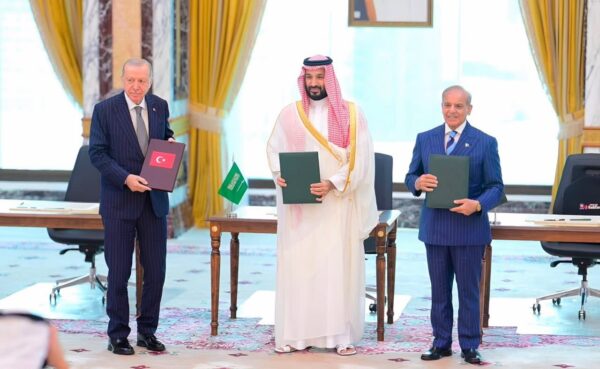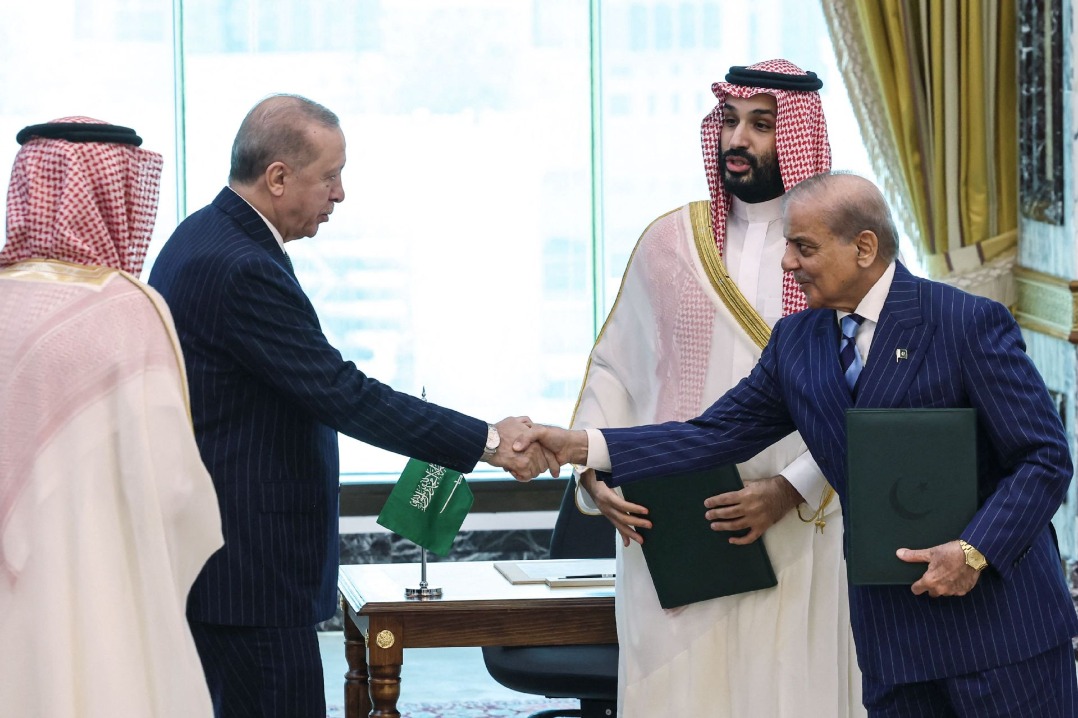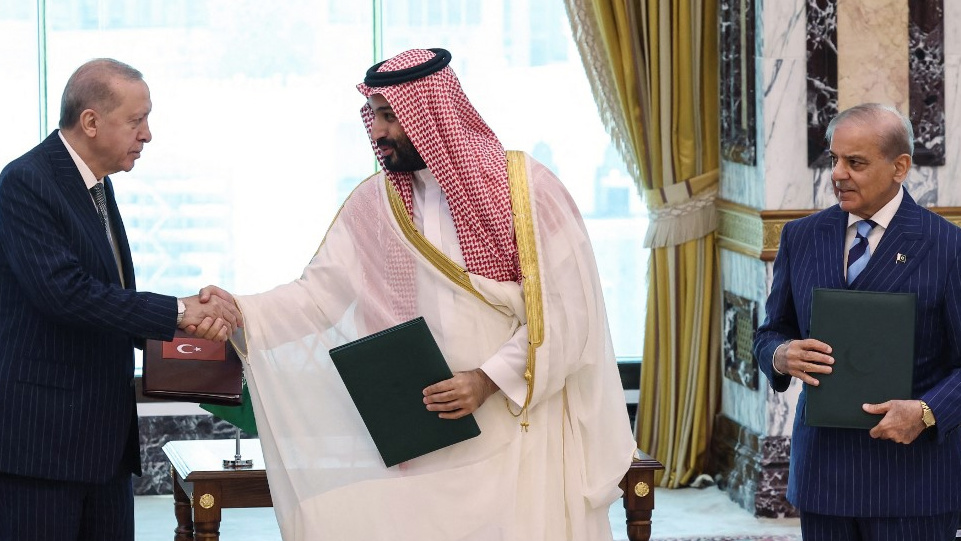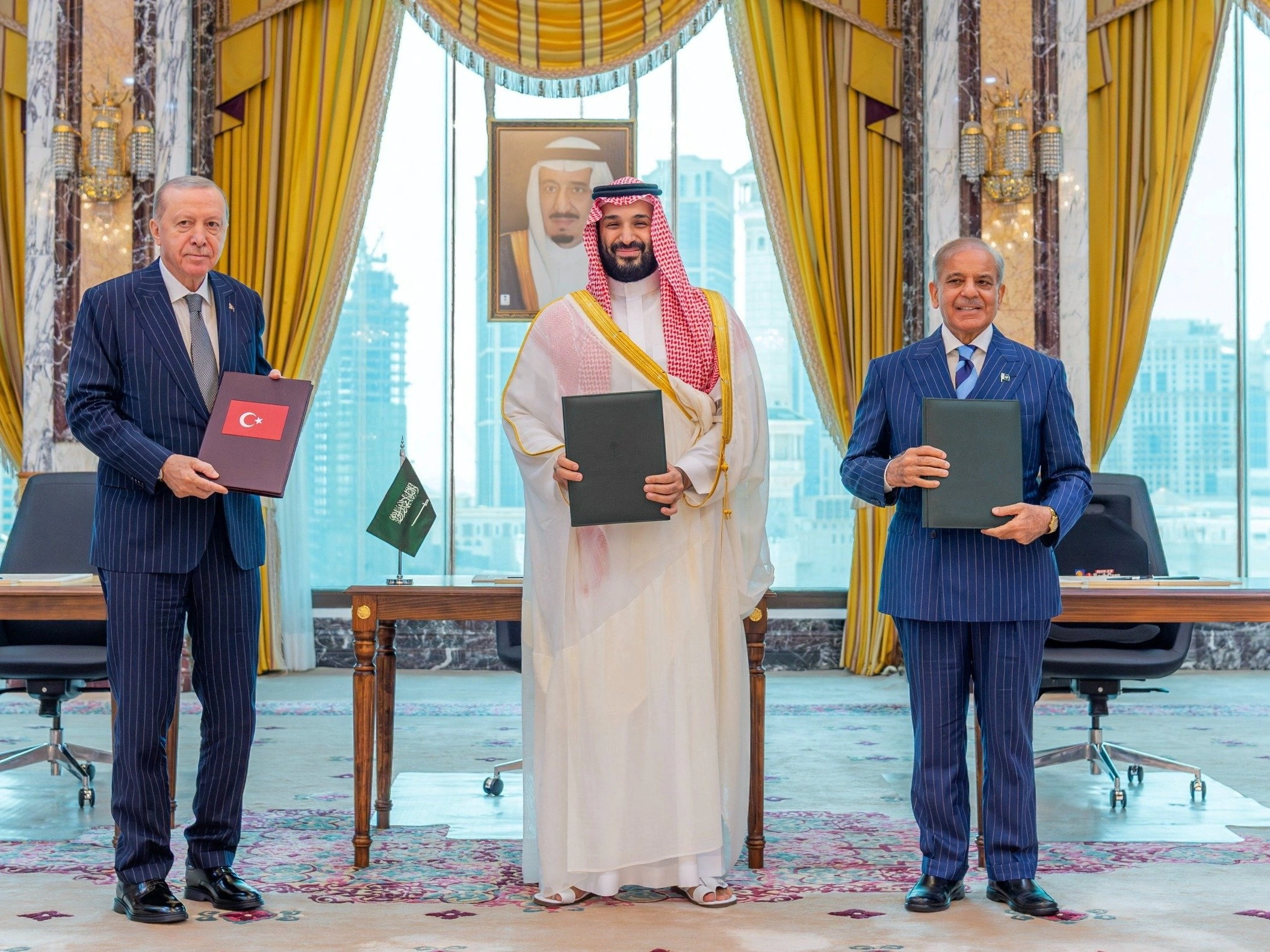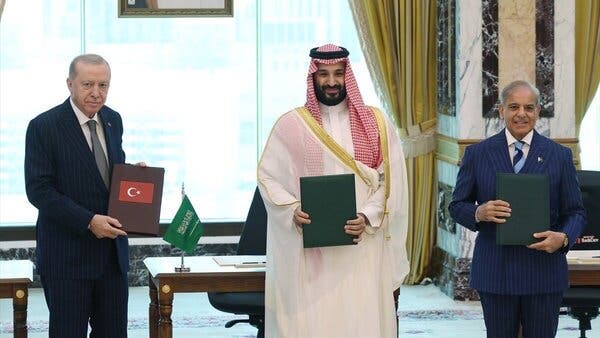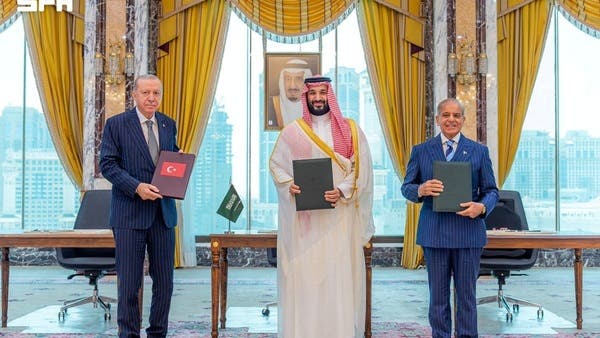
Since the announcement last Friday of the signing of the Mecca Joint Defense Agreement between Saudi Arabia, Pakistan and Turkey, debate and discussion around it have not subsided. Some have viewed it as an important historic alliance, others have approached it with caution, while some have gone so far as to see it as the beginning of a shift in the region’s alliance map. The truth is that the agreement merits this level of attention and debate because it is not merely another passing diplomatic event in the history of regional alliances. Rather, it represents the foundations of a new security era that could reshape the balance of power in the Middle East and create a deterrence equation aimed at reinforcing regional stability.For all the latest headlines, follow our Google News channel online or via the app.The skeptics’ arguments take several forms. Some believe the agreement could weaken the deterrence capabilities of Gulf states, or reduce the relative weight of other Gulf Cooperation Council members within collective security arrangements, especially given Saudi Arabia’s position as the leading regional power. Others are uneasy about Turkey’s role, while some fear the alliance could escalate tensions with Tehran. There are also those who see it as a shift away from the traditional defense partnership with Washington. Some have gone even further, arguing that the agreement could meet the same fate as the 1950 “Joint Arab Defense Treaty.” That final concern may draw on a real precedent. The Arab treaty was never activated, not because of flaws in its legal wording, but because four of the seven countries that signed it in Alexandria experienced persistent instability and repeated internal coups. The Arab world later split into two opposing camps, one Western-aligned and the other Eastern-aligned, turning the Arab League into an arena of rivalry rather than a framework for unified action.A careful reading of the provisions of the Mecca agreement and the context in which it was signed, however, shows that it neither cancels nor marginalizes previous security arrangements, whether those fall under the umbrella of the Gulf Cooperation Council or the bilateral partnerships maintained by its member states. On the contrary, the presence of a pivotal state such as Saudi Arabia, backed by such a strong defensive belt, extends the benefits of that protection and stability across the Arabian Gulf and the wider region. It also provides a cross-regional security network without undermining the individual policies of Gulf states.Although signing such agreements is a sovereign decision for any state, there is a well-established principle in international politics that countries able to diversify their security options are generally better placed to protect their interests. The irony is that some of those criticizing this agreement today see no problem with Gulf and Arab states maintaining multiple defense partnerships. Kuwait, for example, has a joint defense agreement with Washington, alongside agreements with London and Paris. The UAE has a defense agreement with Washington and a joint defense agreement with Paris, in addition to subsequent agreements with Israel. Qatar maintains joint defense arrangements with both Washington and Ankara, while Bahrain and Oman have similar international arrangements with Washington and London.The significance of the agreement lies not only in the three countries involved, but also in the moment in which it emerged. The Middle East no longer operates within the same security environment that defined previous decades. Threats do not necessarily begin with armies crossing borders. They may now come in the form of missiles, drones, armed groups, attacks on critical infrastructure and threats to maritime routes. Recent years have shown that relying entirely on external security guarantees is no longer sufficient on its own to protect national interests.From this perspective, the Mecca agreement can be understood as a shift from seeking protection to building deterrence. Saudi Arabia’s political, economic, geographic and military weight makes its security an integral part of regional security. Pakistan adds significant military and strategic capabilities to the equation, while Turkey brings an advanced defense industrial base and extensive military experience. All three major states have a direct interest in the security and stability of the region. When these three elements come together, the result is not simply the combined capabilities of three countries, but a new deterrence network that is difficult to ignore. Geographically, it stretches from the Arabian Sea to the Arabian Gulf, the Red Sea and the Mediterranean, all of which are already closely tied to the security of global energy and trade routes. Any disruption in these areas quickly affects both the regional and global economy.More importantly, the agreement should not be viewed through the question of “who is it against?” but rather through the question of who has the ability to prevent war before it begins. Genuine deterrence does not start when missiles are launched. It begins when an adversary understands that the cost of testing the region’s security would outweigh any potential gain. This is the new equation embodied by the Mecca Joint Defense Agreement. It is not a declaration of the end of previous alliances, nor is it a prelude to confrontation with any particular party. Rather, it reflects a broader shift in regional security thinking, based on the idea that the region’s stability cannot remain hostage to changing external calculations, and that the best guarantee of peace is the ability to protect it. That is how I read the Mecca agreement.
How I read the Mecca Joint Defense Agreement
Since the announcement last Friday of the signing of the Mecca Joint Defense Agreement between Saudi Arabia, Pakistan and Turkey, debate and discussion
895 words~4 min read