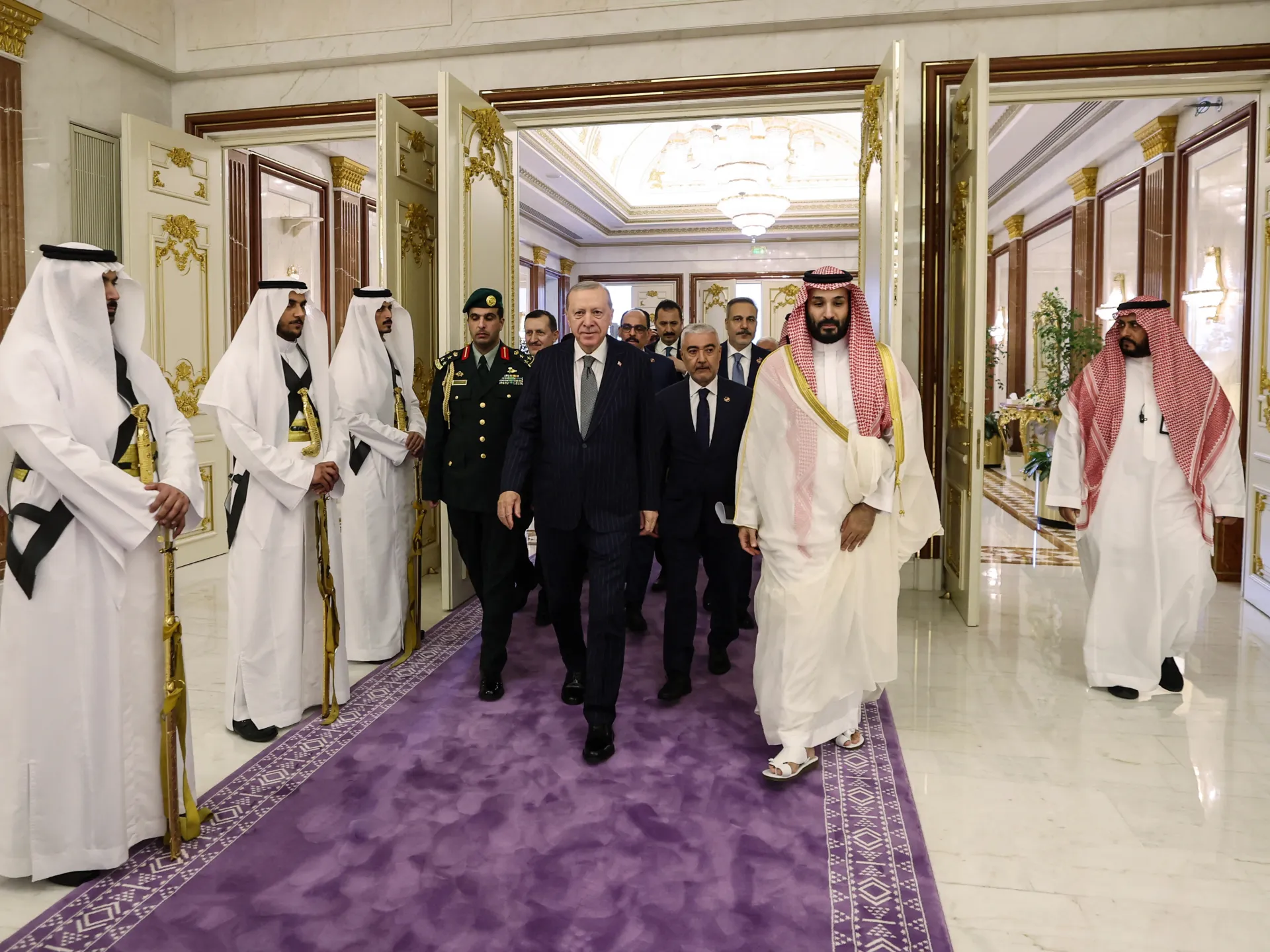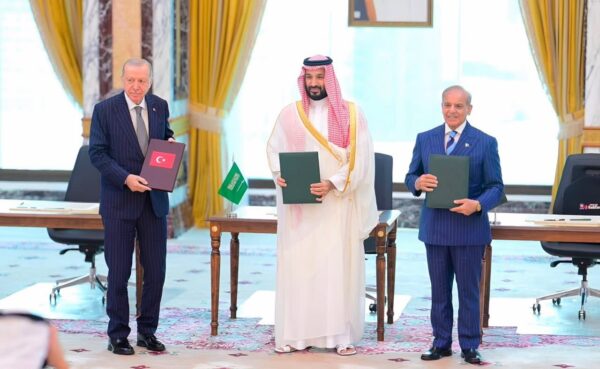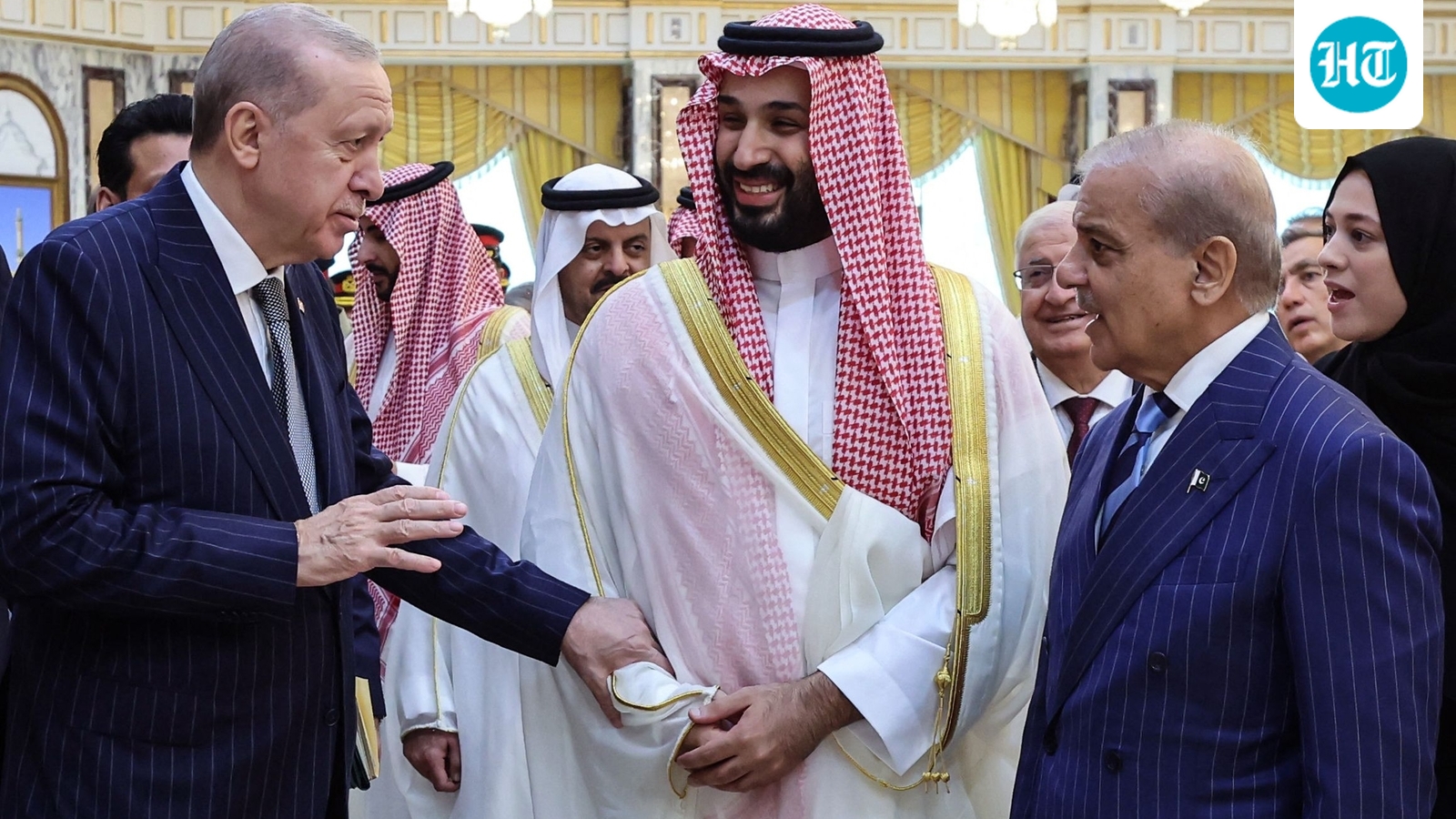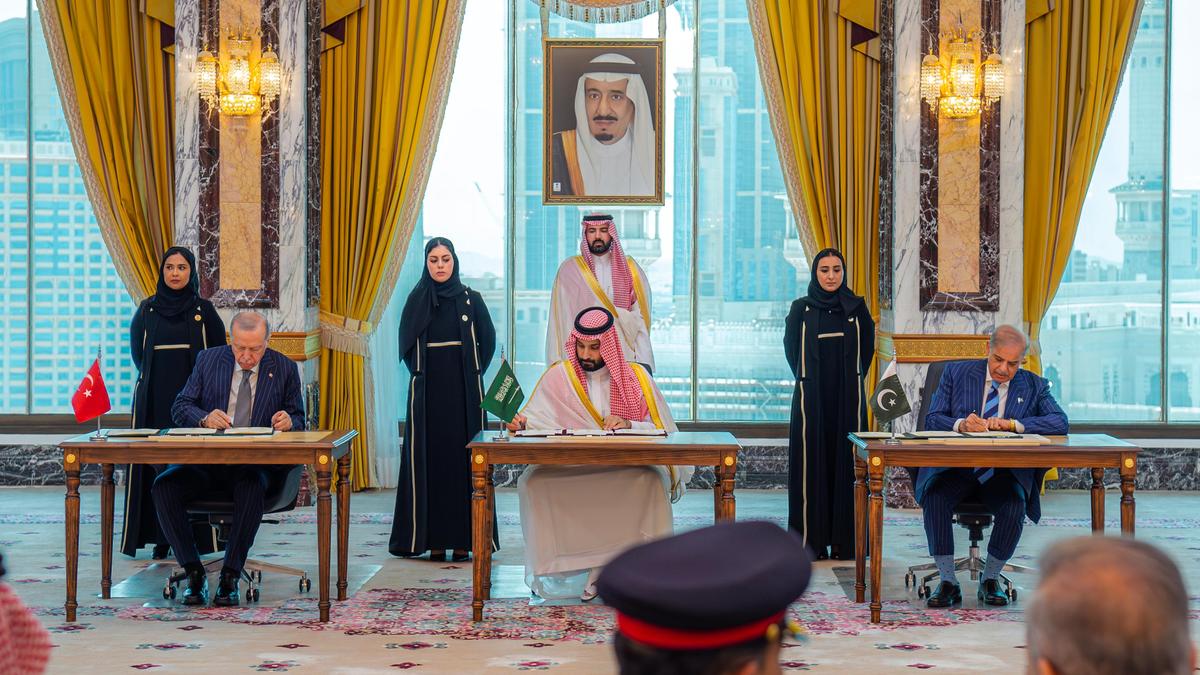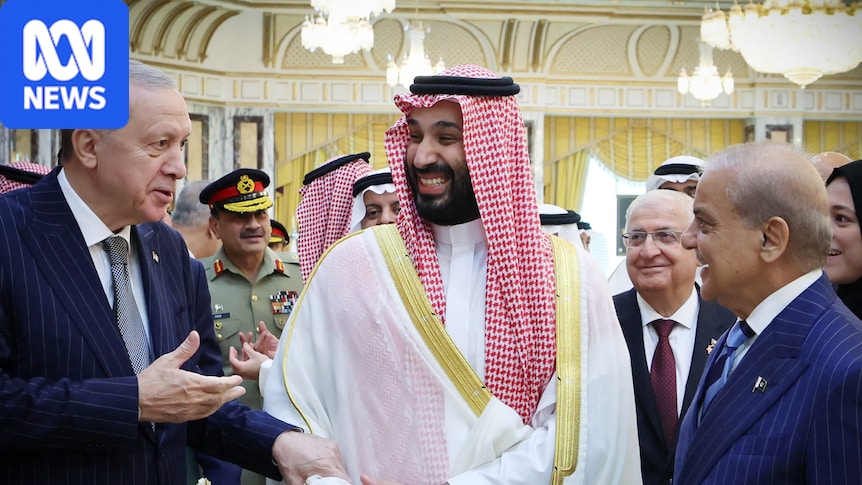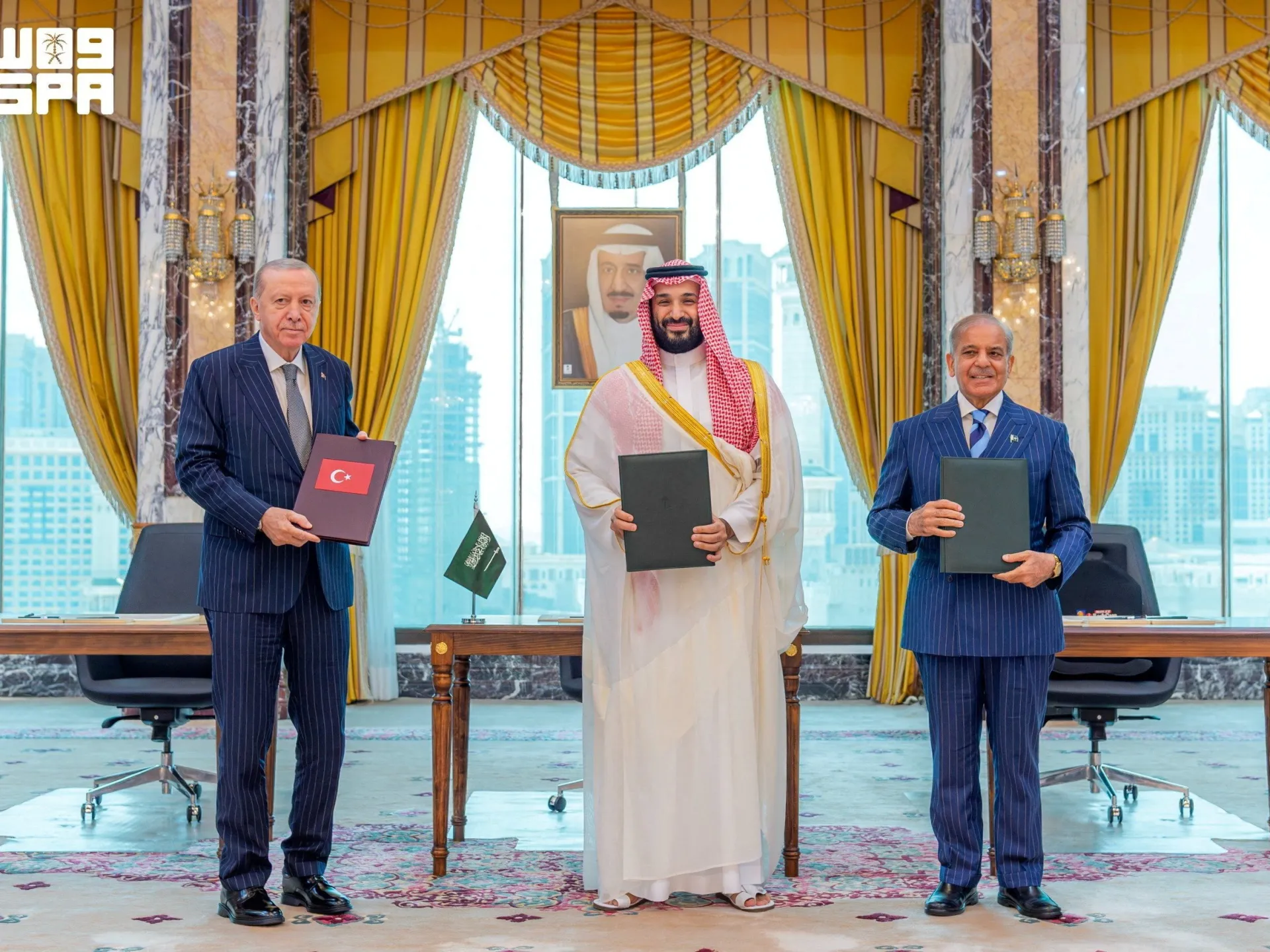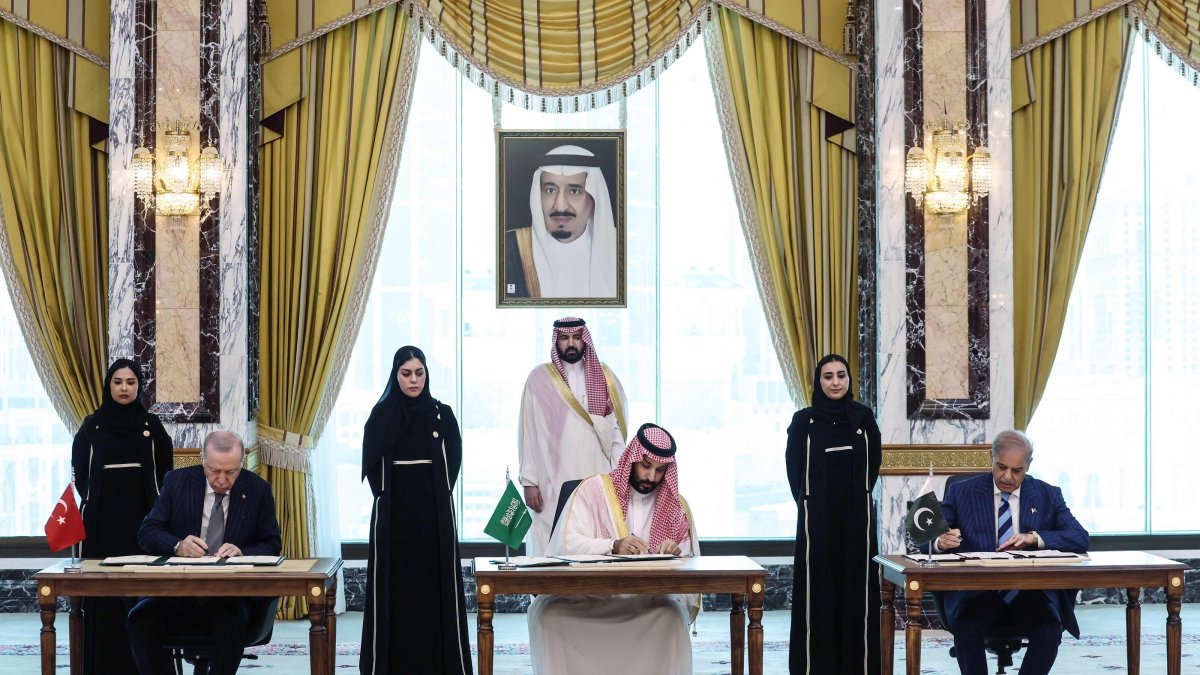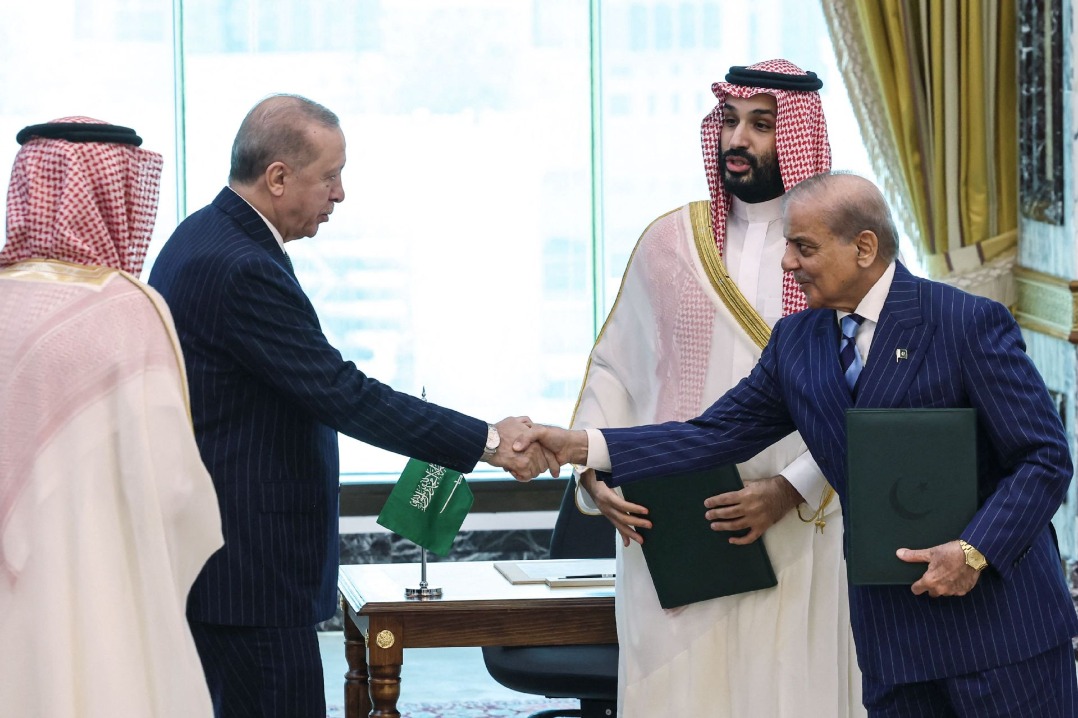
The Mecca Joint Defense Agreement, signed recently by Saudi Arabia, Turkiye and Pakistan, reflects the security pressures facing the three countries amid the deteriorating situation in the Middle East and their growing doubts about the reliability of US security commitments, while its practical impact and effectiveness remain uncertain, experts said.
The agreement was signed by Saudi Crown Prince and Prime Minister Mohammed bin Salman bin Abdulaziz Al Saud, Turkish President Recep Tayyip Erdogan, and Pakistani Prime Minister Muhammad Shehbaz Sharif during a joint defense summit held in the Saudi city of Mecca on Aug 7.
Turkish Foreign Minister Hakan Fidan said on Aug 8 in an interview with Turkiye's Anadolu Agency that several countries have shown interest in joining the deal, voicing confidence that Egypt, which he called a "natural partner", will "be among us in the next stage". He said the agreement does not target Iran, clarifying that the deal is defensive in nature and aimed at protecting signatories from external "attacks".
The pact stipulates that an armed attack on any one of the three countries would be regarded as an attack on all. However, few details have been made public so far regarding the specific commitments of each country, and it remains unclear to what extent the pact would require them to take concrete military action in one another's defense.