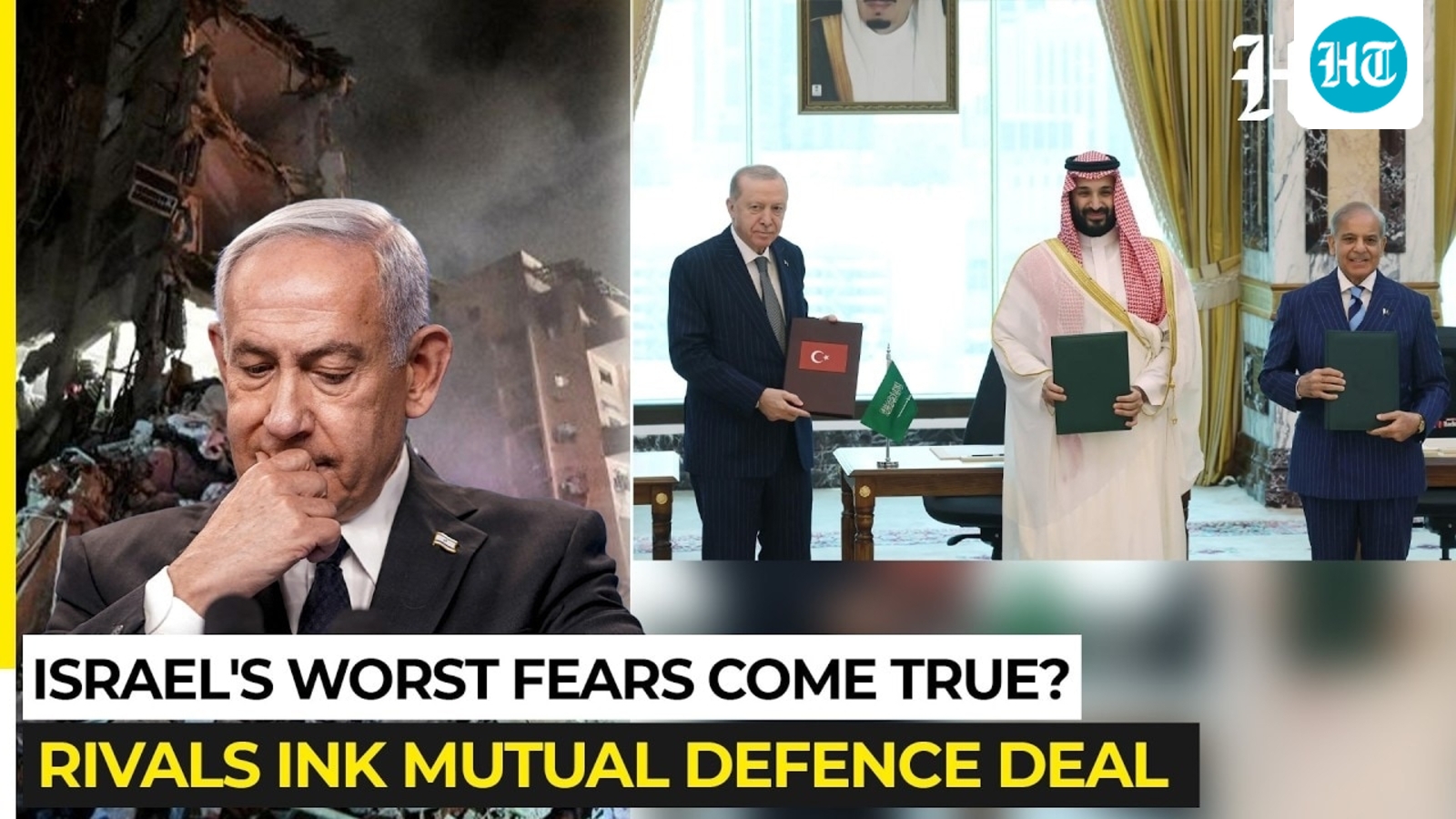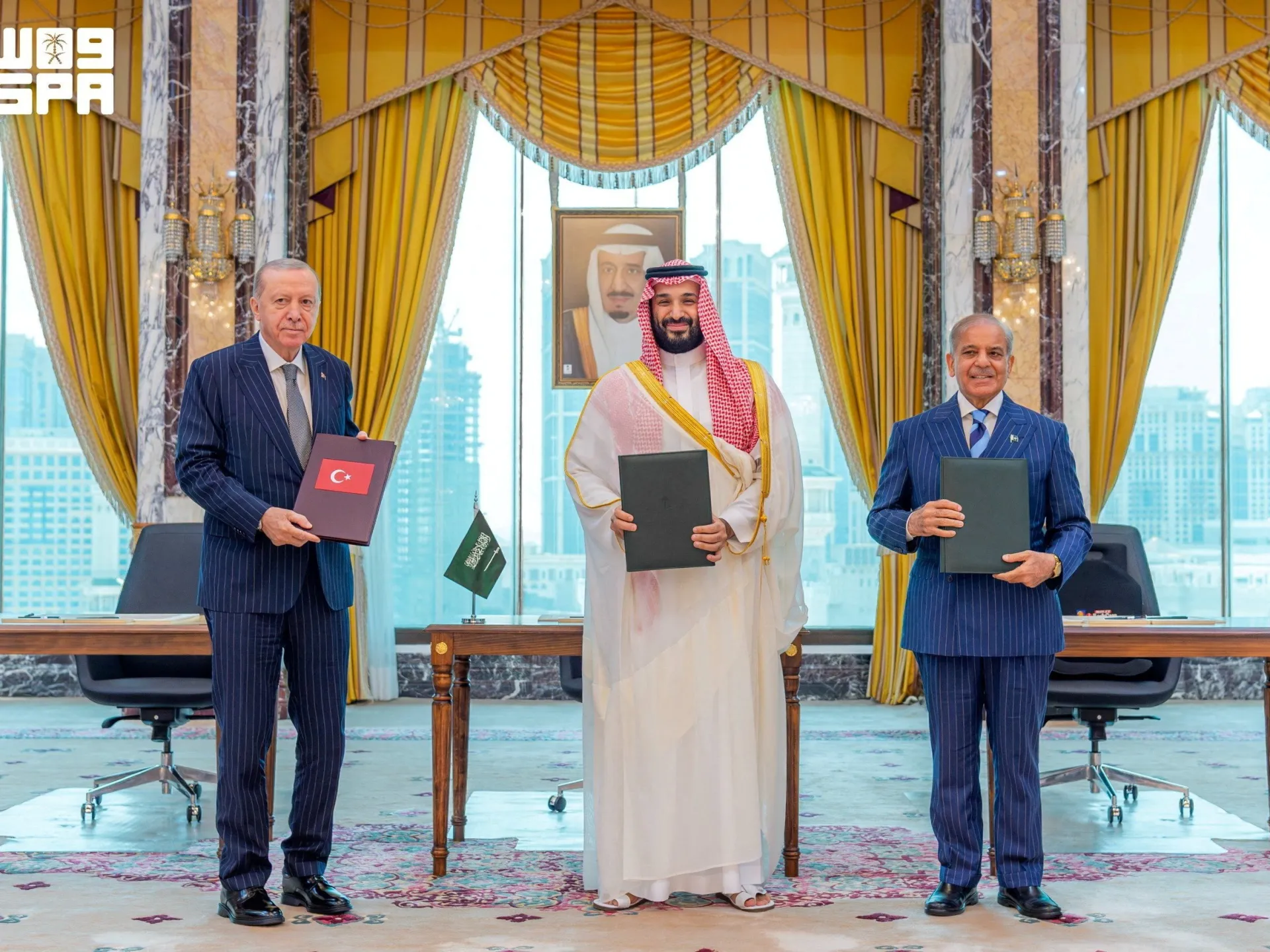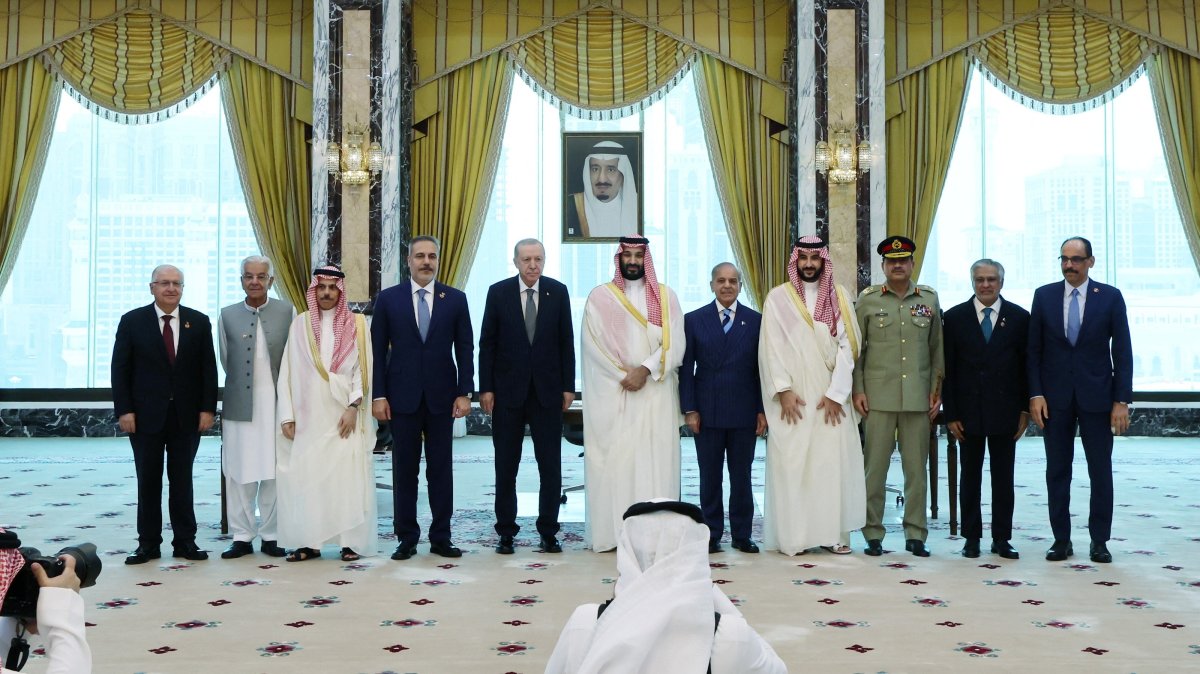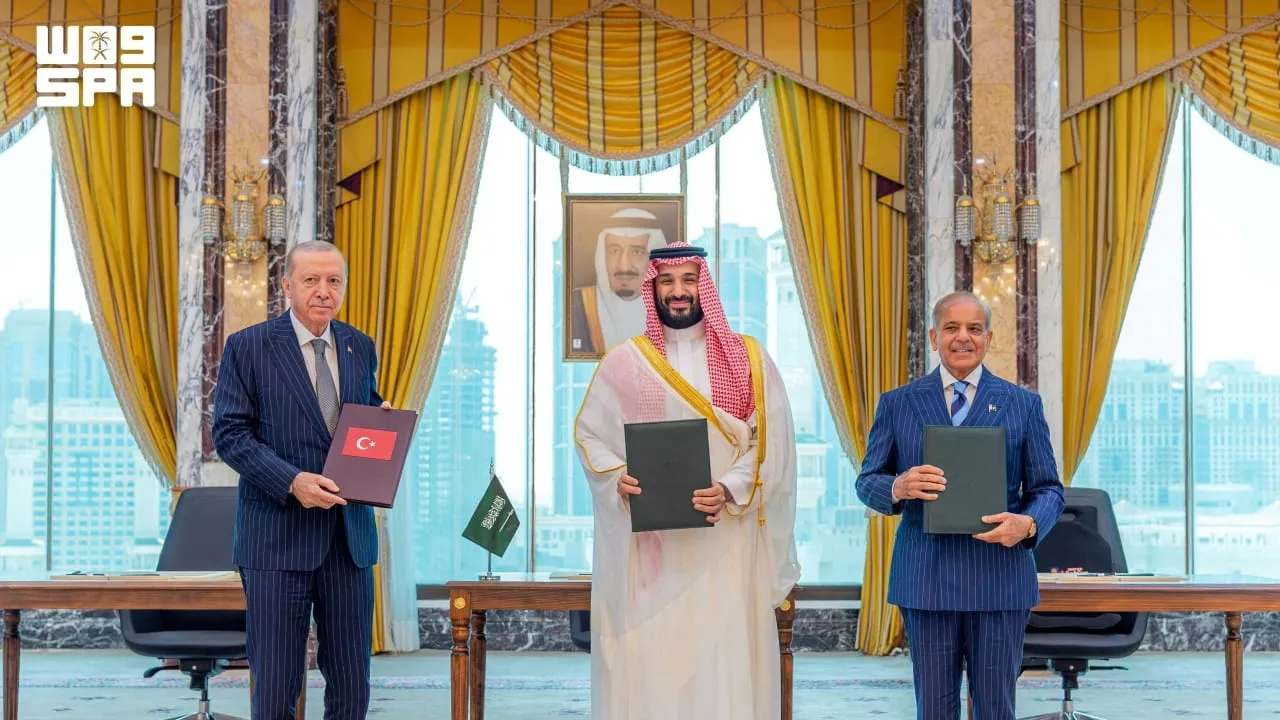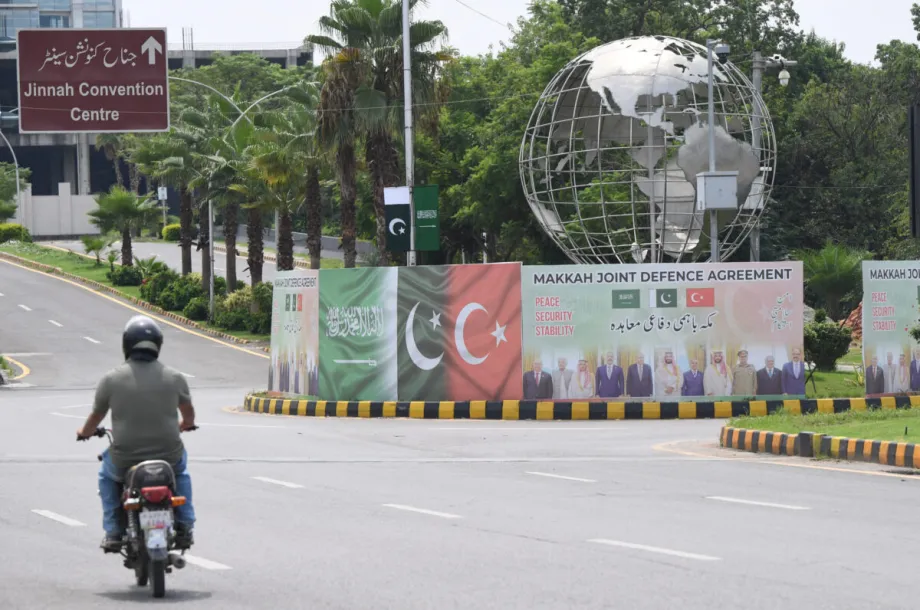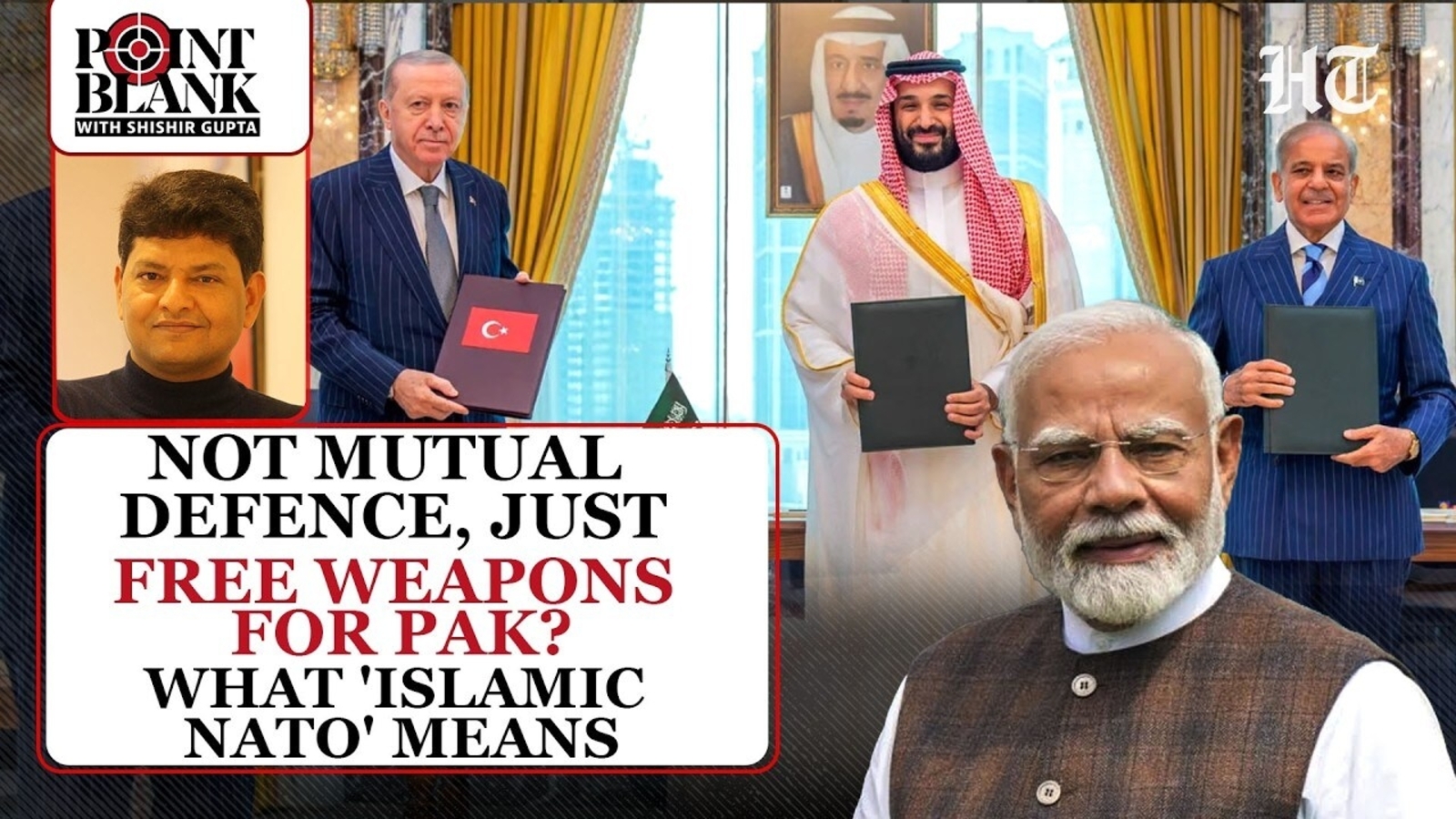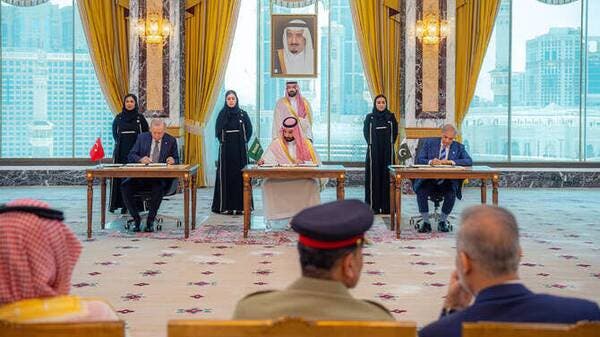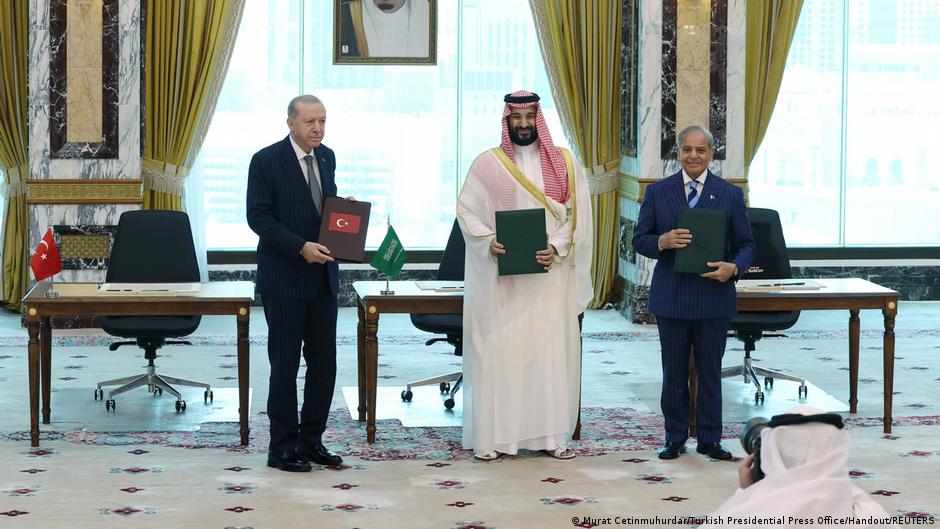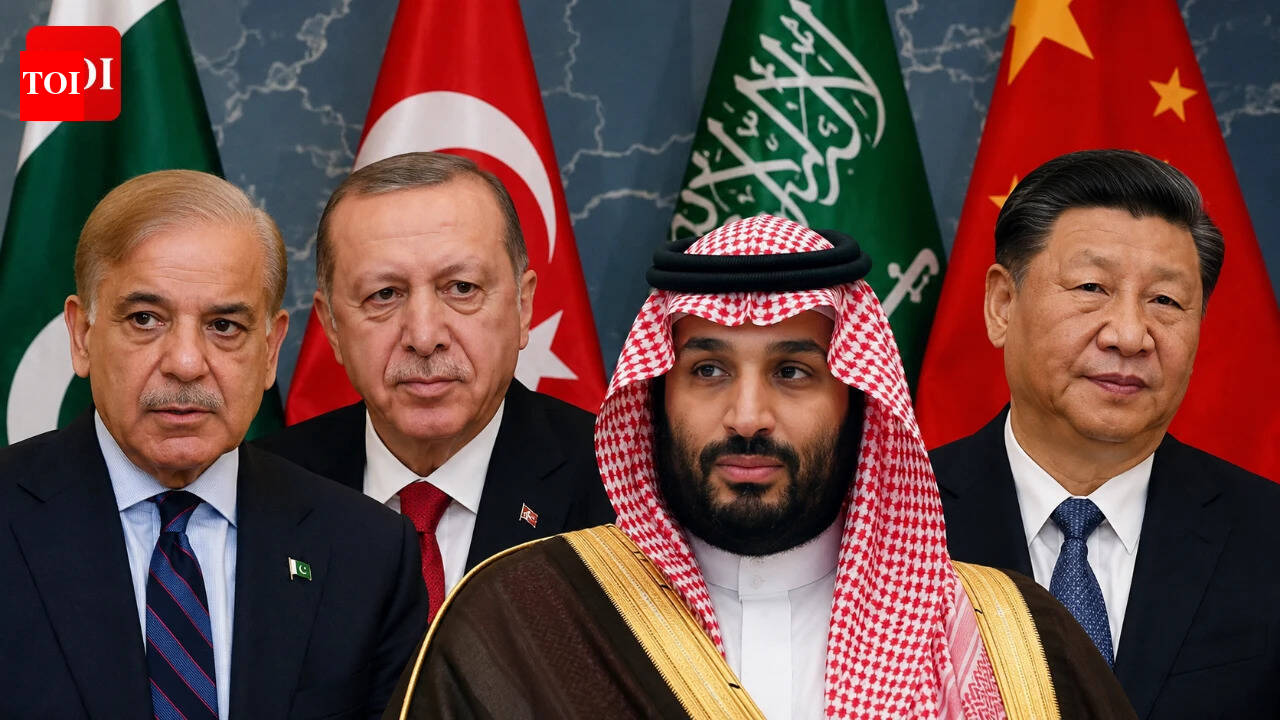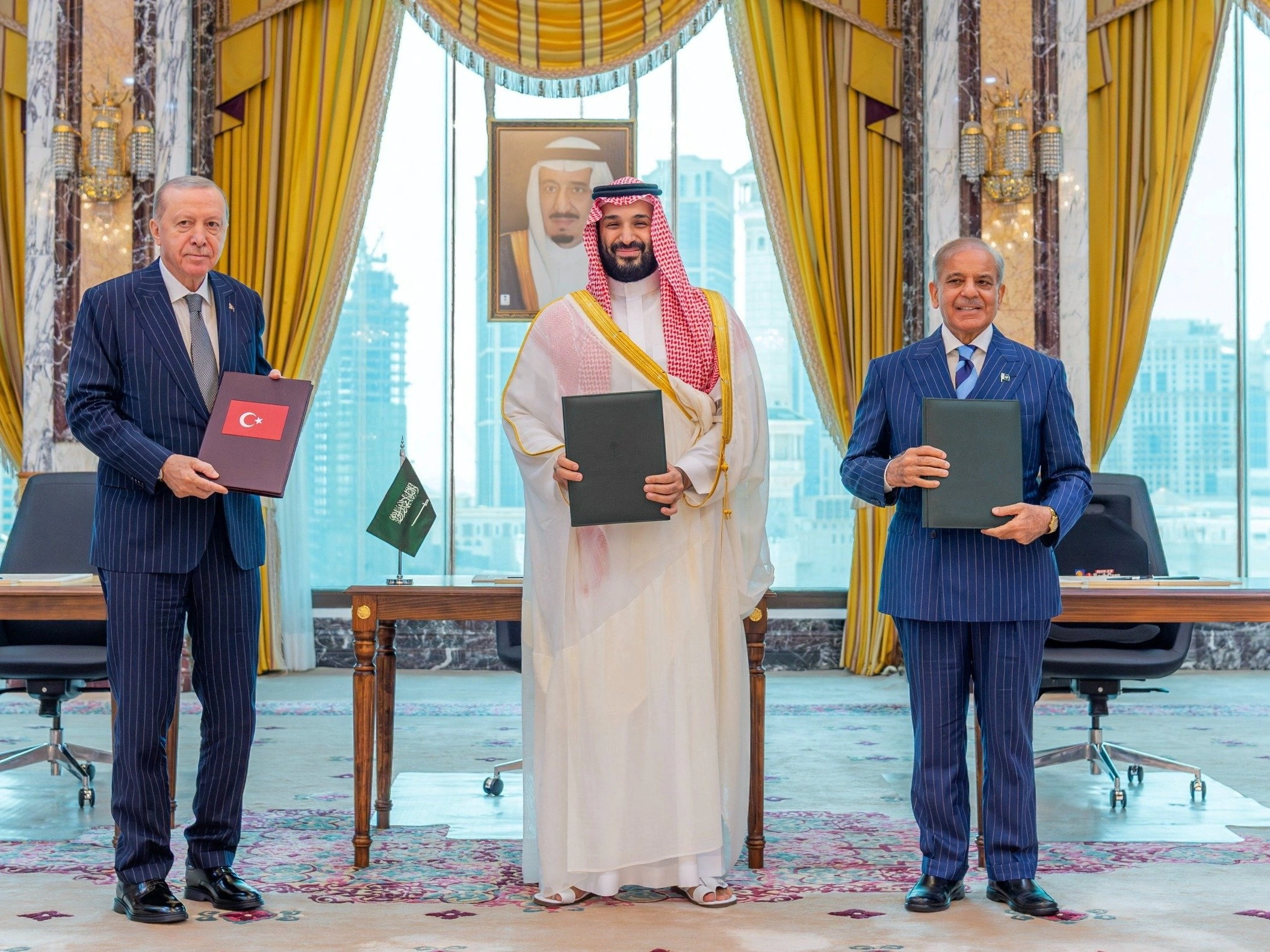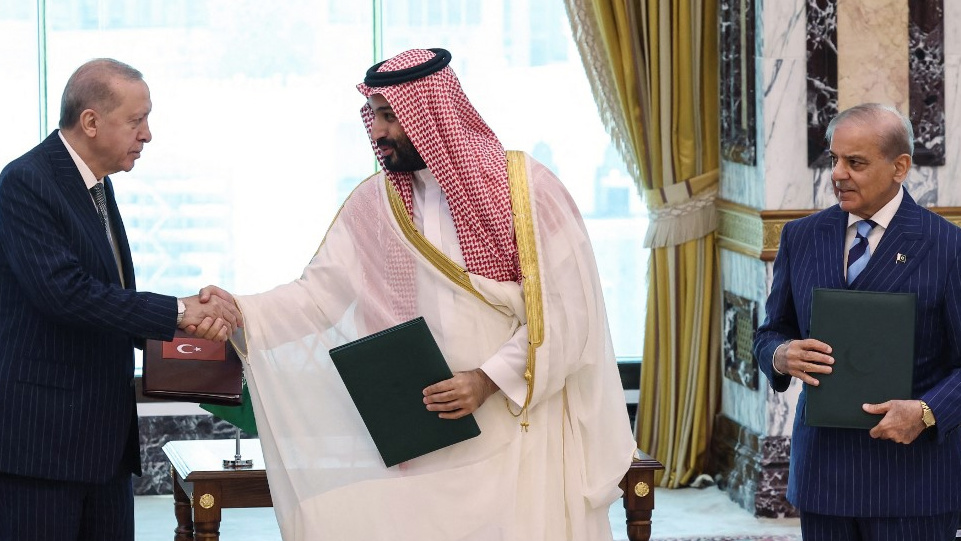
The Mecca Joint Defence Agreement, a trilateral pact announced last week between Saudi Arabia, Pakistan and Turkey, marks a significant and hugely symbolic step for the region.
Penned in the holy city of Mecca rather than the Saudi capital, and accompanied by visuals of the leaders of the three nations praying, the agreement sent a clear message to the world.
Yet while the Saudis swiftly denied that the deal aimed to establish a sectarian or military bloc, there has been much speculation as to what purpose it ultimately serves, especially after Riyadh recently announced the formation of an international axis to protect Red Sea shipping.
In addition, the Islamic Military Counter Terrorism Coalition (IMCTC), dubbed “Muslim Nato”, had already brought dozens of states together in an alliance a decade ago.
The Mecca pact comes at a time when uncertainty reigns over the future of several ongoing conflicts, including the US-Iran war; Israel’s aggressive military occupation and slaughter in Lebanon, Syria and the occupied Palestinian territories; and indeed, Saudi Arabia’s own battles against the Houthis in Yemen and other Iran-backed militias in Iraq.