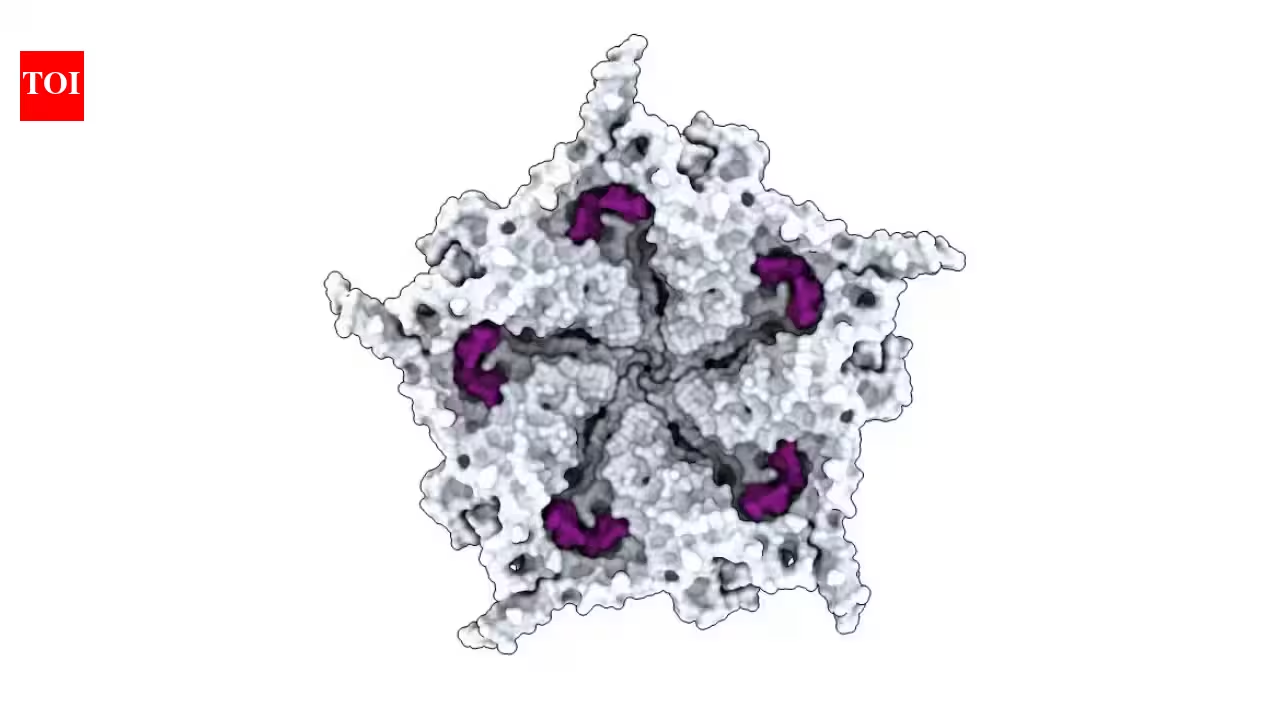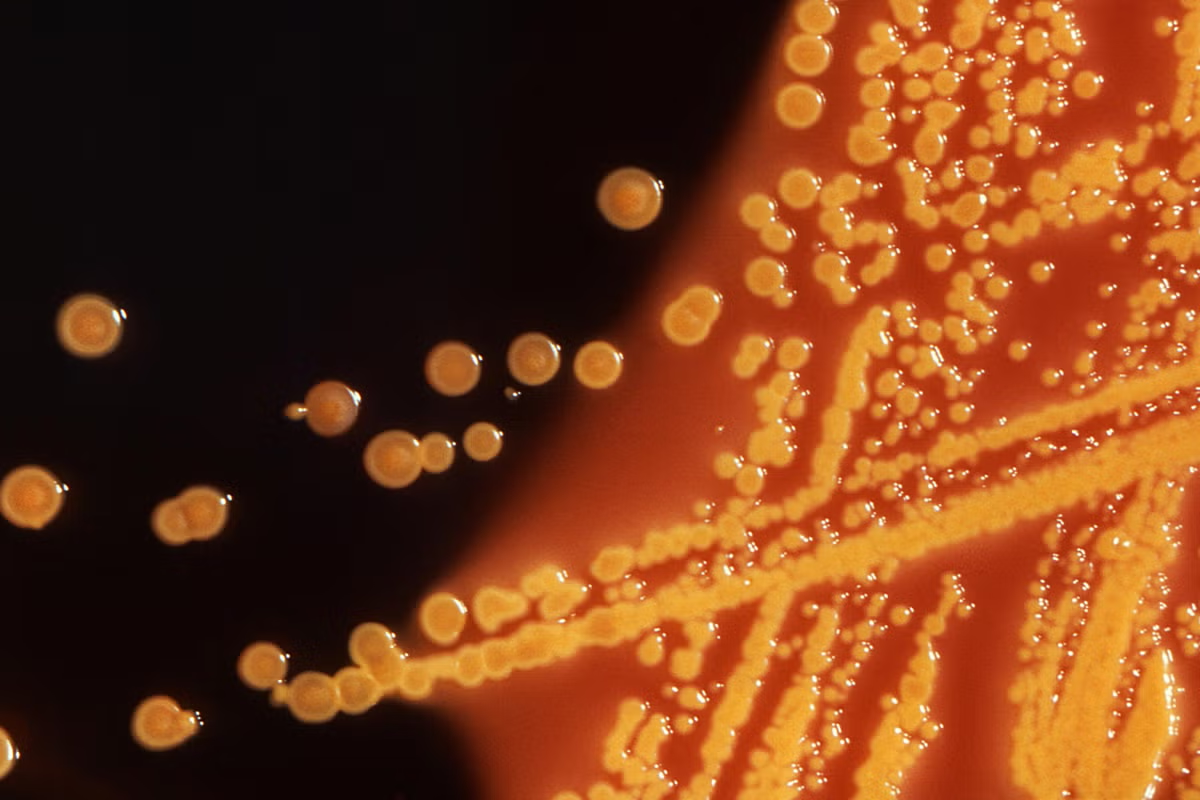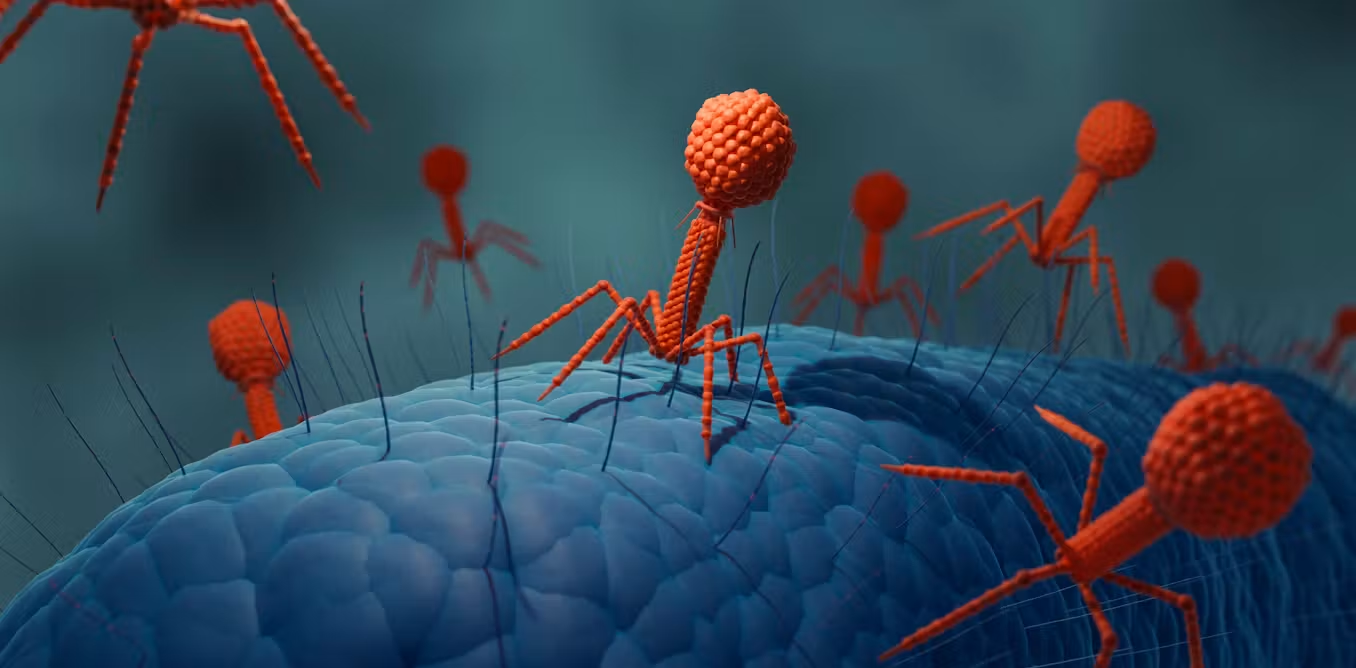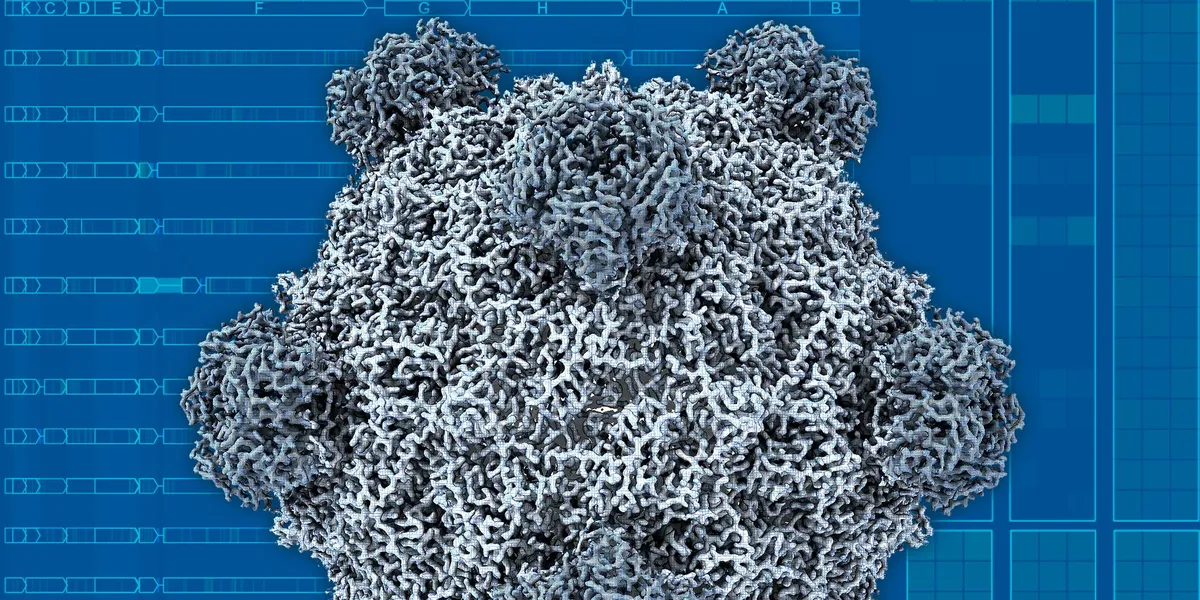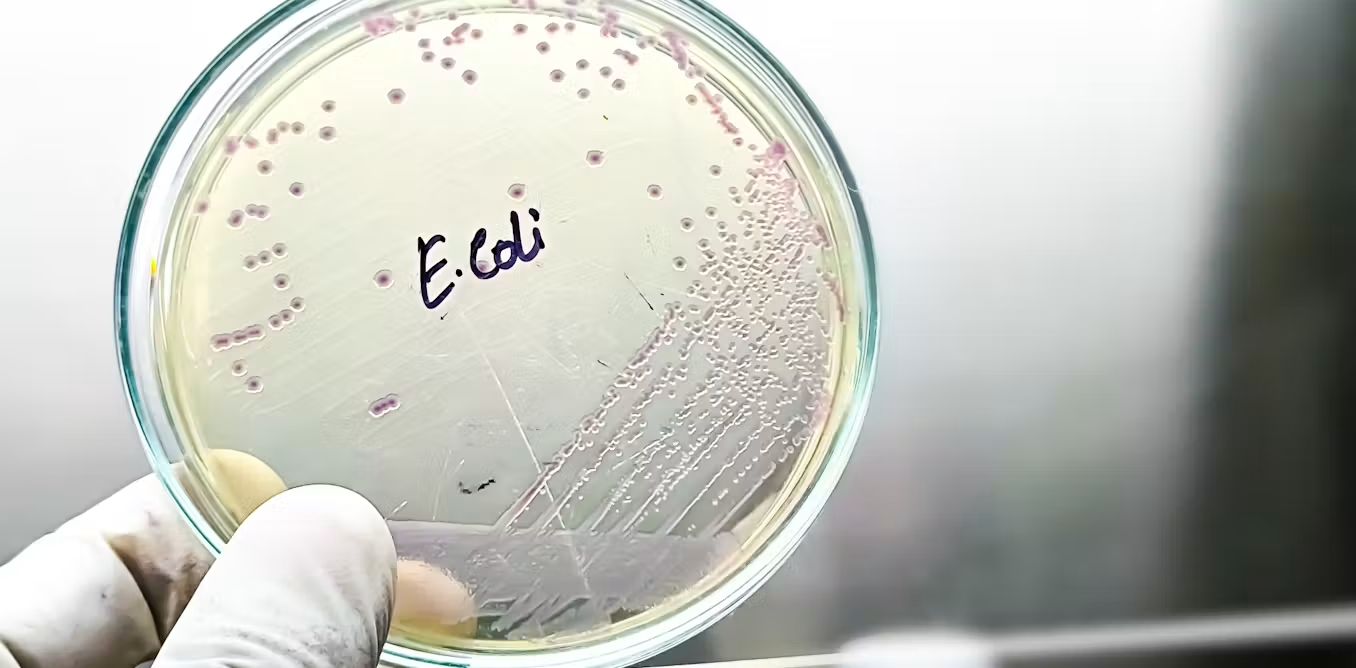
Stanford and Arc researchers used AI to design bacteriophage genomes, producing 16 working viruses that attacked E. coli, a potential step toward fighting antibiotic resistance that also raises urgent questions about biological safety and oversightUntil recently, much of the debate around artificial intelligence focused on what machines could write, draw or calculate. Now the question is becoming far more consequential: Can AI design something that actually functions inside the biological world?Researchers from Stanford University and the Arc Institute have used artificial intelligence to design the genetic code of bacteriophages, viruses that infect bacteria, and then turned some of those designs into functioning viruses in the laboratory.Gallery(Photo: shutterstock)In a study published last week in Science, AI models generated hundreds of new phage designs. Of 285 designs tested in the laboratory, 16 produced functioning viruses capable of reproducing and attacking E. coli bacteria. The researchers later showed that combinations of several of the newly created phages could also attack bacteria that had developed resistance to the original phage.The finding could eventually help scientists develop new treatments against antibiotic-resistant bacterial infections. But it also demonstrates how rapidly AI is gaining the ability to design biological systems, raising questions about safety, oversight and what happens when these tools become much more capable.To understand how AI can design a virus, Prof. Ran Nir-Paz, an infectious disease specialist at Hadassah Medical Center and clinical lead of the Israeli Phage Therapy Center, suggests thinking of DNA as a language.The researchers developed models trained on enormous quantities of genetic information, enabling them to learn patterns and rules governing how genomes are constructed and function. “Just as there is Claude and Gemini, which can use ordinary language to produce sentences, paragraphs or even books, the researchers developed two models, Evo 1 and Evo 2, whose job is to use the language of DNA and RNA,” Nir-Paz said.In this analogy, conventional language models generate text of different lengths and complexity. The biological models generate genetic sequences. “From short words and sentences to long books,” Nir-Paz said. “A long book might be a monkey, a human, a dog or another large, complex animal, while the paragraphs or short sentences would be bacteriophages, the subject of this paper, viruses that infect bacteria.”Designing biological systems on computers is not entirely new. Nir-Paz pointed to American geneticist Craig Venter, one of the pioneers of the Human Genome Project, whose research institute has worked on creating simple forms of life using DNA designed and synthesized in the laboratory.Prof. Ran Nir-PazPhoto: Hadassah Medical CenterOne major breakthrough came about a decade ago, before generative AI models entered everyday life, when scientists created a bacterium with a minimal genome designed on a computer and built in a laboratory so it could divide and reproduce.“The aim was fairly similar to what the researchers did here: use existing knowledge, which still contains gaps in our understanding, to create a life form capable, in their case, of dividing independently and give it certain characteristics,” Nir-Paz said. “They demonstrated that 10 years ago. It was a very impressive and remarkable breakthrough.”What has changed is the power of the computational tools. Nir-Paz said the researchers behind the latest study used technologies resembling those behind language models to learn from vast quantities of genetic data and generate new sequences.“Evo 2 was trained on enormous amounts of genetic information from databases, and from that it learned to build, let’s say, a new paragraph that can be read and understood, or in this case a bacteriophage virus that attacks bacteria,” he said.One of the greatest potential contributions of such tools, Nir-Paz believes, may be helping scientists understand biological functions that remain mysterious. “In the bacteriophage genome, we know the function of roughly 40% of the genes and proteins,” he said. “We understand much less about the rest.” Models capable of detecting patterns across huge genetic datasets could potentially help scientists decipher parts of biology that remain poorly understood.New bacteriophages could one day be used to treat bacterial infections (Photo: shutterstock)Another possibility, already explored in the new study, is designing bacteriophages that might one day treat bacterial infections, particularly those resistant to antibiotics.But Nir-Paz cautioned that the field remains in its infancy. One unresolved question is whether the future of phage therapy lies in engineered viruses designed in laboratories or in naturally occurring phages that can be identified, studied and adapted for medical use. “There is no answer to that,” he said. “It is an open question.”The study itself also demonstrated the technology’s limitations. Only a small proportion of the designs generated by the models became functioning phages. “There is still a huge learning process here,” Nir-Paz said, adding that researchers will need substantially more data and much better models before their outputs can be relied upon consistently. “Like ChatGPT and similar systems, we don’t know how to identify when the machine is lying,” he said. And alongside those limitations comes the other side of the equation. “The machine can also generate dangers,” he said.That concern sits at the heart of the growing debate over AI and biology. As models become better at designing biological systems, the same capabilities that could help scientists understand nature or develop new treatments could potentially be used to create systems with properties that did not previously exist.Prof. Tal BroshPhoto: CourtesyProf. Tal Brosh, director of the Infectious Diseases Unit at Assuta Ashdod Hospital, stressed that the bacteriophages involved in the current study do not directly threaten humans. Bacteriophages occur naturally in the human body, but they attack bacteria rather than human cells. “Bacteriophages are not something that endangers us in any way, because these are viruses of bacteria,” Brosh said. “They can harm bacteria, not human beings.”“What this does show us is the improving capabilities of what is called synthetic biology, the ability to use very advanced biological tools and genetic manipulation to change living organisms or create living organisms from scratch.”The medical possibilities are significant. Synthetic biology could help produce new bacteriophages against antibiotic-resistant bacteria and improve existing applications of engineered viruses for treatment. “There can be many very beneficial uses for these technologies,” Brosh said.But the same ability to alter biological systems could also be misused or produce dangerous unintended consequences. “There could be misuse or a laboratory accident that ends with someone taking a virus, bacterium or some organism and making it more virulent, more contagious or resistant to existing treatments or vaccines,” Brosh warned. “There are certainly laboratories and scientists capable of doing such things.”Could AI one day defeat antibiotic-resistant bacteria? (Photo: shutterstock)To illustrate how reconstructing viruses is no longer purely theoretical, Brosh pointed to smallpox. The disease was eradicated through vaccination, and samples of the virus are now officially held under strict security in designated laboratories in the United States and Russia. Yet several years ago, researchers recreated horsepox, a related virus from the same viral family, using synthetic biology. They relied on its published genetic sequence and synthesized the DNA in the laboratory.“They took the sequence from the internet, created the DNA again from scratch, literally created it, and that was done with technology far less advanced than what exists today,” Brosh said.The concern is that AI could eventually expand those capabilities, helping researchers not only reconstruct an existing virus but search computationally for changes that alter its characteristics. Brosh said a person could theoretically ask an AI system to examine viruses such as influenza or coronavirus and search for changes that could make them more transmissible, more lethal or less susceptible to vaccines.Those possibilities raise difficult questions about regulation. “This is a very big question: What can be done with this technology, and to what extent is it right to regulate science?” Brosh said.“On one hand, you don’t want to put barriers in front of science. You want to allow freedom of research and laboratory work. If researchers cannot be free in the scientific questions they seek to investigate, science will not advance. On the other hand, you also don’t want everything a person can imagine or wants to do to become possible.”Even if limits are imposed, enforcing them on AI systems presents another challenge. Current models already include safeguards intended to prevent them from providing information that could facilitate dangerous acts. But Brosh said such barriers are not necessarily impossible to circumvent through indirect questioning.The threat also does not require malicious intent. Legitimate research could produce dangerous consequences if a laboratory accident or negligence allowed a harmful organism to escape, Brosh said.“There could be a pandemic, not because someone wants to develop a biological weapon, but because someone is working on viruses and, through laboratory negligence or an accident, it leaks out without that being the intention,” he said.‘Computational tools can be asked to theoretically design the molecule most effective against a particular virus’ (Photo: shutterstock)Brosh noted that some have argued such a scenario occurred at the beginning of the COVID-19 pandemic in China, though he said most scientific evidence likely weighs against that explanation.The same computational capabilities also promise major medical advances. One possibility is improving vaccines against rapidly evolving viruses. “With both flu vaccines and coronavirus vaccines, we are constantly chasing our own tails because the viruses keep changing,” Brosh said.Today, vaccine formulations must repeatedly be updated to match evolving strains. Computational systems could eventually improve predictions of which strains are likely to emerge or help design vaccines capable of protecting against a broader range of influenza or coronavirus variants.Drug development could also change. Traditionally, scientists often had to screen large numbers of compounds to determine whether any were effective against a particular bacterium or virus. AI models could narrow that search at the design stage.“You can ask computational tools to theoretically construct which molecule would be most effective for treating a particular virus,” Brosh said. “Then you can produce it chemically and test it in the laboratory, and the chances of success are greater.”That may be the larger story behind the new study. The same capability that allowed artificial intelligence to design bacteriophages that could one day help fight antibiotic-resistant bacteria could eventually be used to design vaccines, medicines and entirely new biological systems. But the more powerful that capability becomes, the greater the responsibility to keep it under control.The viruses in this study do not endanger humans. Yet the research offers a glimpse of a rapidly approaching era in which the boundary between code written on a computer and biology operating in the real world is becoming increasingly thin.
AI designed a virus, scientists brought it to life
Stanford and Arc researchers used AI to design bacteriophage genomes, producing 16 working viruses that attacked E. coli, a potential step toward fighting antibiotic resistance that also raises urgent questions about biological safety and oversight
TL;DRAI
Stanford and Arc used AI to design bacteriophage genomes; 16 of 285 designs became functioning viruses attacking E. coli. Shows AI can engineer biological systems for treating antibiotic-resistant infections, but raises urgent biosafety and governance concerns.
1,739 words~8 min read