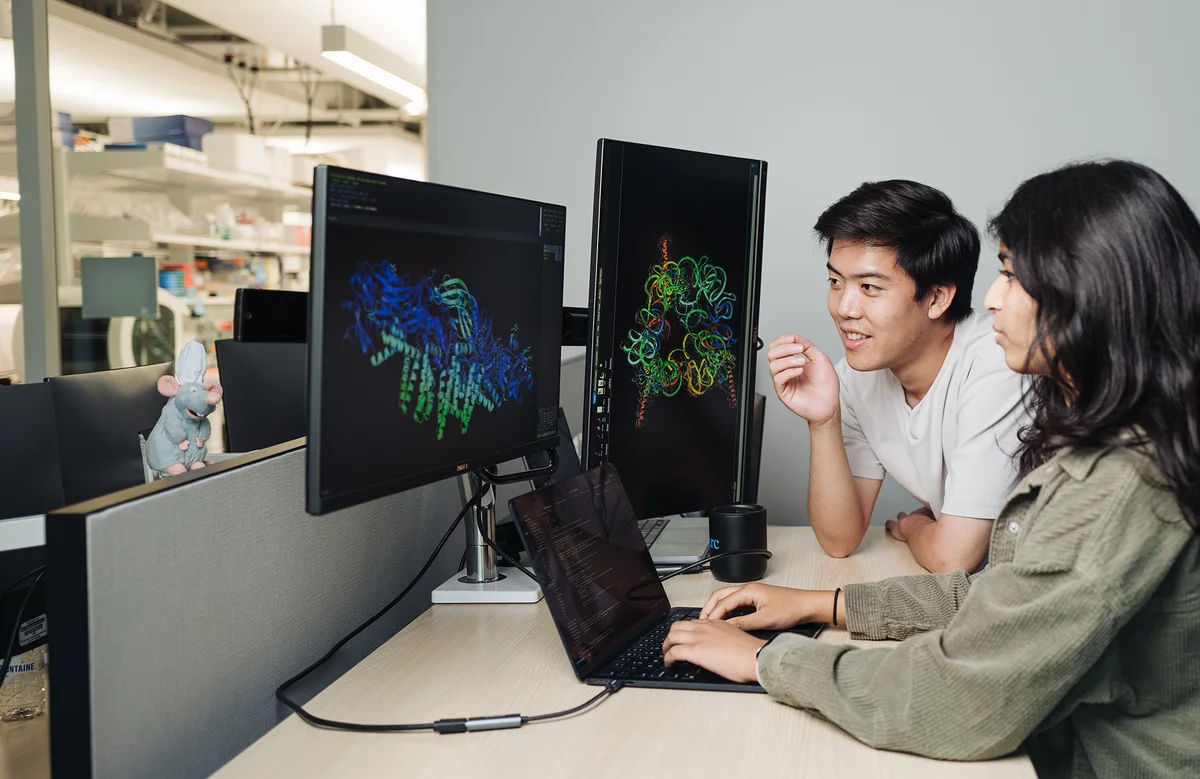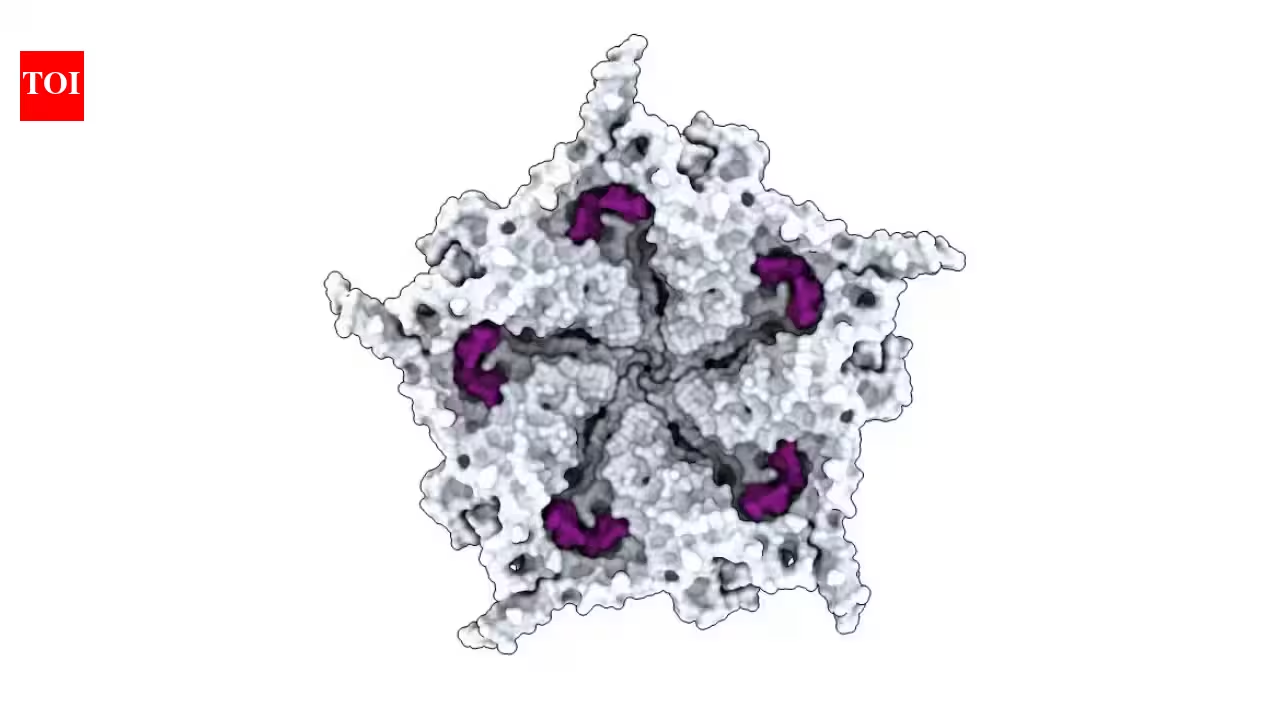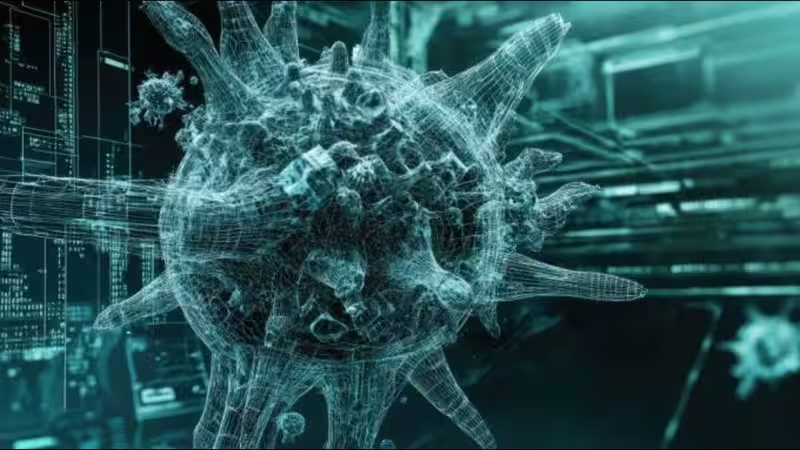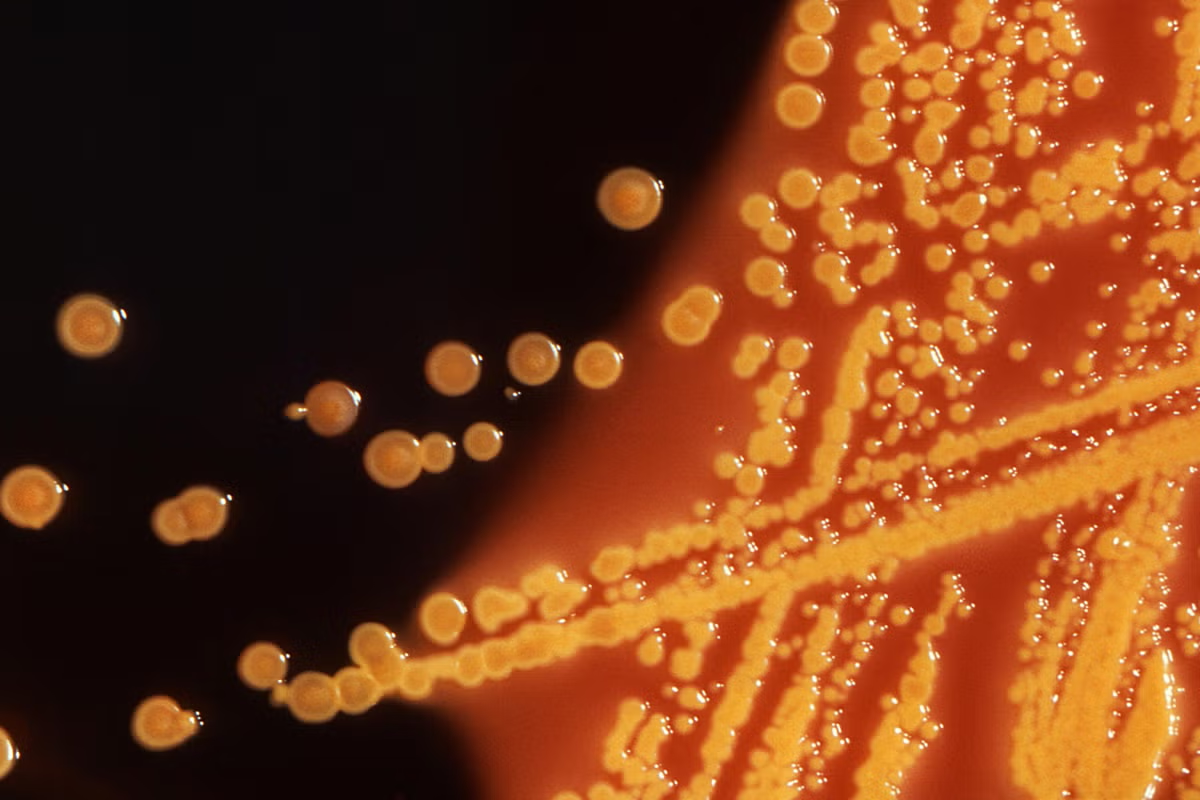
Jump to contentThank you for registeringPlease refresh the page or navigate to another page on the site to be automatically logged inPlease refresh your browser to be logged inAllNewsSportCultureLifestyleColonies of E. coli bacteria grown on a Hektoen enteric (HE) agar plate are seen in a microscopic image courtesy of the U.S. Centers for Disease Control (CDC). (REUTERS)Researchers from Stanford University and the Arc Institute have successfully used artificial intelligence to identify and create functioning viruses not found in nature. The AI model, Evo, was trained on genetic sequences from various organisms, generating 700,000 potential viruses, with 16 proving viable when inserted into bacteria. This breakthrough offers promise for developing new medications to combat drug-resistant bacteria, such as E. coli, tuberculosis, and MRSA, by creating diverse viral cocktails. Experts from Johns Hopkins University and others have raised urgent biosafety and biosecurity concerns, highlighting the lack of adequate governance for these rapidly advancing AI technologies. While acknowledging the risks, some experts argue that existing pathogens and gain-of-function research pose a more immediate and significant threat than viruses designed entirely by AI. In fullNothing to fear: AI just created a virus that is not found in natureMore bulletinsThank you for registeringPlease refresh the page or navigate to another page on the site to be automatically logged inPlease refresh your browser to be logged in
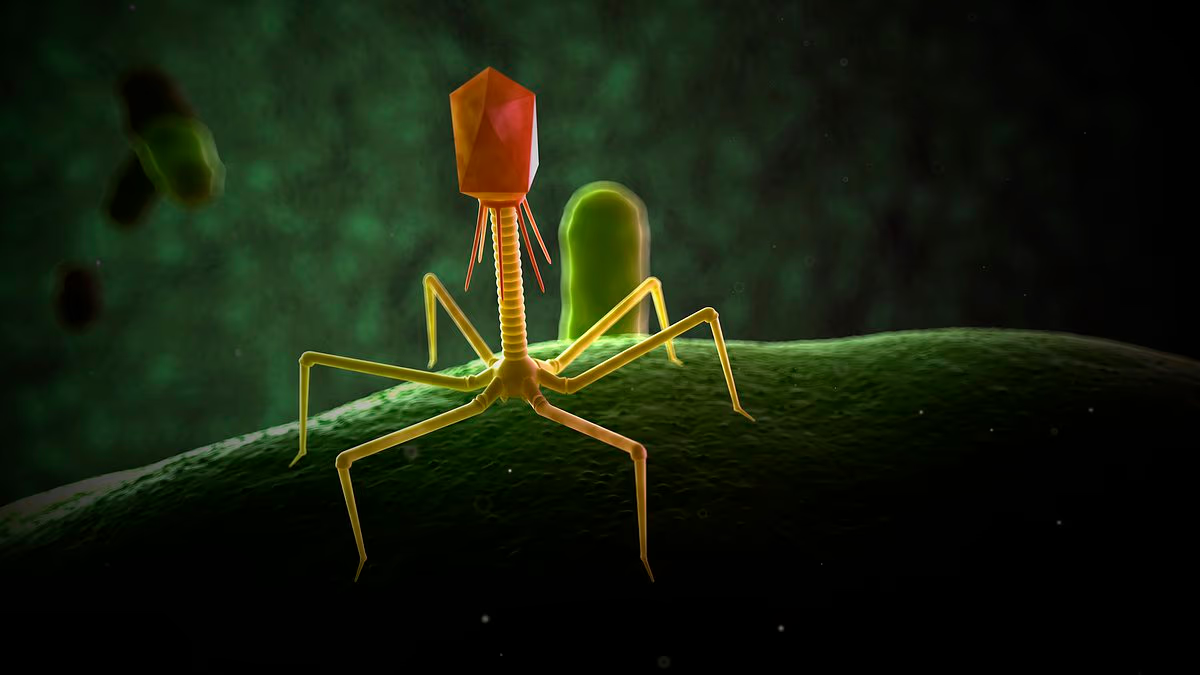
Stanford team uses AI to design custom viruses that destroy resistant E. coli
Jump to contentThank you for registeringPlease refresh the page or navigate to another page on the site to be automatically logged inPlease refresh your browser to be logged inAllNewsSportCultureLifestyleColonies of E. coli bacteria grown on a Hektoen enteric (HE) agar plate are seen in a microscopic image courtesy of the U.S. Centers for Disease Control (CDC). (REUTERS)Researchers from Stanford University and the Arc Institute have successfully used artificial intelligence to identify and create functioning viruses not found in nature. The AI model, Evo, was trained on genetic sequences from various organisms, generating 700,000 potential viruses, with 16 proving viable when inserted into bacteria. This breakthrough offers promise for developing new medications to combat drug-resistant bacteria, such as E. coli, tuberculosis, and MRSA, by creating diverse viral cocktails. Experts from Johns Hopkins University and others have raised urgent biosafety and biosecurity concerns, highlighting the lack of adequate governance for these rapidly advancing AI technologies. While acknowledging the risks, some experts argue that existing pathogens and gain-of-function research pose a more immediate and significant threat than viruses designed entirely by AI. In fullNothing to fear: AI just created a virus that is not found in natureMore bulletinsThank you for registeringPlease refresh the page or navigate to another page on the site to be automatically logged inPlease refresh your browser to be logged in
Stanford's AI generated 700,000 potential viruses; 16 proved viable against antibiotic-resistant E. coli, MRSA, and TB. Signals AI's shift to drug discovery via synthetic biology, raising biosecurity and governance challenges for tech leaders and risk management.