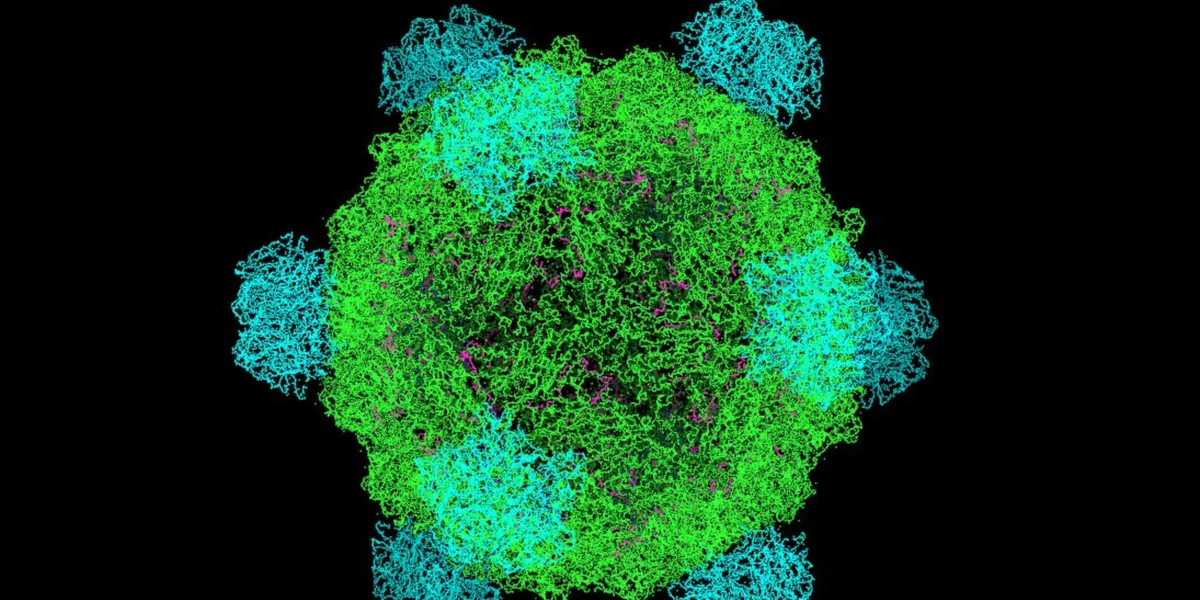
Authored by Steve Watson via Modernity News,For the first time, artificial intelligence has designed complete, functional viral genomes from scratch.Oh dear.Stanford University and Arc Institute researchers used generative AI models to produce 16 novel bacteriophages that successfully infect and kill bacteria in the lab.Breaking News: Scientists have used A.I. to create new viruses for the first time, raising hopes for medical advances while also raising the possibility that the technology could someday be used to invent dangerous pathogens. https://t.co/MJG4mp0TTb
— The New York Times (@nytimes) August 6, 2026Officials insist the viruses "pose no threat to people," yet biosecurity experts are already sounding the alarm that the same technology opens the door to inventing dangerous pathogens.JUST IN – For the first time, AI has designed complete viral genomes, producing 16 functional viruses that infect bacteria and "pose no threat to people." — BBC pic.twitter.com/Le4lRSKN7q
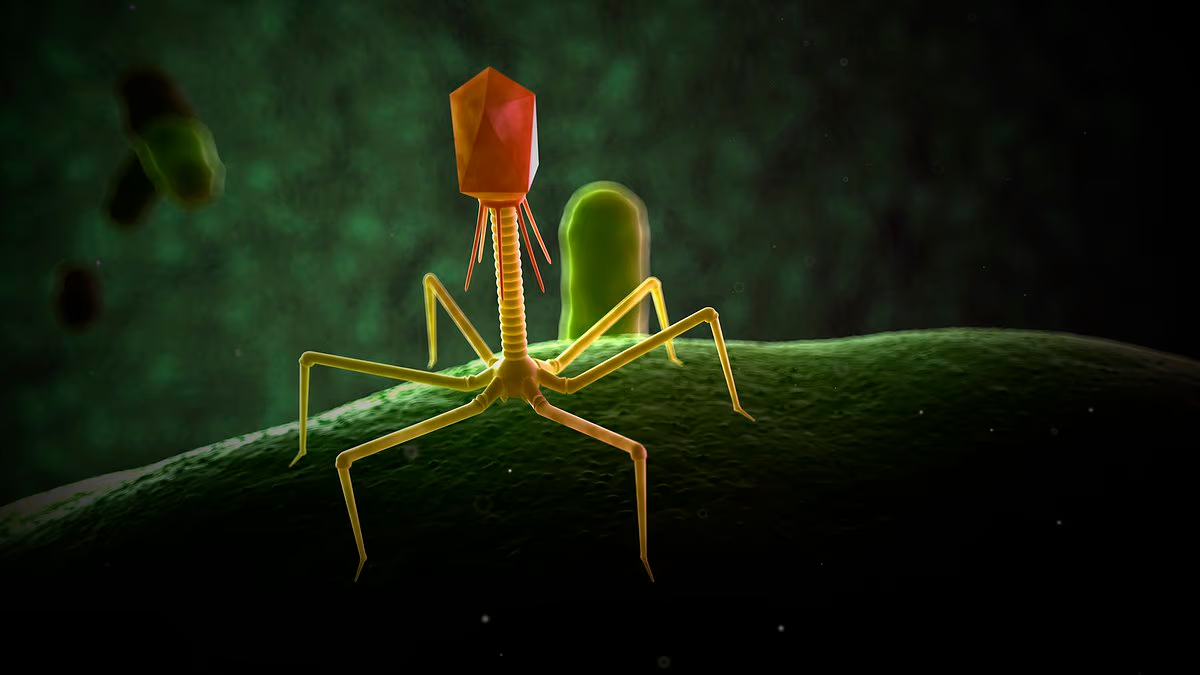
— Disclose.tv (@disclosetv) August 6, 2026The breakthrough, published in the journal Science, marks the first time generative AI has written entire viable viral genomes.Researchers trained genome language models known as Evo 1 and Evo 2 on millions of natural genetic sequences. They then tasked the systems with designing complete bacteriophage genomes based on the well-studied ?X174 template that infects E. coli.Of 302 synthesized designs, 16 proved fully functional: they assembled into virus particles, replicated inside bacterial cells, and in some cases outperformed the natural virus, even overcoming bacterial resistance when used as a cocktail.Oh dear.Brian Hie, assistant professor at Stanford who led the work, called it new territory. "This is a next step in the complexity that's designable by generative AI, this is the first time generative AI has been used to design a complete genome, it's something that can replicate and have other functions inside cells... this was new territory for us," he told the BBC.The team deliberately excluded genetic data from viruses capable of infecting complex organisms and conducted the work in a secure laboratory. The resulting phages target only specific bacteria.Patrick Cai, a synthetic biologist at the University of Manchester not involved in the study, called it "an important milestone."Yet the same experts who celebrate the medical potential for phage therapies against antibiotic-resistant infections are issuing blunt warnings.In an accompanying commentary in Science, Dr. Thomas Inglesby and Dr. Moritz Hanke of the Johns Hopkins Center for Health Security wrote that the findings raise "urgent biosafety and biosecurity questions."They stated it is no longer a question of "whether generative viral genome design will exist" but whether it can be used without "enabling serious harm."Oh dear.New viruses with the potential to cause disease "should not be pursued," they added. "The ability to compose viral genomes using generative AI now exists; the governance to safely steer it does not."Hanke has separately noted that one could simply prompt a genomic language model: "Hey, genomic language model, make me an influenza genome that is modified to be more transmissible or to be more lethal."This is not abstract risk. Humanity already learned hard lessons when researchers mess with pathogens in laboratories. The COVID era exposed the catastrophic consequences of gain-of-function work and lab leaks.Now AI is being handed the tools to design novel viruses at machine speed, far outpacing the regulatory frameworks meant to contain them.The potential for misuse or accidental release is frightening. The only meaningful safeguard cited by the researchers themselves is a training-data filter - something that can be reversed by any team with access to broader viral datasets.First article you find in a Resident Evil game https://t.co/6yNvWlhbLE