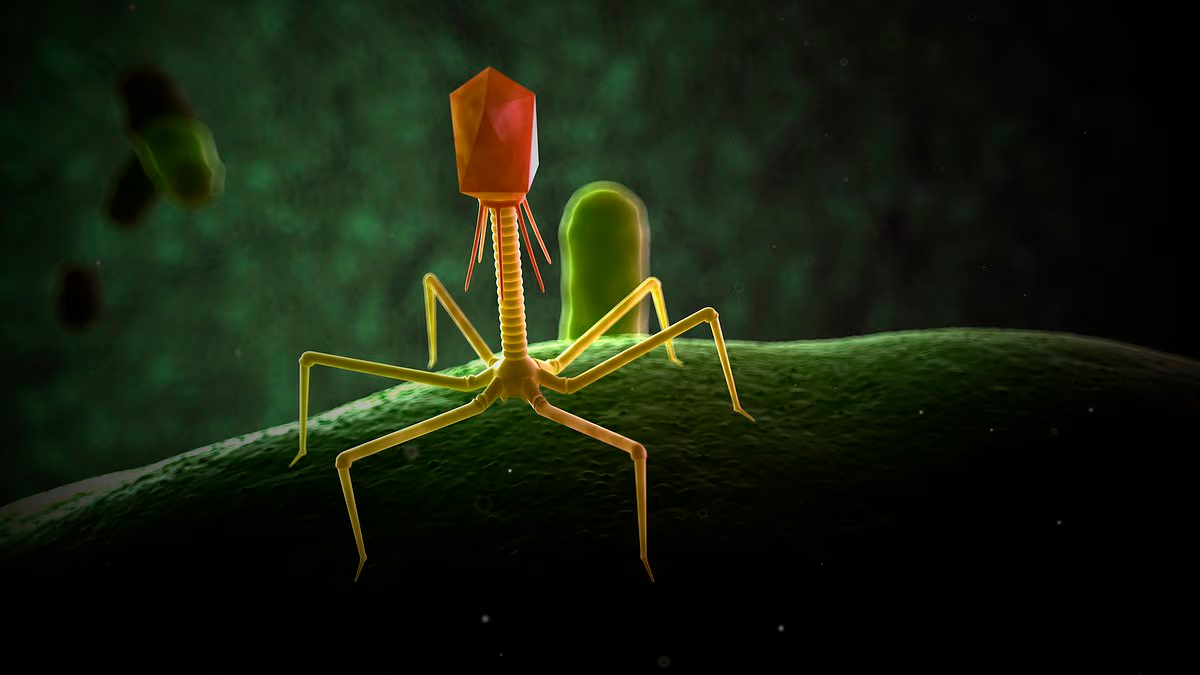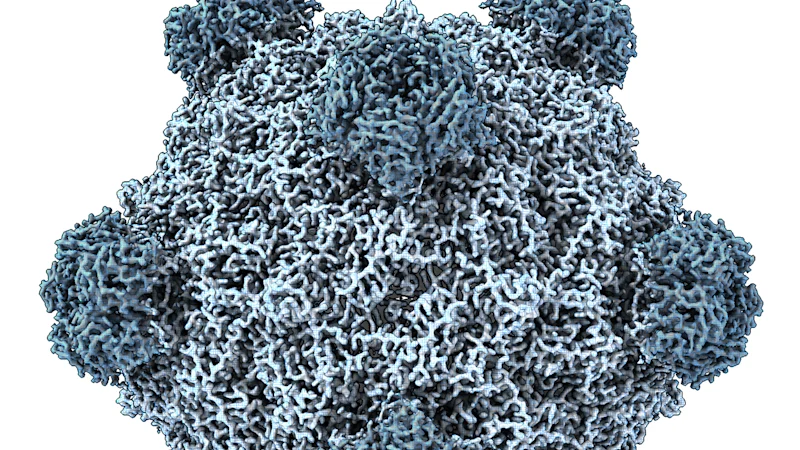
Researchers at Stanford University and the Arc Institute reported the milestone on Thursday in the journal Science, in work detailed by The New York Times. Using AI trained on genetic code rather than text, they generated the genomes of 16 new viruses. Each is a bacteriophage, a virus that infects only bacteria.
The technique borrows straight from chatbots. Models called Evo 1 and Evo 2 work like ChatGPT for biology. They were trained on millions of genomes to learn the “grammar” of DNA. Prompted with a fragment of a natural virus, they wrote out full genetic blueprints for new ones.
How they did it, and what they got
The team used a tiny, well-studied virus called ΦX174 as a template. Evo generated roughly 700,000 candidate genomes. The scientists narrowed these to about 300, built them in the lab, and dropped them into E. coli. Just 16 produced working viruses. It is a low hit rate, but the survivors were real.
They were not mere copies, either. Some carried new genes, or swapped in parts from distantly related viruses. Most striking, a cocktail of the AI viruses quickly overcame E. coli strains that had grown resistant to natural ones. That points to a genuine prize: better therapies against bacteria that antibiotics can no longer kill.