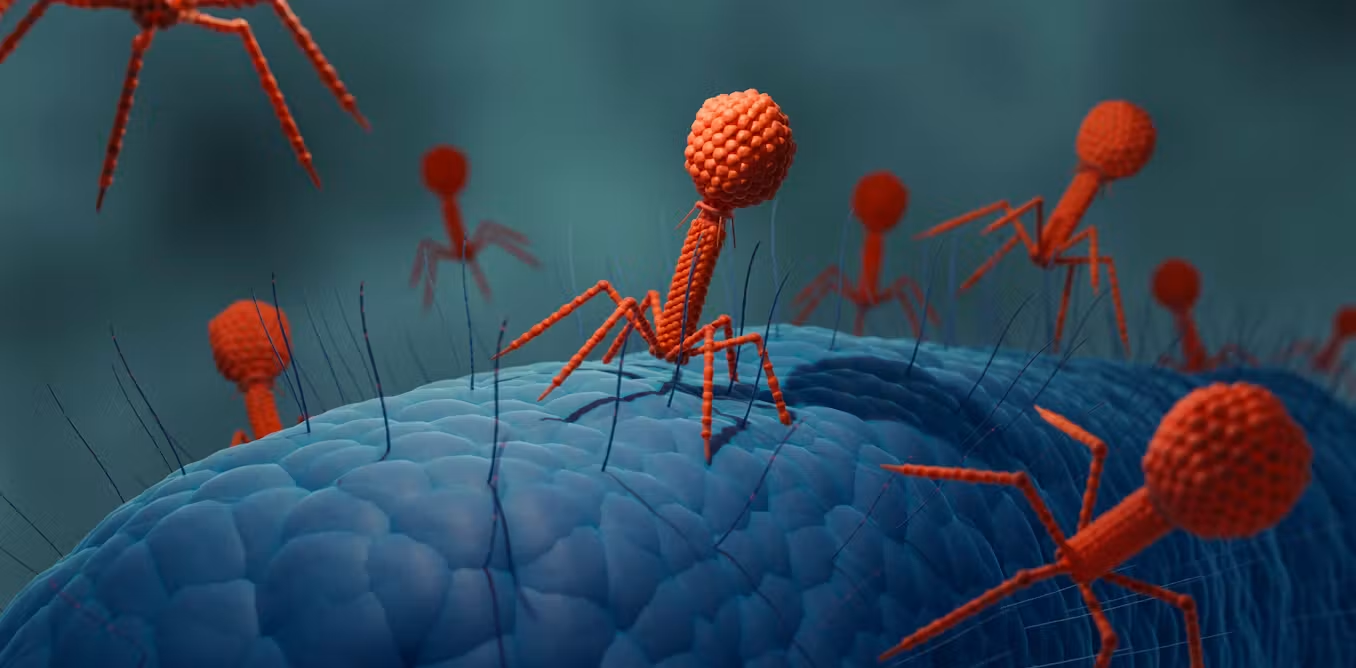
Scientists have crossed an important line in biological engineering. In a recent study, researchers used artificial intelligence to design complete sets of genetic instructions for bacteriophages, viruses that infect bacteria. Some of those computer-generated designs produced working viruses when they were built and tested in the laboratory.
These viruses were designed to infect bacteria rather than people. The researchers worked with bacteriophages that target E. coli, and one of the AI models they used, Evo 2, was developed with safety restrictions. Its developers excluded viruses that infect organisms such as animals, plants and humans from the data used to train it.
Even so, the experiment raises an important question: if AI becomes increasingly able to help design biological systems, are our safeguards developing fast enough?
As engineers working in vaccine manufacturing and public health security, we see good reasons to continue this research. Bacteriophages could potentially be used to treat bacterial infections, including those that are becoming harder to treat with antibiotics. But advances in biological design also create new challenges for biosecurity.
Genome language models work in a broadly similar way to AI language models that learn patterns in text. Instead of learning from words and sentences, they learn patterns in genetic code. Evo 2, for example, was trained on trillions of DNA building blocks taken from many different forms of life.