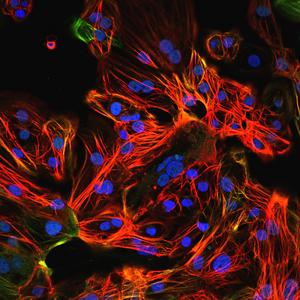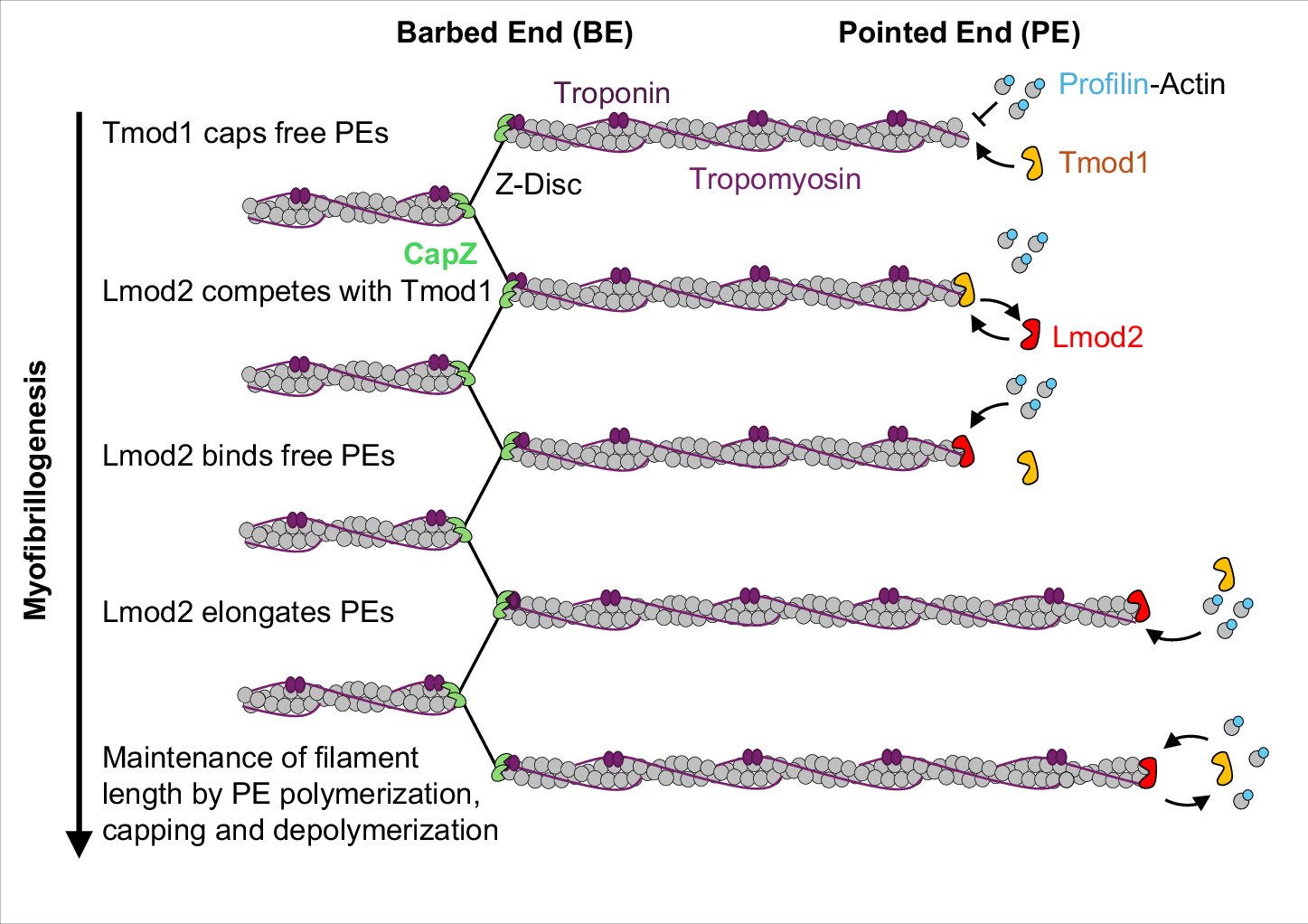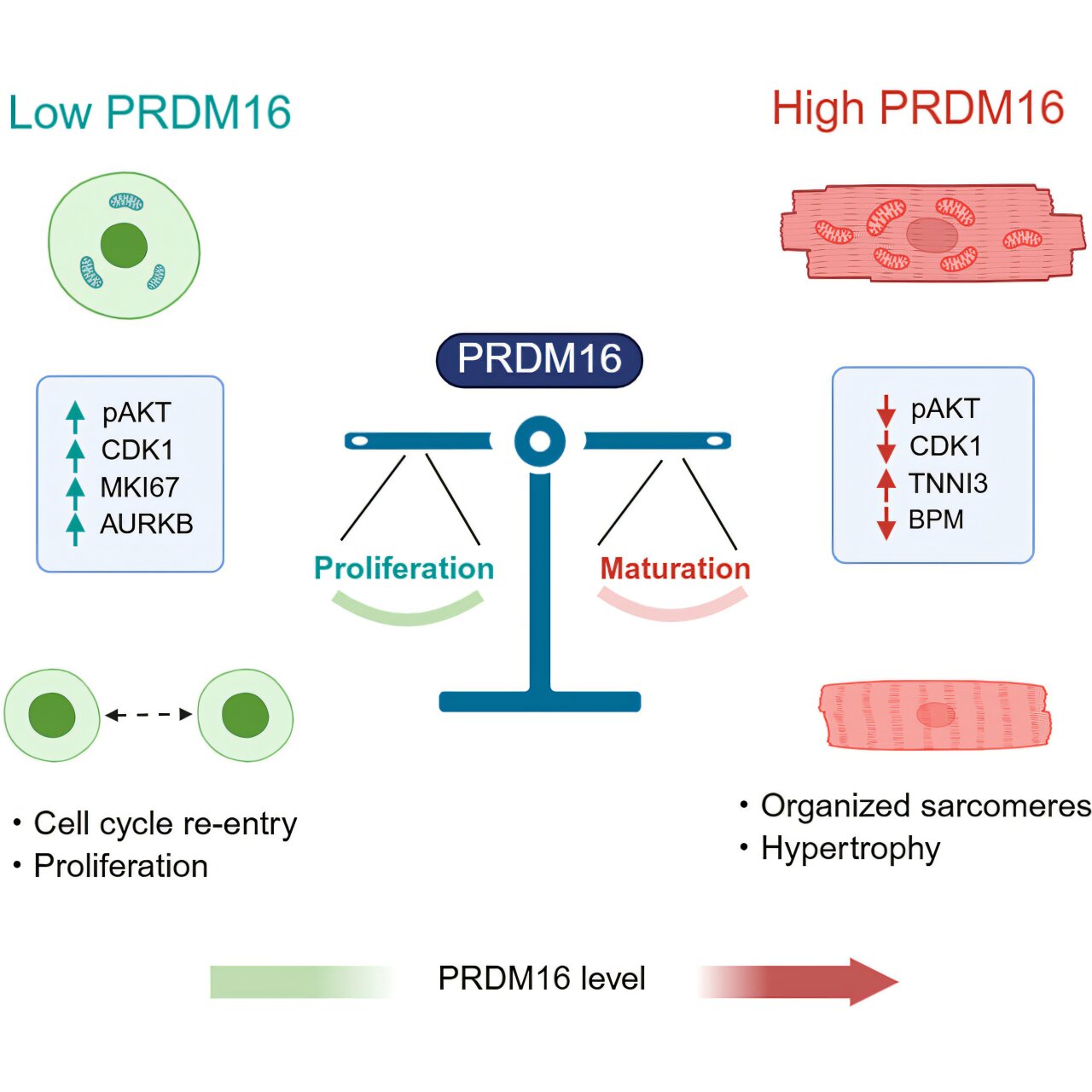
Graphical abstract. Credit: Stem Cell Reports (2026). DOI: 10.1016/j.stemcr.2026.103005
Understanding how heart muscle cells stop dividing and acquire the characteristics needed to sustain lifelong cardiac function remains one of the greatest challenges in cardiovascular biology. Leveraging human induced pluripotent stem (iPS) cell technology, a team led by Associate Professor Yoshinori Yoshida (Department of Clinical Application, CiRA, Kyoto University) and Associate Professor Antonio Lucena-Cacace (WPI-PRIMe, The University of Osaka) has identified PRDM16 as an important regulator governing the balance between proliferation and maturation in human iPSC-derived cardiomyocytes.
Published in Stem Cell Reports, the study reveals that PRDM16 acts as a developmental "rheostat": low levels permit cardiomyocytes to retain proliferative competence, whereas higher levels facilitate the acquisition of structural, metabolic and functional characteristics associated with more mature heart cells. The findings provide a framework for improving regenerative strategies and generating higher-quality cardiac tissues for disease modeling and drug discovery.
A central trade-off in heart development
Successful cardiac regeneration requires overcoming a fundamental biological dilemma. During embryonic development, cardiomyocytes proliferate extensively to build the heart. Shortly after birth, however, these cells progressively withdraw from the cell cycle and adopt specialized functions that support lifelong contraction. While this maturation process is essential for cardiac performance, it severely restricts the regenerative capacity of the adult human heart following injury.