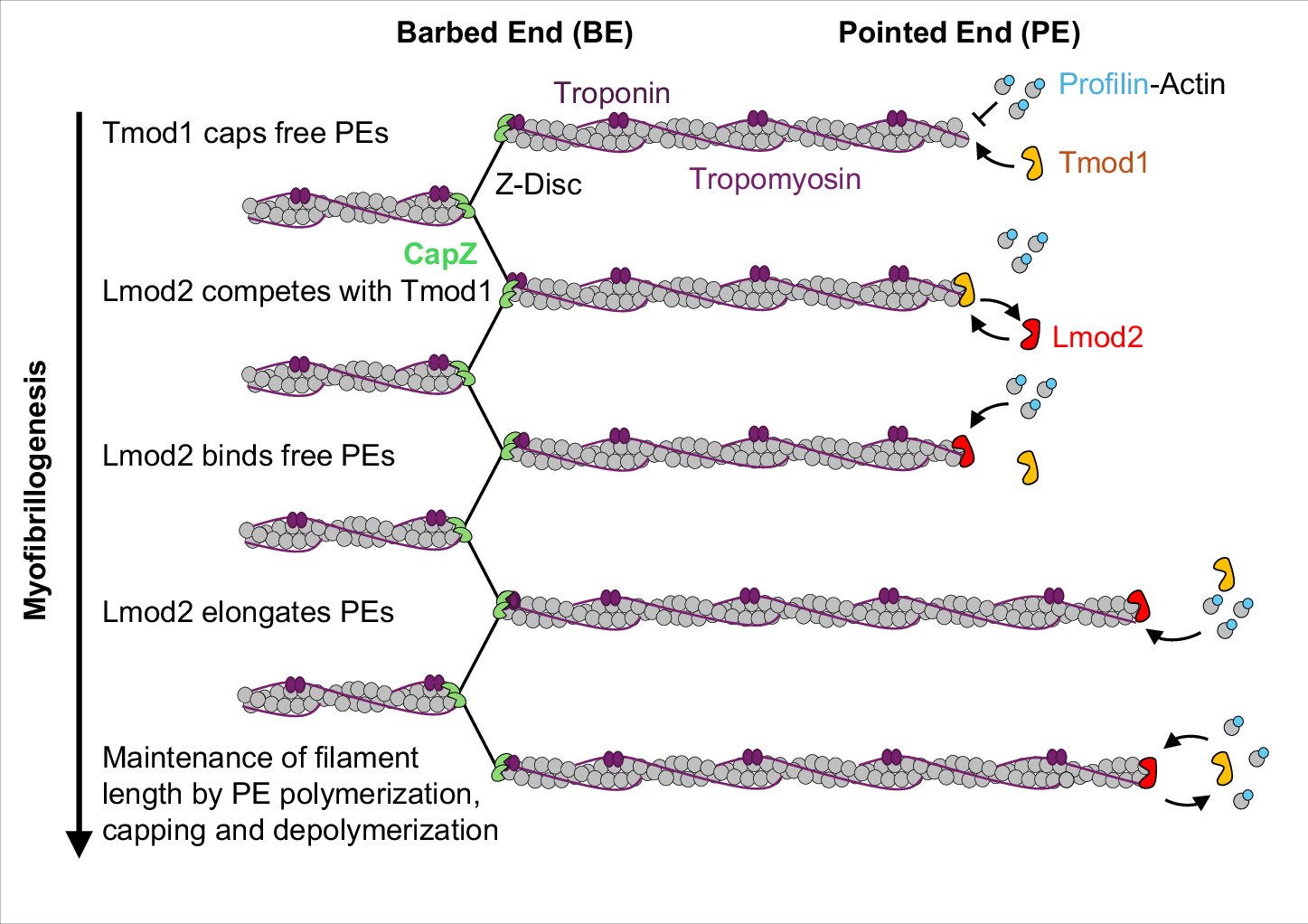
The working model for the role of Lmod2-mediated PE elongation in myofibrillogenesis. Credit: Nature Communications (2026). DOI: 10.1038/s41467-026-74809-z
In a study published in Nature Communications biophysicists unravel the mystery of how muscles form at the molecular level and maintain their function. The findings may help design treatments for muscle diseases such as dilated cardiomyopathy, one of the leading causes of heart failure.
"We've made a fundamental advance in understanding how the cellular cytoskeleton is assembled, especially in muscle cells," says Shashank Shekhar, assistant professor of physics at Emory University and senior author of the study.
The researchers upended a model relied on for more than four decades to explain how filaments of actin, a protein vital to cellular movement and other functions, form and maintain their length.
"Our work challenges a long-standing paradigm by uncovering a new mechanism, previously thought impossible, by which the protein leiomodin builds actin filaments in muscle," Shekhar says.