Many molecules come in two forms that are mirror images of one another, much like left and right hands. Although these molecular twins can appear nearly identical, they may behave in dramatically different ways, particularly in living systems and medicines. Telling these enantiomers (also called chiral molecules) apart has remained a major scientific and technological challenge.
One way to understand molecular handedness is to think about a screw and a nut. A right-handed screw fits a right-handed thread, while a left-handed screw does not. Researchers have now shown that specially shaped light can act as a similar type of threaded probe, interacting differently with molecules depending on their handedness.
Giving Laser Light a Twist
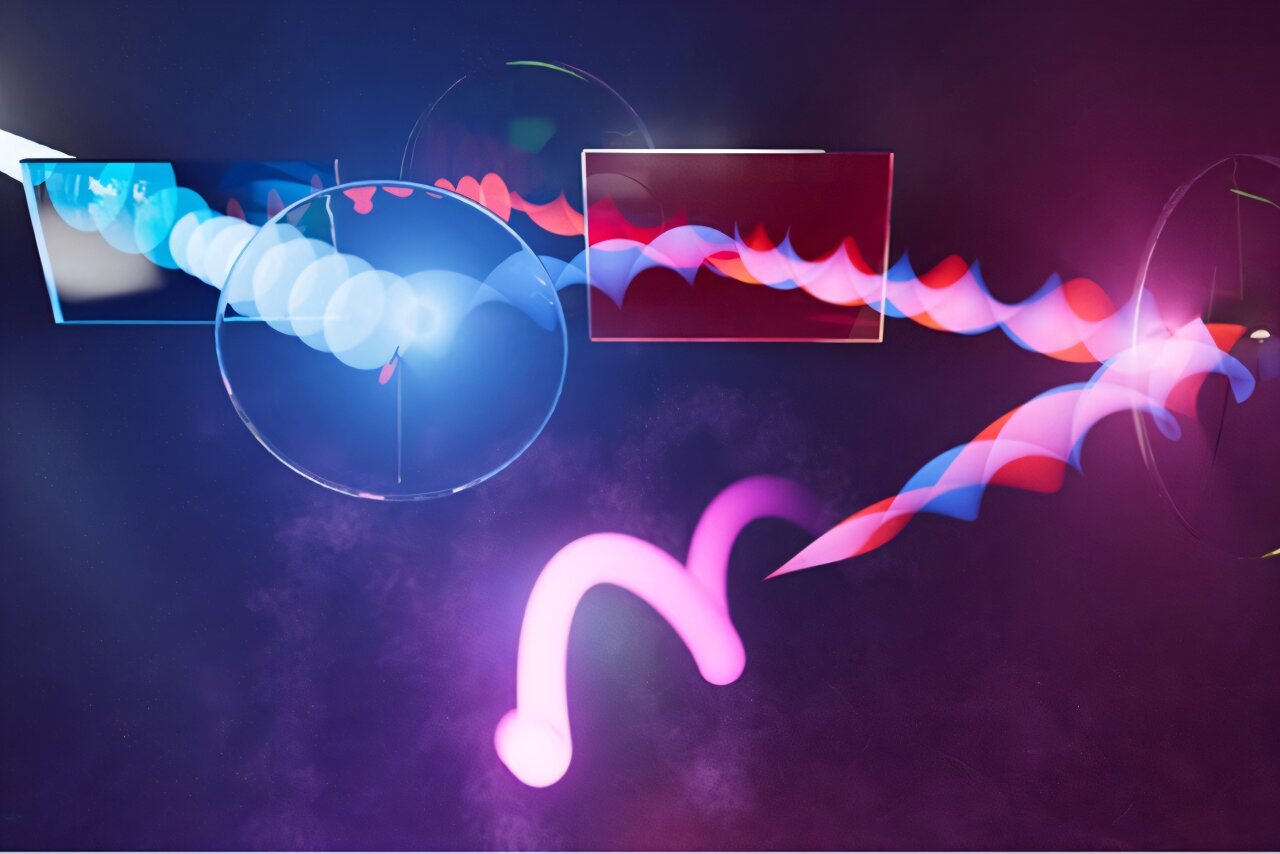
Scientists from Tata Institute of Fundamental Research, Indian Institute of Technology Mumbai, and Indian Institute of Technology Hyderabad engineered light that does more than spin. It also twists as it moves forward.
When this structured light strikes a chiral molecule, the interaction changes depending on how the light's "twist" matches the molecule's natural handedness. This creates a measurable difference that can be used to identify which mirror-image form is present.