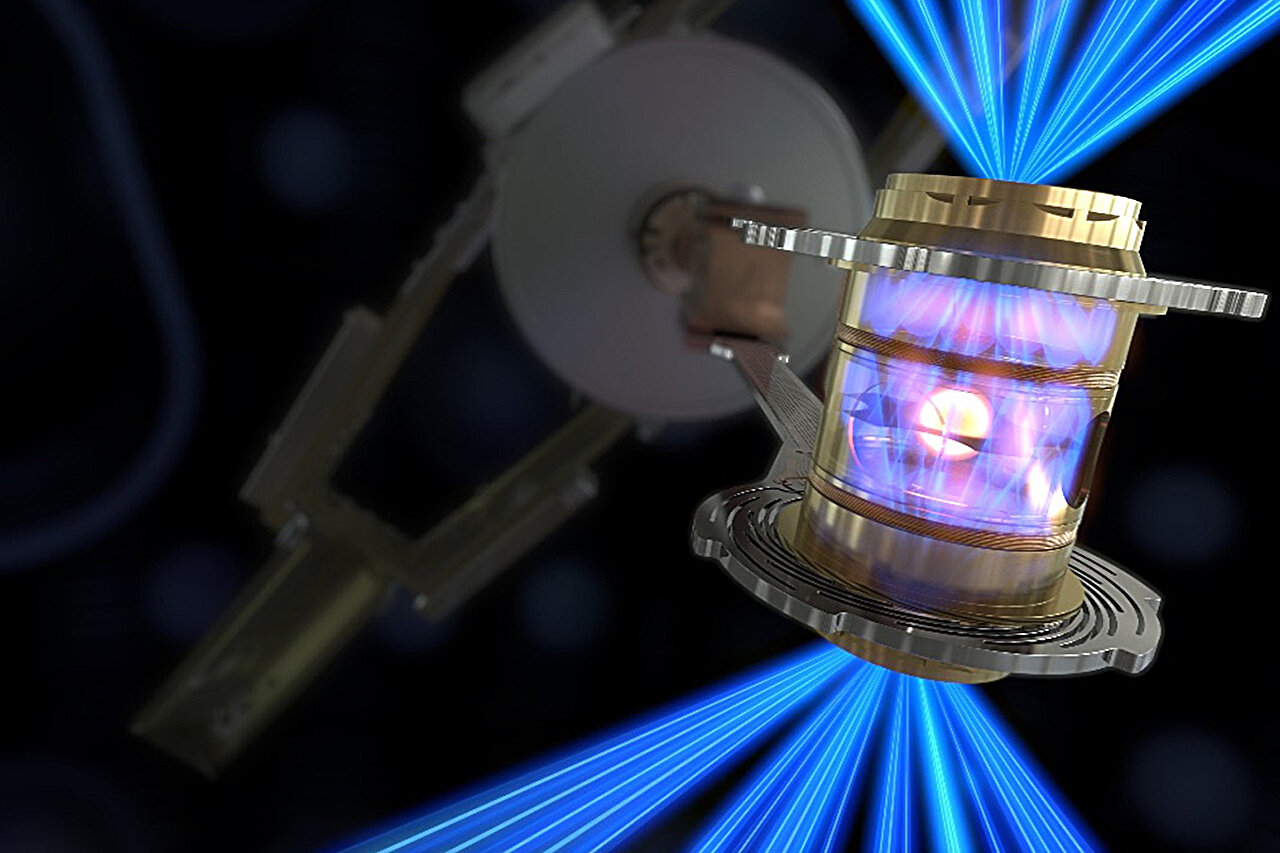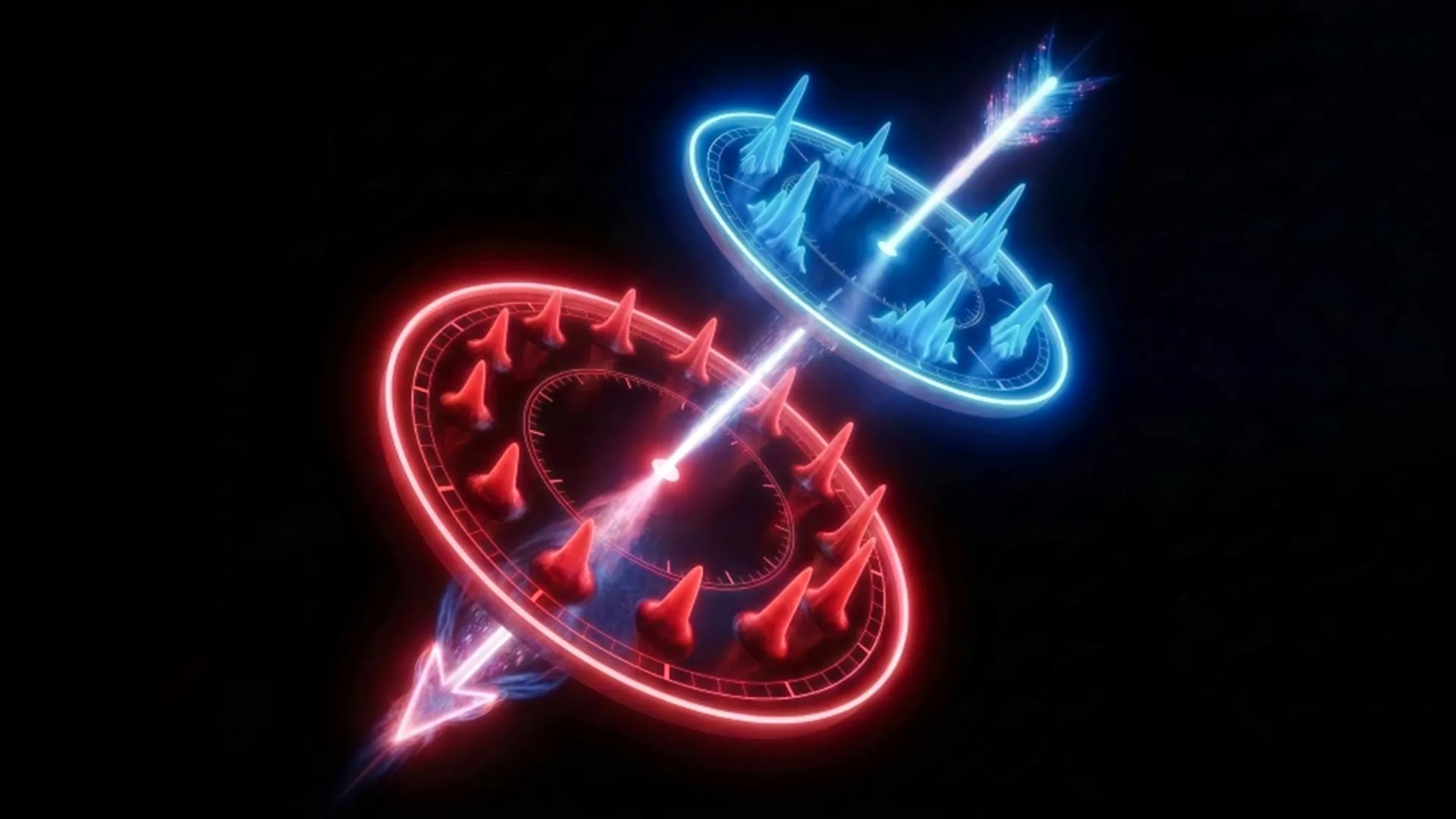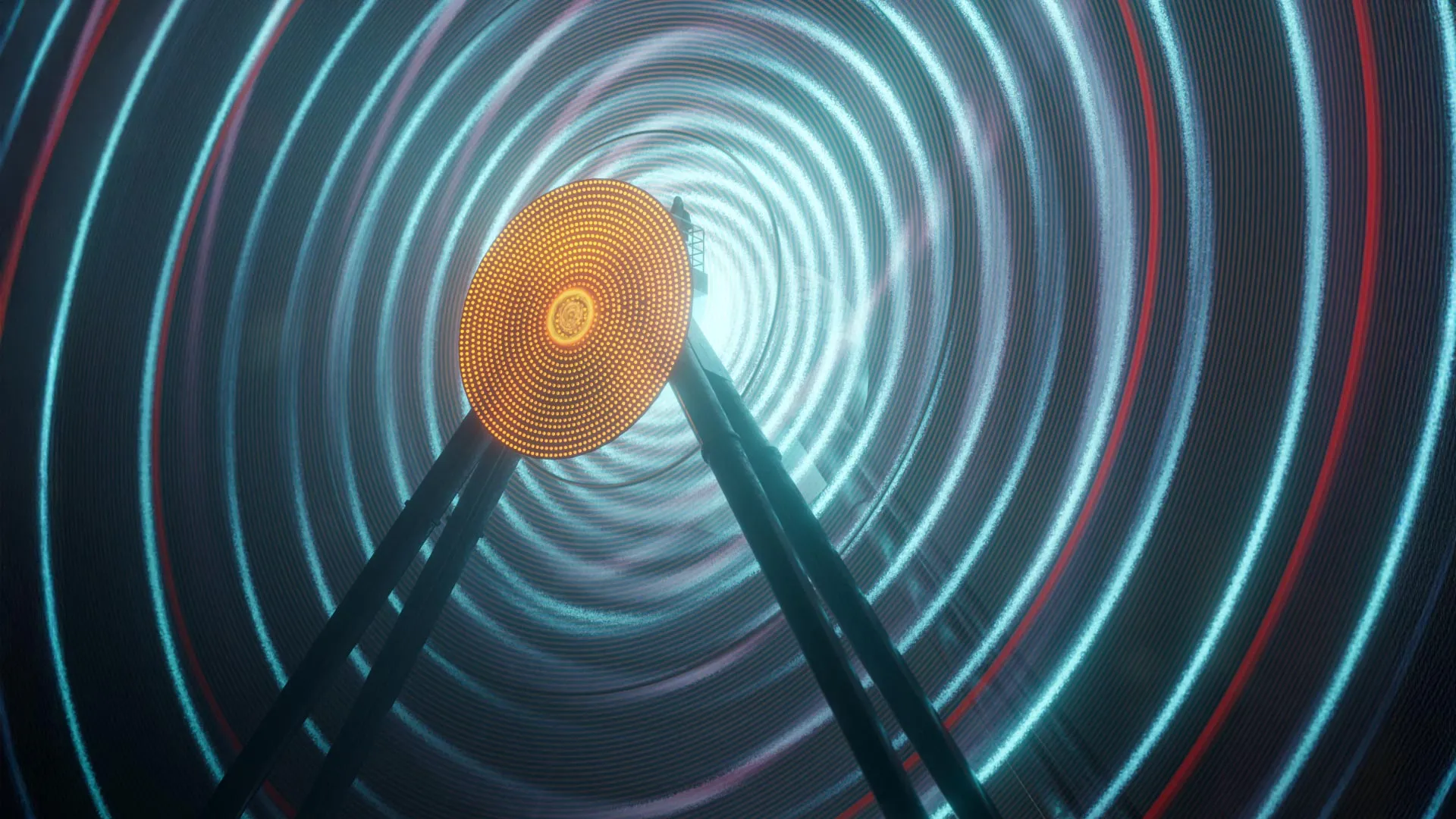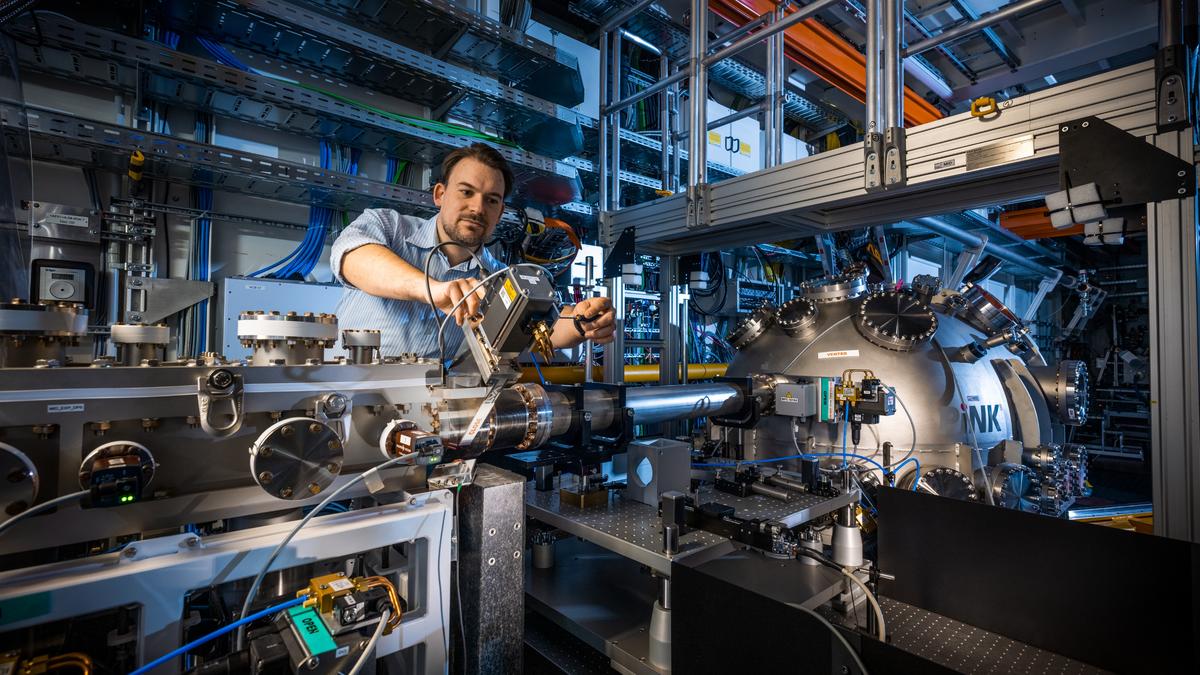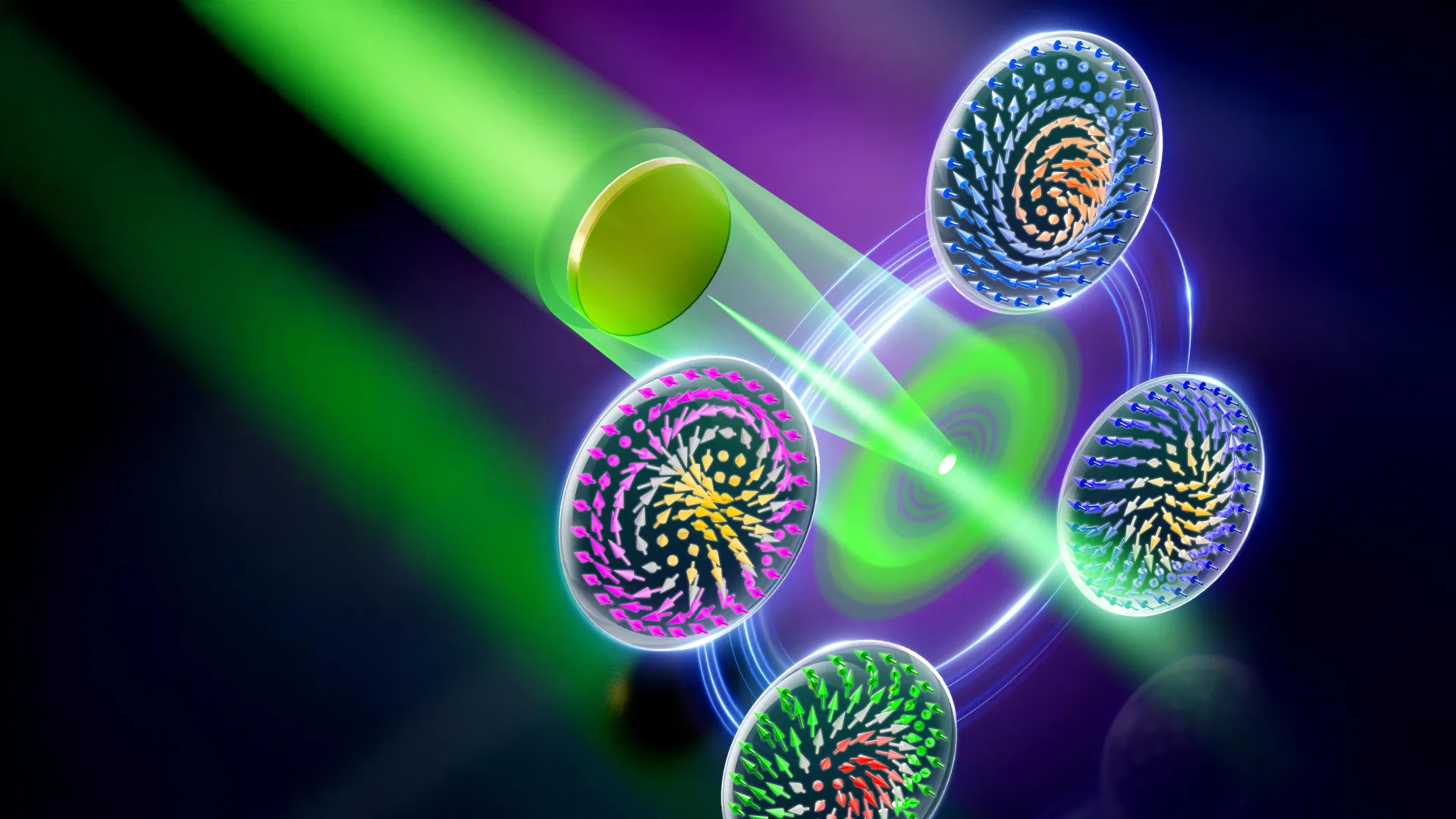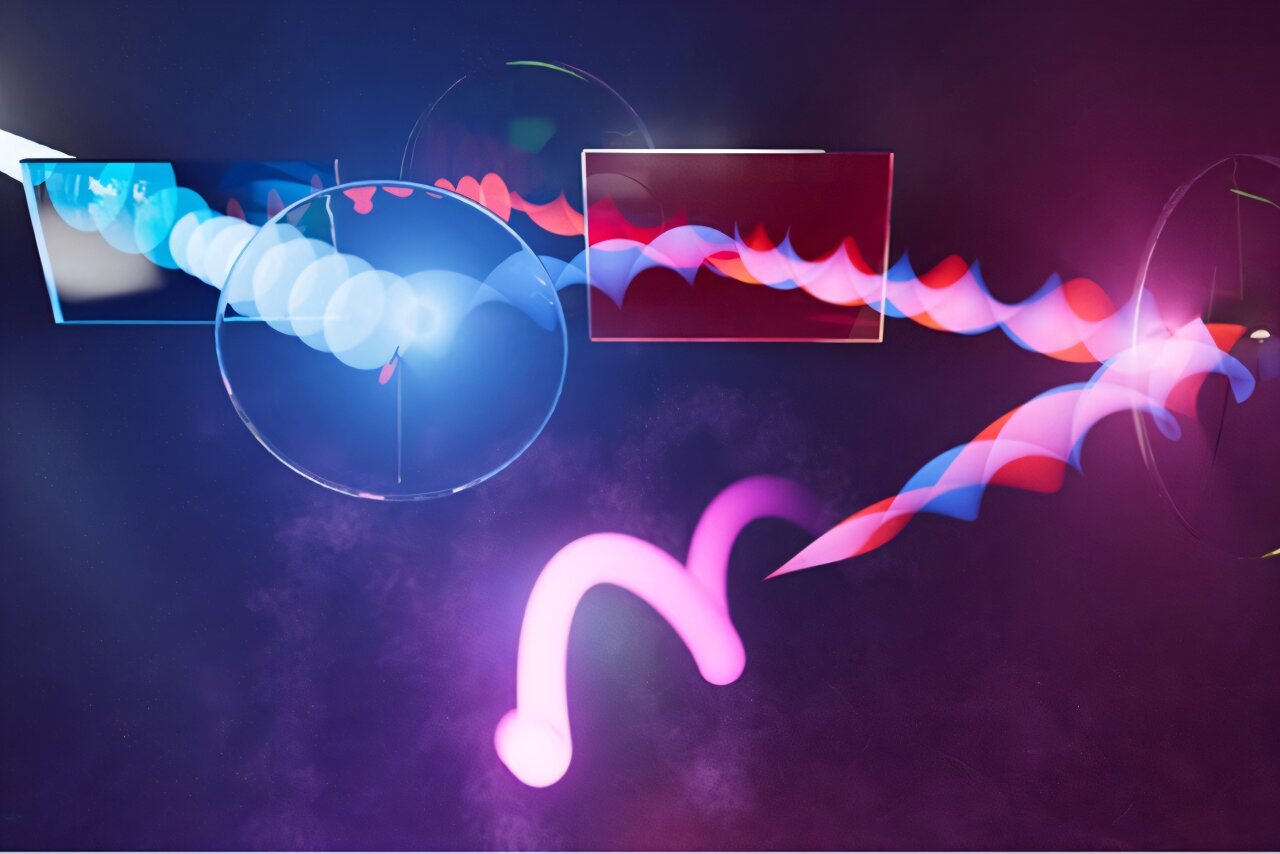
With specialized beamsplitters and precision freeform optics, scientists have generated a novel high-intensity laser that rotates like a spring. Credit: Brendan Thompson/LLNL
When a high-intensity laser interacts with plasma, the charged particles typically oscillate back and forth like waves on the ocean. But what if the laser itself could twist like a whirlpool? Researchers have now demonstrated a rotating, spring-shaped laser pulse, opening new possibilities for fusion energy, particle acceleration, astrophysics and beyond.
In new research published in Nature Photonics, scientists from Lawrence Livermore National Laboratory (LLNL) and the University of California, Irvine, demonstrated the first high-intensity "light spring" laser.
Unlike conventional laser beams, a light spring rotates around its central axis at a controllable rate. If shone onto a wall, the beam pattern would trace out circles over time.
"For a long time, people have used high-power and high-intensity laser pulses to drive plasmas," said LLNL scientist and lead author Andrew Longman. "But those lasers are almost always in their simplest configuration. It's basically a round spot—nothing especially interesting. It's like hitting the plasma with a hammer. We're interested in laser pulses that are structured in both space and time because they let us do unusual things, like stir the plasma."