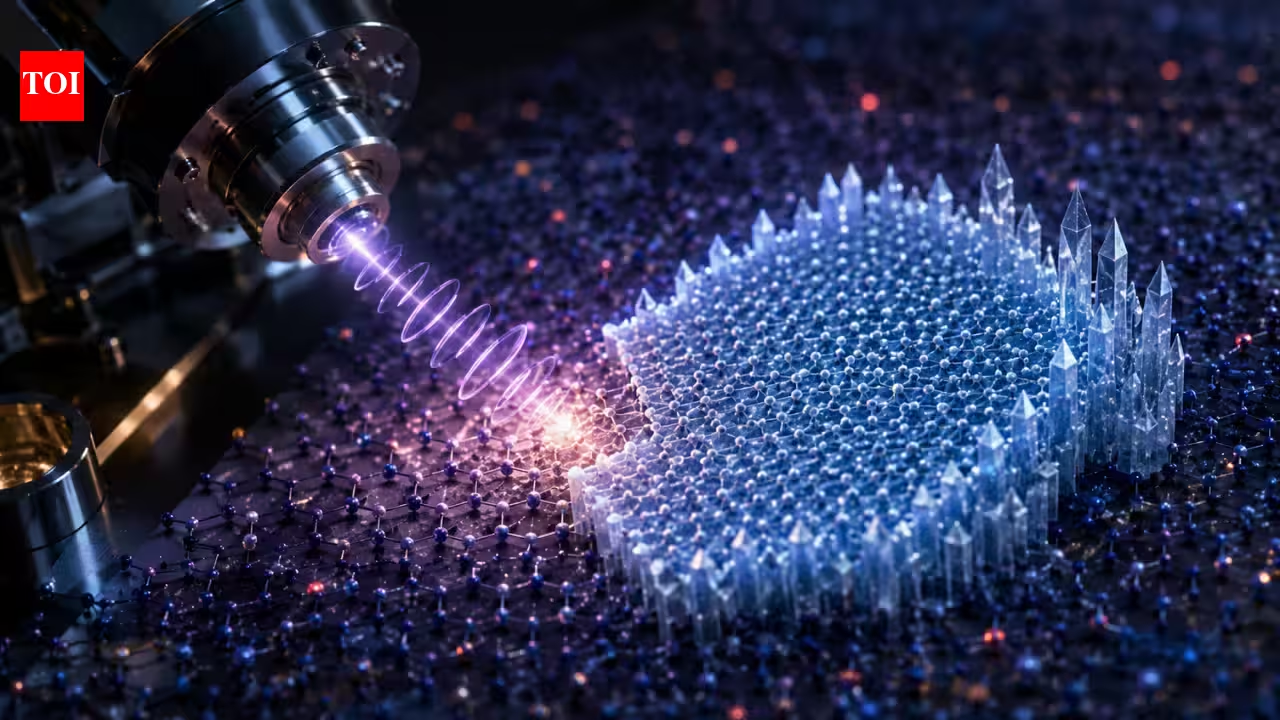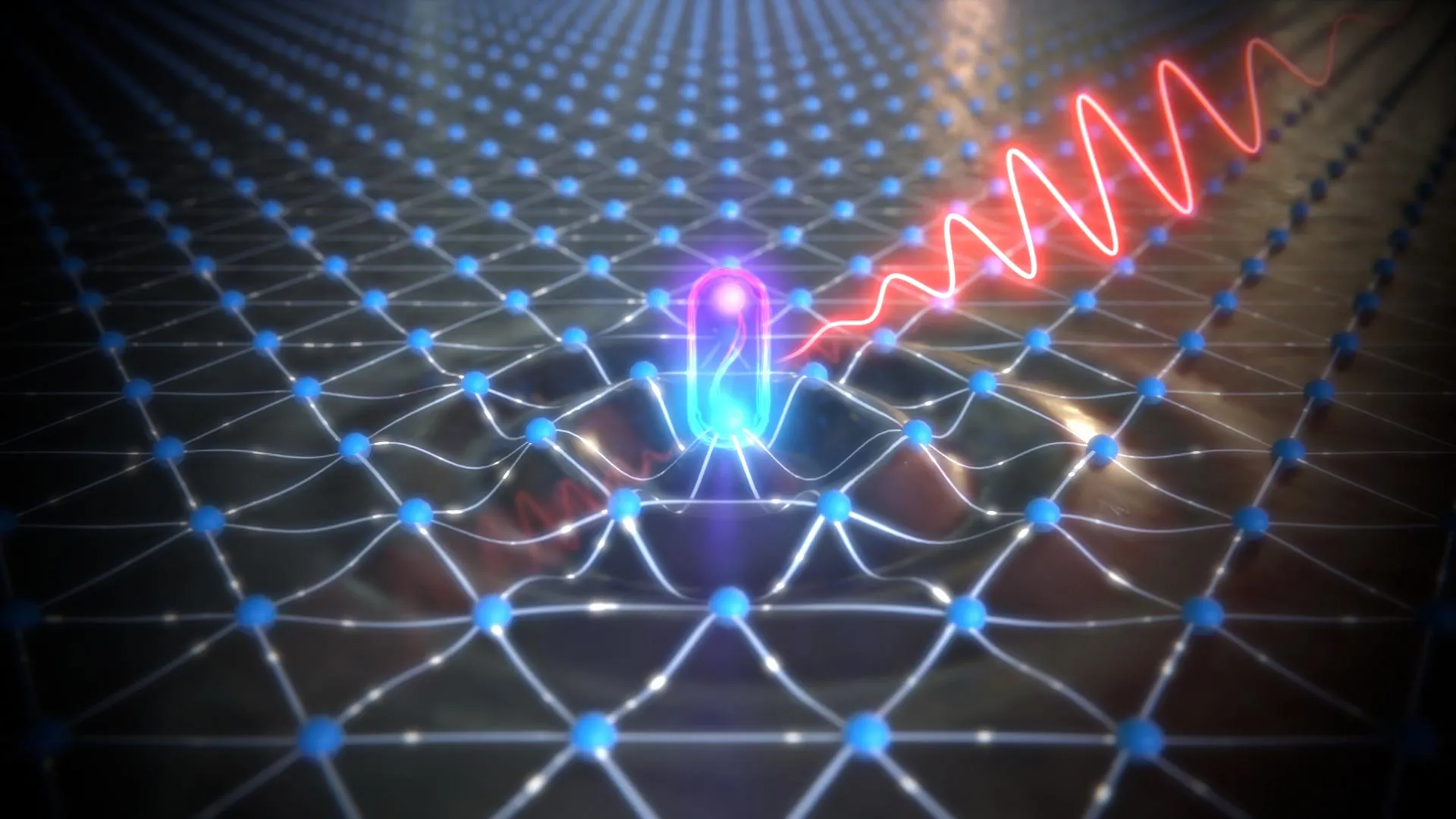
An international team of researchers has directly observed how angular momentum moves through a crystal lattice for the first time, revealing an unexpected quantum effect that causes the direction of rotation to reverse. The discovery, made using intense terahertz laser pulses, gives scientists a new view into the fundamental origins of magnetism and could eventually help researchers better control advanced quantum materials.
The study was led by scientists from the Helmholtz-Zentrum Dresden-Rossendorf (HZDR), the Fritz Haber Institute of the Max Planck Society, and collaborators in Berlin, Dresden, Jülich, and Eindhoven. Their findings were published in Nature Physics.
A Longstanding Mystery About Magnetism
In physics, quantities such as energy, momentum, and angular momentum are conserved, meaning they cannot disappear or be created from nothing. Instead, they move between different parts of a system. Angular momentum is familiar in everyday life through spinning objects like bicycle wheels or merry-go-rounds, but at the atomic scale it is deeply connected to magnetism.
More than a century ago, Albert Einstein and Wander Johannes de Haas demonstrated that changing the magnetization of a material could physically cause it to rotate. Their famous experiment showed that magnetic and mechanical angular momentum are linked together. Since then, scientists have tried to understand exactly how angular momentum spreads through the internal structure of solids.