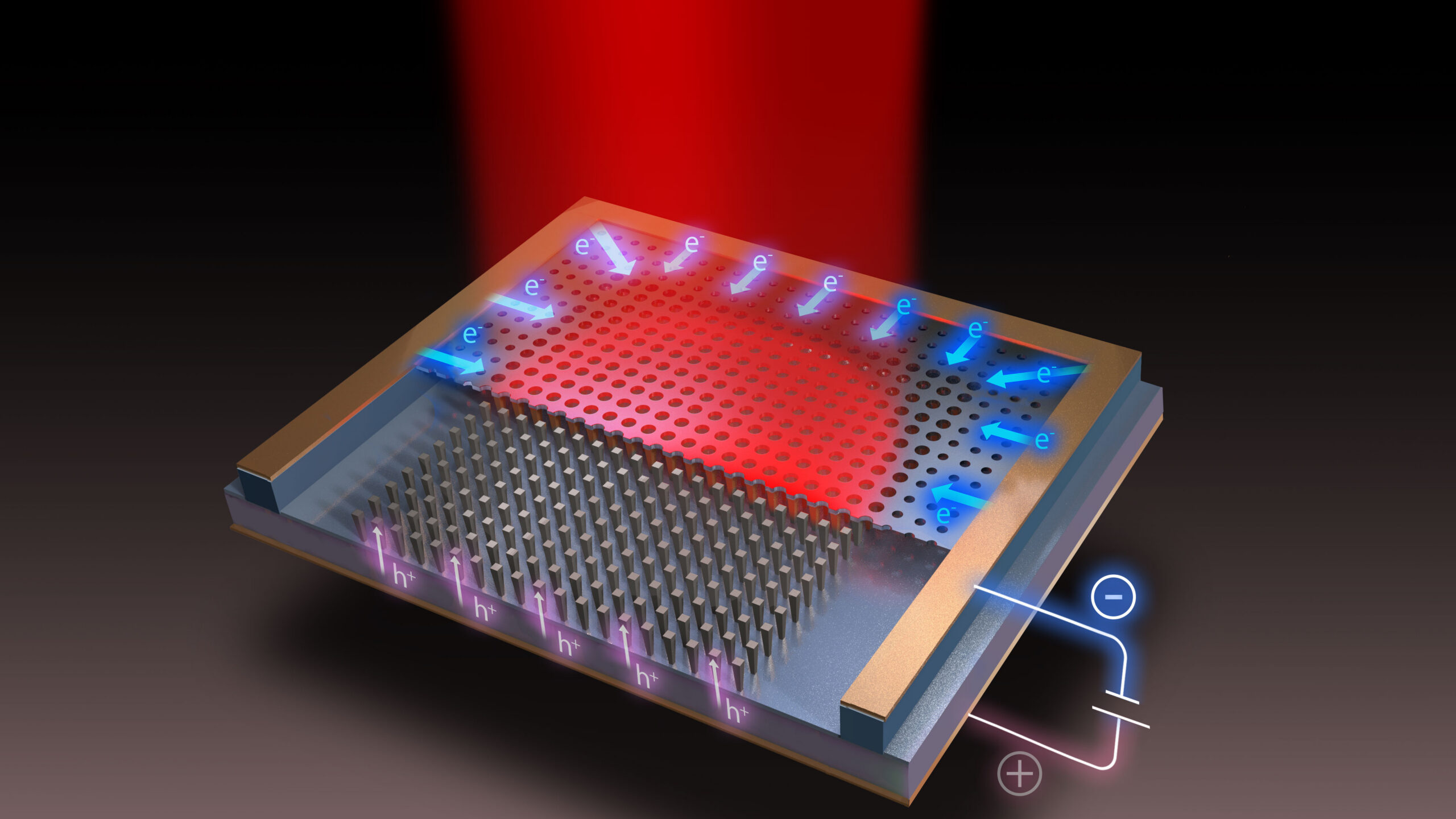
Researchers at the University of Michigan have developed a semiconductor device that uses laser light to direct the movement of electrons without requiring an applied electric field or electrical power source.
The device was primarily designed to investigate fundamental physics and demonstrate a behavior that had never previously been observed. However, the discovery could eventually support technologies that combine optics and electronics, including advanced sensing, imaging, and telecommunications. It may also lead to better ways of transmitting signals between devices and encoding more information within them.
"This electrical device that we manufactured at the Lurie Nanofabrication Facility has the potential to turn into something that measures different aspects of light," said Yiming Gong, who helped lead the project as a doctoral student in the U-M Department of Physics. "But this originates from a very fundamental level of physics, which is the interference between different optical absorption processes."
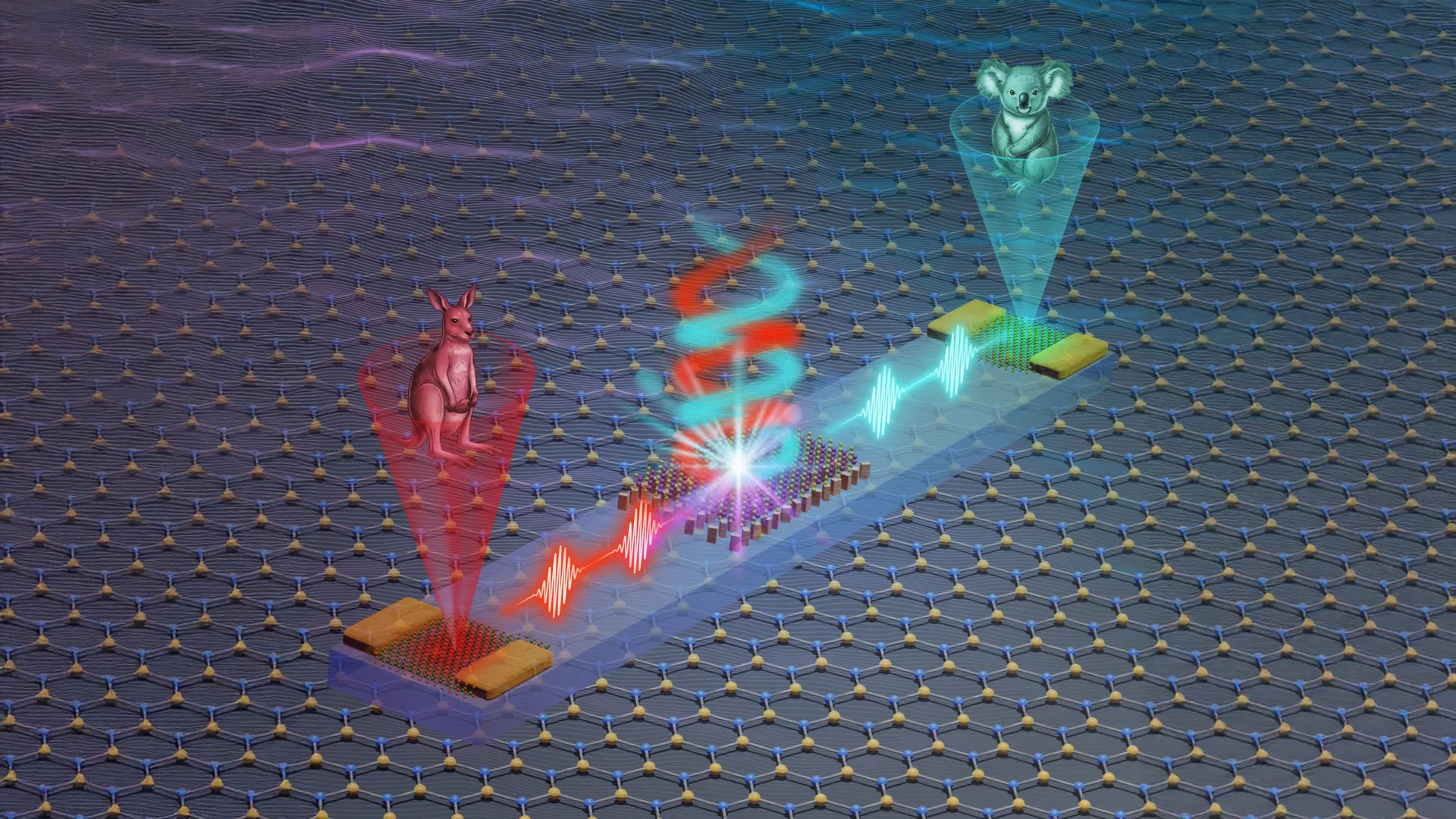
Two Colors of Light Direct Electron Flow
With federal support from the U.S. National Science Foundation, the team demonstrated that two different colors of light could produce an organized flow of electrons through a semiconductor. The researchers could also change the direction of that current by rotating the polarization of the two optical fields, which describes the direction in which the light waves oscillate.