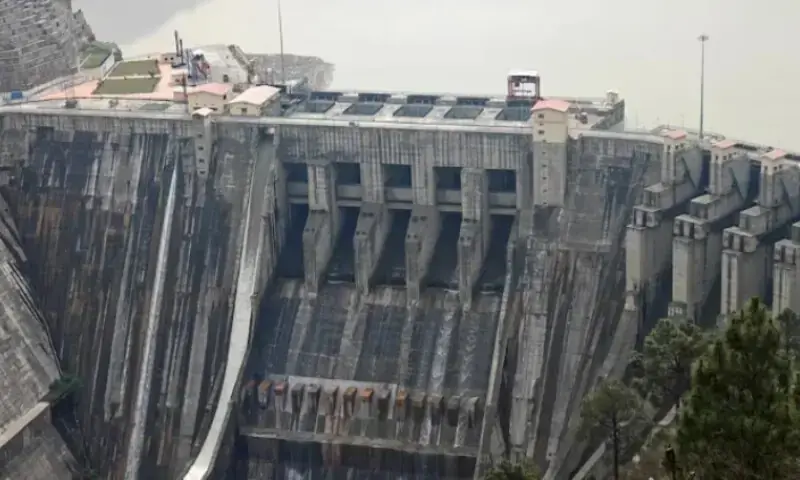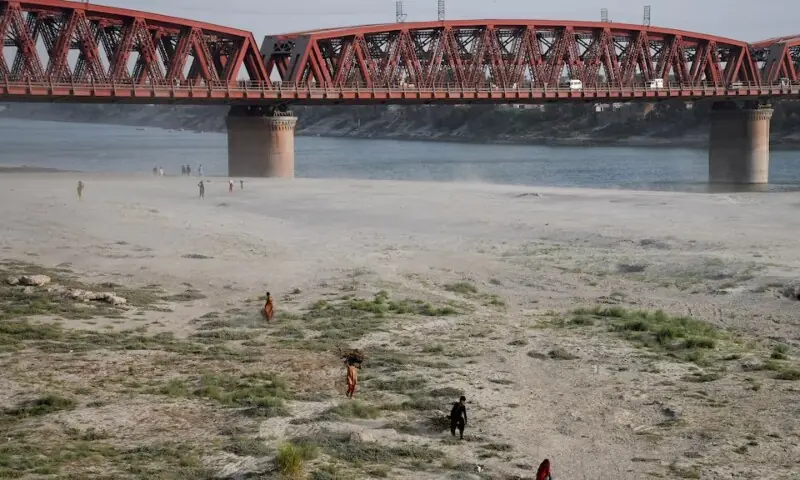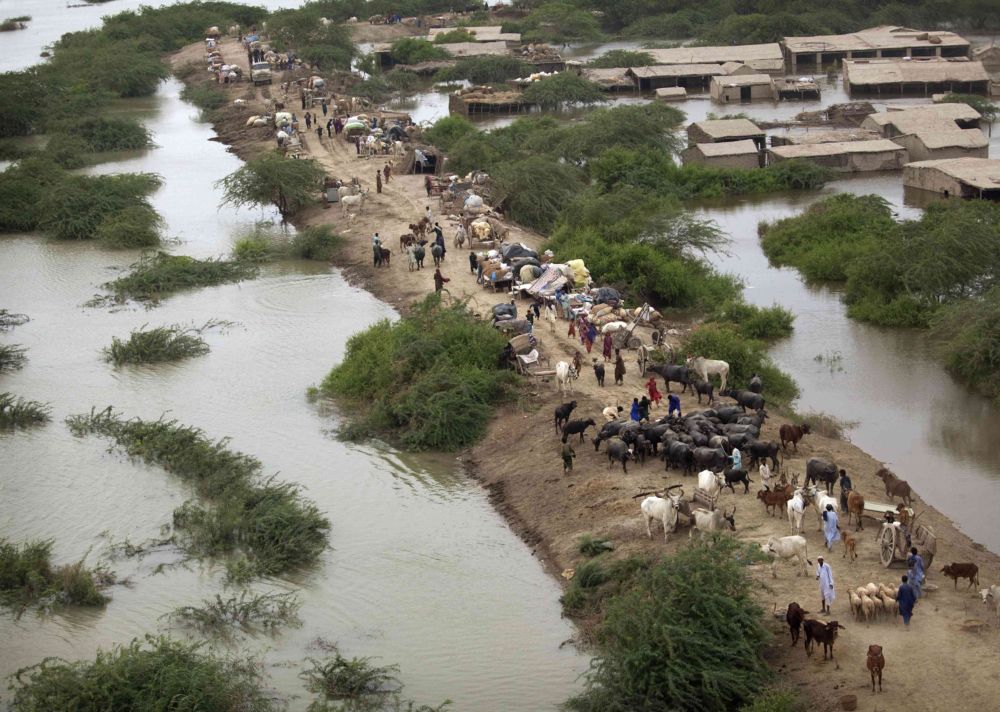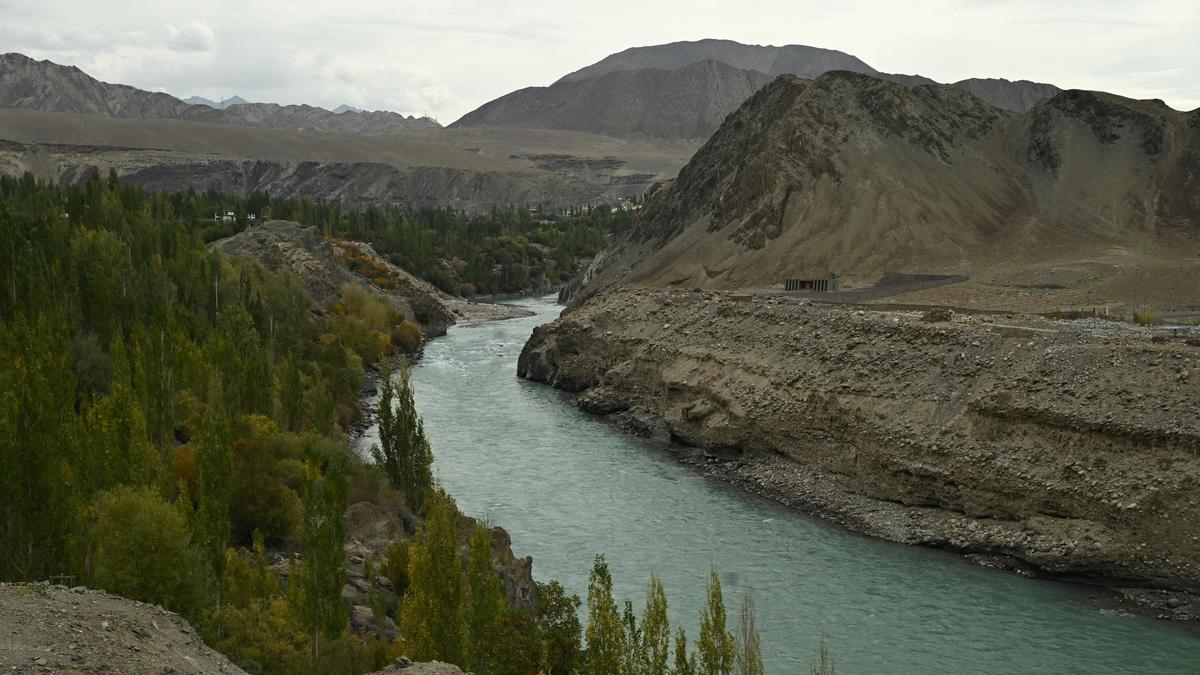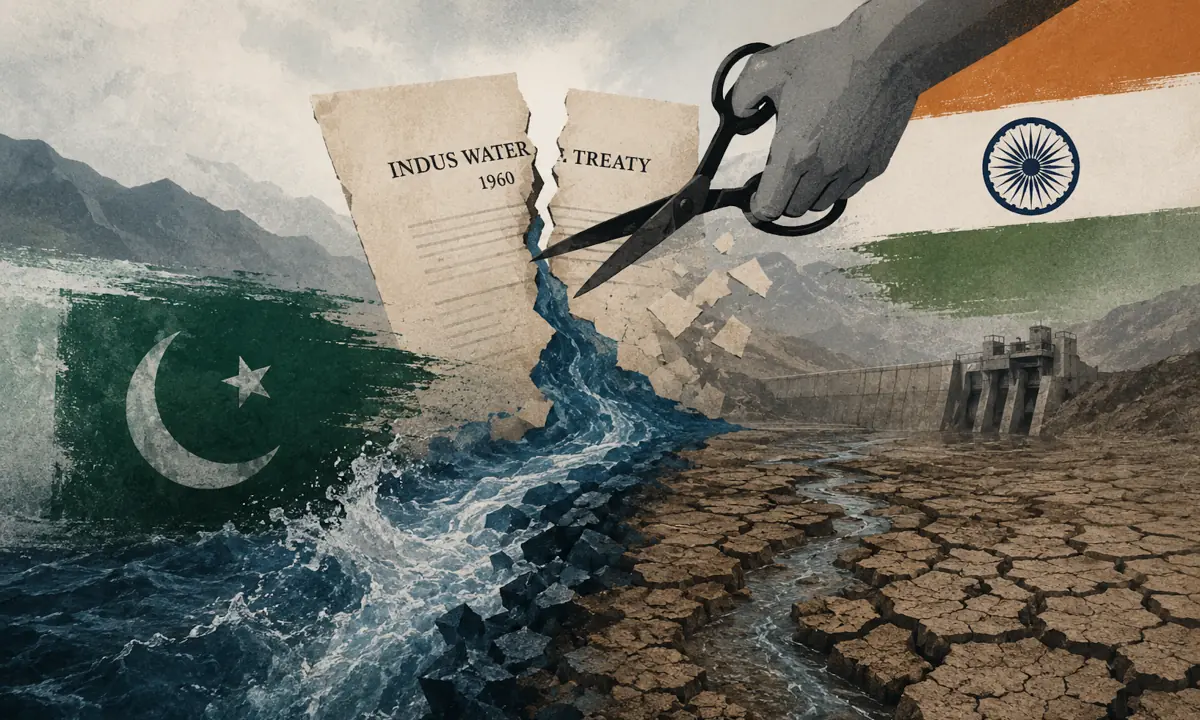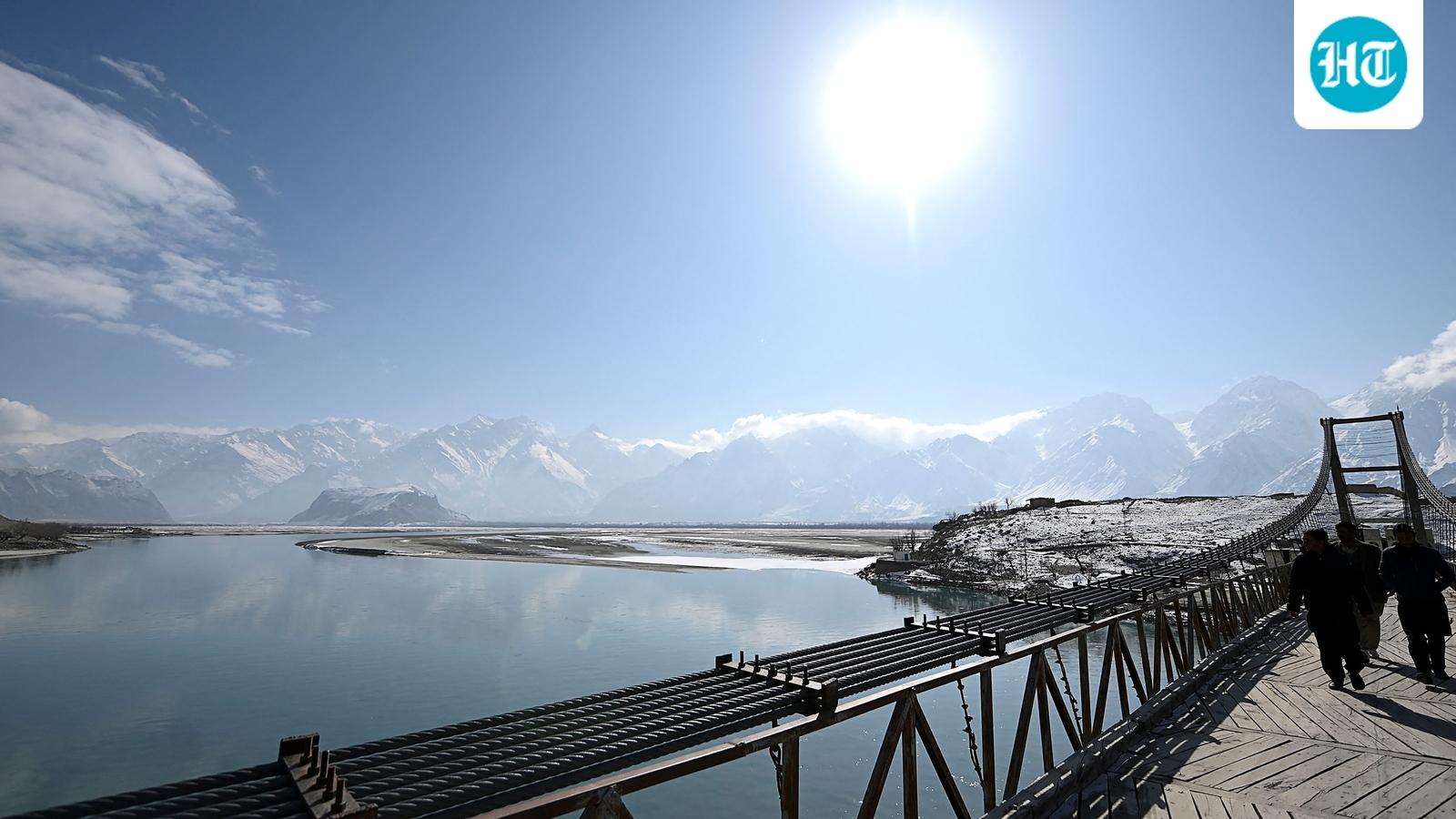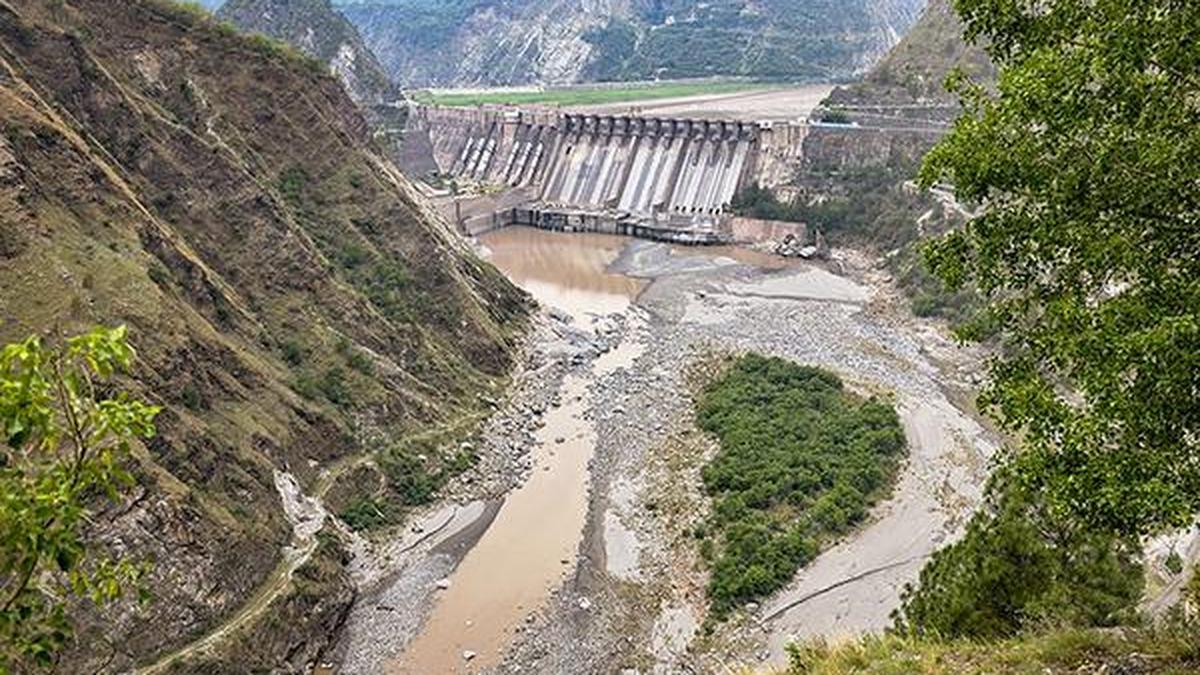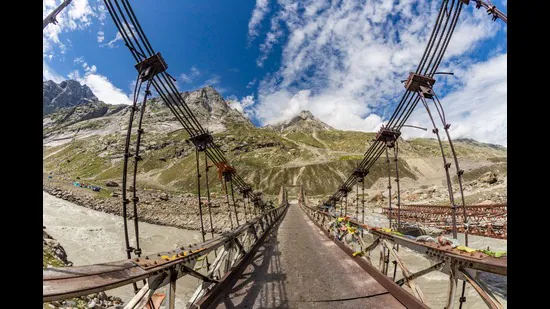
There are several books about Indian rivers and the worlds they have engendered. Where most of them focus on larger rivers, such as the Ganga, Brahmaputra, Narmada, and Kaveri, Danesh Rana’s The Dark-Coloured Waters trains its lens on the Chenab, a tributary of the Indus.A bridge over the Chenab in Himachal Pradesh (Shutterstock)The author uses the waterway to thread disparate stories of the lands it flows through, from its source at the Baralacha pass in Himachal Pradesh to its confluence with the Indus in Pakistan. The geographical account serves as a launchpad into these regions’ politics, culture and history.It thus delves into a range of landmarks and topics: how sapphire mining and smuggling led to a gold rush of sorts in the Paddar valley in the 19th century; how timber traders used to toss tens of thousands of logs into the Chenab to transport them downstream, transforming it into a river of wood; and the legendary love stories that unfolded along its banks, such as that of Sohni-Mahiwal and Heer-Ranjha. Large parts of the book dwell on the insurgency against the Indian state since the 1990s and conflicts between Hindus and Muslims, including many instances of violence.There is also an abundance of legends and folk tales. We learn about the Trilokinath temple in the Lahaul valley, where the deity is said to show “a frowning countenance to sinners and a beaming one to the good souls”. Then, there is Saint Asrar-ud-Din of Kishtwar, who, on learning of his friend’s sudden death after losing to him in a polo match, resurrected him to play again and win the next round.These make for an eclectic account with intriguing tangents. However, the book would have been more insightful if it had more clearly specified which parts were based on verified facts, which on oral history, and which on personal experiences.In the acknowledgements, Rana writes, “A major part of the research for this work was done through several books, Kashmir travelogues, and official accounts, mostly by British officers and adventurists.” He mentions names of some of the books and adds, “I also drew from my own experiences of having travelled a lot around the Chenab during my career as a police officer. However, a number of vlogs and articles on travel writing refreshed my memory.”While he backs some of his assertions with citations, many others go unreferenced. There is also little in terms of source criticism — one of the cornerstones of the historical method. Historians analyse the credibility of a document or evidence by examining its origin, context, and goals, and triangulating it with other contemporary sources. Not every text is trustworthy or accurate just because it was published or survived for centuries.Take, for instance, the paragraph on the torture of Banda Singh Bahadur (a Sikh warrior who fought the Mughals) at the end of the chapter Fork in the River. While his torture and execution are historical facts, the gory details of the atrocities are taken from a religious blog that does not cite any sources. Even if these details were true, the lack of proper referencing and source criticism puts into question the veracity of the paragraph, and by extension, that of the larger narrative.This is not to say that every book must adhere to the highest standards of scholarship. In fact, it would not have been necessary if the narrative had largely relied on the author’s impressions and experiences. Rana has an abiding connection with the Chenab — he grew up near the river and his work took him across its various stretches. The few instances where he talks about his childhood experiences or conversations with other people are among the most engrossing. In these sections, his connection with the river shines through. The dissonance arises when he adopts the dispassionate tone of academics without the methodology and rigour they bring to their work.Deeper insights from Rana’s work as a police officer regarding the insurgency in the Chenab valley would have also enriched the narrative. While he collates a timeline of major events, the modus operandi of insurgents, and how officers and the armed forces responded to them, the book would have been more illuminating if it had joined the dots to show the larger picture, beyond what is already in the public domain.At times, though, there are fascinating revelations. Rana talks about how some Hindus became militants and even went to Pakistan to train — surprising given how the militancy has intersected with Islamic fundamentalism. In-depth explorations of such counterintuitive phenomena beyond the fact that they happened would have made for compelling reading.That said, the book successfully chronicles the regions the Chenab journeys through and the societies and cultures along its course. With plans to further dam and control its waters, the river is likely to meet the fate of numerous others in India, whose ecosystems and natural flow have been destroyed for short-term gains at the expense of long-term environmental, social, and economic benefits.After India suspended its participation in the Indus Water Treaty, which divided the waters of the Indus basin between India and Pakistan, it is fast-tracking dams on the Chenab. However, the river’s catchment has high soil erosion and its waters carry large amounts of silt. This abrades and clogs hydropower plants, and reduces the storage capacity of reservoirs. With climate change, glacial lakes in the river’s basin are growing in size and could burst suddenly, leading to floods that not only destroy lives and livelihoods but also riverine infrastructure.One only needs to look at projects on other Himalayan rivers to see what extensive construction bodes for the Chenab basin. In October 2023, a glacial lake outburst flood swept away Sikkim’s largest hydropower dam in minutes. Joshimath, a town in the fragile and seismically active zone of the western Himalayas, is sinking, causing cracks to appear in more than 800 houses. Experts attribute this partly to the construction of a hydropower project in the town’s vicinity.The quest to control the Chenab’s water, without considering its ecology and the increasing frequency of extreme climate events, could lead to similar catastrophes. Rana’s book helps us appreciate what we might stand to lose by not heeding the river’s roar.Syed Saad Ahmed is a Boston Congress of Public Health Thought Leadership Fellow 2024. He speaks five languages and has taught English in France..
Review: The Dark-Coloured Waters by Danesh Rana
A book that threads through disparate stories of the politics, culture and history of the lands that the Chenab, a tributary of the Indus, flows through
1,053 words~5 min read