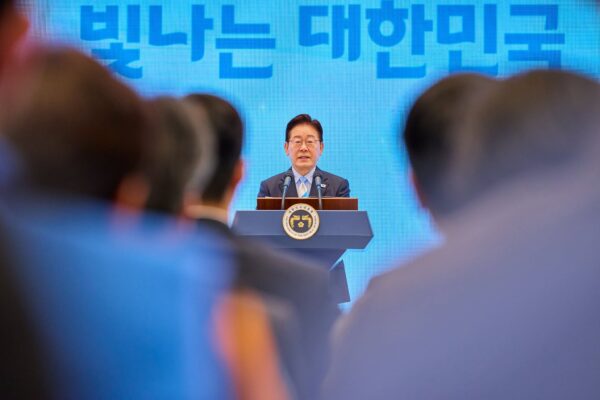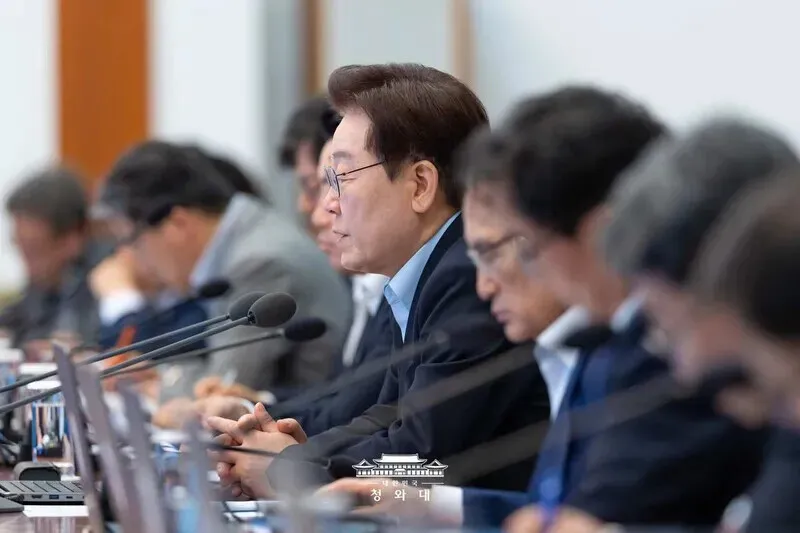
President Lee Jae Myung speaks at a meeting with senior presidential secretaries and advisers at the Blue House on July 2, 2026. (courtesy Blue House)
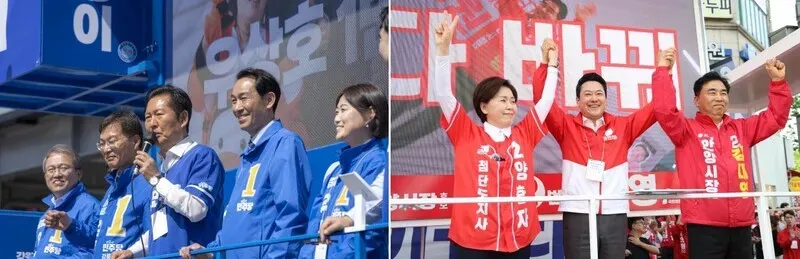
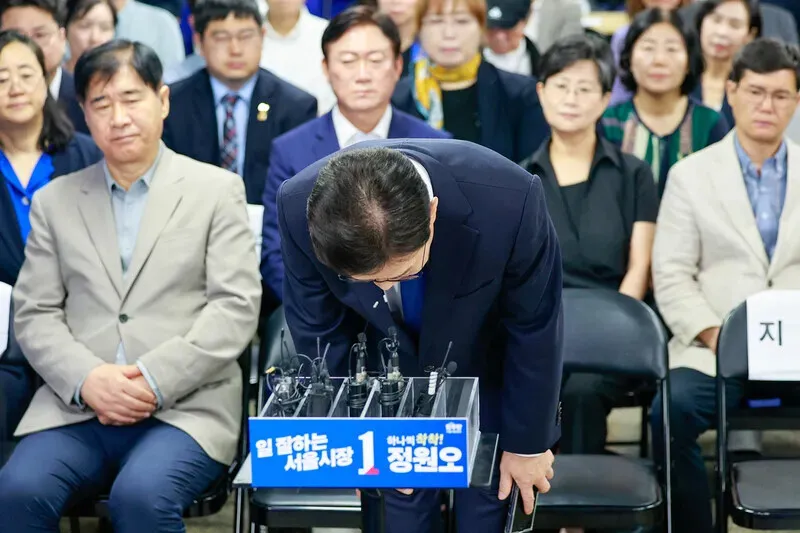
Since Korea’s democratization in 1987, elections have been defined by regional affiliations.In the presidential election that December, Roh Tae-woo was the favorite in Daegu/North Gyeongsang Province, Kim Young-sam in Busan/South Gyeongsang Province, Kim Dae-jung in Gwangju/North and South Jeolla provinces, and Kim Jong-pil in South Chungcheong Province.The same regional divisions were observed in Korea’s general elections in 1988.The merger of three conservative parties in 1990 had the effect of aligning Daegu/North Gyeongsang Province with Busan/South Gyeongsang Province. That gave rise to the political truism that Yeongnam (in the southeast) goes conservative, and Honam (in the southwest) goes liberal.That’s an observation that has held true ever since, although regional alignment has weakened as the political landscape was reoriented around the generational divide.The 2002 presidential election — in which Roh Moo-hyun faced off against Lee Hoi-chang — was the first time the phrase “generational vote” came into use. Roh Moo-hyun carried voters in their 20s and 30s, while Lee Hoi-chang was the preferred choice of those in their 50s and 60s. The two candidates had a similar showing among voters in their 40s.In subsequent elections, regional loyalties have been gradually fading as generational alignment grows stronger.When Park Geun-hye and Moon Jae-in faced off for the presidency in 2012, Moon had the advantage among voters in their 20s, 30s and 40s but could not defeat Park given her overwhelming lead among voters in their 50s and 60s. In 2017, Hong Joon-pyo was roundly defeated despite holding the lead among voters in their 60s and 70s.These elections suggested the formation of a generational alignment in which older people vote conservative and younger people vote liberal. But that trend didn’t prove to be permanent. The young voters who had leaned liberal slowly began turning their backs on the Democratic Party.That shift was triggered by several incidents that occurred during the Moon Jae-in presidency: the controversial conversion of irregular workers to regular workers at the Incheon International Airport Corporation in 2017, the debate over the unified inter-Korean women’s hockey team at the 2018 Pyeongchang Winter Olympics, the divisive appointment of Cho Kuk as justice minister in 2019, and a corruption scandal at Korea’s LH public housing program in 2021.The through line in all four episodes was the value of fairness.Koreans in their 40s and 50s who resisted Chun Doo-hwan’s dictatorship in the 1980s and demonstrated for democracy in June 1987 have prioritized the ideals of democracy and peace. But for Koreans in their 20s and 30s who grew up after democratization, opportunity and fairness have been far more salient ideals. These younger voters have been enraged by the perceived hypocrisy of the older generation and Democratic Party politicians, who they view as paying lip service to justice without pursuing justice in their actual lives.The outrage of voters in their 20s and 30s has erupted on several occasions, including the by-election for Seoul mayor on April 7, 2021, and the presidential election in 2022.In the Seoul mayoral election in 2021, conservative candidate Oh Se-hoon received more votes than his liberal rival Park Young-sun among voters in their 20s and 30s, as well as in older voters (in their 50s and above). That was proof of concept for the People Power Party’s generational pincer strategy.When Lee Jae Myung went head-to-head with Yoon Suk-yeol in the 2022 presidential election, the two candidates enjoyed a similar level of support among voters in their 20s and 30s. But younger males broke for Yoon, while younger women tended to support Lee. That added the gender factor to the generational divide. At any rate, the theory that voters in their 20s and 30s lean liberal was losing credibility.Politicians are hardly ignorant of the shifting sympathies of voters in their 20s and 30s, and they’ve unveiled a host of campaign pledges targeting the younger generation.In his 2022 presidential campaign, Yoon Suk-yeol had a blockbuster lineup of youth-oriented pledges: making 300,000 homes available at cost to young Koreans, providing first-time homeowners with 200,000 subsidized homes with subway access, facilitating “key money” loans for young newlyweds with subsidies for interest payments, and guaranteeing a monthly salary of 2 million won for young men doing their mandatory military service. But Yoon was impeached before he could keep any of those promises.In the 2025 presidential election, Lee Jae Myung rolled out 27 pledges for young people that included introducing government-subsidized installment savings accounts, promoting a spot cryptocurrency ETF, creating a safe cryptocurrency investment environment and lowering transaction fees. But voters in their 20s and 30s remained skeptical of the Democratic Party.In the 2025 presidential election, Lee Jae Myung received 49.42% of the overall vote, with Kim Moon-soo taking 41.15% and Lee Jun-seok coming in third with 8.34%.But Lee’s standing among voters in their 20s and 30s was much weaker. Exit polls by Korean broadcasters showed that Lee Jae Myung had received 41.3% of the vote, Kim Moon-soo 30.9% and Lee Jun-seok 24.3% from people in their 20s. The corresponding figures for voters in their 30s were 47.6%, 32.7% and 17.7%.The Seoul mayoral election on June 3, 2026, turned out similarly. According to major broadcasters’ exit polls, Seoul voters in their 20s and 30s were more likely to vote for Oh Se-hoon.But there was a gap between male and female voters. Men in their 20s and 30s favored Oh, while women preferred Chong Won-o, the liberal candidate. That repeated the gender divide observed in the 2022 presidential election.Korean President Lee Jae Myung and the Democratic Party have been evidently anxious about younger voters since their defeat in the Seoul mayor election last month.