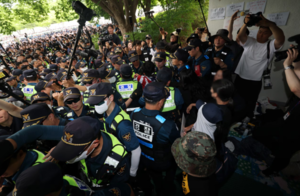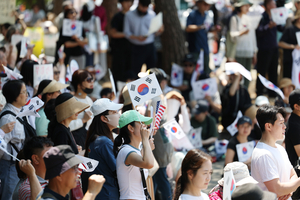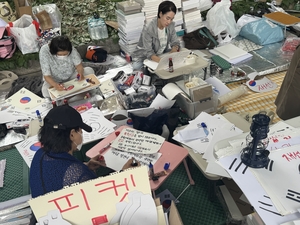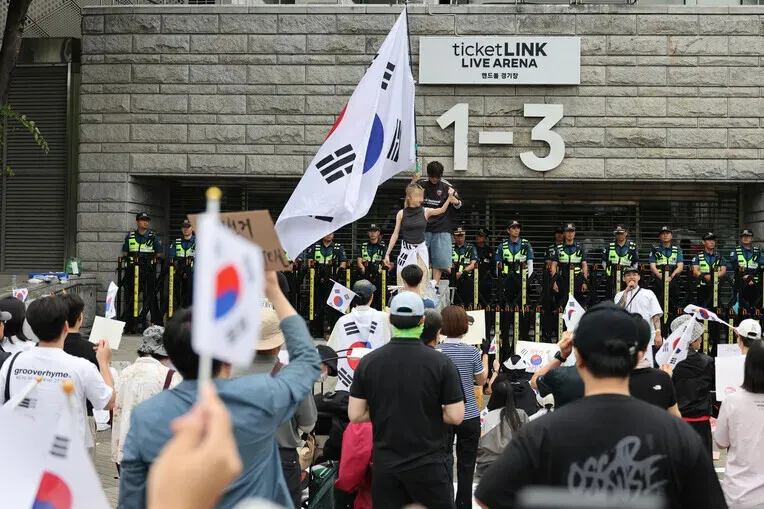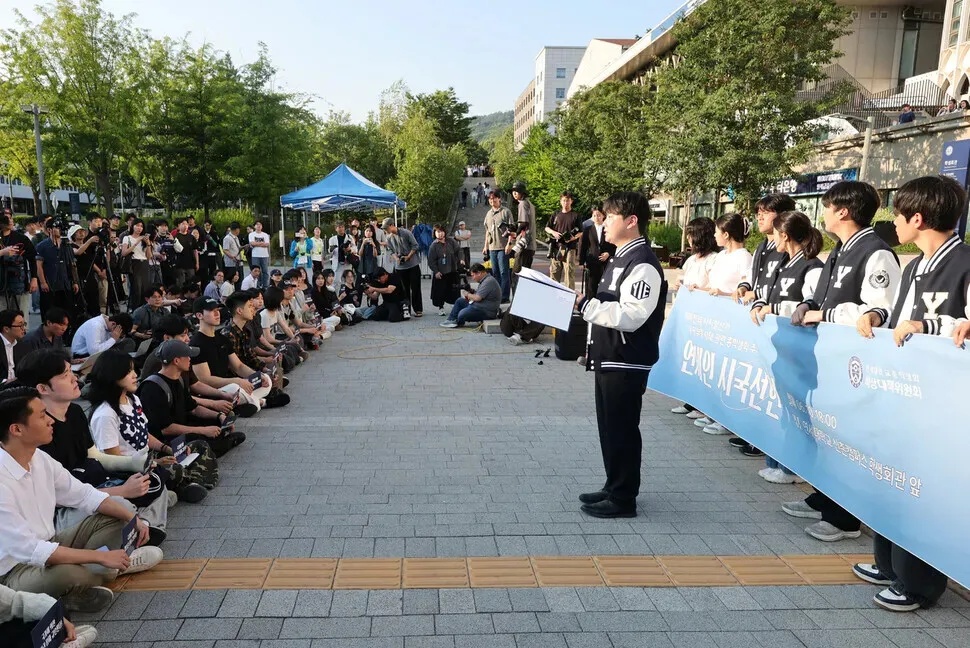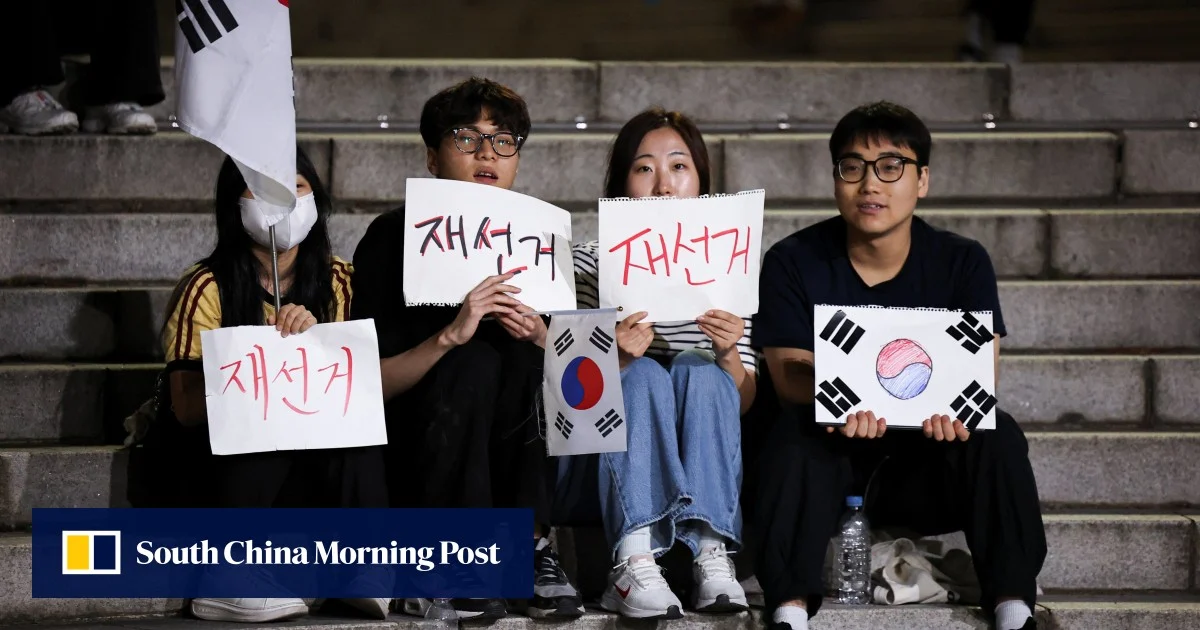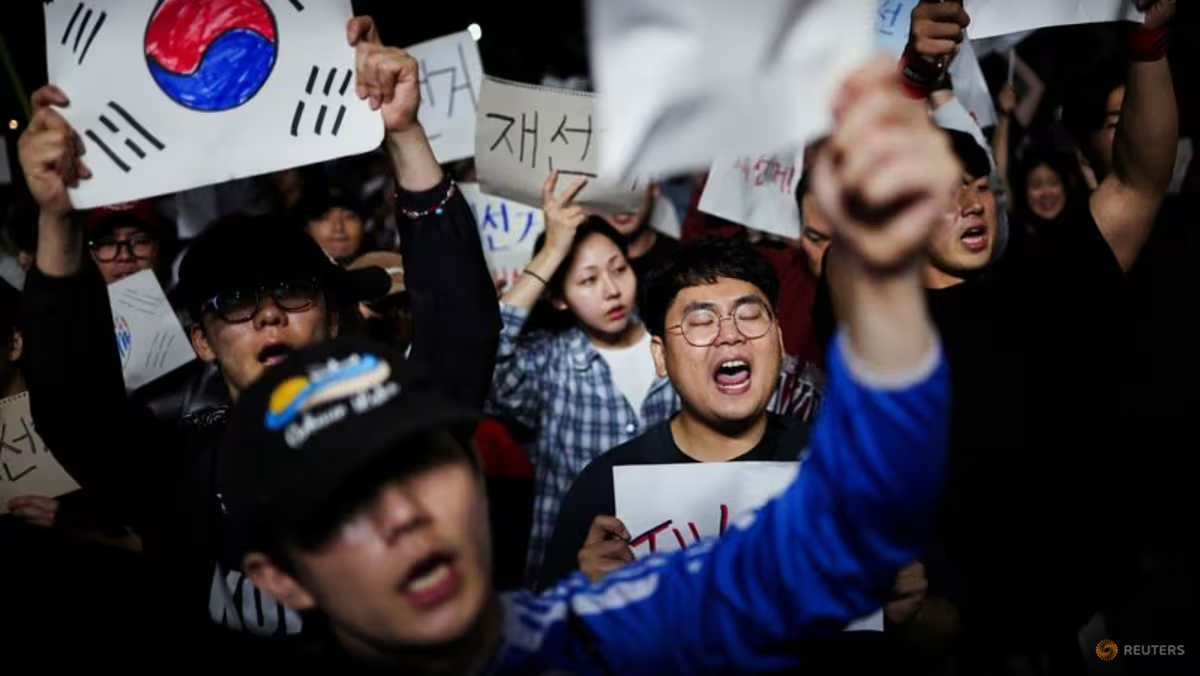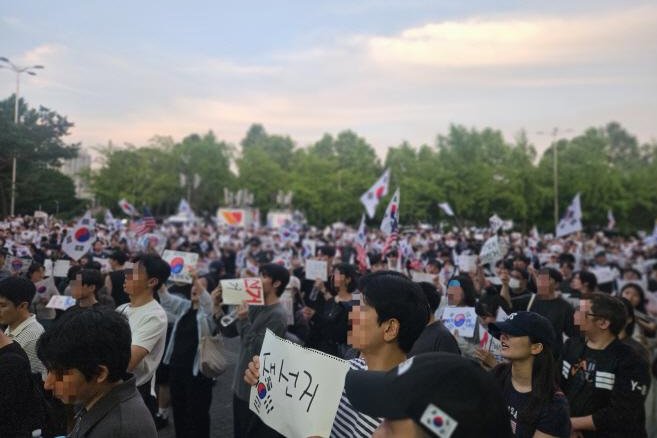
1 of 2 | Protesters gather outside the SK Olympic Handball Stadium in Seoul’s Olympic Park to demand a rerun of South Korea’s June 3 local elections. Photo by Asia Today
July 1 (Asia Today) -- For many South Koreans in their 20s and 30s, democracy is understood less as a political ideology than as a question of whether rules and procedures are applied fairly.
Unlike older generations that directly experienced authoritarian rule and the country's democracy movement, younger adults grew up amid repeated disputes involving unequal access to education, employment, military exemptions and housing.
For them, the central question is often not simply who won, but how the result was reached.
The demonstrations that formed at Seoul's Olympic Park after ballot shortages disrupted the June 3 local elections offered a clear example of that political outlook.