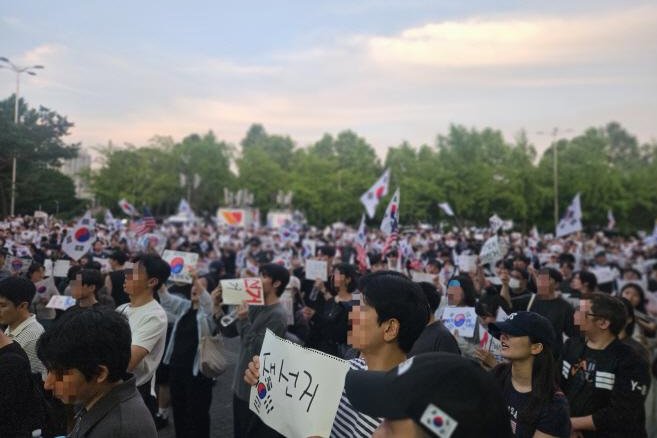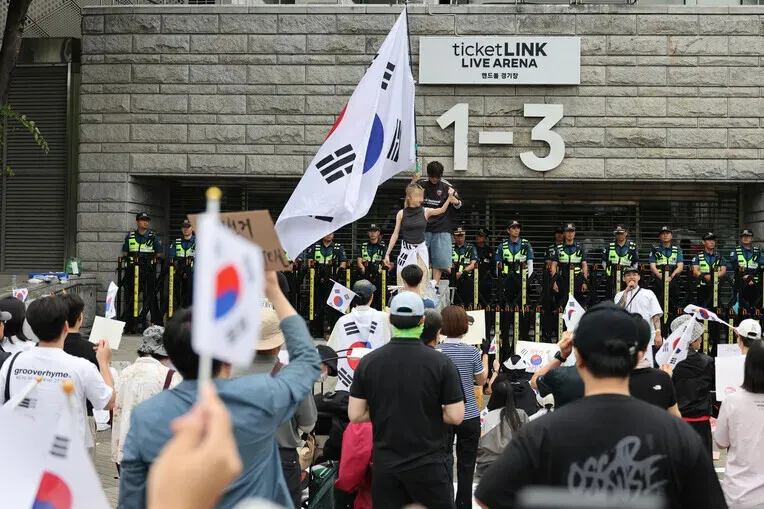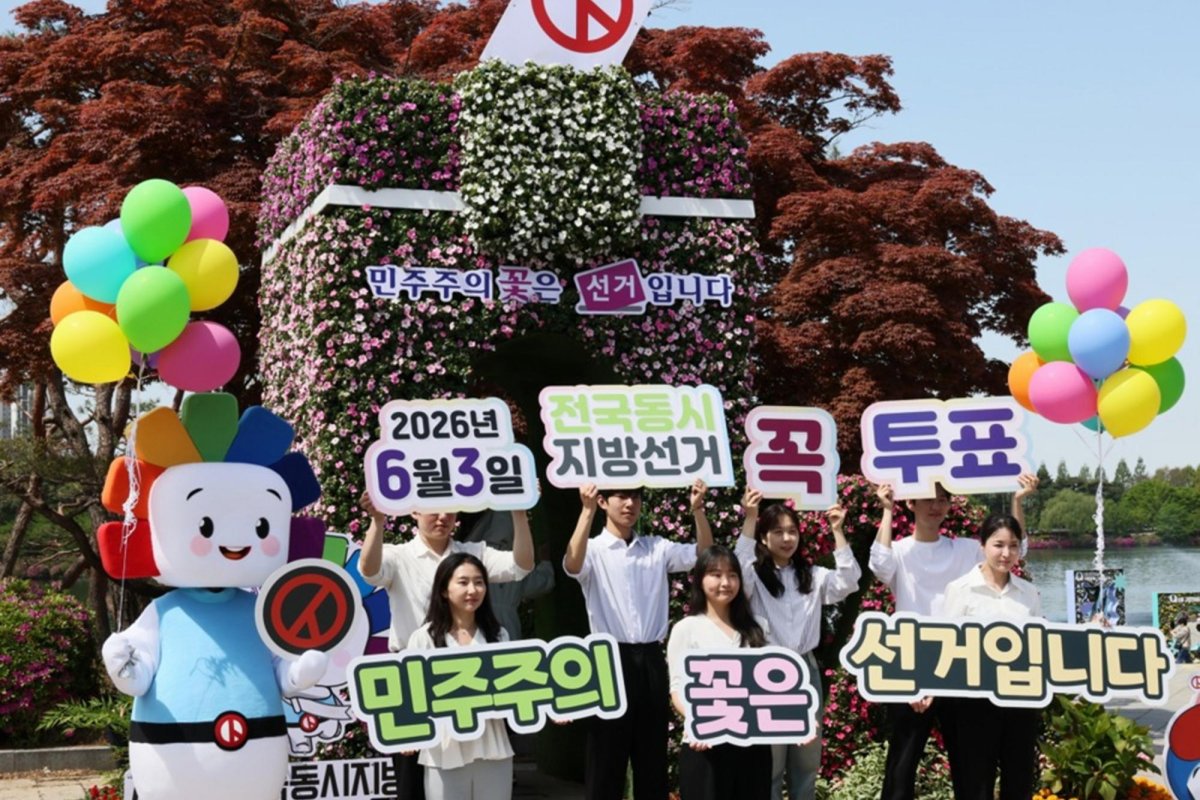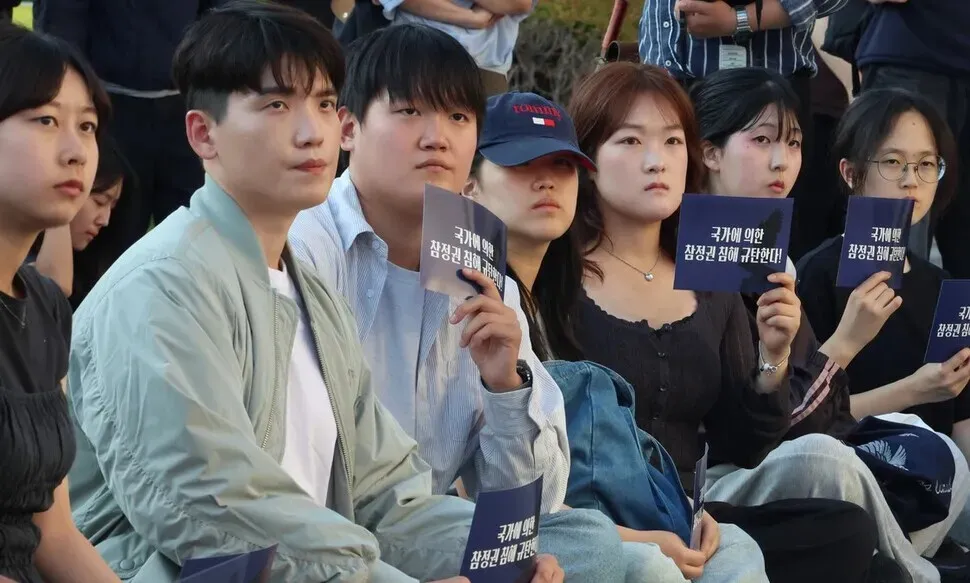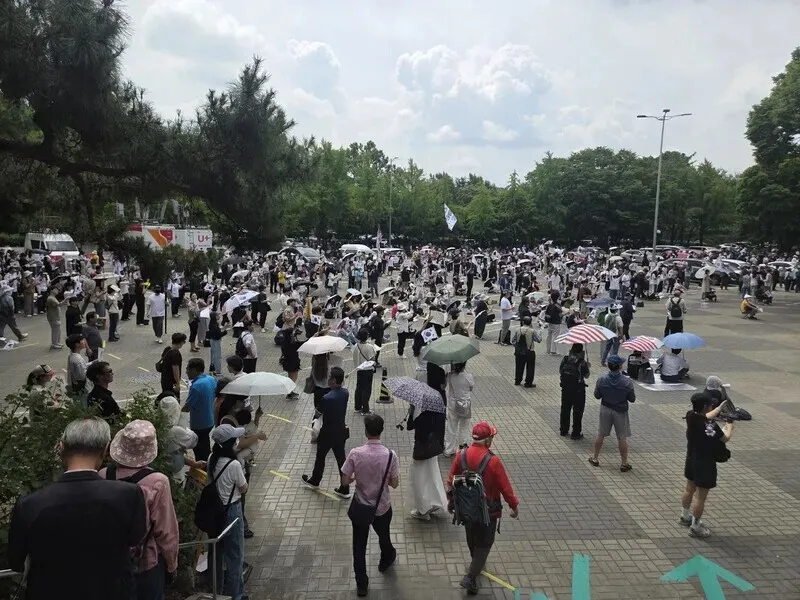
53 percent of those aged 18-29 say fraud occurred, while 61 percent of those in their 50s reject the claim, poll finds Protesters link arms at a ballot shortage protest at Olympic Park Handball Gymnasium in Songpa-gu, Seoul, on Thursday, as a parliamentary special committee prepares to conduct an on-site inspection into the June 3 ballot shortage crisis. (Yonhap) A recent survey has revealed a sharp generational divide over allegations of election fraud in the June 3 local elections, with respondents in their 40s and 50s largely rejecting the claims and those in their 20s and 30s more likely to believe them.A nationwide telephone survey of 1,000 adults aged 18 and older, jointly conducted from Monday to Wednesday by Embrain Public, Kstat Research, Korea Research and Hankook Research, found that 47 percent of respondents believe there was no election fraud, while 42 percent believe there was.By age group, 56 percent of respondents in their 40s and 61 percent of those in their 50s believe there were no voting irregularities. By contrast, 53 percent of those aged 18-29 and 48 percent of respondents in their 30s accepted election fraud claims as legitimate.Asked whether they believed President Lee Jae Myung was doing a good job, 58 percent of respondents gave a positive assessment, up 1 percentage point from the previous survey conducted in mid-June. The figure was at 66 percent in the third week of May, before the June 3 local elections.Negative ratings for Lee rose 2 percentage points to 35 percent, while 7 percent gave no opinion.Support for the ruling Democratic Party of Korea stood at 42 percent, up 1 percentage point from the previous poll, while the main opposition People Power Party saw its rating fall 5 percentage points to 20 percent.The minor conservative Reform Party and the minor liberal Rebuilding Korea Party each received 2 percent support, followed by the Progressive Party at 1 percent.Among supporters of the People Power Party, 77 percent said they believed election fraud had occurred. But 72 percent of Democratic Party of Korea supporters said they believed there had been no election fraud.The ballot shortage crisis disrupted voting at 91 polling stations nationwide during the June 3 local elections, with voting briefly suspended at 26 of them.The incident triggered public protests, prompted the resignation of the NEC chief, and led President Lee to order a full investigation and pledge sweeping reforms to the country's election management system.
Younger Koreans lean toward June 3 election fraud claims, survey finds
A recent survey has revealed a sharp generational divide over allegations of election fraud in the June 3 local elections, with respondents in their 40s and 50s
404 words~2 min read