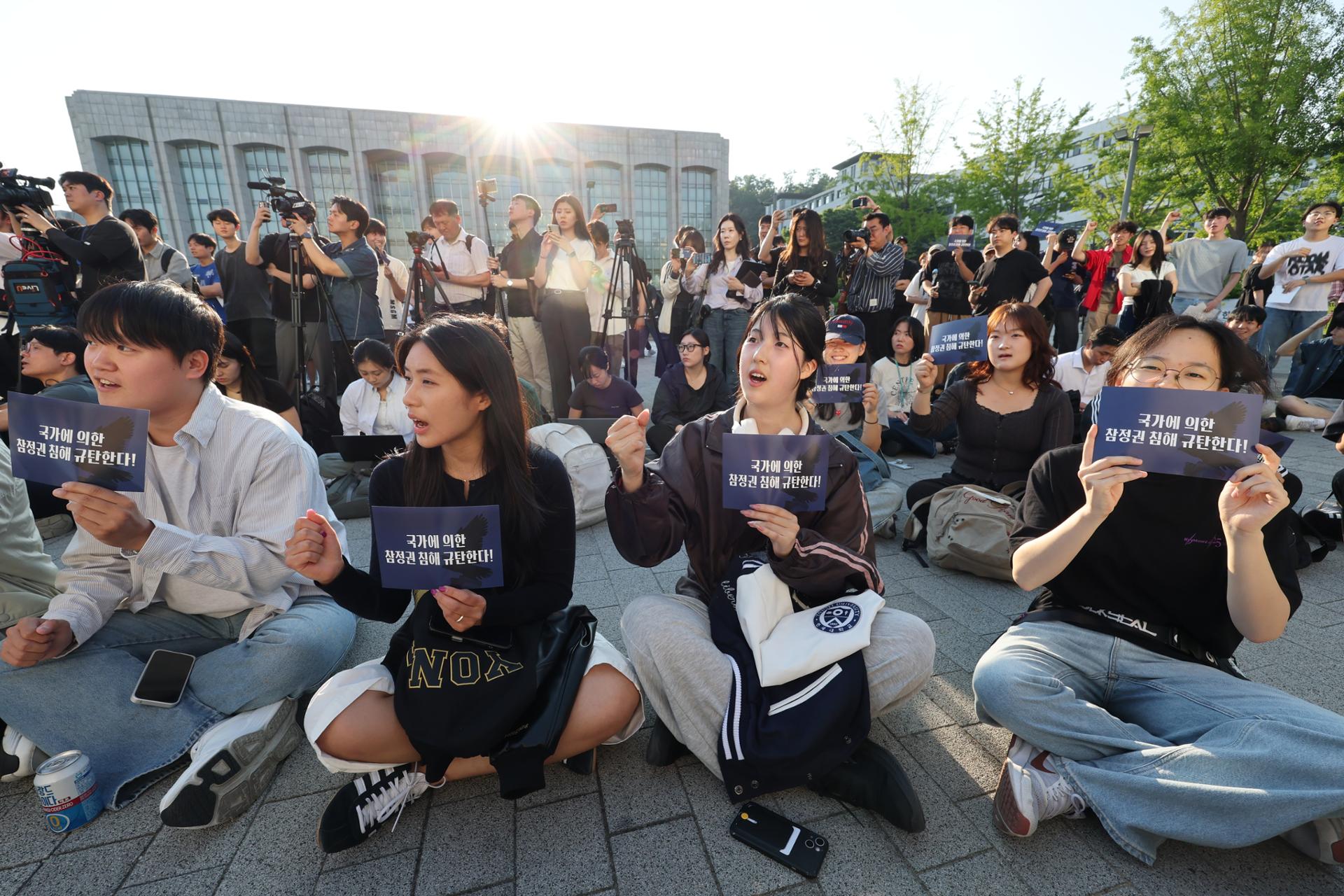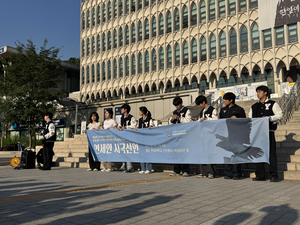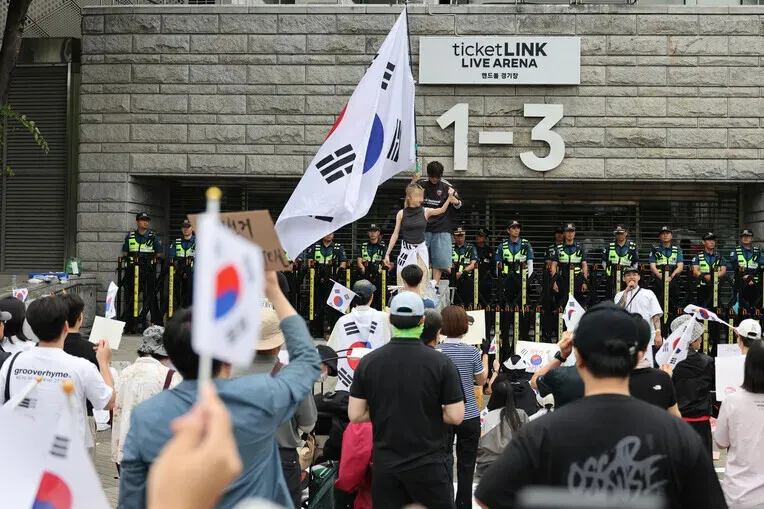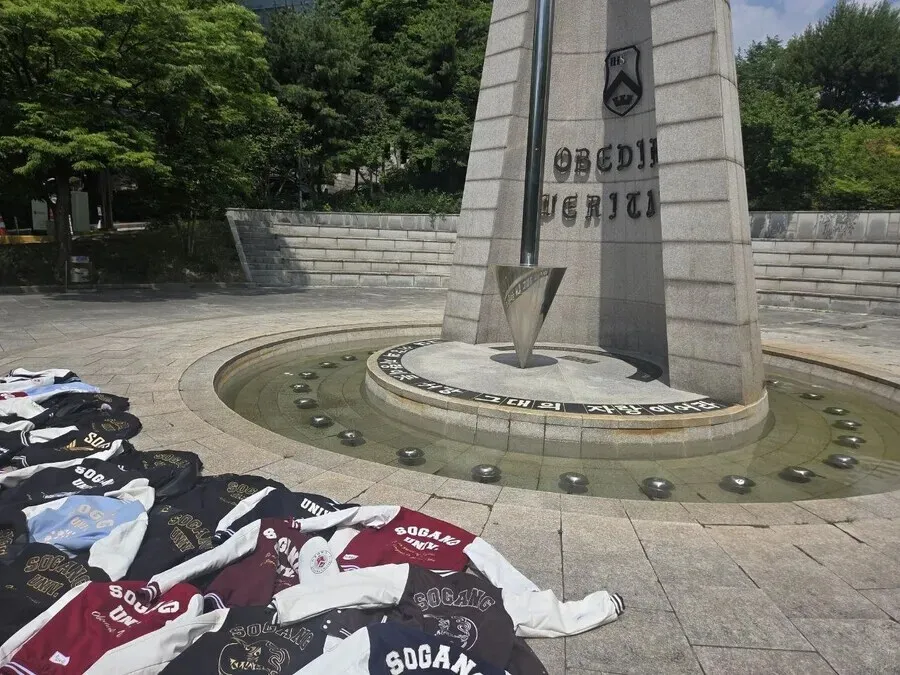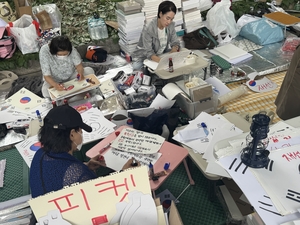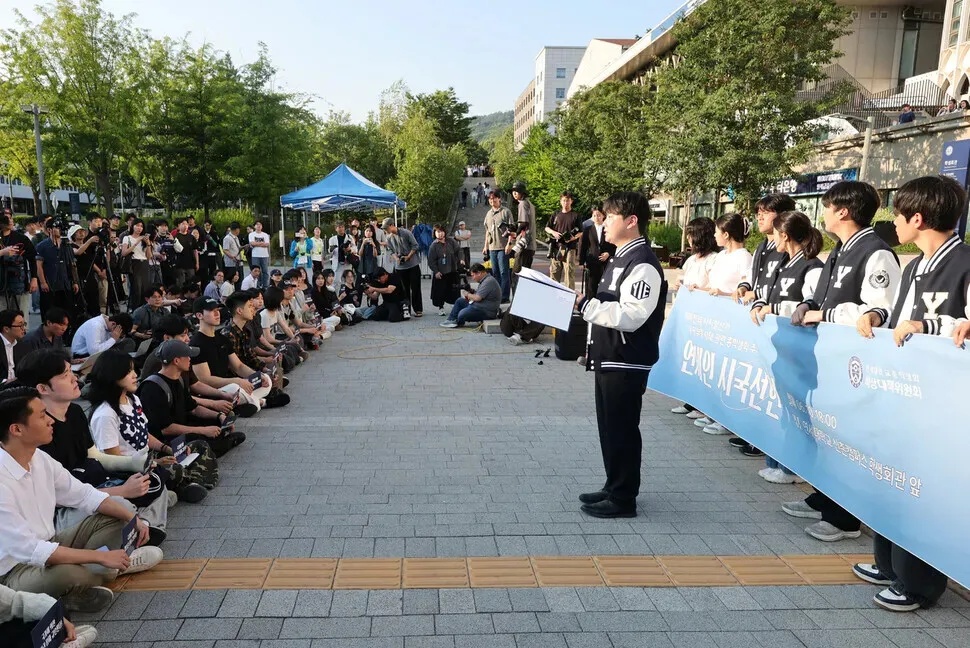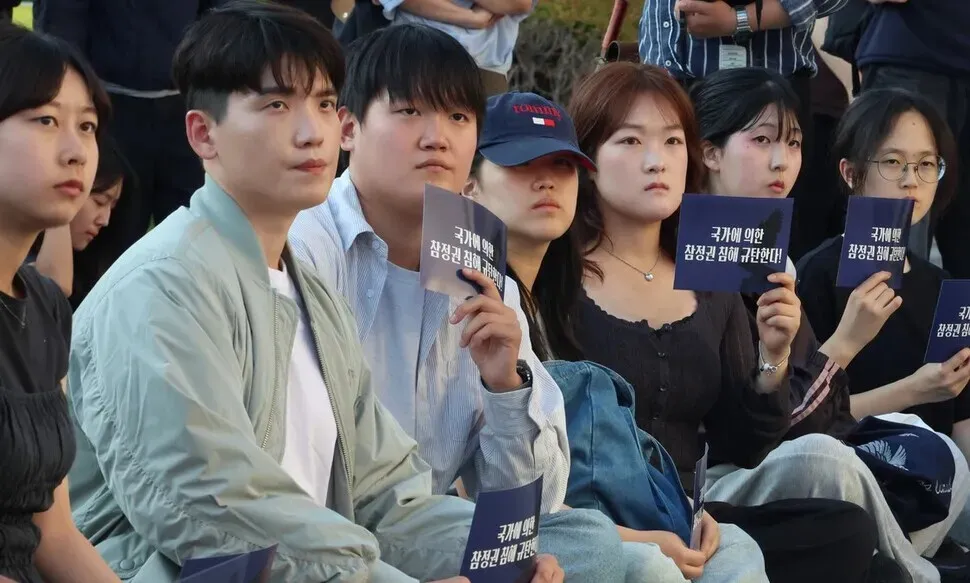
Students at Yonsei University gather to condemn the ballot shortage in the June 3 local elections at a gathering outside the student union building at the school’s campus in Seoul’s Seodaemun District on June 10, 2026. (Choi Hyeon-su/Hankyoreh)
“I questioned why the ballot shortage situation was treated as something that only people in their 20s and 30s would really react to, and why it wasn’t seen as something for the whole nation to take action about.”This was the response heard from a student on Wednesday when asked why 18 university campuses had participated in a joint declaration condemning the ballot shortage that occurred during the June 3 local elections.The biggest reason for speaking out that students cited was skepticism over the establishment’s tepid response to the violation of constitutional values that the infringement of voting rights represented.Warning against the arguments by different blocs attempting to downplay or distort the issue according to their partisan interests, the students stressed that the matter affected not just young people but everyone with the right to vote.As a reason for their joint declaration, students pointed to the unexpectedly muted social response to the breakdown in procedural fairness.For post-democratization generations who take it for granted that the fair exercise of voting rights is a fundamental value, the perception is that the establishment has been hard at work trying to make political hay out of a collapse in the common-sense order.“This is a case where the voting rights that everyone should have fair access to were infringed by a state institution,” said Lee Jae-hong, the president of the Sungkyunkwan University student council.“We were asking why the establishment has been so quiet over such a serious issue that has us angry and speaking out,” he explained.Young people showed especially strong displeasure with the situation of such issues being approached along partisan lines.Lee Yeon-woo, the president of the Sogang University student council, said, “We’ve been concerned about attempts to reduce these issues to a black-and-white logic and confine them to partisan frames rather than looking for the right procedures to recover from the infringement of voting rights.”“We took action because we thought this was a final opportunity to raise the issue outside of a partisan frame,” she added.Lee Ji-min, who chairs the Korea University emergency countermeasures committee, said, “We were concerned about the ripple effect from our messages being diminished as the matter ended up taken outside the essential question of structural reform of the National Election Commission [NEC] and framed instead in terms of specific partisan arguments.”For this reason, young people have consciously rejected not only “election fraud” frames rooted in far-right conspiracy theories but also the relatively moderate demands for the election’s restaging. Their aim is to focus instead on three key demands: an investigation through a parliamentary audit or special counsel, structural reforms to the NEC, and the establishment of an oversight institution with citizen participation.“Before we start asking whether a redo election is necessary or feasible, the proper thing to do is establish who the actual victims are and who is responsible,” said Lee Yeon-woo.“Right now, our focus is on a thorough investigation,” she added.The declaration was chiefly put together by the student council leadership at 18 universities, and it remains to be seen how far it will reach. But some observers are calling the move significant in terms of young people taking the initiative to speak out outside an establishment perspective that views the issues through the lens of potential political gains and losses.“There’s maturity in the way the students have avoided use of the phrase ‘restage the election’ and focused instead on NEC reforms,” observed Koo Jeong-woo, a professor of sociology at Sungkyunkwan University.“This is significant because it means the younger generation is sounding the alarm over the universal issue of voting rights violations, which the establishment has attempted to treat relatively lightly,” he noted.By Lim Jae-woo, staff reporter; Cho Hae-yeong, staff reporter; Park Chan-hee, staff reporterPlease direct questions or comments to [english@hani.co.kr]